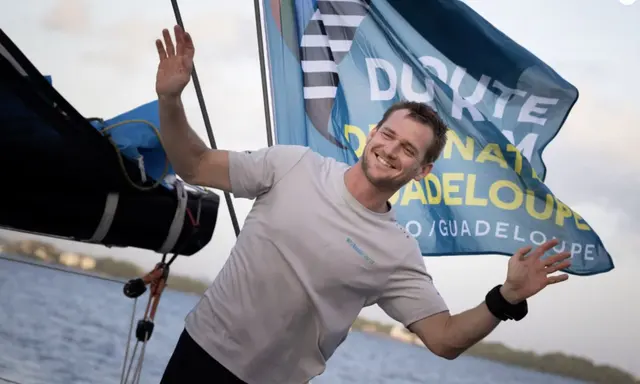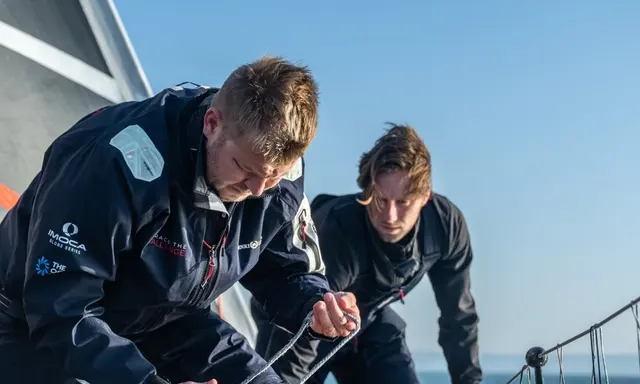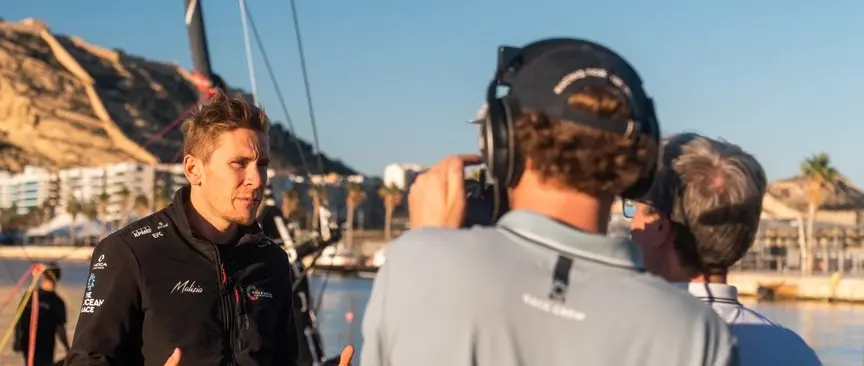
Alicante has received the first sailors preparing for The Ocean Race 2027 after IMOCA Malizia 4 arrived at the Spanish start port on Friday 27 November. Will Harris and Cole Brauer came ashore with Julien Villion, Loïs Berrehar and Alice Callow following a further Atlantic delivery aboard the German campaign's new ocean-racing yacht. This is more than a ceremonial early arrival. It moves the programme from the long-distance passage-making that follows the autumn racing season into an intense period of inspection, crew integration and pre-start preparation. The organiser's first-hand arrival report confirms the crew's identities, the Friday arrival and the team's plan to resume sailing in early December. It does not report a new racing result, and the passage should not be confused with a completed leg of the 2027 contest.
First team to reach the departure port
The Ocean Race identifies Malizia 4 as the first team yacht to arrive in Alicante with its sailors ahead of the event. The city is the designated departure port, and the planned start remains 17 January 2027. A first arrival is useful in organisational terms because it creates a visible reference point for the port, race organisers and other teams preparing to follow. It does not make Malizia a favourite or give the crew a competitive advantage in the standings. Those judgments must await the race. For the team, the value is practical: familiarising sailors and shore personnel with the local base, locating technical suppliers and establishing daily maintenance routines before the rest of the fleet gathers.
A delivery after a difficult Atlantic racing season
Malizia's arrival comes after a busy autumn programme that included the solo Route du Rhum, in which Boris Herrmann took second in the IMOCA class. That result belonged to a separate race and a different format, but it established that the latest boat can operate competitively offshore. The organiser reports the new yacht has completed four transatlantic passages since launch ahead of The Ocean Race Atlantic. The important distinction is between accumulated sea miles and proven reliability in a crewed around-the-world race. A boat may be fast in solo competition yet still need considerable work on living arrangements, watchkeeping, sail handling, communications and systems access when a rotating team occupies it for weeks.
Will Harris and Cole Brauer in the shore-based build-up
Harris and Brauer headline the arriving group, with Villion, Berrehar and Callow also on board. The arrival report identifies the personnel without declaring that this exact five-person group will sail every future leg. In an IMOCA programme, technical, navigational and sailing responsibilities frequently overlap: skippers must keep the boat moving while monitoring structural stresses, energy consumption and changing weather. Brauer brings solo ocean-racing experience, while Harris has a longstanding connection with the Malizia campaign and previous Alicante preparations. Those biographies are relevant because modern offshore crews combine short-handed decision-making with team communication, and a programme benefits when individual sailors can work through problems without waiting for an entire shore team to intervene.
The transition from passage-making to testing
A delivery across an ocean provides useful information but is not a controlled test programme. Engineers and sailors need to compare observed loads and equipment performance with expectations, not simply mark the boat as having completed another crossing. The team may examine deck hardware, standing rigging, foil systems, running rigging and electrical systems, although its exact post-arrival work list has not been published. A sensible programme distinguishes safety-critical repairs from performance modifications and ordinary servicing. If major systems are changed close to the start, they should be tested under realistic conditions before the boat leaves again. The prospect of additional sailing in early December therefore matters more than the symbolism of a photograph at the dock.
What four Atlantic passages can and cannot demonstrate
The reported four Atlantic passages represent a meaningful operational workload for a recently launched yacht. They have exposed the structure, sails, appendages, navigation systems and crew procedures to actual offshore conditions rather than solely to controlled builder trials. Nevertheless, passage count alone says little about the range of wind, sea state or load cycles encountered. It also cannot establish how components will behave after months of racing or how a boat will recover from unexpected collisions and repeated hard sailing. Responsible reporting should resist turning a mileage headline into a guarantee of readiness. For prospective owners of smaller bluewater yachts, that distinction is familiar: sea trials are evidence, not substitutes for preventive maintenance and a plan for component failure.
Alicante's operational role
The departure city is much more than a backdrop for a televised starting line. A race village needs berthing, access for cranes and contractors, controlled storage of sails and equipment, waste handling, transport and a workable relationship with local maritime authorities. Each campaign, in turn, needs clearly assigned decision makers for work authorisation and spare parts. Those procedures can be invisible to viewers but determine whether sailors can focus on preparations once the boats are in port. The new Malizia arrival marks the start of that visible concentration of activity, not the completion of Alicante's work. The organiser's earlier countdown announcement provides the race context.
Crew rotations complicate reliability planning
A crewed offshore race imposes a different human load from a single-handed transatlantic contest. Equipment must be operable by sailors of different builds and experience, while guidance on emergency procedures cannot be stored only in one person's memory. Watch handovers demand disciplined reporting of unusual sounds, damage, chafe and emerging faults. Even an apparently trivial leak or loose fastener becomes more consequential if several watches assume someone else has addressed it. The arrival group offers an opportunity to establish a common language for defects, sail changes, work orders and incident reporting. Such routines rarely attract headlines, yet they are among the most transferable lessons from professional campaigns to 12–24m performance cruisers.
Energy and communications offshore
Modern IMOCA racing depends on electricity not just for comfort but for essential instrumentation, navigation, communications and control systems. The team has not published a fresh power audit with this arrival, so there is no basis to claim a particular consumption or charging performance. More generally, the offshore preparation task involves matching electrical demand to available generation and storage while keeping redundancy for critical systems. Communications require similar discipline: shore support can improve weather awareness and logistics, but communications failure must not leave a crew unable to navigate or make safety decisions. Yacht owners contemplating longer passages can learn from the method rather than assume racing-grade equipment is appropriate for recreational use.
Weather preparation before the January start
Early-winter sea conditions in the western Mediterranean and Atlantic approaches make a late-year build-up a serious exercise. The crew must be ready for a range of weather without suggesting that one forecast represents the conditions it will actually experience at the January start. Professional preparation relies on planning alternatives and practising sail changes and steering responses, with an emphasis on maintaining control when the initial plan becomes unsuitable. A passage directly into Alicante also offers sailors the chance to observe approaches and harbour operations in reality, although the ultimate starting conditions will be set much later. An accurate operational story is therefore about preparedness and flexibility, not a premature weather prediction.
The difference between an IMOCA and a cruising yacht
Malizia 4 is a specialist offshore racing machine rather than a family cruiser, and it is important not to blur the categories. Its deck layout, limited accommodation and performance priorities are designed for ocean competition. Owners of luxury yachts in the 12–23.99m sector cannot copy those arrangements directly, but they can adopt elements of the preparation philosophy: detailed inventories, watch systems, spare-parts prioritisation, regular inspection of high-load fittings and a documented response to water ingress. The larger lesson is that readiness must be demonstrated by use and inspection rather than by a model's reputation or its latest race result. Offshore racing supplies examples of the questions to ask without providing a universal specification.
A team schedule with little slack
The official arrival story says Harris and teammates are due to regroup for more sailing in early December before a short Christmas break. That schedule leaves a compact period for technical checks, rest and another round of work before the January departure. It is not evidence that every modification has been completed or that the campaign is free of engineering concerns; the organiser has not published such a certificate. Teams have to balance desired performance gains with the risk of introducing new problems close to a major start. The early Alicante arrival is therefore best interpreted as one element of a carefully sequenced programme, with the most important deliverable still to come: an adequately prepared yacht and crew on start day.
How to follow the next milestones
The immediate markers are further Malizia training in December, confirmation of the team's preparations and the arrival of other competitors at the Spanish port. Crew announcements, technical inspections and official start information should be assessed separately rather than inferred from promotional coverage. The Ocean Race official newsroom is the primary source for event announcements, while individual team channels can establish details about their own equipment. Luxury Yacht Guide will distinguish a verified start, result or technical change from commentary about its possible significance. For now, Malizia 4's arrival makes the 2027 departure more tangible without claiming that the challenge of racing around the world has already been met.
Related Luxury Yacht Guide reporting
- Malizia 4 Takes Second in Route du Rhum IMOCA Class
- Malizia 4 Faces First Solo Atlantic Test as Boris Herrmann Races 18.23m IMOCA
- ARC Fleet Sets Course for Saint Lucia as 700 Sailors Depart Gran Canaria
- Ferrari Hypersail Adds Ocean-Racing Navigator Simon Fisher and Yacht Club Italiano Partnership
Primary reporting and image credit
Primary manufacturer and organiser source(s): https://www.theoceanrace.com/en/news/16096_The-first-sailors-in-The-Ocean-Race-2027-have-arrived-in-Alicante. © The Ocean Race / original press photograph; organizer-issued arrival image of Malizia 4 at Alicante. Image is used only for correctly attributed factual editorial coverage and never represented as open-licence stock photography.