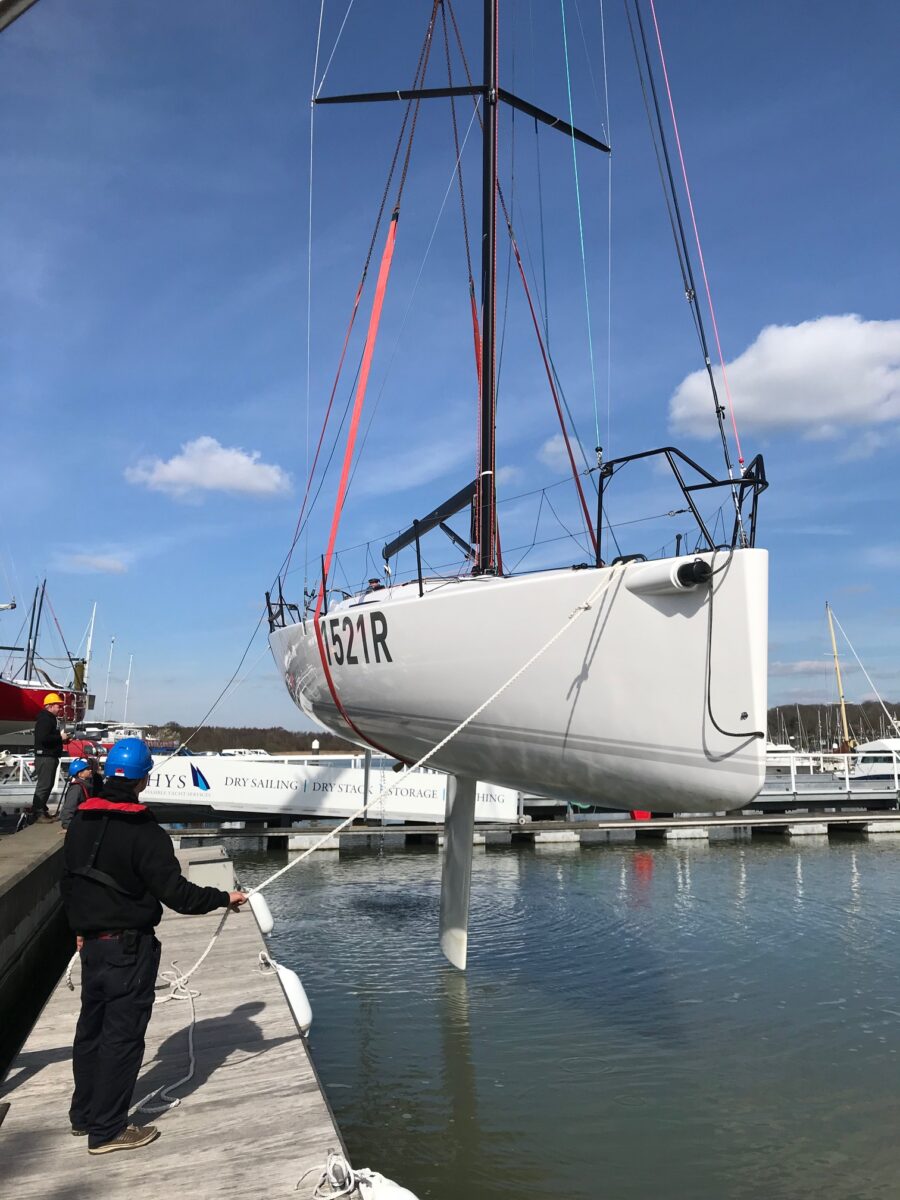
The IRC Rating Authority has published a substantially revised measurement manual, announced on 12 November 2026, to improve the consistency of the physical information used when establishing yacht ratings. The revision includes expanded weighing guidance, additional coverage of modern hull appendages and rig configurations, and practical material relating to the measurement of sails. It also incorporates changes associated with the 2027 IRC Rule. For owners of sailing yachts between 12 and 23.99 metres, the development is especially pertinent when a winter refit, new sail inventory or structural modification is expected to affect the information held on a rating certificate.
Measurement as the basis of a certificate
A yacht's rating is intended to support competition between boats of different characteristics. The reliability of the underlying information is therefore important both to the owner of the yacht being assessed and to the other participants in an event. IRC's announcement emphasises accurate and repeatable measurement, and the manual is intended to help measurers, rule authorities and boat owners understand the relevant procedures consistently across the international sailing community.
A measurement manual is not itself the complete rating formula or a substitute for the current rule. It provides guidance about establishing the physical information used in the rating process. A change in guidance may affect the way an item is documented or assessed without necessarily introducing a corresponding change to the mathematical treatment of that item. Owners should distinguish the procedures described in the manual from the rating requirements applying to their particular yacht and certificate.
Weighing and measurement condition
One of the most substantial parts of the revised manual concerns weighing. The authority identifies measurement condition, load-cell selection and calibration, alternative methods and single-point lifting among the topics receiving additional attention. An accurate reading from a weighing system is meaningful only if the condition in which the yacht was weighed is understood and recorded. A measurement taken with different equipment or supplies aboard cannot automatically be treated as equivalent to another result.
This is particularly relevant to larger cruising and racing yachts, where the inventory of removable equipment can be substantial. Owners should agree the required measurement condition with the relevant authority and measurer before arranging a weighing appointment. The actual lifting operation should be planned and conducted by appropriately qualified personnel using equipment suitable for the vessel. The revised manual should be consulted as the authoritative procedural reference rather than relying on an informal description of a previous measurement.
Calibration and consistent records
The announcement highlights the selection and calibration of load cells. A measuring device must be suitable for the intended range and conditions, and its reliability needs to be established through the relevant calibration process. The authority also stresses the value of recording the condition of the boat accurately so that a measurement can be understood and repeated. These are complementary requirements: an accurate instrument cannot resolve uncertainty about what was included in the measured load.
A yacht undergoing work in a yard may provide a convenient opportunity to coordinate several measurement requirements. However, the convenience of a particular lifting appointment should not determine whether the resulting information is suitable for the rating application. Owners and project managers should consult the measurer in advance and ensure that the yard understands the arrangements required. A clear record of the measurement and the equipment configuration may be especially valuable if the yacht is subsequently modified or sold.
Hull measurements and modifications
The revised document contains updated guidance relating to hulls. This matters to yachts whose characteristics have changed through a refit as well as to newly built boats. A modification that appears relatively limited when viewed in the context of a large vessel may nevertheless affect a dimension or characteristic relevant to the certificate. The existing rating information should not simply be carried forward without considering whether the modification needs to be reported.
Designers and yards can help owners by keeping accurate records of the actual work carried out. Original drawings are useful, but they may not reflect subsequent alterations. A measurer should be able to establish which configuration the yacht is in at the time of the assessment. Where the applicability of a particular measurement or definition is uncertain, the appropriate course is to seek clarification from the rule authority before the work or measurement is completed.
Interceptors and lifting appendages
The authority specifically identifies interceptors and lifting appendages among the features addressed in the expanded guidance. These topics illustrate the variety of technologies now encountered within competitive yacht design. An appendage may serve a different purpose from that of a conventional keel or rudder, and the way it is arranged and operated may be relevant to establishing the yacht's characteristics.
The announcement does not specify a universal rating adjustment for the installation of any of these features. It identifies their measurement and treatment as subjects for clearer guidance. Owners considering an alteration should therefore obtain advice about the actual design before assuming that its effect on the rating can be established from the name of the equipment alone. The revised manual and applicable rule provide a more reliable starting point than comparisons with an apparently similar installation aboard another boat.
Twin rudders and unusual rigs
Twin rudders receive additional attention in the manual, as do unusual rig arrangements. The variety of sailing yachts covered by IRC means that the measurement process must accommodate configurations extending beyond conventional single-rudder monohulls and familiar mast arrangements. Clear definitions help establish how the relevant information should be recorded without assuming that every yacht follows the same basic design pattern.
Owners of a yacht with an unusual rig should provide the measurer with appropriate drawings and technical information where available. Where a new sail-control arrangement or modification to the rig is proposed, the designer and rigger should establish the consequences of the work independently of any rating considerations. The suitability and structural integrity of the installation remain separate engineering questions. The rating manual can help address how the completed arrangement is measured for competition, not certify the safety of the design itself.
Sail corner points and leech hollows
The revised guidance also addresses sail corner points and leech hollows. The latter concern the shape of the trailing edge of a sail. Establishing measurement points consistently is important when sails have unusual geometry, because their shape cannot always be adequately described by a simple overall length or width. The sailmaker and measurer need to work from the applicable definitions when recording the information required for the certificate.
A yacht owner commissioning sails for the 2027 racing season should ensure that the intended use and relevant rating requirements have been communicated before the design is finalised. A change in sail shape may have operational and measurement implications, and those matters should be considered alongside the expected handling characteristics. The published announcement does not replace the individual instructions in the manual. Its importance lies in bringing attention to the expanded guidance before owners make decisions about new equipment.
Specialist measurements
IRC has included quick-reference appendices covering more specialised subjects, including bulb weight and list angle. Such information can be useful in the assessment of boats with particular ballast or stability arrangements. It is important that these topics be addressed through the correct procedures rather than through an estimate derived from another boat's specifications or an informal description of the installed equipment.
The use of a quick-reference appendix does not remove the requirement for appropriate equipment, competent personnel and the full context of the relevant rule. Owners should establish which measurements are required for their own yacht and provide the necessary access and documentation. Some assessments may require arrangements extending beyond those needed for a routine sail measurement. Planning the work in consultation with the appropriate authority can help avoid unnecessary repeat visits or uncertainty about the validity of the resulting information.
Preparing an Endorsed certificate
The announcement specifically encourages owners planning measurement, modifications or an Endorsed certificate to consult the revised document before beginning the work and to contact their local IRC Rule Authority when advice or measurement is needed. An Endorsed certificate involves verification of the relevant measurement information under the applicable IRC arrangements. The precise requirements should be established through that authority rather than assumed from the practices of a different country or event.
A yacht purchased on the brokerage market may have a previous certificate and an extensive collection of sail or equipment records. These documents provide a valuable starting point, but the new owner should establish whether the information still accurately describes the vessel and whether the certificate is appropriate for the planned programme. Any alterations made since the original measurements should be considered. An early review can help coordinate the technical preparation of the yacht with its intended competition schedule.
A useful reference for the winter programme
The revised measurement manual is a practical development for the international IRC community ahead of the 2027 certificate year. Its emphasis on weighing condition, calibrated equipment and repeatable records is particularly relevant to owners arranging winter work on substantial sailing yachts. Its coverage of modern appendages and unconventional rigs also reflects the changing variety of boats competing within the system.
Luxury Yacht Guide has not conducted measurements using the new document or assessed an individual certificate. The information reported here comes from the IRC Rating Authority's November announcement, including the accompanying official contextual image of a yacht being weighed. Owners should obtain the current complete manual and relevant rule directly from IRC and discuss individual requirements with their local rule authority. The principal opportunity is to ensure that measurement is planned as an integral part of a yacht's preparation rather than addressed only when a certificate is required for an imminent race.
Related Luxury Yacht Guide reporting
- ORC and IRC Establish Joint Working Party on Racing Technology
- Harken Presents New Staysail Furling and Sail Control Systems at METSTRADE
- BSI Rigging Adds Hydraulic Sail-Control Cylinders to Yacht Equipment Range
- Incidence Sails Names Dolphin Sails Exclusive UK Partner for DFi Membrane Technology
Primary reporting and image credit
Primary source(s): https://ircrating.org/irc-news-articles/irc-technical/updated-measurement-manual/. IRC Rating Authority; official contextual yacht-weighing photograph accompanying the November 2026 manual announcement. Image is used only for correctly attributed factual editorial coverage and never represented as open-licence stock photography. Original source image.