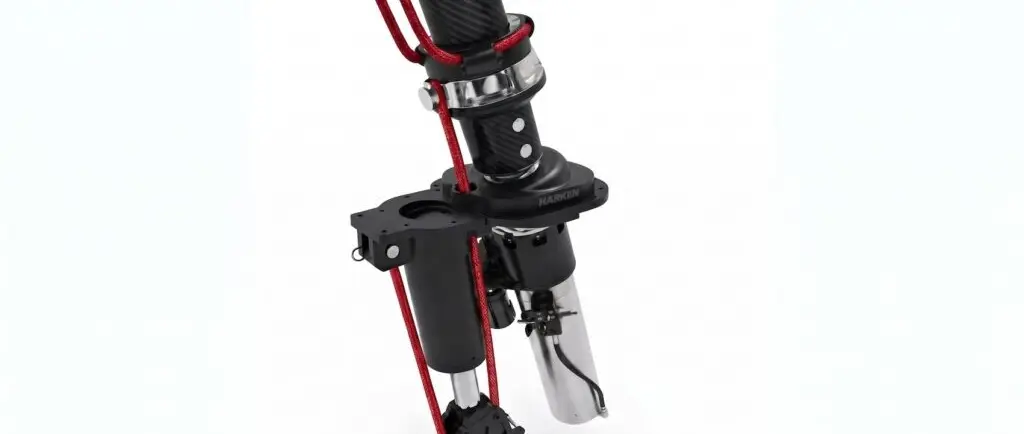
Marine deck-equipment manufacturer Harken has used METSTRADE 2026 in Amsterdam to outline new sailing equipment aimed at making the handling of substantial sail plans more controlled and manageable. Among the developments is a StaySail Furler intended for removable sails fitted with torsion cables, alongside under-deck furlers, textile furlers and swivels. The company also presented related winch and block technologies, with attention to reducing the effort and complexity involved in operating larger sailing yachts. The announcements appeared in the technical programme for 17–19 November, with further details reported by The Yachting Voice on 13 November. For owners of 12–24-metre performance cruisers and luxury sailing yachts, the relevant question is how these innovations might improve sail handling without creating unnecessary new equipment dependencies. The products vary in intended application and should be assessed against the actual rig rather than treated as interchangeable upgrades.
Furling as a practical sailing system
A sail furler allows fabric to be rolled or unrolled around a structural element or torsion cable, changing the sail's exposure to the wind. This can reduce the physical effort associated with managing large sails, but the design must account for considerable loads and the movement of the yacht. A furler is not simply a rotating drum; its connections, bearings, drive mechanisms and sail construction must work together. Harken's new presentation reflects that system-based approach by offering different configurations for varied sail plans. The owner should ask which kind of sail is intended, how it will be deployed and recovered, and whether the existing rig can accommodate the required loads. A product that makes one operation easier may still demand careful crew training and maintenance. The goal is predictable control, not the elimination of seamanship.
The new StaySail Furler
The StaySail Furler is described as a product for removable sails using a torsion cable. Harken's design combines a low-profile reduction mechanism with a quick-release arrangement to help crews rig and remove the sail. That is a useful proposition for yachts that change their sail configuration according to conditions. Yet the phrase quick release should not be misunderstood as permission to disconnect a loaded system without following prescribed procedures. Attachment, tension and stored energy are safety-critical considerations. The manufacturer or qualified rigger should establish the correct operating sequence, compatible sail construction and load limits. For a short-handed yacht, easier removal could provide flexibility, but the practical value depends on how reliably the installation works at sea and how safely the crew can handle it when conditions deteriorate.
Why torsion cables matter
A torsion cable is designed to transmit rotational force through a sail's furling system. It behaves differently from a conventional running line, and the way it is integrated with the sail affects furling performance. A cable that is poorly selected or tensioned may allow inconsistent rotation or undesirable sail behaviour. The new Harken equipment is intended to work with this category of removable sail, but the source does not provide universal tension settings or safe-load values. Those must be determined for the specific product and rig. Owners should also understand the storage and handling requirements of the sail and cable when they are removed. An arrangement that is fast to deploy can be valuable during a cruise only if the components are protected and easy to inspect. The wider lesson is that the furler and sail must be specified as a coordinated system.
Under-deck furlers and cleaner deck layouts
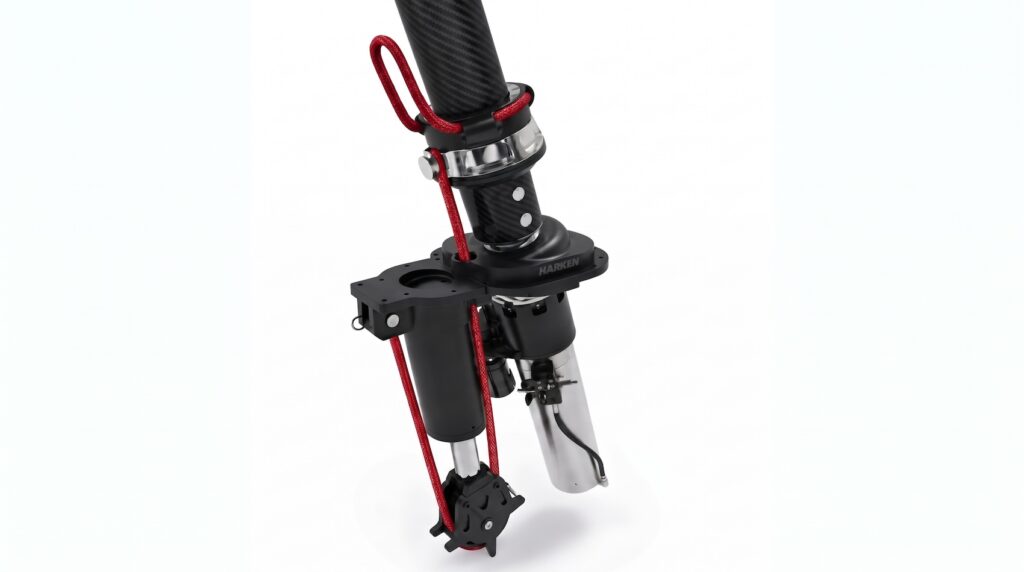
The presentation describes under-deck furlers for profile or torsion-cable applications, using a two-stage parallel-shaft reduction system. Positioning equipment below deck can create a less cluttered appearance above, but visual neatness is only one consideration. Under-deck installations require appropriate space, structural support, drainage and service access. Harken says the system includes a spherical interface to transfer load into the deck structure, an important reminder that large sail loads need a defined path through the yacht. The owner should ask how the hardware can be inspected and maintained after surrounding finishes are installed. A clean deck may appeal aesthetically, particularly on a custom luxury yacht, but it should not be achieved by making a critical mechanical component inaccessible. Function, safety and long-term serviceability remain central.
Electric and hydraulic drive options
The under-deck range is reported as offering electric and hydraulic drive options, with manual backup arrangements. Different drive technologies have advantages and constraints depending on the yacht's existing systems. A vessel with a substantial hydraulic network may find certain arrangements convenient, while another may prefer integrated electrical control. Neither choice should be made on the basis of fashion alone. The installer needs to consider available power, control interfaces, loads, maintenance and how the crew will respond to an abnormal condition. The presence of a manual backup is useful only when operators know where it is and how the manufacturer intends it to be used. The source does not establish one universal method for all Harken systems. Owners should obtain the current operating instructions and confirm compatibility with their rig and vessel architecture.
Deck-mounted alternatives for refits
Harken also outlined a deck-mounted winch or furling arrangement suited to certain multihulls and refit projects where installing equipment below deck may be impractical. A yacht can have structural or space constraints that make a technically attractive hidden installation uneconomic or difficult to service. The ability to mount equipment directly at a suitable deck or chainplate location may broaden options, provided the structure has been assessed properly. The company describes stainless-steel and aluminium configurations, along with hydraulic tensioning possibilities. These are manufacturer product options, not evidence that every refit can avoid structural work. A professional assessment should consider load transfer, movement, access and interactions with existing rigging. Owners may need to accept some visible deck equipment in return for better serviceability and a safer engineering solution.
Textile furlers and an unconventional connection
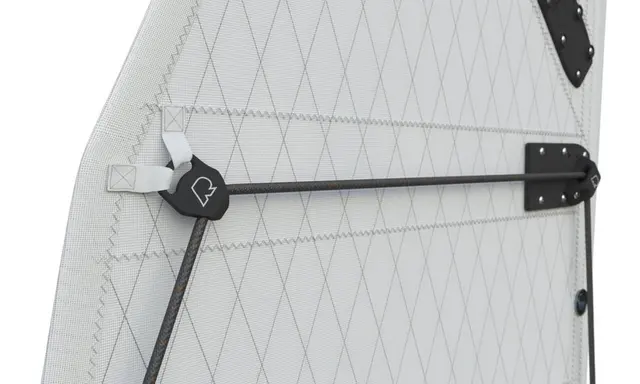
Another development is a textile furler for certain bow-mounted sails and forestay applications fitted with torsion cables. The description includes a fabric ring operating on an under-deck tensioning cylinder. That approach reflects experimentation with ways to connect and control substantial sail loads, but a fabric-based component should not be considered automatically weaker or stronger than a metal alternative without technical evidence. Its suitability depends on the particular fibre construction, load conditions and how it is protected from wear. Owners should ask about inspection intervals and whether the component can be replaced readily. A yacht's rigging is a complete structure, so unfamiliar materials need to be evaluated by people who understand their behaviour. The company has introduced a configuration for specialist consideration; the announcement is not a general recommendation to replace existing hardware.
Swivels intended for low maintenance
The new foil and cable swivels are reported as having an open architecture with low-friction, self-lubricating bearings and no routine lubrication requirement under the intended design. That may simplify certain servicing tasks, but it must not be equated with a component that never needs inspection. Bearings can be affected by contamination, loads and environmental conditions, while the complete swivel assembly remains part of a highly stressed sail-control system. Owners should consult the manufacturer's current maintenance instructions and check whether cleaning or inspection is required even where lubrication is not. A component that reduces regular maintenance can be valuable for a yacht operating far from a service yard, but reliability depends on correct specification and use. A careful owner will document installed part numbers and replacement intervals rather than assume a design claim applies indefinitely.
Controlling the forces of a large sail plan
As a yacht grows, sail areas and control loads can increase dramatically, although hull length alone does not define the forces involved. A performance cruiser may carry demanding sails despite being smaller than a heavy expedition sailboat. Systems that make trimming and furling more manageable can contribute to operational convenience, but powered hardware can also apply force faster than a person could by hand. Controls must provide predictable feedback and the crew must understand when to stop. Rigging and deck structure should be designed for the full range of intended loads, including unusual sailing conditions. A new furler cannot compensate for unsuitable mast attachments or worn standing rigging. For Luxury Yacht Guide readers, the useful approach is to consider whether a product addresses a genuine handling challenge within the complete yacht system.
Winch technology alongside furling
The METSTRADE presentation also includes brushless UniPower winches and multilayer captive-winch concepts. Their inclusion illustrates how sail-handling equipment is becoming more integrated, with attention to power efficiency and the storage of control lines. The UniPower 500/900 AD range is described as incorporating the motor within the drum, reducing space below deck, while captive winches are offered in multiple sizes for different loads. These features are not the same as the new StaySail Furler and should not be combined into a single specification. An owner should identify the precise equipment under consideration and confirm the maker's rated capacities. A winch may be attractive because it saves space or labour, but the correct choice depends on rope, load, available power and maintenance access. New technology makes coordination more important, not less.
Relevance to multihull cruising
Large sailing catamarans often place particular demands on sail controls because their deck geometry, sail plans and available equipment space differ from many monohulls. Harken's reported offerings include arrangements for multihulls and other specialised installations. That does not mean every catamaran should carry the same powered gear. Some yachts prioritise simplicity and manual handling, while others require substantial mechanical assistance for their sail areas. Equipment weight, installation space and power demand can affect the overall design. The benefit of a broad manufacturer range is that a naval architect or rigger can evaluate several alternatives. For an owner of a 15- to 23-metre luxury catamaran, the first conversation should concern the yacht's current sail-handling problems and the loads involved. A hardware catalogue is useful after that brief is clear.
Selecting equipment during a refit
A refit may provide an opportunity to improve sail handling, but it also introduces uncertainty about the original design and the condition of surrounding structure. Owners should request an inspection of mast, deck, fittings and existing controls before committing to a new furling arrangement. Dimensions, rope routing, control positions and power connections need to be documented, and the installation should be commissioned by competent specialists. A prototype or show sample may demonstrate a concept without proving that it fits an existing boat. The manufacturer should provide the actual version and technical documents proposed for the refit. Owners should also consider crew training and the availability of local service support. A carefully planned change can improve usability, while poorly integrated equipment may create more maintenance and operating complexity than it removes.
What the 2026 presentation establishes
The confirmed development is Harken's METSTRADE 2026 presentation of new furling and sailing equipment, including the StaySail Furler, under-deck arrangements, textile options and swivels. The company's broader programme also includes electric controls, winches and low-friction deck hardware, but the precise suitability of each component must be established for individual yachts. The report does not include independent sea-trial results or claim that every system is ready for every 12–24-metre vessel. For Luxury Yacht Guide's sailing audience, the significance lies in expanding the ways owners and designers can manage large sails through coordinated mechanical systems. Greater convenience is worth pursuing when it is supported by dependable engineering, practical service access and clear crew procedures. Future installation examples and detailed performance evidence will help clarify which of these technologies become most useful for private cruising yachts.
Sources and image credits: The Yachting Voice's original 13 November 2026 Harken METSTRADE preview, based on manufacturer equipment information. Lead photograph: Harken sail-furling or forestay equipment as published in the trade report. Product descriptions are attributed to the source, while rig integration and maintenance commentary is independent Luxury Yacht Guide analysis.
Sources and image credits
Reporting based on The Yachting Voice's 13 November 2026 technical preview using Harken-released product details.
Lead photograph: Harken new under-deck sail-furling rigging system shown in 2026 technical media photograph. Photograph: Harken technical media as published by The Yachting Voice in its 13 November 2026 METSTRADE equipment report, showing a furling or stay assembly. Original official image source.