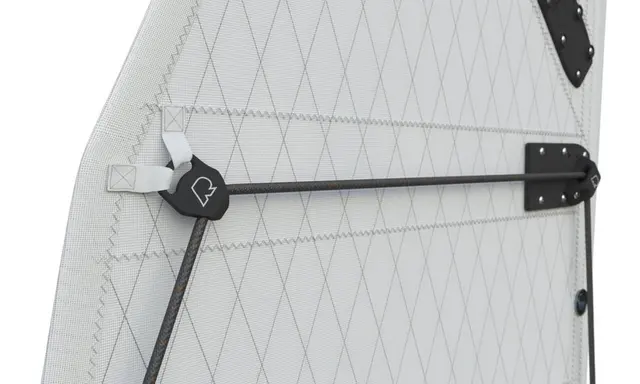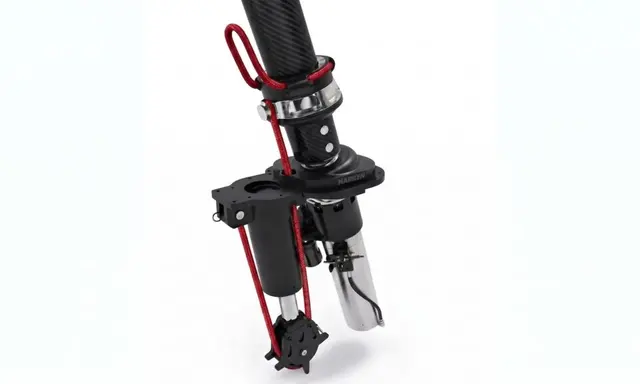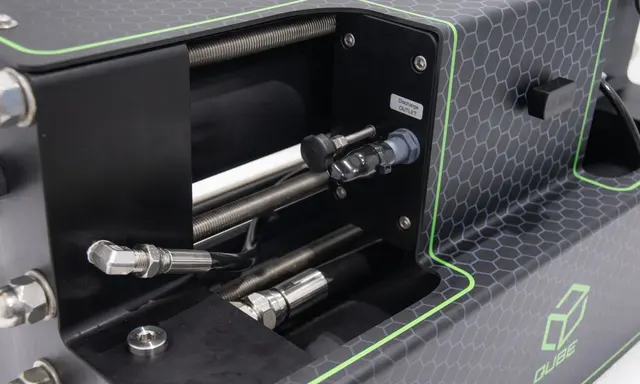
Danish sailing-equipment manufacturer BSI Rigging has introduced a range of hydraulic cylinders for rig and sail-control applications, expanding its established standing-rigging portfolio. Presented at METSTRADE 2026 in Amsterdam, the new equipment includes single-acting rams, single- and double-acting vangs, and mechanical-lock rams. BSI says the products are now offered through its certified service centres, agents and dealers, providing customers with a more coordinated way to specify rigging and hydraulic hardware. The announcement concerns a standardised range rather than a single custom actuator, and it does not identify a particular yacht as the first installation. For owners of substantial cruising sailboats, it raises practical questions about sail-handling forces, specification, reliability and after-sales support. A properly engineered hydraulic system can make a large rig easier to manage, but its design must be determined by actual loads and professional assessment.
From standing rigging to sail control
BSI is known for its wire, rod and fibre rigging, products whose primary purpose is to support the mast and carry sailing loads. Hydraulic cylinders occupy a different part of that system: depending on their configuration, they can apply controlled force or positioning to components such as a vang or rig-tensioning arrangement. Bringing the two product families closer together may help rig designers coordinate terminals, attachment points and service requirements. That is a potential benefit rather than evidence that any individual installation will automatically perform better. A hydraulic cylinder must be sized to the loads and movement its application demands. Designers also need to understand how the system behaves when pressure is lost, how force is transferred into the structure and what maintenance is required. The new catalogue offers components; the vessel-specific engineering remains essential.
The range announced at METSTRADE
BSI's original announcement lists single-acting rams in sizes described as minus 6 to minus 60, single-acting vangs from minus 10 to minus 91, double-acting vangs from minus 40 to minus 91, and single-acting mechanical-lock rams from minus 12 to minus 91. Those are the manufacturer's range designations, not dimensions or working-load ratings that can be interpreted without a catalogue. Owners and yards should not assume that a product labelled 60 has a particular stroke or safe working load based only on its number. Selection requires actual drawings, specifications and information about the intended use. The company demonstrated the first products on the BSI Marine Equipment Group stand 12.740 at RAI Amsterdam between 17 and 19 November 2026. Availability through its network is the confirmed development, while installation terms remain subject to individual requirements.
Why a vang may be hydraulic
A boom vang controls the relationship between the boom and mast and can influence sail shape, particularly when the mainsheet is eased. On a larger yacht, the forces involved may exceed what the owner or crew wants to handle entirely through manual line systems. A hydraulic arrangement can allow controlled adjustment, but it introduces hoses, seals, controls and service considerations. A good installation must account for loads under sail and the movement of the boom through its intended arc. It should also allow safe handling when the boat is not sailing. The choice between mechanical, rope-driven and hydraulic solutions is not merely a question of prestige. It depends on rig geometry, expected loads, sailing style, redundancy and the owner's maintenance resources. The BSI announcement adds options for designers to examine against those criteria.
Single-acting and double-acting designs
In broad mechanical terms, a single-acting cylinder applies hydraulic force in one direction, with the return movement provided by an external force or another arrangement. A double-acting cylinder can apply hydraulic pressure on both sides of the piston, allowing controlled force in both directions. The suitability of either form depends on the design of the complete system. BSI lists both options in its vang range, giving designers alternatives for different installations. Readers should not treat this description as an operating instruction for the manufacturer's hardware. Internal design, allowable pressure, end fittings and control mechanisms may vary, and the actual device must be understood from the maker's technical information. The practical value of a product range is being able to choose a configuration rather than forcing every yacht into the same mechanical solution.
Mechanical locking and the control of loads
The introduction also includes mechanical-lock rams. A mechanical lock may be important where a rig component needs to retain a position or withstand specified forces without relying solely on continued hydraulic pressure. The exact purpose and behaviour of BSI's version require the manufacturer's documentation, however, and no universal claim about locking strength can be made from the short launch release. Owners should ask how the lock is engaged, how its status is confirmed and what happens during a power or pressure failure. A system that is convenient while working normally must also be understandable in unusual conditions. Professional commissioning, crew instruction and clearly labelled controls can help reduce confusion. Mechanical locking may add useful protection, but the structure receiving the force must be designed to support it.
Certified service centres and global availability
Ulf Josefsson, responsible for worldwide superyacht and custom sales at BSI Rigging, says the company's certified service centres, agents and dealers can now offer the new cylinder range. This distribution point is important because rigging systems often need attention in destinations far from the original builder. A supplier with an established network can potentially support enquiries, identification of components and the selection of replacements. Nonetheless, the announcement does not establish that every dealer carries every cylinder in stock or can perform all hydraulic repairs. A yacht owner should confirm local expertise, lead times and spare-parts arrangements before selecting an unfamiliar system. In a refit, the yard should understand who will assume responsibility for installation, testing and later maintenance. A well-supported component is useful only when those responsibilities are clear.
Sail handling on 12–24-metre yachts
The importance of hydraulic support tends to increase as sail size and rigging loads grow, though the suitability of a particular system depends on the vessel rather than its length alone. A 15-metre performance cruiser may have demands quite different from a heavy 20-metre passagemaker. Owners often want to reduce the need for large crews without compromising safety. Powered adjustment can help with some operations, yet it also creates the possibility of significant force being applied at the press of a control. Clear operating procedures and suitable safeguards remain essential. A product developed with large custom yachts in mind may not fit a smaller yacht's space, weight or budget. The new BSI range is relevant as an option to investigate, not evidence of automatic compatibility with every luxury sailboat.
The role of end fittings and attachments
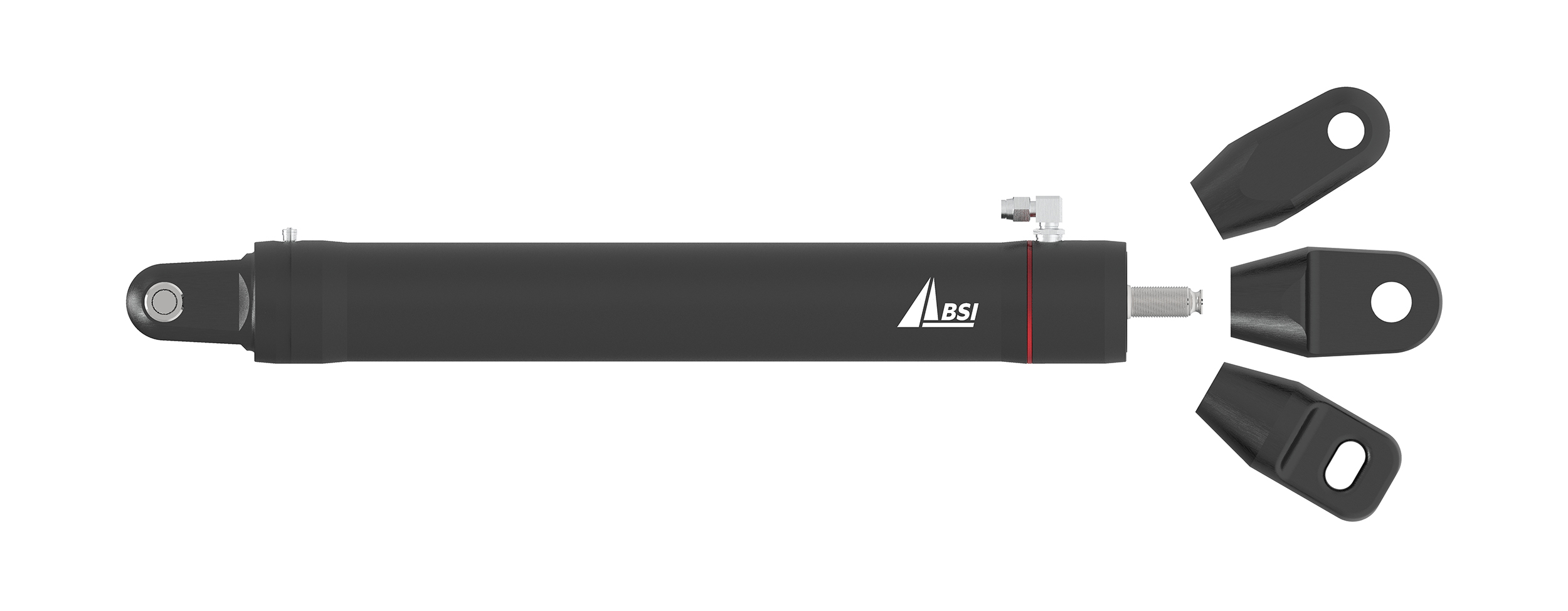
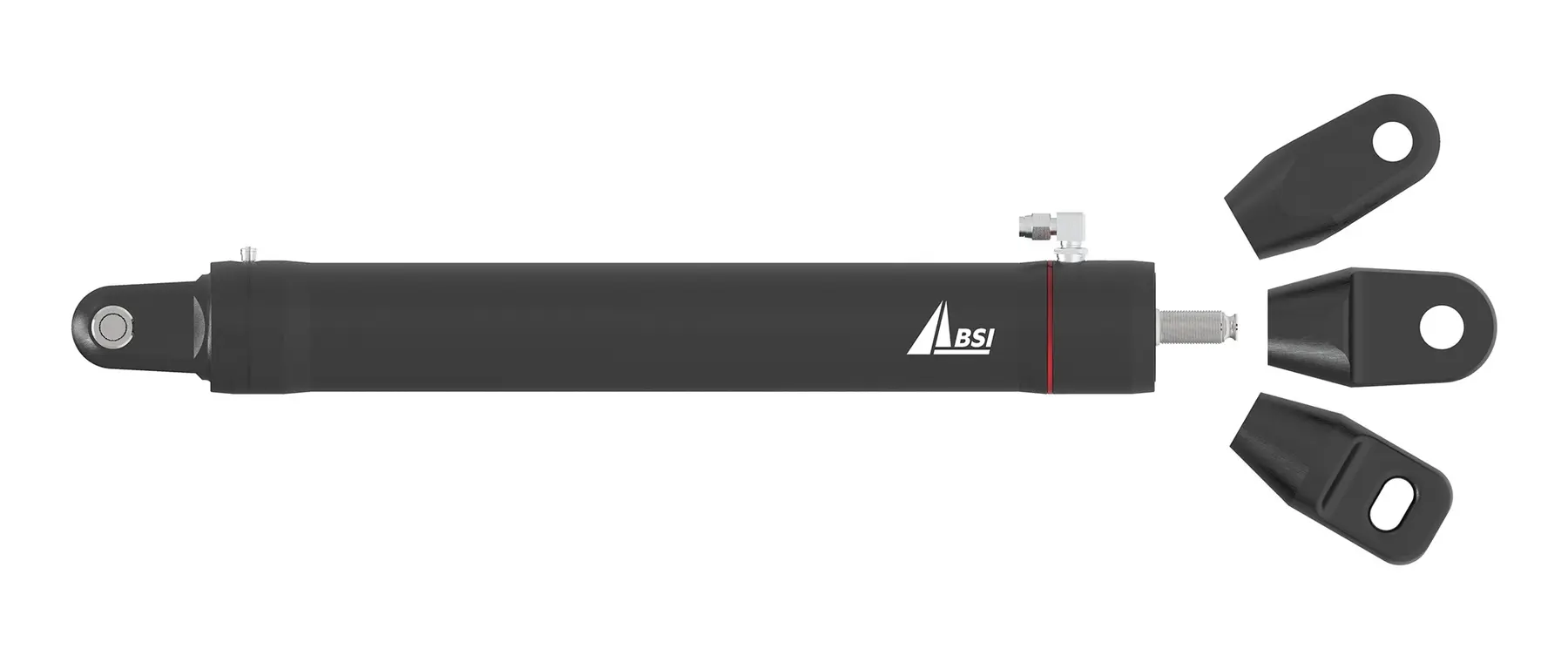
The official photograph shows a hydraulic cylinder and its end fittings, illustrating that the connection between an actuator and the rig is as important as the cylinder body. End fittings must transfer force without creating unintended bending loads or interference as the rig moves. Compatibility with existing pins, tangs, mast attachments and boom structures should be verified by the designer or engineer. Reusing an attachment because it appears to fit can be unsafe if its loading differs from the original design. The new range may simplify specification when coordinated with BSI rigging products, but dimensions and allowable movement must be checked. A complete solution involves the actuator, structural attachments, hydraulic controls and safety arrangements. No individual component should be assessed in isolation from the loads imposed by the boat.
Installation and commissioning considerations
A hydraulic rig-control installation may involve lines, pumps, reservoirs, valves, electrical controls and structural supports depending on its configuration. The BSI product release identifies the cylinder range but does not provide a standard complete-system package or commissioning sequence. A yard should therefore request the correct technical documents, decide which specialists will undertake installation and define the required tests before using the system. Commissioning must establish that movement is controlled over the intended range and that the equipment can safely withstand expected forces. The owner should receive operating instructions and maintenance records specific to the fitted arrangement. This is particularly important during a refit where a new device may interact with an older mast or boom. A new cylinder does not automatically bring the rest of the installation up to modern requirements.
Maintenance over a yacht's working life
Hydraulic systems can be durable, but they still require appropriate inspection. Seals, hoses, fittings, corrosion protection and signs of unusual movement may need attention over time. The location of a cylinder on deck or within the rig influences its exposure to salt, ultraviolet light and mechanical damage. A future replacement should be specified using the actual model and installed dimensions rather than guesswork. Owners may also ask whether hydraulic fluid, pressure settings and servicing intervals are documented for the system. These details are not provided in the public launch announcement and should be established by the manufacturer or installer. Preventive maintenance is especially valuable on yachts that sail long distances, where a small problem can become difficult to address without suitable tools or parts.
The significance for design and refit companies
BSI's extension into cylinders may appeal to naval architects, spar makers, riggers and service yards that already work with the company's standing rigging. Coordinated sourcing can simplify communication, although contractors should still compare technical alternatives on their merits. A custom yacht may require a configuration beyond the standard range, while a production vessel may benefit from readily available components. The announcement also shows how sail-control hardware is becoming more integrated across mechanical disciplines. Stronger rigging alone is not the goal; predictable adjustment, maintainability and proper load distribution are equally important. The commercial impact of the launch cannot be measured without sales and installation evidence. For now, the significant development is the availability of additional engineered components through an established marine-rigging network.
What the November launch establishes
The confirmed facts are BSI Rigging's introduction of its hydraulic cylinder range, the named families of rams and vangs, and its presentation at METSTRADE from 17 to 19 November 2026. The products add a new category to the company's offering through certified service centres, dealers and agents. The announcement does not publish an independent performance comparison, a universal yacht-size range or the identity of a completed installation. For Luxury Yacht Guide readers, the practical relevance is a broader choice of sail-handling equipment, accompanied by the need for careful engineering and competent service. A yacht's rig is a load-bearing system; the convenience of powered adjustment must always remain subordinate to safety and the integrity of the whole arrangement. Future installation references and detailed specifications will help owners assess where the new range best fits.
Sources and image credits: BSI Rigging's official November 2026 hydraulic cylinder announcement and manufacturer product photograph, showing the new cylinder and end fittings. The technical discussion is independent Luxury Yacht Guide editorial analysis; equipment choices and operating methods must follow qualified engineering advice and actual manufacturer documentation.
Sources and image credits
Reporting based on BSI Rigging official November 2026 hydraulic-cylinder press release.
Lead photograph: BSI Rigging's 2026 hydraulic sail control cylinder with end fittings in manufacturer photograph. Image: BSI Rigging, first-party 2026 METSTRADE product photograph of a hydraulic cylinder and its end fittings. Original official image source.