British Marine is asking companies across the United Kingdom's leisure marine sector to contribute to its 2026 Skills and Workforce Survey, a study intended to identify recruitment difficulties, emerging training needs and opportunities to develop the industry's next generation of workers. Announced on 18 November 2026, the consultation invites participation from boatbuilders, engineers, marinas, yacht brokers, manufacturers and marine service businesses. The association says the questionnaire takes about ten to twelve minutes to complete and will inform its work with employers, education providers and training organisations. This is a call for information rather than a completed workforce report, so it would be inaccurate to quote new survey findings before responses have been analysed. For owners of 12–24-metre luxury yachts, the relevance is practical: dependable servicing, timely refits and safe operation all depend on businesses being able to recruit and retain skilled professionals.
An industry with many different skills
The leisure marine sector is not a single occupation. It combines naval architecture, boat construction, mechanical and electrical engineering, composites, joinery, sails, rigging, marina operations, sales and technical support. Even within one shipyard, several teams may be required to deliver a refit. British Marine wants to understand which skills are becoming difficult to obtain and where future training should be directed. That is important because a broad statement about a shortage of workers can conceal very different problems. A shortage of experienced marine electricians, for example, cannot necessarily be solved by recruiting more general tradespeople. The association's survey is designed to give businesses an opportunity to describe their circumstances rather than impose a predetermined answer. Its findings may help decision-makers identify where training or recruitment initiatives could make the greatest difference.
Why owner maintenance depends on the workforce
For a private yacht owner, a skills problem often appears as a delayed service appointment or a repair that takes longer than anticipated. A boat may be mechanically sound overall but remain unavailable because one specialist is needed to commission a new system or investigate a fault. In a short cruising season, the cost of delay can extend beyond the invoice for the repair itself. Owners may lose booked berths, travel arrangements or opportunities to use the yacht. The survey is not evidence that any particular yard currently lacks staff, but it recognises a wider question about workforce availability. Understanding the training needs of businesses can help address pressures before they become severe. Owners benefit when the local marine sector has enough qualified people to provide accurate diagnoses and complete maintenance reliably.
Respondents range from sole traders to major employers
British Marine has invited input from very small companies as well as large marine businesses. This inclusive approach matters because a sole-trader surveyor or specialist mechanic may experience recruitment and succession differently from a large boatbuilder. Small firms might struggle to find an apprentice, while a major manufacturer may need hundreds of workers across several trades. Aggregating their experiences requires careful analysis, and the eventual report should avoid implying that every business faces identical challenges. The questionnaire is expected to take ten to twelve minutes, making the barrier to participation relatively low. However, ease of completion does not itself ensure a representative sample. The quality of the results will depend on the number and range of companies that respond. Readers should distinguish a voluntary industry survey from a complete census of employment.
The next five years of technical demand
The announcement says British Marine wants to understand the skills businesses expect to need over the next five years. That forward-looking element is significant because boats and their supporting systems continue to evolve. Electrical power management, digital navigation, connectivity and new propulsion options may require technicians to work across mechanical and software-related disciplines. The survey aims to identify emerging needs, including those associated with sustainability, but it does not provide a ranked list of shortages in advance. Training programmes can take time to design, recruit participants and produce qualified workers. An industry that waits until every new technology is widely installed may find itself without enough specialists to maintain it. Forward planning can help employers and educators prepare, provided that predictions are grounded in evidence and updated as the market changes.
Apprenticeships and vocational routes
One stated objective is to explore apprenticeships, professional qualifications and other development opportunities that reflect the marine sector's needs. Apprenticeships can provide practical experience while connecting learners with employers, but the quality of the training and availability of skilled supervisors are crucial. Marine work often requires careful attention to safety, documentation and unfamiliar systems, so training cannot be reduced to brief familiarisation. Some workers enter the industry after experience in automotive, construction or general electrical work, while others begin through marine-specific education. A useful survey may help reveal which pathways are most effective for particular roles. It should also encourage discussion of how businesses retain people after initial training. Developing a qualification is valuable only if graduates can build sustainable careers and employers are able to use their skills.
Retention matters as much as recruitment
The association's announcement refers to attracting, developing and retaining workers. These are related but different challenges. A business might recruit suitable people yet lose them because it cannot provide adequate progression, working conditions or continuing development. Experienced marine technicians possess knowledge that is difficult to replace quickly, particularly when it involves specialist equipment or a particular vessel's maintenance history. Good management can preserve that expertise through records, supervision and mentoring rather than relying solely on a few individuals. The survey may help British Marine understand what firms consider their most pressing needs, but it has not yet established any universal explanation for staff turnover. Owners should recognise that a stable service team can be valuable, while businesses must decide how to create conditions that support competent and lasting employment.
Linking companies with colleges and universities
British Marine intends to use the results in discussions with employers, universities, colleges and training providers. Effective cooperation requires agreement about what qualifications and practical capabilities are actually needed. An academic course may provide strong theoretical foundations while a workplace placement develops familiarity with marine conditions. The balance differs across professions. Naval architects, for example, need rigorous technical education, while boatyard trades can require extensive hands-on experience and recognised safety training. A sector-wide consultation can help educational institutions avoid designing programmes in isolation from employers. It can also reveal where existing courses are working well and should be supported. The announcement is a statement of intention, not evidence that any particular partnership or new curriculum has already been agreed. Subsequent work will be needed to turn survey responses into concrete opportunities.
Marinas have their own workforce requirements
Marina businesses are included in the consultation, reflecting the fact that berth provision involves far more than administrative reservations. Staff may need knowledge of safe boat handling, shoreside electrical infrastructure, maintenance, customer service and local operating procedures. Some marinas also coordinate contractors or provide haul-out facilities. The relevant skills depend on the size and nature of the site. A small harbour cannot simply adopt the staffing model of a large full-service marina, and the training priorities of the two may differ. For luxury yacht owners, the reliability of marina operations affects arrival planning, safety and day-to-day comfort. The survey may help identify how businesses intend to develop their teams as facilities and customer expectations change. Any future findings should distinguish marina roles from the requirements of boatbuilders and equipment manufacturers.
Brokerage and customer-facing expertise
Marine brokerage is another area identified in the announcement. A broker needs commercial judgment, reliable communication and knowledge of transaction procedures, while technical specialists provide surveys and inspections. Training needs in brokerage may therefore concern customer due diligence, legal responsibilities, accurate listing information and changing market practices rather than engineering alone. British Marine has separate professional-development initiatives for the brokerage sector, including the Certified Professional Boat Broker framework, but the workforce survey is broader. It asks about the industry's skills challenges and future needs, not just certification. Owners selling or buying a yacht benefit when those dealing with their transaction understand professional responsibilities and know when specialist advice is required. Better training can contribute to trust, although individual performance still depends on conduct, experience and the quality of the services delivered.
Emerging technologies change service expectations
Modern yachts can contain integrated electronics, remote monitoring, lithium-based energy storage and automated controls that require careful installation and diagnostics. These technologies may improve comfort or efficiency, but they also increase the need for technicians who understand interfaces and safe maintenance. An owner should not assume that a general electrician is qualified to work on every marine electrical system. Equally, a technician experienced with a particular brand may need additional training to support new equipment. British Marine's survey is a chance for employers to identify these changing requirements, including the need for continuing professional education. It does not establish how many specialists currently possess each qualification. That evidence would require detailed data. The wider point is that after-sales service capability should develop alongside product launches, rather than being considered only when a component fails.
How information will be used
British Marine says responses will be analysed collectively and individual businesses will not be identified in published findings without permission. This is an important reassurance for companies that may want to discuss difficulties openly. The announcement does not provide every detail of data retention or survey processing, so participants should consult the questionnaire and privacy information before submitting their responses. An industry association can use aggregated evidence to explain common needs to policymakers and education providers, but responsible reporting should avoid exposing commercially sensitive company-level information. Participation is voluntary, and the published findings will need to make the methodology clear enough for readers to understand their scope. A survey is most useful when its limitations are acknowledged as well as its headline conclusions.
Practical implications for yacht owners
Owners cannot solve industry training needs individually, but they can make choices that support good technical practice. Planning maintenance early, keeping accurate equipment records and engaging qualified contractors can reduce disruption to the boat and make complex work easier to organise. Owners should also be willing to pay for competent inspection and proper commissioning rather than select a supplier solely on price. Marine businesses, meanwhile, can invest in apprenticeships and training that improve the quality of their future workforce. The survey may inform broader initiatives that support these decisions, though its immediate output is a better understanding of employers' needs. For a 12–24-metre luxury yacht, maintenance quality and access to expertise often matter as much as the original equipment specification. A growing industry must take those continuing responsibilities seriously.
What the 2026 consultation establishes
The confirmed development is British Marine's invitation to UK leisure marine businesses to complete a Skills and Workforce Survey, published on 18 November 2026 and aimed at understanding recruitment, training and future technical requirements. The consultation covers businesses from boatbuilding and engineering to marinas, brokerage and related services. It takes an estimated ten to twelve minutes, and the association intends to use aggregated responses in its work with employers and educators. No survey findings are yet available from this announcement, and no quantified shortage should be presented as an established result. For Luxury Yacht Guide readers, this is a constructive industry initiative with a practical connection to yacht ownership: the best boats require skilled people to build, maintain and operate them. Measuring the training challenge is a necessary first step toward addressing it.
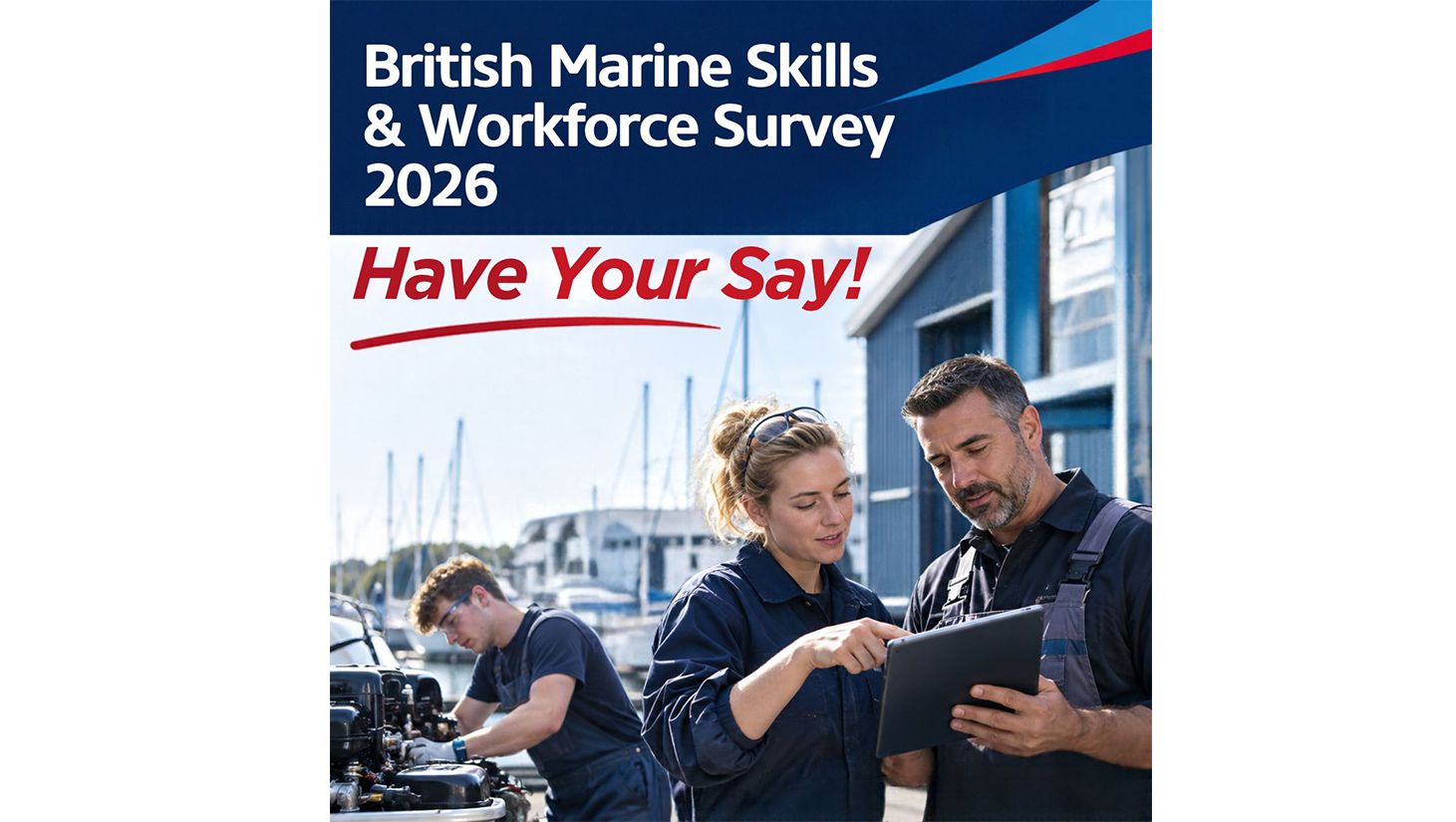
Sources and photograph: British Marine's original 18 November 2026 Skills and Workforce Survey announcement and official campaign image. All programme statements are attributed to the association; analysis of yacht maintenance and workforce needs is independent Luxury Yacht Guide commentary.
Sources and image credits
Reporting based on British Marine original 18 November 2026 Skills & Workforce Survey 2026 announcement.
Lead photograph: British Marine original promotional photograph for 2026 Skills and Workforce Survey. Photo: British Marine, official 18 November 2026 Skills and Workforce Survey announcement picture illustrating the UK's marine skills and training challenge. Original official image source.