Italian manufacturer Schenker Watermakers has added the Qube 150 to its compact reverse-osmosis range, bringing a stated freshwater output of 150 litres per hour to a unit intended for medium-sized and larger recreational boats. The product was introduced to the industry ahead of METSTRADE 2026 in Amsterdam, with an emphasis on supplying domestic water aboard cruising yachts while reducing the space and energy required for installation. Schenker's published specifications describe a power consumption of approximately 500 watts, configurations for 12-, 24- and 48-volt direct current and a 230-volt alternating-current option. Those figures are manufacturer-provided specifications, not independent results measured on a particular yacht. For owners of 12–24-metre motor and sailing yachts, the development raises useful questions about daily freshwater demand, installation location, electrical load, maintenance and how a watermaker fits the wider cruising plan.
A larger member of the Qube family
The Qube line already included smaller machines rated at 30, 65 and 100 litres per hour. The Qube 150 extends the range toward yachts with greater freshwater needs or a preference for shorter production periods. Output capacity is useful to understand, but it should not be treated as a promise that the unit will continuously deliver the headline figure under every seawater condition. Temperature, salinity, pressure, membrane condition and maintenance can all affect actual performance. A boat's water consumption also depends on the number of people aboard and how they use showers, galley equipment and cleaning systems. The correct choice begins with an estimate of real demand and an understanding of how frequently the yacht can safely run its watermaking equipment. A larger unit can be valuable, but oversizing may introduce unnecessary cost, weight or energy requirements.
Understanding the 150-litre rating
At its nominal rate, the Qube 150's published output is equivalent to 150 litres of fresh water during one hour of operation. That is a capacity specification rather than a recommended operating schedule for every installation. Owners should check the manufacturer's operating conditions and the actual production rate once the system is installed. A vessel that already carries ample freshwater tanks may benefit from replenishing them on a passage, while another boat may depend on a regular daily production routine. The headline output must be considered alongside storage capacity, hygiene practices and the cruising programme. Watermakers are particularly appealing to yachts exploring destinations where shore water supplies are limited or expensive, but they do not remove the need for adequate reserves. A prudent skipper should plan freshwater use around the whole vessel rather than assume one device guarantees independence.
The manufacturer's 500-watt claim
Schenker reports power consumption of around 500 watts for the new model. The figure suggests a focus on energy efficiency, especially at the stated output, but it should not be confused with a complete electrical installation calculation. Power draw may vary in real service, while the yacht must also run refrigeration, navigation equipment, pumps, lighting and other loads. On a vessel with limited batteries, the duration and timing of watermaker operation can be just as important as the device's nominal rating. Owners who want to operate from battery power should establish usable battery capacity, charging arrangements and the effects of prolonged demand. The manufacturer cites an energy-recovery system as a feature of the Qube architecture; its reported efficiency should be evaluated using current technical documentation and properly controlled operating evidence.
A choice of DC and AC power supplies
Availability for 12-, 24- and 48-volt DC systems, with a 230-volt AC alternative, may widen the range of yachts that can accommodate the Qube 150. However, voltage compatibility is not a complete integration specification. Cable sizing, protection, battery state, charging capacity and electrical standards remain relevant. A 12-volt system carrying several hundred watts requires substantial current compared with a higher-voltage installation, which makes cable runs and connections particularly important. Owners should not interpret a manufacturer's voltage option as an invitation to connect the device without professional electrical design. A yard can determine the correct installation arrangement after examining the yacht's distribution system and the manufacturer's guidance. The appeal of multiple options is flexibility; the engineering responsibility remains unchanged.
Compact design for yacht machinery spaces
The trade coverage gives dimensions of approximately 75 by 28 by 34 centimetres, with a weight of around 56 kilograms. These are useful planning figures because space aboard a cruising yacht is often reserved for batteries, stores, safety equipment and other machinery. A compact watermaker could be easier to incorporate into a lazarette or technical locker than a larger installation, depending on access and plumbing routes. Yet the dimensions of the principal unit do not necessarily account for every filter, pipe or component required by a complete system. Owners should request installation drawings that show service clearance, mounting arrangements and the location of seawater intake, discharge and fresh-water connections. Equipment that can be installed tightly may still become expensive to maintain if filters or service points are difficult to reach.
The energy-recovery approach
Schenker says the Qube family uses energy recovery to improve the efficiency of reverse-osmosis production. In general, desalination systems must overcome the pressure required to move water through a membrane while rejecting concentrated saltwater. Recovering energy from parts of that process can reduce the electricity needed for a given amount of product water. The specific mechanism and performance limits should be established through the manufacturer's technical descriptions rather than inferred from a generic explanation. The Qube 150 also uses brushless electric motors and a feedback system that adjusts operation as conditions change. These features are presented as ways to support efficient and consistent production, but the public launch does not establish that maintenance is unnecessary or that every operating environment will produce identical results.
Reverse osmosis requires clean source water
A yacht watermaker takes seawater and processes it through filtration and membrane stages to produce fresh water suitable for the system's intended use. Intake location and surrounding water quality matter. Harbours can contain fuel residues, suspended sediment and contamination that a conventional watermaker should not be expected to handle indiscriminately. Owners should follow the supplier's advice on where and when the equipment may be operated. The presence of reverse-osmosis membranes also makes correct prefiltration, flushing and preservation procedures important. A high-capacity model cannot compensate for poor source-water practice or neglected maintenance. Skippers should understand both the routine checks and the actions required if the water quality or pressure readings indicate a problem. The equipment should fit into the yacht's documented operating procedures rather than be treated as an appliance requiring no attention.
Planning around a cruising programme
Freshwater demand can vary enormously between a weekend passage with two people aboard and an extended summer holiday with family and guests. Some yachts may have tankage sufficient for several days, while others rely more heavily on onboard production. A watermaker such as the Qube 150 can change how an owner plans replenishment, but it does not make shore supplies or conservation irrelevant. Electricity generation, maintenance time and the location of suitable intake water all influence availability. The best approach is to establish a realistic consumption budget, including showers, cooking and cleaning, then compare it with tank capacity and the operating conditions of the selected watermaker. For a 20-metre cruiser, a larger unit may allow water production during favourable periods, but actual benefit needs to be considered against the complete electrical system.
What a refit must accommodate
Installing a new watermaker in an existing yacht can involve more than securing the main unit. Seawater intake and discharge arrangements, filters, freshwater plumbing, electrical connections and controls may all require work. The location must support inspection and safe handling of consumable parts, and the installation should not compromise access to other essential equipment. Owners should request an itemised proposal from a qualified yard or technician, distinguishing the machine cost from plumbing, electrical work, commissioning and future service. A modern compact design may reduce some of these challenges, but a successful refit depends on the condition and configuration of the actual vessel. A machine that fits on paper may still require careful planning to avoid impractical hose runs or inaccessible components.
Controls and automatic regulation
The manufacturer says the Qube 150 uses a feedback control system that varies motor speed to maintain operating pressure as conditions change. The objective is stable production with appropriate energy use. This is a feature of the device's control approach, not evidence that the unit can operate indefinitely without supervision. Owners should understand the information displayed by the controls and any alarms or protective functions described in the manual. The ability to monitor pressure or salinity can support maintenance decisions only when readings are interpreted correctly. A crew taking over a boat should receive clear instructions and access to service documentation. The watermaker's operation should be integrated into routine engineering records, particularly when a yacht is shared among owners, chartered professionally or managed by rotating crew.
Maintenance, membranes and consumables
A desalination system depends on membranes, filters, valves and other components that require periodic attention. Maintenance intervals can vary with use and the quality of incoming water, so the current manufacturer schedule should govern decisions. A larger production rating may reduce operating hours needed for a particular daily water target, but it does not eliminate the effects of storage, fouling or incorrect preservation. Owners planning to leave a yacht unused for extended periods should ask specifically how the unit must be flushed or stored. Spare filters and suitable service support can also matter when cruising away from the home marina. A watermaker is valuable when it can be kept in reliable service, not simply because its published output is high. Long-term ownership cost should therefore include consumables, skilled labour and possible membrane replacement.
A product announcement, not a sea-trial result
The Qube 150's published figures are relevant to potential buyers, but this report does not claim to have tested the machine aboard a yacht. The stated 150-litre output, 500-watt power draw, dimensions and weight come from manufacturer information and contemporary industry reporting. In the absence of independently controlled trials on a particular installation, owners should treat those numbers as specification data to verify during procurement and commissioning. Comparisons with competing systems should account for similar testing conditions and the complete installed equipment. A price or efficiency claim that looks attractive in isolation may be less decisive once electrical and plumbing modifications are included. The proper next step is a technical review of the vessel, followed by an installation and operational plan matched to its actual needs.
What the METSTRADE launch establishes
Schenker's Qube 150 broadens the manufacturer's compact watermaker range and places a higher-capacity option before builders and owners seeking freshwater production from available yacht electrical systems. The November 2026 introduction establishes the intended performance specifications and the range of advertised voltage configurations; it does not provide proof that every yacht can achieve identical operation or that a watermaker removes all shore-water requirements. For Luxury Yacht Guide readers, the significance lies in the practical relationship between freshwater production, battery energy and cruising autonomy. A good installation can support a more flexible itinerary, while poor specification may create avoidable expense and inconvenience. Owners should study the current technical data, plan for maintenance and commission the system through competent professionals before relying on it during longer passages.
Sources and image credits: Daily Nautica's 11 November 2026 report on the Schenker Qube 150 launch, with contemporary Schenker Watermakers product specifications and manufacturer's Qube range materials. Lead photograph: original Daily Nautica product image of the Qube 150. All performance numbers are manufacturer-reported; the operational considerations are independent Luxury Yacht Guide editorial analysis.
Sources and image credits
Reporting based on Daily Nautica original 11 November 2026 Schenker Qube 150 launch report and manufacturer-reported specifications.
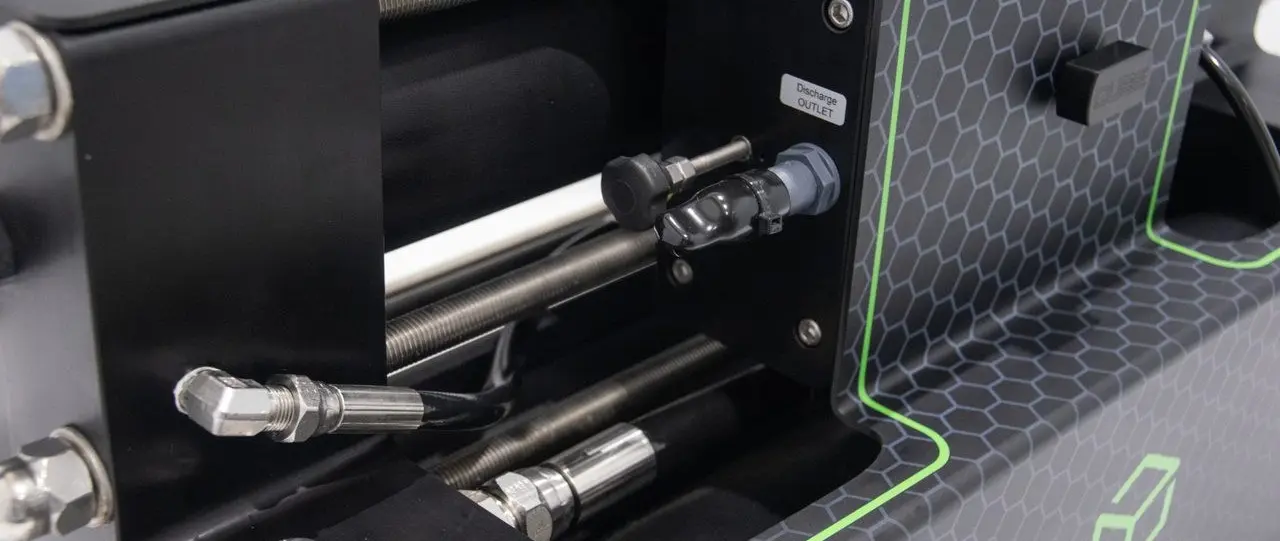
Lead photograph: Schenker Qube 150 watermaker internal plumbing and pump assembly detail, 2026 publisher photograph. Photograph: Nautica.it, original November 2026 close-up of the Schenker Qube 150 watermaker assembly showing internal fittings and pump connections; a detail view, not the standard full-product image. Original official image source.