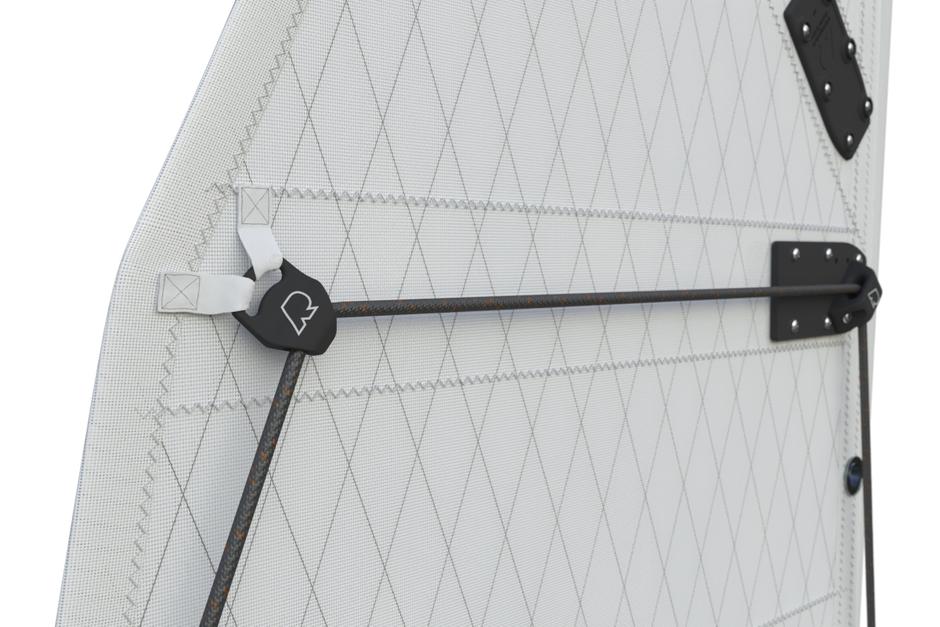
Swedish deck-hardware manufacturer Rutgerson Marin presented its LLS Leech Line Solution at METSTRADE in Amsterdam on 17 November 2026, proposing a simpler way to adjust a sail's leech line by moving the control point to the mast. The announcement, released through the manufacturer's official exhibition listing, describes a system that pairs a low-friction fairlead fitted with webbing at the leech with an integrated fairlead at the luff. It is offered for 20, 30 and 40 mm webbing and was developed in collaboration with sailmakers. For owners of 12–24-metre luxury sailing yachts, the interesting point is not a claim of greater yacht speed but the potential to reduce complex control-line routing and make a small yet sometimes frustrating sail adjustment easier to perform. A proposed retrofit still needs assessment by the relevant sailmaker and rigger.
Why a leech line deserves attention
The leech is the trailing edge of a sail, where unwanted flutter can produce noise, accelerate cloth wear and make the sail less comfortable to use. A leech line is a small control that can help regulate that edge in appropriate conditions. It should not be treated as a substitute for correct sheet, halyard and sail-shape adjustments. On a larger cruising yacht, the control may be difficult to reach or awkwardly routed through the sail, particularly when the owner has to balance the need for convenient trimming against unnecessary weight and bulk. The Rutgerson announcement focuses on making the adjustment itself easier and the installation more straightforward. The actual effect on handling will depend on how the sail is designed and where it is operated.
A control point at the mast
The defining feature of LLS is the concept of operating the leech line from the mast rather than relying on more intricate arrangements leading to other locations. Rutgerson says the system enables direct adjustment through the combination of a webbed fairlead at the leech and a fairlead integrated into the luff. This is an alteration to the route and handling of the control rather than a new principal sail-trimming system. The mast can be an accessible and logical location on some boats, especially while the yacht is stationary or sailing in controlled conditions. On others it may expose a crew member to unnecessary movement away from the cockpit. A suitable installation must account for the vessel's deck layout, the sail's size and the owner's preferred operating procedure.
Reducing line runs and added weight
Long, complicated lines carry penalties. Each additional component can introduce friction, extra weight, a potential snag point and another item to inspect. Rutgerson's official description says the LLS layout eliminates complex traditional routing and reduces weight. Those advantages are plausible design objectives, but the company has not published independent measured weight savings for every sail configuration. Owners should ask a sailmaker to show precisely which fittings and line lengths would be replaced in their own application. On a yacht with several headsails or changing sail inventories, the answer may differ from one sail to another. Reducing unnecessary hardware is worthwhile when it preserves correct load paths and maintains a safe means of operation, not simply because a shorter specification looks attractive.
Fairleads have a technical role
A fairlead directs rope or webbing through a predetermined path while limiting unnecessary abrasion and friction. In this system, the fairlead at the leech is described as low friction and webbed, with a corresponding guide at the luff. That arrangement appears intended to distribute the control's movement more cleanly through the sail, rather than relying on a number of traditional routes. The correct fairlead material, attachment method and reinforcement will vary with the sail. Riggers and sailmakers must confirm that the product is compatible with the fabric, construction and loads involved. A small fitting can become a significant maintenance issue when it is poorly aligned or installed without adequate reinforcement. The manufacturer announcement is an introduction to the concept, not a structural design drawing for every yacht.
Three webbing widths are listed
Rutgerson specifies compatibility with 20, 30 and 40 mm webbing. Those sizes give sailmakers several options, but the width of a webbing strip alone does not establish its strength or suitability for a particular sail. Fibre composition, stitching, reinforcement, the geometry of the fitting and the nature of the attachment all matter. Owners commissioning an upgrade should therefore avoid selecting a part based purely on the sail's area or the visual proportions of the fitting. A properly prepared specification should identify the exact Rutgerson component, recommended webbing type and the intended load environment. The available options are a useful starting point for professional advice; they are not proof that one size is recommended for every 12–24-metre yacht.
The sailmaker's perspective
The LLS project was developed in close collaboration with sailmakers, according to Rutgerson, and the manufacturer says it can streamline sail production and installation. This is important because the practical success of a new sailing component often depends on the workshop that incorporates it. A solution that is easy to fit consistently may improve quality control and make a later repair less complicated. But a factory-installed system and an aftermarket change to an existing sail may require different work. Sailmakers must examine seams, batten positions, reinforcement areas and any existing leech-line mechanism. The collaboration described in the release suggests an emphasis on manufacturability, although no production-time reduction or comparative service-life figure is stated in the announcement.
Luxury cruising yachts and short-handed sailing
Owners of luxury sailing yachts in the 12–24-metre category may sail with a limited crew, sometimes relying on a partner rather than professional deckhands. In that setting, reducing the number of awkward adjustments is useful, provided the new control does not introduce a need to leave the cockpit at an inappropriate time. The mast location could suit a yacht where leech-line adjustment is rare and made while conditions are settled. It may be less appealing where the crew expects to adjust that control frequently while sailing offshore in difficult conditions. The right operating procedure depends on the sail plan and deck design. A rigging upgrade should be evaluated for the particular crew, not chosen simply because the product is described as more convenient.
Performance claims need perspective
A leech line can help manage sail-edge flutter, but its adjustment does not replace the more significant sail controls. Over-tightening a leech line may distort the shape of the sail, while insufficient adjustment can allow unwanted flutter. Changes in apparent wind, sail angle and tension on the rest of the rig alter the problem. The METSTRADE announcement does not contain comparative race results, measurable gains in boat speed or quantified energy savings. Those claims should not be inferred from its description of lower friction and reduced weight. Owners may still value an installation that makes correct adjustment easier and reduces opportunities for wear. In everyday cruising, consistent safe sail handling can be more significant than a small theoretical performance improvement.
Considerations for retrofitting an existing sail
Before ordering, the yacht owner should ask the sailmaker to inspect the existing leech line and document its route, attachment points and condition. A retrofit may require reinforcement or changes to a sail that has already accumulated many years of service. The sailmaker should assess whether the cloth and stitching remain suitable for further work and whether a different maintenance action would solve the problem more simply. The revised line must be easy to identify, accessible when intended and kept clear of nearby rigging. The crew should receive a demonstration of correct adjustment. Rutgerson's product is interesting for refits, but the official announcement does not promise that it can be installed without modification on every previously manufactured sail.
Maintenance and line inspection
Small control lines are often overlooked because they do not carry the same prominent loads as halyards or sheets. Nevertheless, their failure can still create difficulties, especially if a damaged fitting catches on sailcloth or becomes inaccessible aloft. A good maintenance routine includes checking stitching, fairleads, webbing edges and any places where the control bears against the sail. A mast-based adjustment system also needs its own inspection points and a documented method of use. The manufacturer's current installation instructions should govern the details. A neat system can simplify an owner's work only if it remains accessible for service and does not conceal wear. Owners should ask who will supply replacement parts and how repairs would be made during a long cruise.
How the idea fits Rutgerson's wider range
Rutgerson is based on Sweden's west coast at Marstrand and has a long-standing portfolio of sailing hardware, deck fittings, portlights and hatches. The company describes LLS as part of its push towards practical sailing solutions, with a focus on low friction and simpler handling. That broader context matters because a solution to sail control should be considered alongside the rig and the other hardware it interacts with. It does not mean that changing the leech line requires replacing an entire deck system. A sailmaker may choose to fit the new component while retaining existing equipment that is sound and compatible. Buyers benefit from discussing the design with an authorised technical supplier rather than assembling a system from unrelated parts.
Questions to ask at the product review
Prospective customers should ask Rutgerson or an experienced sailmaker for diagrams showing the route through the sail, the recommended attachments and the intended adjustment procedure. They should also confirm dimensional choices, weight, webbing requirements, available finishes and whether the design has been evaluated on a sail of comparable size. Where a yacht has in-mast furling or an unusual mainsail arrangement, that installation needs particular care. The introduction lists the three webbing widths but does not provide every engineering limit in the short official exhibition description. A purchase decision should therefore be based on the full current product documentation and the expertise of the sailmaker undertaking the work.
What the November launch establishes
The confirmed development is Rutgerson Marin's 17 November 2026 introduction of its LLS Leech Line Solution through the METSTRADE exhibitor programme. Its central proposition is to bring leech-line adjustment to the mast using integrated low-friction guides and webbing, with 20, 30 and 40 mm versions available for specification. The release makes a reasonable case for a simpler arrangement and reduced complexity, but it does not contain independent testing across all sail types. Owners of 12–24-metre luxury sailing yachts should consider the idea as a potential refinement to sail handling, particularly when commissioning new sails or planning a careful refit. The sound choice is the one that fits the yacht's rig, the crew's working methods and an appropriately engineered installation.
Sources and image credits: Rutgerson Marin AB's original 17 November 2026 LLS Leech Line Solution manufacturer product listing in the official METSTRADE exhibitor catalogue. The supplied product photograph is credited to Rutgerson Marin AB via the organiser's official exhibitor media. Product claims and webbing dimensions are attributed to Rutgerson; rigging and safety observations are independent Luxury Yacht Guide editorial analysis.
Sources and image credits
Reporting based on Rutgerson Marin AB official exhibitor product announcement, released 17 November 2026.
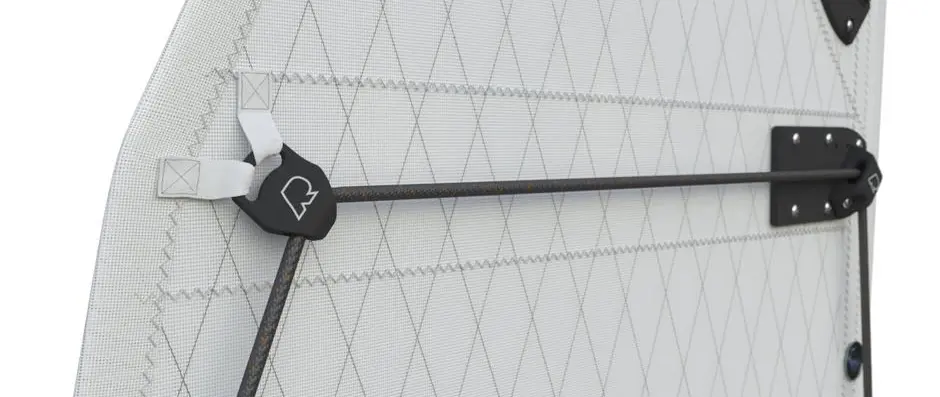
Lead photograph: Rutgerson Marin LLS Leech Line Solution shown installed on sail in manufacturer-supplied METSTRADE 2026 product photograph. Image: Rutgerson Marin AB, manufacturer-supplied original LLS Leech Line Solution photograph from official METSTRADE 2026 exhibitor product announcement. Original official image source.