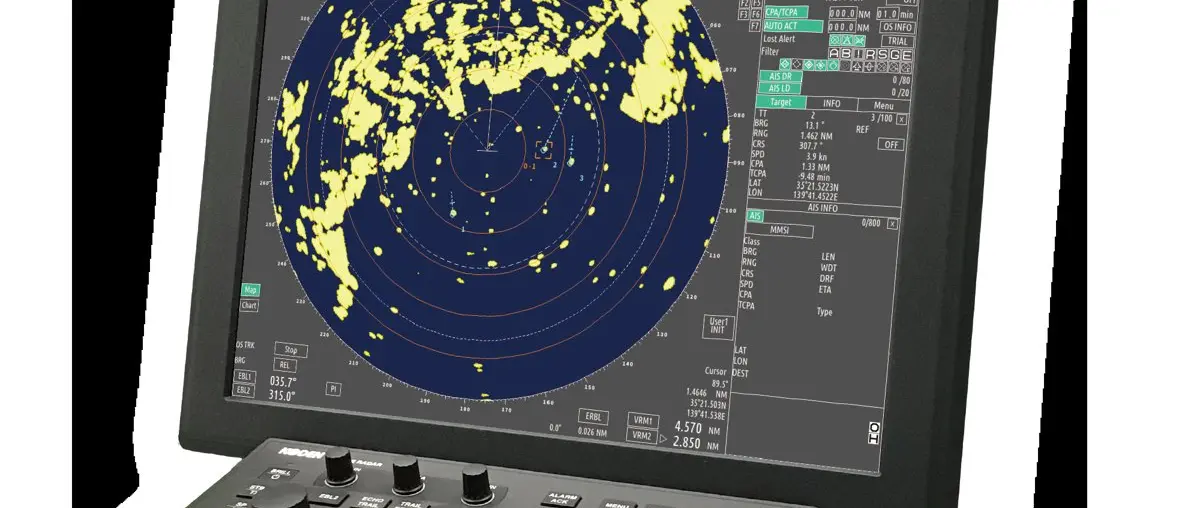
Japanese marine-electronics manufacturer Koden Electronics exhibited its new KRM radar families, GNSS compasses and echo sounders at METSTRADE in Amsterdam on 17–19 November 2026. The company's original announcement, dated 23 October, identifies the new IMO-oriented KRM-P radar series and HSC-oriented KRM-S series as particular highlights of its stand, alongside further navigation equipment. For owners and managers of 12–24-metre luxury yachts, the announcement provides an opportunity to examine how commercial-grade navigation technologies overlap with the requirements of pleasure craft, especially when a vessel is used for charter or operates in difficult weather. The company has not provided a complete independent performance comparison for every model in its event notice. Buyers should therefore treat the release as a product showcase, supported by further technical due diligence before fitting equipment.
A showcase of integrated navigation equipment
The METSTRADE display is not a claim that all of Koden's electronics belong in every yacht. The company's range includes radars, echo sounders, GNSS compasses and supporting equipment developed for vessels with different operational needs. These components perform distinct tasks: radar detects targets through radio-wave reflections, a GNSS compass derives heading information, and an echo sounder measures depth beneath the transducer. Effective navigation depends on presenting their information coherently and ensuring that the operator understands the limits of each sensor. A luxury yacht choosing new helm electronics may find an integrated suite attractive, yet an integration proposal should be backed by a wiring and compatibility plan. The value lies in dependable information rather than having the largest possible number of screens.
What the new KRM-P designation tells us
Koden describes KRM-P as a new series of marine radars intended for International Maritime Organization compliance. IMO requirements are associated with specified maritime equipment standards and generally have more direct implications for certain larger or commercial vessels. A 12–24-metre private yacht may not be obliged to fit an IMO-approved radar simply because the manufacturer offers one. Flag state, vessel use, tonnage and other operational factors can alter the applicable rules. Buyers should avoid assuming that a marketing phrase such as IMO compliance automatically confirms certification of every possible configuration. The installer should identify the exact radar, display, scanner, software and documented approval under consideration. An owner benefits most when technical ambition is matched to the vessel's actual regulatory and navigational needs.
High-speed craft and the KRM-S series
The KRM-S family is described by Koden as compliant with high-speed craft requirements. Such standards apply in particular operational contexts and cannot be translated into a blanket recommendation for a fast leisure motor yacht. A luxury express yacht may travel at considerable speed yet remain subject to different rules from a commercially certified high-speed craft. The practical reason to consider a radar designed for demanding applications is its potential relevance to rapid decision-making and reliable target presentation, not the badge itself. Buyers should ask how target updates, clutter filtering, stabilisation and operator settings perform on their actual boat. Any claims about tracking accuracy, maximum range or speed-related performance should be checked against the published model specification rather than inferred from the series name.
Why yacht owners still need radar
Modern chartplotters are informative, but a digital chart is a representation of mapped information, not a live picture of every vessel or floating object ahead. Radar provides another independent source of situational awareness, especially around rain, low visibility, harbour traffic and coastal navigation. It cannot detect every hazard and should never displace watchkeeping or safe speed. Onboard operators need training to identify land echoes, other craft, sea clutter and false targets. A good radar installation combines appropriate antenna height, unobstructed placement and a display that can be used safely from the helm. Koden's new radar series is relevant to this wider discussion, but the manufacturer's announcement does not say that fitting one model removes the need for other navigation precautions.
GNSS heading is more than a position fix
GNSS compasses use satellite signals to provide heading information without relying solely on an ordinary magnetic compass. That can be useful to radar target presentation, chart-overlay systems and other electronic displays that need a dependable orientation reference. However, buyers should not confuse satellite-derived heading with course over ground: a yacht drifting sideways can travel in a direction different from the direction its bow points. Good installation practice requires checking antenna positions, interference, signal visibility and the interfaces between the compass and the rest of the network. The company's presence at METSTRADE includes this class of equipment, but the event notice does not identify a single universal GNSS compass that suits every yacht. Engineering review remains essential.
Echo sounders complete a different part of the picture
Echo sounders provide depth information beneath or close to the vessel, depending on transducer design and installation. On a cruising luxury yacht they assist with entering anchorages, negotiating shallow coastal approaches and understanding bottom conditions. An echo sounder does not make an unsafe depth safe; readings depend on how the system is calibrated and what reference is used. Owners must confirm whether the display shows depth below the transducer, keel or waterline. The boat's motion, bottom characteristics and water conditions can also affect readings. Koden's product range includes echo sounders, and the company's Amsterdam appearance gives prospective buyers a chance to compare offerings directly. A sensible equipment decision starts by matching the transducer and display to the intended hull and cruising grounds.
Compatibility is the hidden cost of a helm refit
Replacing a yacht's radar may involve more than mounting a new scanner. Existing displays, heading sensors, autopilots and electrical arrangements may have proprietary connections or software dependencies. Even when two products advertise familiar data standards, the supported functions can differ. An installer should assess the whole navigation network, note which components can remain and itemise the changes required to preserve safe functionality. On a yacht that has received repeated upgrades, an accurate wiring diagram may be more valuable than another product brochure. Koden's KRM series should be evaluated in the context of the existing helm instead of treated as a drop-in replacement without confirmation. The same caution applies to cockpit displays and remotely positioned repeaters.
Antenna position matters in actual use
Radar performance depends on the quality and siting of the sensor as well as on its electronics. On a yacht with a hardtop or flying bridge, the owner may have several possible positions for a radar array, but not all offer an equally clear view. Masts, aerials and other structures can mask sectors, while the motion of the yacht and the surrounding sea state affect what the operator sees. The antenna's installation also has implications for access, maintenance and separation from people according to the manufacturer's instructions. A model associated with professional navigation cannot overcome a poor physical installation. Yacht builders and refit yards should conduct a placement assessment before drilling new mounts or modifying the electrical system.
The human factor at the display
Large radar screens and sophisticated processing features can improve awareness, but only if the crew can operate them under pressure. When fog develops or an unfamiliar vessel approaches at night, the navigator should not need to learn a new menu system. Training needs to cover range selection, target acquisition, alarm settings and the limitations of automatic tracking where fitted. Owners should arrange a practical handover after new equipment is installed, including a controlled demonstration of how the displays behave in different situations. Standardised settings and a concise operating note can help when several people share watchkeeping duties. Koden's announcement focuses on products; an editorial appraisal of safety must include the people who use those products.
Distinguishing commercial obligations from private choices
The 12–24-metre sector spans privately owned sailing yachts, performance motor yachts and professionally operated charter vessels. Their equipment obligations may not be the same. The term IMO-compliant is meaningful only in connection with the specific regulations and technical approvals that apply to the installation. An owner should consult the vessel's surveyor, flag administrator or suitably qualified marine-electronics specialist when equipment choices involve certification. This also helps prevent spending heavily on functionality that is not needed while overlooking a simpler mandatory requirement. Product demonstrations at trade fairs are useful opportunities to ask questions, but they cannot replace a vessel-specific compliance assessment. The distinction is particularly important during a change from private to commercial operation.
Documentation, spares and software support
Electronic navigation equipment remains in service for many years, often through changes in ownership and crew. Before purchasing a newly introduced radar series, buyers should ask about spare-parts availability, warranty terms, firmware updates and the location of trained engineers. A failure during a cruise may not occur close to the original installation yard. Operators should also preserve the technical manuals and installation records for future surveyors and service providers. Where the radar is connected to an autopilot, navigation display or alarm system, any later software change should be checked for unexpected effects. Koden has an established marine-electronics business, but the event release alone does not provide an international support guarantee for a particular product. Those terms must be confirmed with the seller.
METSTRADE as a chance for technical comparison
Koden announced its presence at booth 01.740, inviting visitors to examine the new KRM families and other products directly. Physical product demonstrations can be more informative than comparing headline figures online: the user interface, size, cabling and connection options become easier to assess. Builders can also discuss the support required for integrating marine electronics into a production design. That said, an exhibition demonstration takes place in a controlled environment, not while the yacht is moving through traffic or waves. Buyers should ask for operational references, published test results and, where appropriate, a working demonstration afloat. The manufacturer's show appearance is a useful first step, not the end of a procurement process.
What the presentation establishes
The confirmed November 2026 news is that Koden took its new KRM-P and KRM-S navigation radar series to METSTRADE together with GNSS compasses and echo sounders. The company presented the KRM-P family in an IMO-compliance context and the KRM-S series in a high-speed-craft context. Those distinctions are relevant to owners who want to understand how professional navigation technology is developing, but they do not justify assuming that every model is required on a luxury yacht. A responsible specification should compare the exact approved equipment, realistic helm requirements and support arrangements. For luxury cruising in the 12–24-metre class, clear information, sound installation and trained watchkeeping remain the essential principles.
Sources and image credits: Koden Electronics' original 23 October 2026 official METSTRADE exhibitor announcement, including its own radar and marine-electronics product images. Details of the event, radar families and product categories are attributed to Koden; yacht navigation and installation commentary is independent Luxury Yacht Guide analysis.
Sources and image credits
Reporting based on Koden Electronics original 23 October 2026 METSTRADE announcement.
Lead photograph: Koden Electronics marine radar system product image used in its METSTRADE 2026 KRM navigation exhibition announcement. Image: Koden Electronics, original manufacturer product image published with its 23 October 2026 METSTRADE announcement. Original official image source.