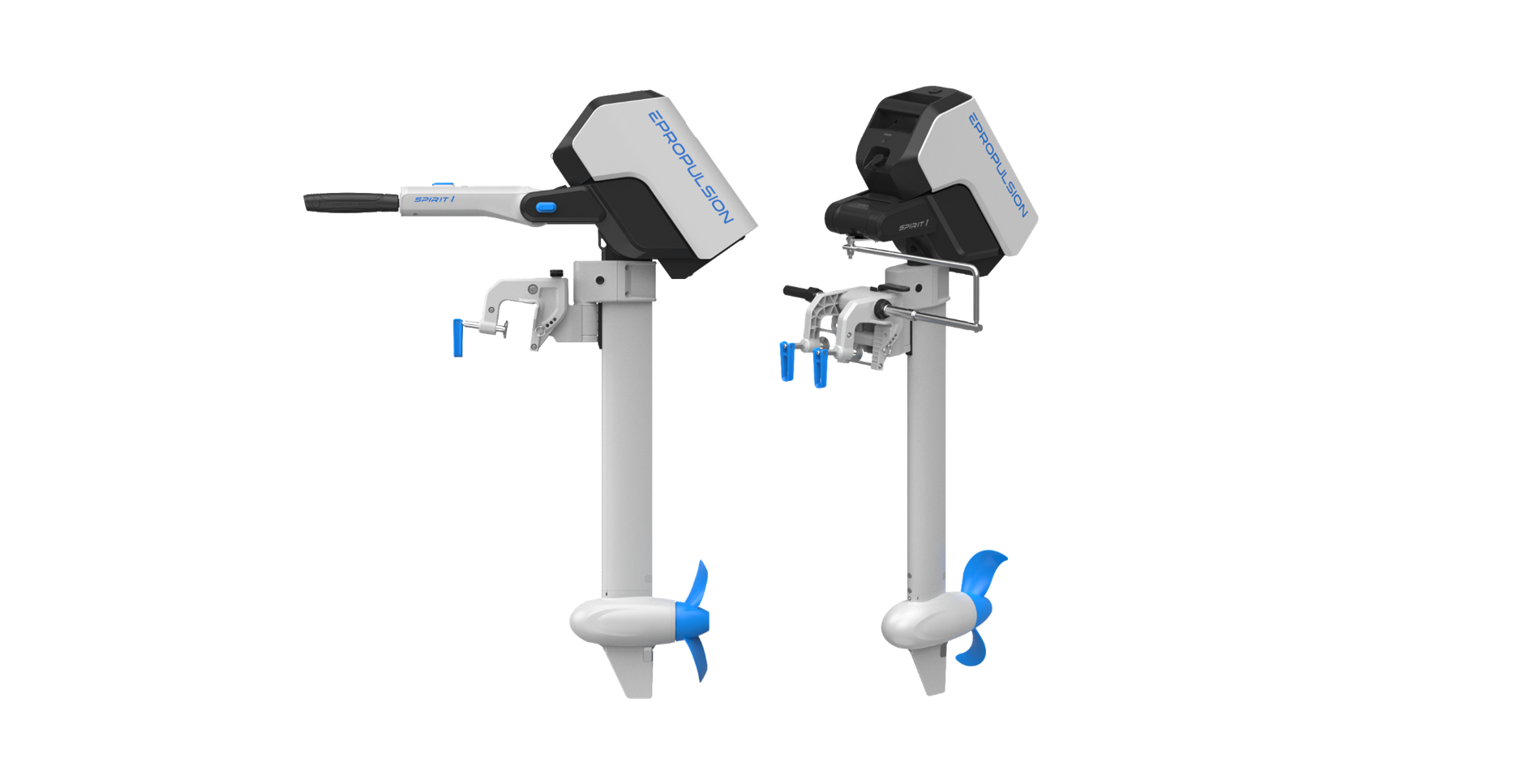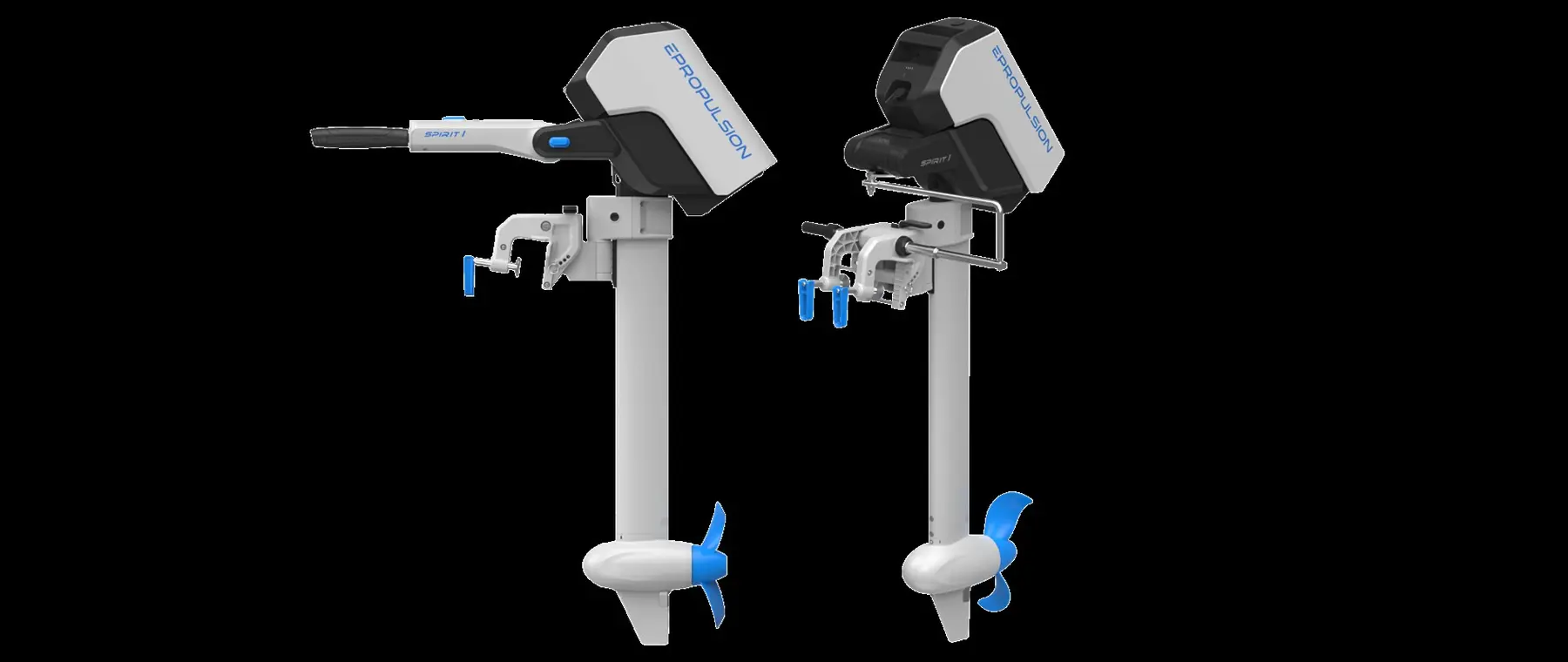
ePropulsion launched a new generation of its Spirit 1 electric outboard at METSTRADE in Amsterdam on 17 November 2026, announcing that the motor had received a Special Mention in the Propulsion & Dynamics category of the DAME Design Awards. The product updates a familiar portable-electric format with a 1-kW nominal output, a short-duration 1.5-kW Boost Mode and a detachable battery rated at 1,539 watt-hours. It is intended for tenders, dinghies, small sailing boats and other lightweight craft. For the owners and crews of 12–24-metre luxury yachts, the relevant question is how a compact electric motor can serve short tender trips, auxiliary dinghy work or a small sailing tender without requiring a permanent large battery installation. The release establishes product features and recognition, not a guaranteed operating range on every boat.
A new Spirit 1, not merely an old name
The manufacturer uses the name Spirit 1 for the latest model, which should not be confused with the earlier Spirit 1.0 Plus or Evo products. Those previous motors established the company's portable-electric offering, but the November 2026 announcement concerns a new generation of equipment. Owners replacing an older motor should check which accessories, clamps, batteries and chargers are actually compatible rather than assume that familiar branding implies interchangeable parts. ePropulsion describes the new Spirit as a refinement in handling and use, with a folding and adjustable tiller, removable clamp, quick-connect battery and revised transport arrangements. These are practical differences for tender operators who regularly remove an outboard for storage or put the boat on a yacht's deck or garage cradle.
One kilowatt for ordinary use
At its standard rating, Spirit 1 delivers 1 kW of electric power. This positions it among compact motors for lightweight craft, not among outboards intended to propel a heavily loaded planing tender at high speed. An owner considering a substitution for a petrol engine needs more than the printed power figure to decide whether the result will be satisfactory. Boat shape, propeller characteristics, displacement, occupants, wind and current can all make a substantial difference. A small inflatable used for sheltered harbour transfers may have a very different duty cycle from a tender expected to carry luggage and multiple passengers in exposed conditions. Buyers should request verified performance information for a comparable hull and plan the journey around a prudent energy reserve.
Boost Mode adds a temporary power option
The new Boost Mode raises output to 1.5 kW when additional thrust is required. This is a meaningful design feature, but it must be understood as an operating mode rather than a promise that the motor will sustain that output throughout an entire passage. The manufacturer does not present a universal runtime figure for every possible combination of speed, sea state and load. Higher demand typically increases energy consumption and can reduce the duration available from a finite battery. Operators should establish how Boost Mode is activated, how the system indicates its use and whether any operating limits are imposed by battery or motor temperature. The value of extra thrust is greatest when the operator knows exactly how much to expect and when to return to normal power.
A 1,539 Wh removable battery
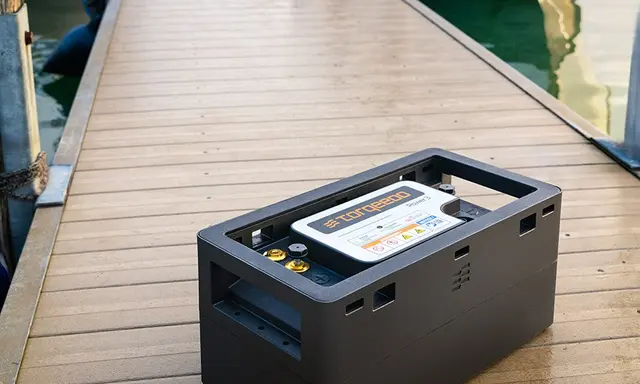
The published capacity of the removable battery is 1,539 watt-hours. It is a useful starting point for energy planning, but it should not be converted directly into a promised voyage distance. Available energy, motor efficiency and boat resistance affect actual running time. The battery weighs 10.4 kg according to ePropulsion, making it a substantial item for a crew member to lift but one that can be carried independently of the motor. That two-part arrangement may be easier to manage than transporting a single heavy outboard and battery together. On a luxury yacht, planners should still consider safe battery storage, dry connections, correct restraint during passages and the ability to access the charging point without obstructing other equipment.
Motor weight and lifting arrangements
ePropulsion states a motor weight ranging from 9.2 kg to 10.6 kg depending on configuration, separate from the battery. A removable clamp and folding tiller are intended to simplify handling and storage. Those details can matter where the yacht has a small dinghy that is launched infrequently, a dedicated sailing tender or an auxiliary outboard carried as a backup. Removing the drive between uses may save deck space or discourage theft, but every repeated installation introduces the possibility of an incorrectly tightened clamp or an unsecured electrical connection. The crew should use the manufacturer's installation checks, confirm transom suitability and secure the components before the tender is launched. Portability is valuable only when it is supported by consistent procedures.
Hydrogeneration for small sailing craft
The Spirit 1 retains ePropulsion's hydrogeneration technology, which allows the motor to recover energy while a suitably equipped boat is being driven through the water under sail. The company quotes an operating speed range of approximately three to sixteen knots for the feature, with around 380 watts at ten knots and up to 1.5 kW at sixteen knots, dependent on conditions. These are claimed operating figures and should not be applied uncritically to all yachts. A small cruising sailboat moving at much lower speeds will not generate the same output, and energy recovery introduces hydrodynamic resistance. The feature is potentially useful for sailing tenders and smaller auxiliary-powered sailing boats; it does not turn the motor into a source of unlimited electricity.
Why hydrogeneration must be assessed as a system
Hydrogeneration is attractive because a sailing boat may spend long periods underway without using its propulsive motor. Turning some of that motion into battery charge can reduce reliance on shore power or a separate generator. Yet the amount recovered depends on propeller behaviour, sailing speed and the system's control limits. Owners should determine whether the motor can be secured, tilted or controlled in the necessary positions, and how much additional drag is introduced while generating. It is also important to understand where the recovered electricity is stored and what happens when the battery is full. The company's announcement demonstrates a useful technical capability; a realistic passage-energy plan must still account for weather, speed and the consumption of other onboard equipment.
External energy capacity and USB-C charging
The company says Spirit 1 can work with its external E Series batteries, providing further energy-capacity options for owners with more demanding use cases. This changes the specification discussion: a simple removable pack may be sufficient for short trips, while a longer programme may call for properly installed external storage. Buyers must verify the exact compatibility and safety requirements in the latest technical documentation. The removable battery also provides a USB-C output for compatible personal devices. That is a convenience feature rather than a substitute for the yacht's main electrical system. The extra load should be kept in perspective and any water exposure precautions observed. A tender battery may be valuable as a limited emergency power source without becoming a planned replacement for dedicated onboard communications arrangements.
DAME recognition and what it means
Spirit 1 received a Special Mention in the DAME Design Awards' Propulsion & Dynamics category, as ePropulsion reported during METSTRADE 2026. Such recognition signals that the design attracted the attention of an industry jury, but it is not identical to independent long-term durability testing or certification of a particular installation. A buyer still needs to assess dealer coverage, warranty conditions and the motor's suitability for the intended boat. Design awards often reward thoughtful ergonomics or integration, both of which can improve everyday use. Those advantages are most persuasive when supported by good instructions, available spare parts and a service network that can repair equipment quickly. Owners should treat the award as useful background, not as the deciding engineering specification.
Tendership on 12–24-metre yachts
In the luxury-yacht sector the smallest tenders perform a surprisingly varied role: quick movements to a pontoon, carrying a crew member to a nearby berth, reaching a shallow landing or assisting with basic maintenance tasks. Not all of these jobs need high speed, and quiet electric operation can be desirable in marinas. On the other hand, larger tenders carrying guests and baggage may require considerably more propulsion and energy than Spirit 1 offers. Owners should allocate motors to boats according to actual duty, rather than assume every tender on a premium yacht needs the same power. A lightweight electric outboard may complement a more powerful main tender without attempting to replace it. The correct classification is a compact auxiliary drive with specific operating limits.
Charging and storage aboard the parent vessel
The parent yacht's available electricity determines whether a portable electric tender is convenient during extended anchoring. A battery that is simple to remove is also easier to bring into a suitable charging location, but that location must be chosen carefully. Crew should use the approved charger and follow instructions on battery temperature, ventilation where specified, protection from saltwater and isolation from combustible materials. Charging on an unstable surface or with a damaged connector is poor practice regardless of product brand. Storage arrangements also have to prevent the motor or battery becoming loose in rough weather. Yacht managers should include the tender in the vessel's electrical inventory, label its charging equipment and document routine inspections alongside those of larger onboard systems.
Service access is a commercial consideration
Portable outboards can travel with their parent yachts across national borders, but warranty service and spare parts may not follow automatically to every cruising location. ePropulsion has an international distribution network, yet a purchaser should confirm coverage for the exact new Spirit 1 model rather than rely on a general dealer map. Questions should include the availability of replacement propellers, connectors, clamps, batteries and updated firmware, along with the procedure for diagnosing warning codes. An independent yacht owner may have little use for sophisticated fleet management, but will appreciate clear service instructions and predictable support. A launch announcement does not guarantee stock at every dealer or immediate availability in every market. Ordering decisions should be based on the seller's current written delivery and support terms.
A new choice rather than a universal solution
The significance of the November announcement is that ePropulsion is refining a compact system rather than simply increasing a headline power number. Boost Mode, an upgraded removable battery, an adjustable tiller, hydrogeneration and portable components create a set of practical options for dinghy and tender operators. The DAME mention adds industry recognition, but the essential questions remain familiar: Will the motor move the intended boat safely with its ordinary load? Is the energy reserve adequate for the worst routine journey? Can the battery be charged and the equipment maintained where the yacht actually cruises? For the 12–24-metre sector, Spirit 1 may be a useful specialised tool when those questions receive sound answers. Its benefits are best judged by practical fit, not by the word electric alone.
Sources and image credits: ePropulsion's original 17 November 2026 announcement and official Spirit 1 product images released alongside the METSTRADE product launch, with the manufacturer's Spirit product documentation for context. All quoted figures and design features are attributed to ePropulsion; yacht operating implications are independent Luxury Yacht Guide analysis.
Sources and image credits
Reporting based on ePropulsion original 17 November 2026 DAME/METSTRADE product announcement, ePropulsion Spirit 1 and Spirit 2 official product information.
Lead photograph: New ePropulsion Spirit 1 electric outboard official product rendering issued for METSTRADE 2026. Image: ePropulsion, official new Spirit 1 product render from its November 2026 news announcement. Original official image source.