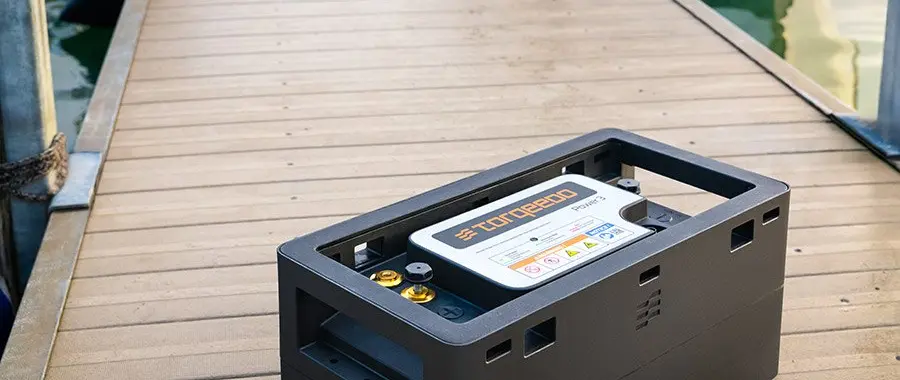
Torqeedo presented a trio of connected electric-propulsion developments at METSTRADE in Amsterdam on 17 November 2026: the Power 3 marine battery, a tiller-controlled version of its Cruise 12.0 outboard and new TorqLink gateways. The German manufacturer, part of Yamaha Motor Group since 2024, positions the introductions as a way to make complete electric drive systems easier to specify and operate. For owners of 12–24-metre luxury yachts, the announcement is particularly relevant to auxiliary craft and tenders, where electric propulsion can make short transfers quieter and simplify local operation. It does not establish that every cruising yacht can replace its main diesel engines with a battery, nor does it provide independent endurance results for a specific tender. Those decisions still require a vessel-by-vessel engineering assessment.
A coherent electric drive, rather than separate components
The notable theme of the release is integration. Torqeedo is not simply advertising a more powerful battery alongside an unrelated motor. It is bringing energy storage, propulsion controls and software monitoring into the same family of equipment. That matters because an electric installation is only as workable as the connections between its components. A yacht owner buying a tender motor must consider battery location, charging, cabling, water exposure and how the operator sees remaining energy. Even where individual components have impressive specifications, incompatible control and communication arrangements can create maintenance problems. Torqeedo says its systems are designed so the battery, motor and TorqView application share information. A prospective buyer should still check the precise supported combinations, firmware versions and dealer installation requirements.
Power 3 brings three kilowatt-hours aboard
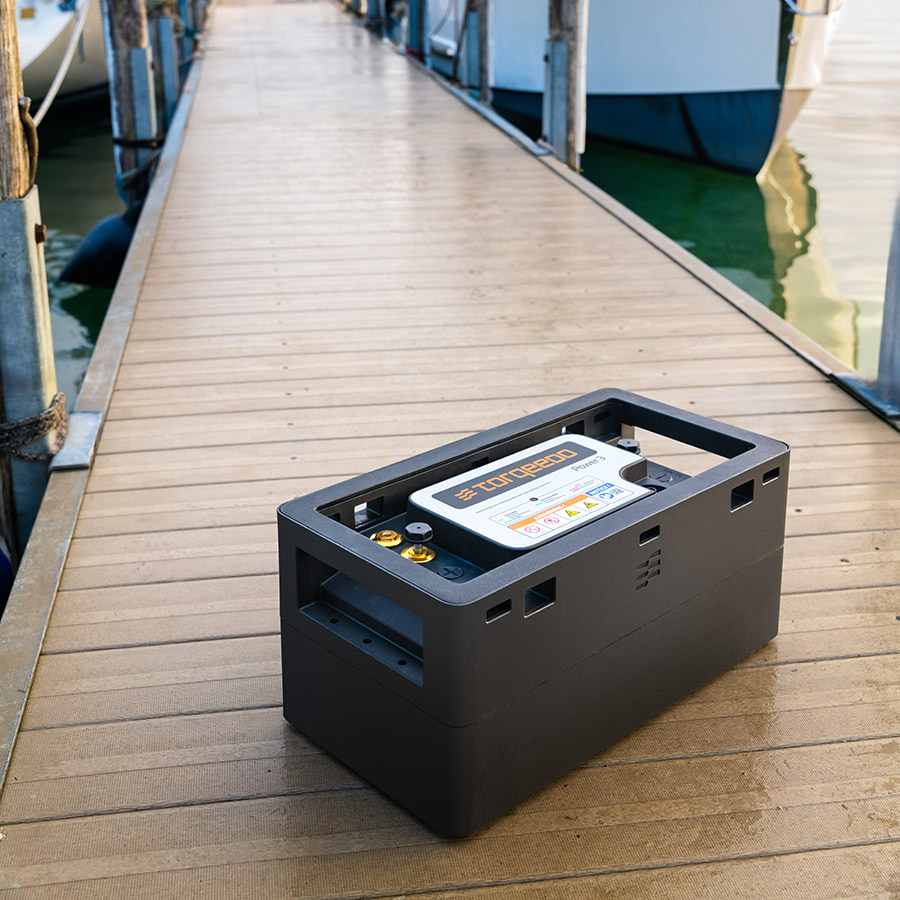
The new Power 3 has a stated capacity of 3 kWh and a weight of 21 kilograms. That places it in a different handling category from large fixed propulsion batteries. Torqeedo describes the unit as compact, waterproof and resistant to saltwater exposure. It is intended for the 48-volt Cruise range, with one Power 3 designed to work with the Cruise 3.0. The company says two units may be connected in parallel to power a Cruise 6.0, or used to extend cruising range, without external fuses in the specified configuration. These are manufacturer specifications rather than third-party performance test results. Installers must use the current wiring guidance, permitted mounting positions and protections, particularly where an owner wants the option of adding a second battery later.
Why weight and handling matter to yacht tenders
For a tender carried aboard a larger luxury yacht, battery weight has consequences beyond the tender's own range. The tender may need to be launched from a garage, davit or platform, secured during passages and maintained by a small crew. A 21-kilogram module is manageable in a way that an integrated battery bank weighing many times that amount may not be, but manual handling still deserves proper planning. The complete installed weight also includes the motor, cables, brackets and additional batteries. Where a tender is designed around a conventional petrol outboard, the owner cannot assume that a battery system will fit existing lockers or maintain the original weight distribution. The advantage of a modular system is its potential flexibility, not an automatic exemption from naval-architectural checks.
Cruise 12.0 Tiller targets a different type of control
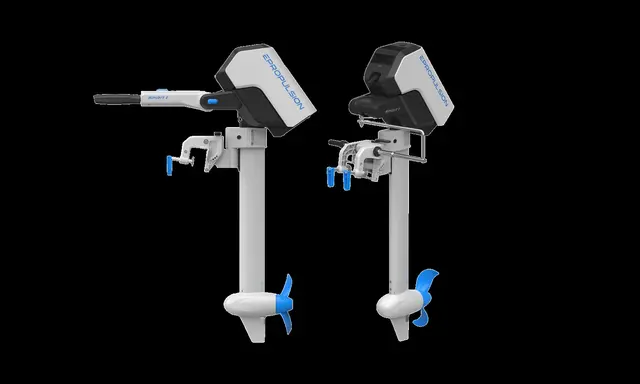
Torqeedo's Cruise 12.0 Tiller is a 12-kW outboard variant with a modernised tiller. The manufacturer compares its thrust with that of a 25-horsepower combustion outboard, an equivalence that should not be mistaken for a claim of identical efficiency, top speed or endurance on every hull. The tiller configuration is important because many tenders and utility craft are operated directly at the stern rather than from a separate steering console. The company says the motor uses between two and ten Power 48 batteries according to energy needs and desired running time. That is a wide installation range and reinforces the importance of determining a realistic duty cycle before selecting a battery bank. Expected availability in Europe and the United States is mid-2027, so the November presentation should not be described as immediate general retail delivery.
Harbour Mode is designed for close-quarters operation
One of the practical details announced for the Cruise 12.0 Tiller is Harbour Mode. Activated through the display, it provides more sensitive throttle response for manoeuvring in confined spaces. On a yacht tender, the challenge is often not simply making enough speed for an exposed crossing. Operators must approach a boarding platform, hold position alongside a dock or move through a busy marina at controlled speed. Smooth and predictable thrust response can help, but no electronic mode replaces keeping a proper lookout, training the driver and allowing for wind, current and the tender's momentum. Buyers should test the throttle behaviour on their actual hull and confirm how the motor responds when reversing or operating at very low power.
Displays and software become part of propulsion
The upgraded TorqLink tiller includes a colour display that communicates with the motor and batteries. Torqeedo says users can see total state of charge and key operating information on that display and within the TorqView app. The company also plans app-based software updates. These connected features are useful only if operators can interpret what the display is showing and if the system remains serviceable when a phone is unavailable. Owners should ask what is stored locally, which features need a connection and how faults or battery warnings are presented. A fleet of tenders managed by a yacht's crew benefits from consistent information, but that information must not give an exaggerated sense of certainty about remaining time on the water.
TorqLink gateways move towards wider fleet management
The announcement also introduces gateways that allow propulsion data to be displayed on compatible third-party equipment and used for more extensive fleet monitoring. Torqeedo says the gateways are compatible with its latest-generation propulsion products and are intended to support remote analysis and control. A charter operator or a manager responsible for several boats may find centralised status information useful for maintenance planning and energy management. For a privately owned luxury yacht, the value may be simpler: understanding how the tender has been used, whether it is charged and whether a fault needs attention before departure. The release establishes a new product direction, but it does not provide a universal compatibility list for every chartplotter, vessel-monitoring service or existing Torqeedo installation.
Choosing the right system begins with the itinerary
Before selecting the Power 3 or Cruise 12.0 Tiller, owners need to define the tender's typical journeys. A short transfer between a yacht and a sheltered harbour has different requirements from repeated long runs with passengers, provisions and luggage. Distance, speed, sea state, payload, reserve capacity and charging opportunities all affect energy requirements. The 3-kWh label is a measure of stored energy, not a guaranteed number of kilometres or hours under all conditions. A useful specification exercise includes the least favourable routine journey and an allowance for a change of weather or a closed landing point. A demonstration with the intended hull and a representative load is more valuable than choosing a motor entirely on its nominal power rating.
Charging belongs in the parent yacht's energy plan
Battery-powered tenders transfer part of their operating demand to the yacht or marina that recharges them. That load may be small compared with a large yacht's hotel services, yet it still needs a safe and appropriately protected supply. On a yacht with limited shore-power capacity, simultaneous charging of tenders, toys and domestic equipment may require scheduling. Owners should confirm the charger specified for the battery, the acceptable temperature range and the procedures for charging after the tender has been exposed to spray. A properly engineered charging locker also needs sensible cable routing and accessible isolation. The manufacturer release describes propulsion equipment, not a completed design for every parent yacht's charging arrangements. That work remains with the yacht's electrical specialists and the system supplier.
Maintenance is different, not absent
Electric outboards can reduce some tasks associated with fuel and combustion engines, but they introduce their own inspection requirements. Cable connections, electrical seals, connectors, propellers and mounting hardware all require attention in a marine environment. Software and electronic diagnostics become part of the service picture, while battery storage and transport procedures require their own documentation. Torqeedo's statement that its new products are designed for saltwater conditions should be read alongside the specific cleaning, storage and immersion instructions provided with each unit. Owners should confirm whether nearby authorised service providers can support the latest products. A quiet tender is not useful if it is out of service during a cruise because a replacement component or diagnostic tool is unavailable.
The Yamaha relationship and service coverage
Torqeedo became part of Yamaha Motor Group in April 2024 and identifies itself as the group's Global Marine Electrification Center. At METSTRADE 2026, the companies shared a stand. This association provides context for the company's ambitions in electric marine propulsion, but it does not establish that every Yamaha dealer already services all Torqeedo battery and control products. For luxury yacht owners, international support is an important purchasing criterion because cruising plans often span several countries. The practical questions are whether the chosen drive has local warranty assistance, trained engineers, replacement propellers and timely battery support. Dealers should provide written information covering the particular products and territories involved, rather than relying on the perceived scale of the parent company.
Separate availability dates require careful ordering
The November release sets out different commercial timetables. Torqeedo expects the Power 3 to become available from spring 2027, with a market-by-market rollout, while the Cruise 12.0 Tiller is expected in Europe and the United States from mid-2027. Owners commissioning a new tender or planning a refit should not treat those timelines as confirmed delivery appointments for a specific country. The gateways are announced as new connectivity products, but prospective customers should request current pricing, availability and compatibility directly from Torqeedo or an authorised dealer. It would be premature to specify a vessel around a product on the assumption that it is in stock. A contingency plan is especially important where a tender is essential to the yacht's operating programme.
What this launch means for the 12–24m sector
The most interesting outcome is a broader choice of modular propulsion systems, coupled with more deliberate integration between energy storage and the helm. An owner-operated luxury yacht may need a compact electric tender that is straightforward to deploy; a professionally crewed yacht may want clearer operating data and consistent equipment across its auxiliary craft. Neither case calls for the same battery configuration. Torqeedo's new products offer several routes worth evaluating, but the manufacturer's published figures should be tested against real use and independently verified where performance claims influence a purchase. The November METSTRADE presentation is a product announcement, not proof of a universal replacement for combustion propulsion. Owners who plan around their journeys, loading and service network will be best placed to make use of the new options.
Sources and image credits: Primary manufacturer announcement published by Torqeedo on 16–17 November 2026, including its official press photographs of the Power 3, Cruise 12.0 Tiller and TorqLink gateways. Performance figures, availability dates and feature claims are attributed to Torqeedo; operational implications and buying guidance are independent Luxury Yacht Guide editorial analysis.
Sources and image credits
Reporting based on Torqeedo original 16 November 2026 manufacturer news release.
Lead photograph: Torqeedo Power 3 marine battery, official manufacturer METSTRADE 2026 press photograph. Image: Torqeedo GmbH official November 2026 Power 3 product press photograph. Original official image source.