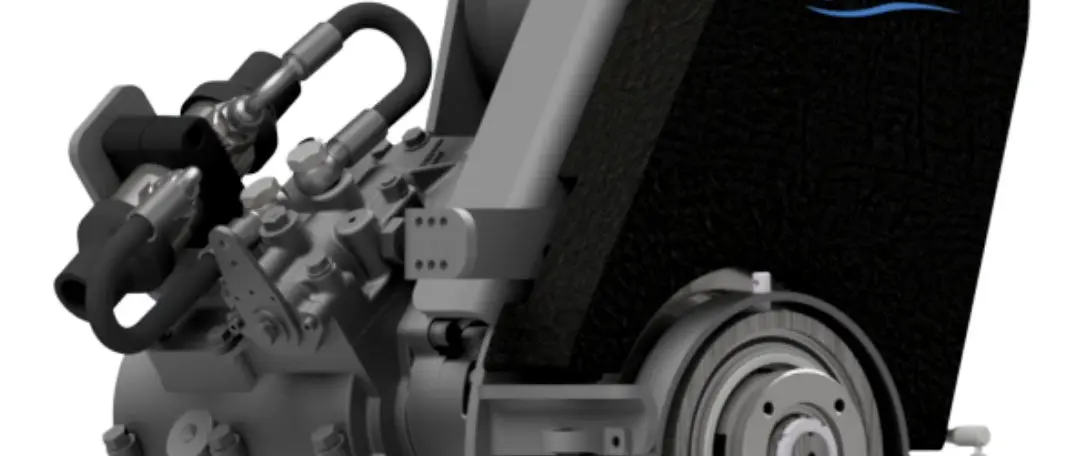
Hybrid Marine International presented its Multimode Hybrid Gearbox in the METSTRADE 2026 exhibitor programme on 17 November, describing an integrated parallel-hybrid propulsion package intended to work with a broad range of inboard engines between 20 and 110 horsepower. The manufacturer says its system draws on more than two decades of development and almost two decades of production experience. Its announcement also highlights AI-Regeneration, intended to make use of energy from a freely turning propeller while a sailing yacht is under sail, and support for modern glass-screen helm stations. For the owners and builders of 12–24-metre luxury sailing yachts, the significance lies in the possibility of combining conventional diesel propulsion with electric drive and energy recovery without conceiving the entire system from the beginning. As with any hybrid installation, real benefits depend on the boat and its actual operating programme.
What a parallel hybrid gearbox does
A parallel hybrid system combines two possible sources of mechanical drive rather than making propulsion entirely dependent on battery-electric motors. The Multimode Hybrid Gearbox is designed as an integrated package alongside a conventional marine engine, according to its maker. That arrangement can give a yacht different ways to propel itself or manage power, depending on the system's approved configuration and controls. The word hybrid does not guarantee that every combination of engine, motor, gearbox and propeller is compatible. An owner must consider the existing shaft line, engine mounts, available space and cooling arrangements, as well as the electrical installation. A properly specified system can offer flexibility, but the engineering study should come before any claim about fuel savings or a promise of silent cruising.
The 20 to 110 horsepower range
Hybrid Marine lists the product for virtually any bobtail inboard engine in the range of 20 to 110 horsepower. A bobtail engine is one supplied without the usual transmission assembly, which helps explain the product's emphasis on integrating the hybrid with the gearbox. The stated power range aligns with the auxiliary propulsion needs of many sailing yachts, although length alone is not enough to determine whether a particular vessel falls within it. Displacement, hull form, propeller dimensions and performance expectations are crucial. Some 12–24-metre yachts require considerably more than the published range, while others may use power comfortably within it. Owners should compare the engine maker's approved torque and rotation requirements with the hybrid system's current compatibility documentation rather than treating the size range as universal.
The latest manufacturer specifications
The official product-launch page supplies further figures for the current Multimode unit: a peak electric drive rating of 15 kW, continuous generation of 10 kW and a specified dry weight of 72 kg excluding its display and controller. It identifies a PRM280 gearbox and interfaces including NMEA 2000, Victron GX and Navico Connect. The company also says larger systems for engines up to 250 horsepower are in development for release in 2027; they should not be treated as available products today. These figures make the latest announcement more useful to builders, but they are manufacturer specifications that remain subject to confirmation for an actual installation. Peak drive power is not the same as guaranteed continuous output, and generator capacity does not guarantee net charging at every engine speed. The equipment weight must be added to the batteries, cables, controls and structural arrangements when evaluating a yacht's final displacement and trim.
Why sailing yachts offer an interesting use case
A sailing yacht can travel for long periods with its diesel engine switched off, creating opportunities to recover energy or use stored electricity in specific phases of the voyage. That does not mean a sailing yacht necessarily has surplus electricity at all times. Navigation electronics, refrigeration, communications, lighting and other hotel loads continue to consume power. The appeal of a hybrid architecture is that it may offer several ways to balance those demands and the vessel's propulsion needs. A yacht operating mostly under sail with short approaches to marinas has a different profile from one using its engine for prolonged passages in light winds. The Multimode announcement should be assessed against measured engine hours and energy consumption, not against an idealised sailing itinerary.
AI-Regeneration through a freewheeling propeller
One of the manufacturer's most prominent claims is AI-Regeneration, which it describes as capturing energy from a freely spinning propeller while the yacht is sailing. The general principle is well established: as the boat moves through the water, flow at the propeller can be used to turn a generator and charge an electrical storage system. The practical result depends on the propeller, the vessel's speed, the generator's operating range and how much additional drag the process introduces. The official product announcement does not supply a universal regeneration output at a specified speed for every yacht. Buyers should request energy-recovery curves for their intended propulsion arrangement and confirm whether the installed propeller supports the function. A high promised charging figure is of little value if the boat rarely reaches the speed at which it can be achieved.
AI terminology should not obscure the engineering
The company uses the name AI-Regeneration for its control feature, but owners should distinguish a branded system description from independent evidence of artificial intelligence improving performance. The core questions are mechanical and electrical: how does the controller decide when to recover energy, what limits the charging current, and what happens as battery state of charge or temperature changes? A clear specification should explain the measurable benefit against a simpler controller using a defined test procedure. Owners should be wary of treating the label as proof of self-optimising performance in every sea state. The important feature is whether the equipment captures usable electricity safely and predictably within the yacht's overall energy strategy.
Two propulsion sources create more operating choices
The attraction of parallel-hybrid propulsion is that the yacht may be able to use mechanical diesel power, electric power or a coordinated combination, depending on its installed hardware and controller. Quiet movement in a sheltered anchorage may be appealing, while retaining a diesel engine can offer familiar long-range capability where charging infrastructure is uncertain. Yet not every system permits all theoretical modes in every condition. Motor temperature, battery state, transmission design and manufacturer restrictions may limit available operation. The METSTRADE entry identifies a multimode concept, but purchasers need an exact description of supported modes and their performance. The word multimode is a useful product description, not a substitute for a complete mode-by-mode operating table.
The battery remains a separate design decision
A gearbox does not determine how much electric cruising time the yacht will have. That depends on the batteries, the motor, charging capacity and the power drawn by other onboard services. Owners planning a hybrid refit should make an energy budget before deciding whether a particular battery bank is worthwhile. They should consider the yacht's heaviest ordinary service loads, the desired duration of battery-only operation and the available sources of recharging. The installation must include appropriate protection, isolation and monitoring in accordance with the manufacturer's current instructions and the vessel's applicable standards. Inadequate design can turn a promising propulsion upgrade into an expensive maintenance problem. A competent marine electrical engineer should therefore be involved as early as the gearbox and engine specialists.
Mechanical integration should be the first engineering review
Adding a hybrid gearbox to an inboard propulsion train can change dimensions, alignment, loads and maintenance access. An owner should request installation drawings and confirm that the combined engine and gearbox can fit the existing space without compromising the shaft angle, mounts or cooling arrangements. An older yacht may present particular challenges where the engine room is compact or the original equipment has been altered by previous owners. Propeller selection also deserves scrutiny because a propeller optimised for conventional diesel operation may not behave identically under electric drive or regeneration. No owner should order equipment based solely on the available horsepower range. The final installation must be designed for the specific hull and its propulsive demands.
Glass-screen helm integration
The product announcement says the Multimode Hybrid Gearbox supports glass-screen helm stations. This is an important direction because an integrated hybrid installation creates information that the operator needs to see clearly: propulsion mode, remaining battery energy, charging status and any warnings. Owners should ask which display standards and software interfaces are supported, and what will be shown if a network connection fails. A modern screen may be attractive in the cockpit, but it must not remove access to essential controls when electronics become unavailable. Compatibility between displays, controller software and the rest of the yacht's monitoring equipment is a real procurement issue. The maker's broad reference to glass screens does not certify compatibility with every chartplotter, navigation network or instrumentation package.
Ownership benefits must be quantified
A hybrid vessel may use less diesel in some circumstances, provide quieter operation in selected areas and reduce the need to run an engine solely to charge batteries. None of those benefits should be assumed without a baseline. A useful assessment begins with the yacht's historical fuel use, engine hours, electrical load and sailing speeds. It then models a realistic year under the proposed system, including electrical conversion losses, battery degradation, service costs and potential changes in weight. Owners should also distinguish financial savings from other goals such as comfort or operational flexibility. A hybrid refit may be worthwhile primarily because it improves the yacht's cruising experience rather than because it has a short payback period. Transparent modelling helps avoid disappointment.
Refit versus new-build installations
A new-build yacht gives its designer more freedom to allocate space to batteries, controls, cooling and electrical protection. In a refit, those systems must work around existing structure and machinery. This difference may determine whether an integrated gearbox is practical at all. A builder planning a production sailing yacht may value repeatable dimensions and supplier support, while an individual owner may face unique engineering work. Hybrid Marine describes the product as a way for boat builders and engine manufacturers to adopt hybrid technology efficiently and flexibly. That is a manufacturer proposition; the amount of labour saved on a particular installation is not specified in the release. A prudent refit quotation should separate the product cost from design, electrical work, structural adaptation and commissioning.
Safety and redundancy belong in the plan
Any hybrid propulsion system adds additional components and possible failure modes to the vessel. The engine and electric motor need a clear operating relationship, with safe transitions between modes. The electrical side needs protections that suit the battery chemistry and expected currents, while the mechanical side requires correct lubrication and service arrangements. Owners should ask what happens if a motor controller fails, the battery disconnects or the hybrid system loses communication with its display. They should also confirm whether the diesel engine can still propel the yacht under the specified conditions after a fault. The product's parallel architecture may offer flexibility, but no redundancy claim should be accepted without a documented failure-mode assessment for the intended configuration.
Training and maintenance under long-distance cruising
A yacht may be maintained by several different engineers during a season, particularly if it cruises in different countries. A hybrid system that blends mechanical and electrical components needs coherent documentation and a practical servicing network. Owners should confirm who supplies spare parts, what training is required, and where qualified assistance is available in the vessel's expected cruising region. The crew should understand what the instruments mean and how to recognise abnormal operation before a minor fault becomes a voyage disruption. Updated software may be part of routine maintenance, but it should be managed with the same care as other propulsion interventions. A manufacturer's trade-show announcement is not a complete service manual; the final procurement documentation should address these questions explicitly.
How the METSTRADE introduction fits the market
Hybrid Marine International says the new gearbox reflects 24 years of development and 19 years of manufacturing experience. Its exhibition listing also notes use of the company's hybrid technology on inland craft, barges and sailing boats, including offshore catamarans. This history offers useful context, but an owner still needs evidence relevant to the precise gearbox and intended engine. Marine electrification attracts interest across very different markets, and a solution proven on one type of craft may require adaptation for another. The company's decision to showcase an integrated gearbox at METSTRADE reflects increasing attention to practical retrofit and new-build hybrid options rather than electric propulsion alone. The benefits will be determined by the quality of the engineering and by how the boat is actually used.
What the November product announcement establishes
The confirmed news is Hybrid Marine International's 17 November 2026 presentation of an integrated Multimode Hybrid Gearbox for approximately 20–110-horsepower inboard engines. The company highlights parallel-hybrid flexibility, energy recovery through AI-Regeneration and compatibility with modern electronic helm displays. For owners of 12–24-metre luxury sailing yachts, the system is worth technical investigation where a conventional diesel installation is to be replaced or complemented. It is not yet evidence of a universal fuel saving, an assured electric range or a straightforward fit to every older boat. The correct next step is a professionally prepared specification that compares engine compatibility, energy generation, installation cost and after-sales support against the owner's actual cruising programme.
Sources and image credits: Hybrid Marine International's original exhibitor-supplied Multimode Hybrid Gearbox announcement released through the METSTRADE 2026 official product catalogue on 17 November 2026; corresponding manufacturer product photograph supplied with its exhibitor listing. All numerical specifications, development-history claims and regeneration descriptions are attributed to Hybrid Marine; economic, technical and operational considerations are independent Luxury Yacht Guide analysis.
Sources and image credits
Reporting based on Hybrid Marine International official Multimode gearbox product-launch and specification page, Hybrid Marine International official METSTRADE exhibitor announcement dated 17 November 2026.
Lead photograph: Hybrid Marine International Multimode Hybrid Gearbox, original manufacturer rendering from official product announcement. Image: Hybrid Marine International, official Multimode Hybrid Gearbox manufacturer rendering supplied on its current product-launch page. Original official image source.