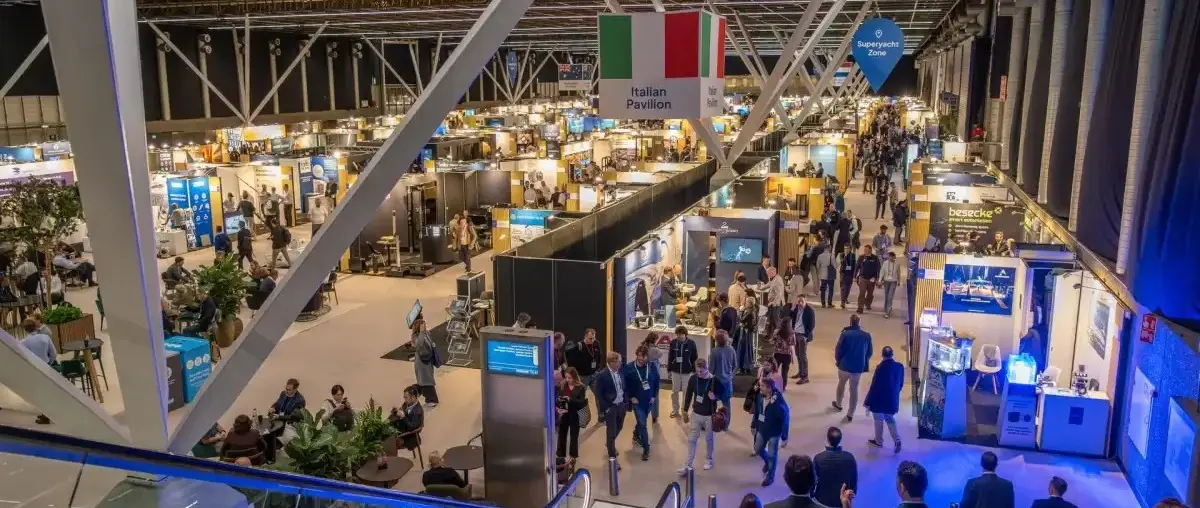
Italy's marine-equipment industry has completed a substantial collective presentation at METSTRADE 2026, with 77 companies exhibiting through a coordinated initiative by Confindustria Nautica and the Italian Trade Agency, ICE. The participating firms occupied two national areas at RAI Amsterdam: 66 in the Italian Pavilion in Hall 12 and 11 in the Superyacht Pavilion in Hall 7. Together they covered approximately 1,753 square metres. A statement issued on 20 November through the Italian maritime federation describes the event as a platform for international buyer meetings, new commercial contacts and discussion of future projects. The participation is relevant to builders, refit businesses and owners across the luxury yacht sector because specialist Italian manufacturers supply equipment and services used aboard vessels of many sizes. It should not be presented as evidence that all 77 companies launched new products or secured confirmed sales during the exhibition.
An industry delegation rather than one product launch
The Italian presentation brought manufacturers with different technical specialisms under a shared national programme. This approach differs from a conventional product announcement, where a single manufacturer identifies a new model and its specifications. The goal was to raise visibility, support export relationships and connect suppliers with the international marine industry. The collective was organised by Confindustria Nautica and ICE through the agency's Brussels office as part of a wider Made in Italy promotion initiative. These institutional arrangements help smaller and medium-sized suppliers participate in major trade events, but they do not erase competition between the businesses themselves. For a prospective buyer, a national pavilion can make it easier to identify candidates for an enquiry. The actual quality, price and suitability of each product must still be evaluated individually.
Hall 12 and the Superyacht Pavilion
The distribution across Hall 12 and Hall 7 is significant because the two areas serve overlapping but different audiences. The Italian Pavilion concentrated a large group of equipment and component suppliers, while the Superyacht Pavilion gave the remaining companies exposure to professionals working on larger custom projects. Alessandro Gianneschi, vice-president of Confindustria Nautica, reported the split of 66 and 11 exhibitors respectively. That layout may have influenced foot traffic, as some participating businesses observed, but no independent count of visitors to the Italian stands has been published in the source. A yacht owner should not interpret a pavilion label as a technical qualification or assume that suppliers in the superyacht area work exclusively with vessels longer than 24 metres. Many materials and equipment families have applications across more than one part of the market.
A closing report rather than a preview
The 20 November statement was issued after METSTRADE concluded on 19 November. That date matters: the report describes exhibitors' experiences rather than merely predicting how the event might go. It includes assessments from several companies, some of which reported a slower first day followed by stronger traffic. Such comments are useful qualitative evidence of business activity, though they are not the same as independently measured visitor figures or final contract values. The organisers describe qualified contacts and opportunities for further commercial development, but a conversation at a stand is not a completed sale. Some negotiations may lead to orders later, while others will not progress. A responsible industry account can report constructive sentiment without converting it into unverified revenue growth.
The role of the Italian Trade Agency
ICE's participation is intended to support Italian businesses seeking opportunities abroad, complementing the industry knowledge and membership network of Confindustria Nautica. The statement says the 2026 event involved a more structured institutional presence and stronger organisational support than previously. That can be valuable for exporters that lack the resources to maintain representatives in every market. Government-backed trade promotion may open doors, but businesses still need competitive products, dependable delivery and effective after-sales service. For a yacht owner purchasing a component from another country, the presence of a manufacturer's national export agency does not mean the product can be installed or serviced locally. The dealer and technical-support network should be confirmed before an important purchase, particularly for equipment that affects propulsion, steering, electrical systems or safety.
The ambassador's visit
Italian Ambassador to the Netherlands Augusto Massari visited the collective on the opening day, 17 November, according to the official report. He met Confindustria Nautica president Piero Formenti, vice-president Alessandro Gianneschi, director general Marina Stella and ICE's Benelux representative Chiara Troisi, as well as participating entrepreneurs. The visit underlines the institutional importance attached to maritime manufacturing exports, but it is not a technical endorsement of individual products. Public officials can support trade relationships and provide a platform for companies to present their capabilities. Engineers, yards and owners must make procurement decisions according to documented requirements. The ambassador's presence is therefore most appropriately understood as part of the wider economic diplomacy around the exhibition rather than evidence of a new maritime regulation or commercial contract.
Pumps, electrical equipment and technical integration
Among the companies commenting on the event was Gianneschi Pumps & Blowers, represented by Alessandro Gianneschi. Marine pumps and ventilation equipment are essential to a yacht's operation, although the official collective statement does not identify a new specific model launched by that company during the show. For a luxury yacht, these systems affect water services, machinery-space ventilation and other functions that owners may seldom see but rely upon constantly. The availability of specialist Italian suppliers can broaden options for builders and refit yards, while also creating the need to assess electrical compatibility, service support and parts availability. An owner considering replacement equipment should obtain the actual technical specifications. A manufacturer's participation in a prestigious exhibition may prompt an enquiry, but it cannot replace an engineering review.
Deck hardware and boarding systems
Besenzoni, represented in the closing statement by international sales manager Alberto Resconi, reported contacts with customers from Europe, Asia and the Middle East. The company is known for marine access and deck equipment, categories that may influence guest comfort and practical boarding. Trade-show discussions can help manufacturers understand demand across different boat sizes and markets. Nevertheless, the association's report does not quantify Besenzoni's new orders or identify the exact equipment discussed with every visitor. Owners should avoid taking general expressions of satisfaction as product-level performance evidence. Boarding systems, doors and other moving equipment must be sized and installed for the intended vessel, with maintenance arrangements established before service. Refits can be particularly complicated where an older hull requires structural changes or where access to machinery is limited.
Coatings and the maintenance market
The Boero Group also participated and described METSTRADE as a useful venue for meeting existing and prospective partners. Marine coatings represent an important segment of the supply chain, from underwater protection to decorative finishes. Product selection can affect labour, maintenance intervals and the appearance of a luxury yacht. The Italian delegation's presence does not prove that one coating is better than an alternative or that all marketed environmental benefits are independently verified. Owners should compare the evidence and requirements for the specific product and hull. A coat of paint is often the visible outcome of a much larger process involving surface preparation, compatible layers, controlled application conditions and aftercare. A trade event can introduce a yard to suppliers, but reliable long-term performance depends on the quality of specification and installation.
Feedback from exhibitors
The official statement includes observations from Veleria San Giorgio, SAIM, Besenzoni and other companies, providing a more varied picture than a single enthusiastic headline. Anton Francesco Albertoni of Veleria San Giorgio said the first day was quieter before activity strengthened. Andrea Fabbri of SAIM highlighted interest in developing projects, while Besenzoni reported international enquiries. These are attributed business impressions, not an audited survey of all 77 exhibitors. The variation is useful because a new exhibition layout may work differently for individual companies. Organisers can consider such feedback when planning future participation. For readers, the relevant point is that manufacturing companies use METSTRADE for relationships and research as well as immediate orders. Commercial value may become clearer months after the show, when proposed projects have developed.
What 1,753 square metres does and does not mean
The reported exhibition area shows the scale of the coordinated Italian presence, but floor space is not a direct measure of market share, export revenue or technical quality. One company may need a large stand to display machinery, while another can demonstrate a sophisticated electronic component from a small counter. Similarly, the total of 77 firms measures participation in this particular initiative, not the number of all Italian marine suppliers operating worldwide. These distinctions matter when turning trade-show publicity into industry intelligence. An owner or procurement manager should use the numbers to understand the scope of the event, then investigate firms relevant to their actual requirements. The most commercially useful findings may come from specific new supply relationships rather than the size of the pavilion itself.
The connection with Genoa
Confindustria Nautica linked its Amsterdam activity to the International Boat Show in Genoa, held earlier in the autumn. Piero Formenti referred to the continuing cooperation with ICE and the value of presenting the industry to international operators and journalists. Genoa and Amsterdam serve different functions within the marine calendar. A public-facing boat show may offer the opportunity to inspect finished yachts, while METSTRADE concentrates more strongly on equipment, materials and supply-chain meetings. Companies operating in both settings can meet different participants in the purchasing process. A yacht owner might first see an attractive feature aboard a new model and later discover the specialist manufacturer behind it through a trade publication. The collective programme illustrates how those markets are interconnected without making them identical.
Relevance to 12–24-metre owners
Owners of luxury motor and sailing yachts may be unfamiliar with the names of many component suppliers because the builder specifies equipment before delivery. During a refit, however, the choice of manufacturer can become much more visible. Replacement pumps, deck fittings, furnishings and coatings may be sourced through specialist companies working across domestic and international markets. An organised national delegation can help a refit team identify alternatives, but a supplier should be selected according to technical documentation and support rather than nationality alone. Lead times, installation requirements, warranties and local service access may determine the practical value of a product. Owners should also distinguish equipment designed for large custom vessels from systems appropriate to a relatively compact production cruiser. A strong supply chain offers choice, not a single universal answer.
What the 2026 results establish
The verified outcome is that 77 Italian companies participated in a coordinated METSTRADE 2026 programme covering 1,753 square metres in two halls, with support from Confindustria Nautica and ICE. The official post-show statement reports international contacts and varied but generally constructive exhibitor feedback, together with a visit from Italy's ambassador to the Netherlands. It does not establish a total value of new orders or prove that every exhibitor achieved commercial success. For Luxury Yacht Guide readers, the story is relevant to the broader manufacturing network on which boatbuilders and refit businesses depend. The strength of the industry is best demonstrated through engineering capability, dependable service and lasting customer relationships. The Amsterdam event gave participating companies an opportunity to build those relationships; their future results will require further evidence.
Sources and image credits: Federazione del Mare's publication of Confindustria Nautica's 20 November 2026 post-show report, with a contemporary Italian Pavilion photograph published by NauticaLive. All participant numbers, venue details and named remarks are attributed to the official statement. Procurement and market interpretation is independent Luxury Yacht Guide analysis.
Sources and image credits
Reporting based on Federazione del Mare / Confindustria Nautica official 20 November 2026 METSTRADE report.
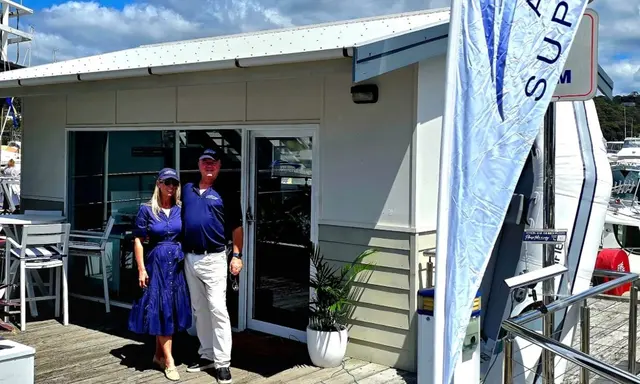
Lead photograph: 2026 Italian Pavilion for Confindustria Nautica and ICE at METSTRADE, contemporary news photograph. Photo: NauticaLive, 20 November 2026 coverage of the Confindustria Nautica and ICE Italian Pavilion at METSTRADE; image depicts the trade-show delegation. Original official image source.