The Australian International Marine Export Group (AIMEX) and Australian Commercial Marine Group (ACMG) have released the 2027 Australian Marine Industry Directory to international buyers at METSTRADE in Amsterdam. Introduced on 17 November 2026, the publication contains an alphabetical listing of more than 100 Australian marine suppliers, alongside reports on new equipment, boatbuilding, refit work and export performance. The launch is a business development rather than the introduction of a new yacht model, but it has direct relevance to owners, builders and technical managers who need dependable suppliers during an international cruising programme. The official announcement highlights businesses making anchoring equipment, fuel-monitoring systems, propulsion components and marine glazing. It also shows how the same Australian manufacturing base supports leisure vessels and demanding commercial craft. For 12–24-metre luxury yachts, the directory may be useful as a starting point for research, not as an independent guarantee of any supplier's suitability.
Why a supplier directory still matters
Owners and captains have access to an extraordinary volume of marine advertising, but finding a company that actually manufactures a suitable component remains a practical challenge. A directory supported by industry associations can make the initial search more efficient by bringing many enterprises together and identifying their areas of expertise. The new Australian edition is intended to connect international buyers with exporters, equipment makers and service providers. That does not mean every firm in the publication supplies every kind of yacht or maintains stock in all overseas markets. A 17-metre motor yacht requiring an anchor-winch component has different needs from a commercial ferry ordering a complete propulsion package. The value of the directory is therefore the structure it provides for enquiries. Owners should follow the entry to current technical documentation and contact the supplier for details specific to their vessel.
Launched before an international audience
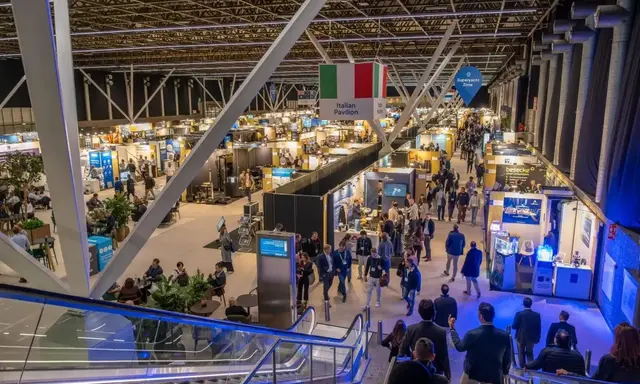
METSTRADE brings manufacturers and distributors together in Amsterdam, making it a logical setting for the release. AIMEX and ACMG placed the directory at the Australian national presence, with hard copies available from stand 03.234 during the show. A public launch gives overseas visitors the opportunity to discover companies with which they may not yet have relationships. It also demonstrates the associations' emphasis on export markets rather than domestic promotion alone. Nevertheless, a trade-show listing is not the same as an established distribution agreement or an assurance of servicing in Europe. Owners evaluating an Australian-made product should ask where warranties are handled, who carries replacement parts and whether competent installation support is available at their home port. Those questions become especially important for systems that the crew may need to repair while cruising far from the manufacturer's headquarters.
PV Equinox provides the cover story
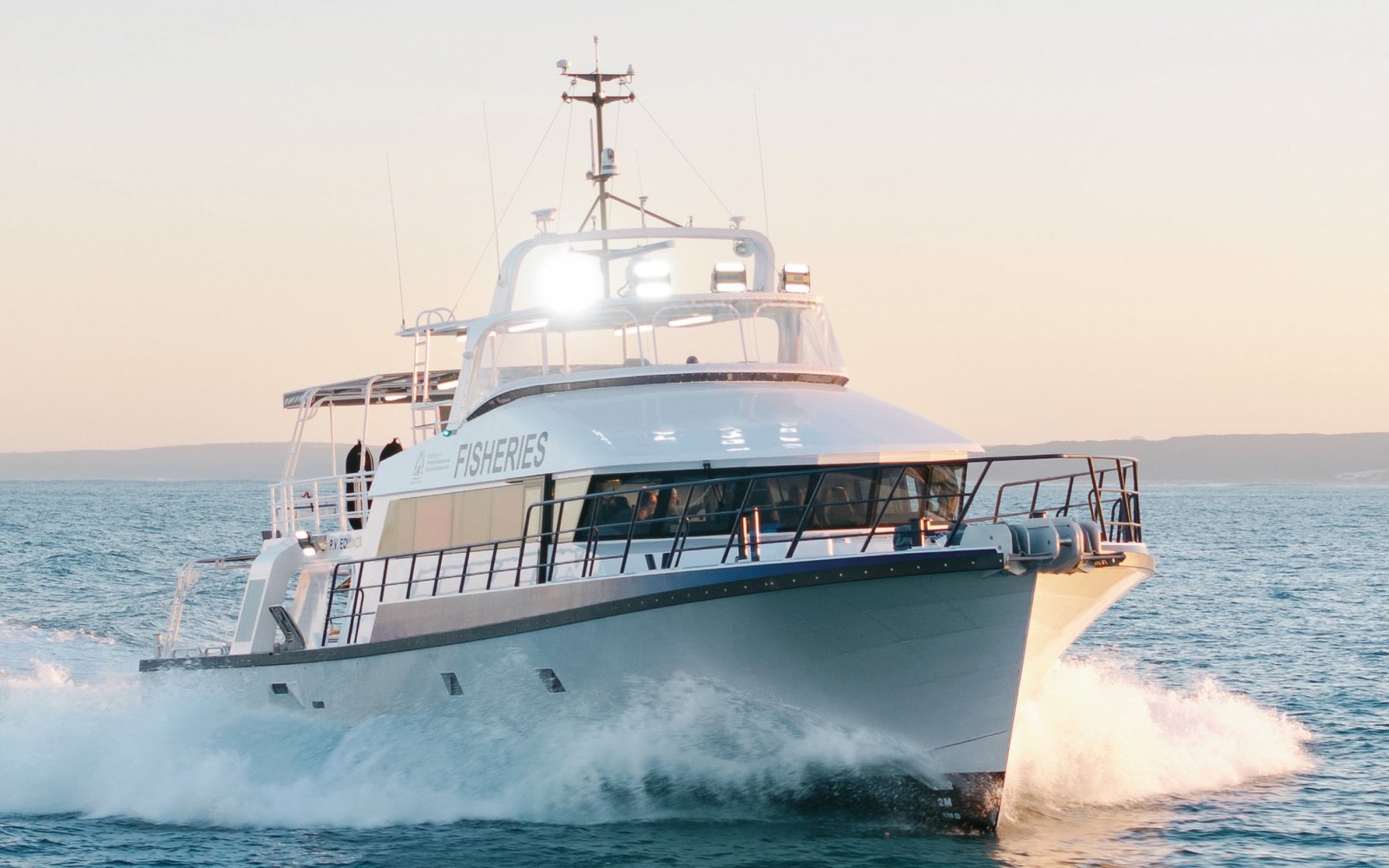
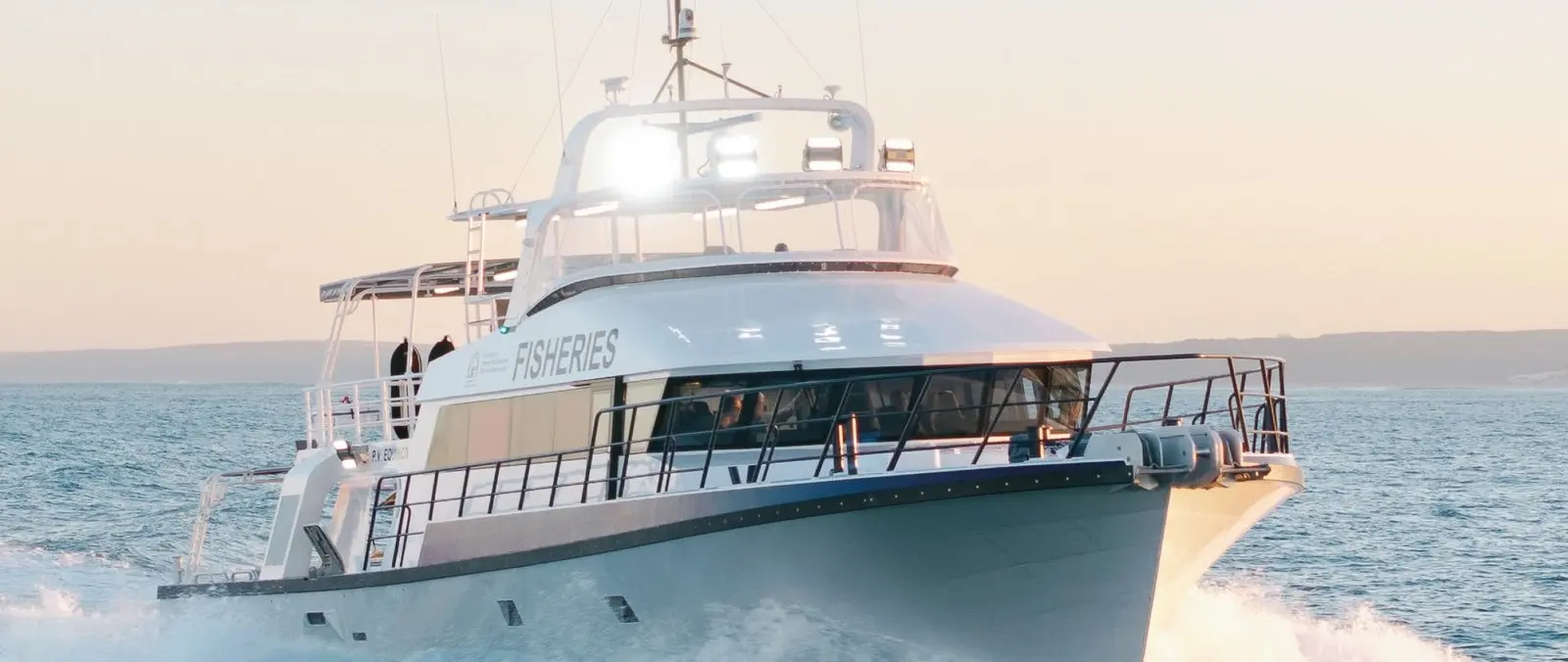
The directory's cover features PV Equinox, a 24.95-metre patrol vessel built by Dongara Marine at its Geraldton yard to a design by Southerly Designs. The vessel entered service in August 2026 and is based in Broome, according to the launch account. The manufacturer reports a range of about 1,000 nautical miles at a 20-knot service speed. PV Equinox is a government patrol craft, not a luxury yacht, and its length is just above LYG's principal 12–24-metre yacht editorial range. Its relevance here is as an example of Australian naval architecture, fabrication and systems integration, not as a new pleasure-yacht offering. Commercial designs can demonstrate engineering capability that may also be available to recreational projects, but each application requires a different specification. A photograph on a directory cover should not be treated as evidence of a new civilian model.
Savwinch and the development of marine exports
AIMEX's release highlights Savwinch, named its 2026 Exporter of the Year. The business traces its beginnings to an anchor winch built for a friend's boat in 2006 and describes subsequent sales to markets including the United States, Canada, New Zealand, China, the Middle East and Europe. The association reports international sales growth exceeding 120 percent in 2025. This is a company-specific figure reported by the industry body, not a forecast for the entire Australian marine sector. For yacht owners, the interesting part is how a specialist component maker can develop international reach while remaining connected to practical boating requirements. The test of its offering remains the correct specification for the individual yacht, along with installation, maintenance and warranty arrangements. Export success alone does not prove that every anchor system is suitable for every hull.
Fuel monitoring with Topargee
Topargee is another supplier highlighted, recognised as Junior Exporter of the Year and described as active in seven international markets. The business returned to METSTRADE with its Fuel Flow range. Fuel monitoring can be useful on a luxury cruiser, particularly when an owner wants reliable information for passage planning or maintenance records. However, the benefits depend on correct sensor installation and calibration, appropriate engine compatibility and an understanding of what the displayed values represent. A measurement device cannot remove the need for prudent fuel reserves or sound passage planning. The export award and the new product range make Topargee worth investigating, but readers should not infer technical accuracy figures that the directory announcement does not supply. An owner considering equipment should seek the manufacturer's current specifications and, where necessary, advice from a competent marine electrician.
SUKKAGON addresses shipyard ventilation
Cairns-based Control Point Group has introduced SUKKAGON, a ventilation unit intended to connect with existing tank and void ventilation points. The launch material describes an effort to reduce temporary ducting and congestion during confined-space work in shipyards. That is principally an industrial safety and maintenance application, not an onboard guest ventilation system. It nonetheless matters to yacht owners because refit work may involve tanks and enclosed areas where safe access is critical. Ventilation equipment used during such operations must be specified in line with the actual hazards and competent safety procedures. A new product may improve the practicality of the worksite without removing the need for atmosphere testing, rescue arrangements or qualified supervision. The directory gives visibility to the manufacturer; the suitability of its system must still be assessed by the yard responsible for the job.
Muir's compact anchoring package
The publication also highlights Muir's HR22000 horizontal windlass, winner of the 2026 Australian Marine Industry Innovation award. According to the association, it brings components onto a single base plate and can reduce the system footprint by up to 40 percent. This is a maker-reported design achievement in a particular equipment context and should not be extrapolated to all windlass installations. Space is scarce at the bow of many yachts, and reducing the footprint of large hardware may give naval architects more freedom. At the same time, an integrated system still has to permit adequate inspection, service access and safe load management. Owners of smaller luxury yachts may find the engineering concept interesting even if the named product is intended for larger vessels. Understanding how compact integration affects maintenance is as important as appreciating the initial space saving.
Riviera's model and export programme
Luxury yacht builder Riviera features in the directory's review of Australian boatbuilding. The association says Riviera launched or announced six models during the preceding year, with more than 60 percent of its annual production destined for international owners. It also references the company's largest shipment to the United States, involving 15 yachts. These figures describe a company programme and should be understood in the specific period reported; they are not proof of the wider market's future direction. Riviera is especially relevant to LYG because several of its motor-yacht models fall within the readership's preferred size range. International sales may indicate established dealer and service relationships, yet an owner should still examine the exact yacht specification, local support and operating costs. A national directory can help place a yacht builder within the broader ecosystem supplying its boats.
Maritime engineering beyond recreational yachts
Other directory features include propulsion supplier Doen WaterJets, Norman R. Wright & Sons and specialist glazing business Integ Marine Group. Doen reports equipment for ferries in Indonesia and hybrid-electric installations elsewhere, while Norman R. Wright & Sons describes the restoration of the historic timber vessel South Pacific II. These are different sectors, but each offers insights into manufacturing and maintenance capabilities. A marine engineering firm that serves commercial vessels may have considerable expertise in durability and complex refit work, though it may not be organised to handle small owner enquiries. Conversely, a recreational-yacht specialist may provide more appropriate customer service for an individual boat. Readers should distinguish technical capability from commercial fit. The directory makes potential connections easier to discover; a proper proposal and references are still needed before selecting a contractor.
Training and the next generation of specialists
The 2026 Australian Marine Industry Award winners are part of the directory, including Laura Hillman, a fourth-year fixed and mobile plant mechanic at Riviera Australia and recipient of the Apprentice of the Year award. AIMEX says she joined the Australian delegation at METSTRADE. The inclusion is significant because industry capability depends on trained people as well as product innovation. A yacht owner may buy an advanced electrical or propulsion system, but its long-term reliability relies partly on mechanics and technicians who know how to maintain it. Apprenticeship recognition helps draw attention to that practical foundation of the marine industry. It does not establish the total number of apprentices available or resolve any wider skills shortages, but it places workforce development alongside export success. The directory's message is that international competitiveness involves people, support and manufacturing capacity together.
Using the directory responsibly
A supplier list should be the beginning of procurement research, not the end. For a refit, owners can use the directory to identify candidate manufacturers, then obtain current product data, pricing, lead times, warranty conditions and installation requirements. A business should be asked whether it has experience with the vessel's size and equipment configuration. Owners ordering from overseas may need to consider customs, taxes, shipping and technical support at the destination. Documentation is especially valuable where equipment must satisfy class or safety requirements. The directory includes companies with very different specialisms, so it is not appropriate to assume an entry represents formal endorsement for a particular yacht. An organised procurement process can turn the directory into a useful working tool without mistaking promotional inclusion for an independent certification.
What the 2027 launch establishes
The verified development is the November 2026 release of the 2027 Australian Marine Industry Directory, containing more than 100 suppliers and features on equipment, boatbuilding, commercial projects and workforce achievements. Its international launch at METSTRADE puts Australian marine exporters in front of buyers from many markets. The release does not claim that every featured firm has won a new contract or that the listed export results represent the entire sector. For owners of 12–24-metre motor and sailing yachts, the directory is relevant because specialist Australian suppliers may offer equipment, technical advice and refit support that are not immediately visible in a local search. Its practical value will depend on the quality of the relationships it helps establish. The correct next step is to investigate relevant companies through their own current documentation rather than treat the publication as a complete purchasing recommendation.
Sources and photograph: Australian Marine's official AIMEX and ACMG announcement of 17 November 2026. The lead image is the publication's own photograph of its 2027 directory cover featuring Dongara Marine's patrol vessel PV Equinox. Supplier activities and industry figures are attributed to the announcement; procurement analysis is independent Luxury Yacht Guide editorial commentary.
Sources and image credits
Reporting based on AIMEX and ACMG original 17 November 2026 official industry directory launch announcement, Australian Marine.
Lead photograph: 2027 Australian Marine Industry Directory official cover-feature photograph of PV Equinox. Photo: AIMEX / ACMG via Australian Marine, official 2027 Australian Marine Industry Directory launch illustration featuring the patrol vessel PV Equinox. Original official image source.