British Marine has announced a temporary reduction in the cost of professional certification for experienced boat brokers, offering its Certified Professional Boat Broker (CPBB) fast-track assessment for £125 until 31 December 2026. The promotional price represents a 50 percent discount on the stated normal fee. Developed through the Boat Retailers & Brokers Association and the Association of Brokers and Yacht Agents, the programme is intended to recognise practical experience and test knowledge of issues such as vessel listings, transaction law, insurance, taxation and customer checks. The announcement, published on 11 November, is relevant to sellers and purchasers of 12–24-metre luxury yachts because brokerage transactions can involve substantial sums and complicated documentation. A professional designation can be one useful indicator of competence, but it is not a substitute for examining a broker's actual experience, contractual responsibilities and record of service.
What the fast-track pathway offers
The CPBB Experienced Broker Fast-Track Pathway is aimed at people who have already acquired substantial experience in boat brokerage. Rather than automatically granting status based on years in the business, it asks eligible candidates to demonstrate their knowledge through an assessment of approximately twenty questions and fulfil the applicable certification requirements. The programme is designed to avoid unnecessary repetition for practitioners who already work with vessel sales regularly. That makes practical sense: an experienced broker may know the required procedures from daily use even if they have not previously obtained this formal recognition. However, the number of questions should not be confused with the entire standard of professional conduct or with an unrestricted licence to practise in every jurisdiction. The credential is one element of the industry's professional development framework. Its value depends on both the assessment and how certified brokers apply their knowledge.
The organisations behind certification
British Marine's Boat Retailers & Brokers Association and the Association of Brokers and Yacht Agents are associated with the development of the programme. The organisations represent industry interests and seek to improve professional practice through knowledge, training and shared standards. Their involvement gives the designation an identifiable origin, which is preferable to an unexplained title or a self-awarded badge. A yacht owner should still distinguish a trade-association qualification from statutory authorisation where particular activities are regulated by law. Professional standards and legal obligations may overlap, but they are not identical. The certification is not presented in the announcement as proof that its holder can provide legal advice in every country or act as a qualified surveyor. The sensible use of the designation is as evidence that a broker has undertaken a relevant assessment, alongside checks on the specific services that person proposes to provide.
Listings and vessel identification
One assessment area concerns the way a vessel is listed and identified. Accurate descriptions are especially important in the 12–24-metre market, where a model name may be shared across different production years and individual yachts may have undergone substantial alterations. A buyer should expect a broker to distinguish confirmed technical information from owner-provided statements and to avoid using outdated photographs or specifications without explanation. Hull identification, registration details and documentation can help establish what is actually being offered. Errors do not necessarily indicate deliberate misconduct, but repeated inaccuracies can make a transaction more difficult and expensive. Owners selling a yacht should provide reliable records, and brokers should explain which claims have been checked. A professional qualification can reinforce awareness of these duties, but verification remains an ongoing part of the individual sale.
Legal and regulatory knowledge
Boat brokerage sits at the intersection of property transactions, maritime administration and consumer protection, with requirements that can vary by country. The CPBB assessment includes law and regulation because a broker may need to recognise when a particular issue calls for specialist advice. For example, ownership structure, registration, finance and the intended use of a yacht can all influence the documents required for sale. A responsible broker should understand the limits of their expertise and refer clients to qualified legal or tax advisers when appropriate. The assessment does not make every holder a lawyer, and British Marine does not claim otherwise. The practical benefit for an owner is working with someone who can identify issues early rather than allow them to become last-minute obstacles. Clear contractual responsibilities, accurate statements and appropriately handled funds are more important than a marketing claim of complete expertise.
VAT and other tax considerations
VAT is among the subjects identified in the programme, reflecting the importance of tax status in boat sales. A yacht described as VAT-paid may still require supporting evidence and careful examination of its movement, ownership and transaction history. Different jurisdictions may impose distinct requirements, and the treatment of a sale can depend on facts that a simple advertisement does not explain. The CPBB assessment also covers probate, which may be relevant when a vessel is sold from an estate or a change of ownership involves inheritance. A broker should be alert to these circumstances, but clients should not rely on a generic certification as a substitute for tailored professional advice. The best approach is to establish the yacht's relevant documentation before completing the transaction and to seek specialist help where uncertainty remains. Correct paperwork protects buyers and sellers more effectively than confident but unsupported assumptions.
Insurance and the buyer's position
Insurance knowledge is another part of the assessment. A buyer purchasing a 16-metre motor yacht may need to arrange cover for a sea trial, delivery passage or a period of storage before the boat reaches its permanent berth. The precise arrangements depend on contractual terms and policy wording. A broker may help identify the questions that need answering, but the insurer determines the actual cover offered. Sellers should likewise understand when responsibility for the yacht passes and whether their existing insurance remains effective during the transaction. It is unsafe to assume that a policy attached to one owner automatically follows the vessel to another. A professional broker who anticipates these issues can make the sale smoother. Buyers should still obtain written confirmation from the insurer or authorised adviser, especially when a yacht will be transported or moved across national boundaries.
Know-your-customer and compliance
The programme includes customer due diligence, reflecting the importance of identifying transaction parties and understanding relevant compliance obligations. Boats can be high-value movable assets, and sales may involve companies, trusts or buyers based in different countries. Appropriate checks help businesses comply with the rules that apply to their activities. A broker should explain why information is requested, how it will be handled and which legal obligations are involved. A professional qualification does not remove the need for secure systems or careful treatment of personal records. Owners should also be cautious about sending sensitive identity or financial documents through unverified channels. Clear communication about compliance can help legitimate transactions proceed efficiently while protecting both client and business. The aim is reliable procedure, not the unnecessary collection of information beyond what the transaction requires.
The promotional assessment fee
British Marine states that the fast-track assessment is offered at £125 until 31 December 2026, half its normal price. The deadline makes the announcement time-sensitive for experienced UK brokerage professionals who may wish to apply before the offer ends. However, the fee should not be described as the total cost of every qualification or membership requirement unless the programme's current conditions expressly say so. Eligibility, supporting evidence and any continuing obligations should be confirmed through British Marine or the administering association. The price reduction is a commercial incentive, but the value of certification is principally professional rather than financial. A broker may view it as a way to demonstrate competence and respond to client expectations. An owner, meanwhile, should understand what the credential actually represents instead of assuming that a discounted assessment automatically means lower brokerage fees.
Industry testimonials and their limits
The British Marine release includes comments from professionals who have obtained CPBB status, including Emma Green of ABNB and James Barke of Boatco UK. They describe benefits in credibility, confidence and recognition of existing experience. Their views illustrate why some brokers value a formal designation, but they are individual testimonials rather than independent evidence that certification always produces better transaction outcomes. A buyer should treat them as experiences reported by the participants. The most useful measure of a broker is still the quality of work done in a specific sale: accurate information, prompt communication, proper handling of documents and respect for professional boundaries. Certification may support those practices by testing knowledge and encouraging development. It cannot guarantee that no mistake will occur, nor does the absence of a particular credential automatically prove a broker is incompetent.
Selecting a broker for a luxury yacht
An owner preparing to sell a 12–24-metre yacht can use the announcement as a prompt to evaluate potential representatives. Relevant questions include experience with the specific size and type of vessel, knowledge of local markets, marketing strategy, fee arrangements and how enquiries are qualified. Sellers should also ask about how photographs, condition statements and important specifications will be verified before publication. Buyers may prefer brokers who can explain the vessel's history, arrange appropriate inspections and coordinate effectively with surveyors. A certification can be considered alongside these factors, but it should not replace them. A strong broker understands the commercial process and knows when to involve another professional. The right choice may differ between a relatively standard production yacht and a highly customised vessel with unusual ownership or technical arrangements.
Professional standards in an international market
The UK brokerage sector participates in a global market where yachts may be advertised in several countries and buyers may not visit until late in the transaction. This creates an obvious need for consistent information and clear communication. Professional qualifications can provide common language around obligations and practices, although laws still differ between jurisdictions. A British designation should not be presented as an international regulatory passport. Brokers involved in overseas transactions need to understand which parts of the process are governed by local rules and which advisers are appropriately qualified. The movement toward documented competence is encouraging, but the transaction's legal and practical details remain individual. Owners who travel widely can benefit from a broker able to coordinate with multiple parties without presenting unverified claims as settled facts.
What the November announcement establishes
The confirmed news is the British Marine-supported CPBB experienced-broker fast-track offer, available at the stated promotional price through 31 December 2026, with an assessment intended to recognise established practical knowledge. The programme covers vessel listings, law, insurance, tax matters and due diligence, all of which have direct significance to the buyers and sellers of luxury yachts. Its long-term impact on the brokerage profession cannot be measured from the announcement alone, and it should not be portrayed as a mandatory new licence. For LYG readers, the important lesson is that competence can be assessed and discussed rather than assumed. Whether selling a family cruiser or buying a professionally maintained motor yacht, clients are entitled to clear information about the professional standards and responsibilities of the people representing them.
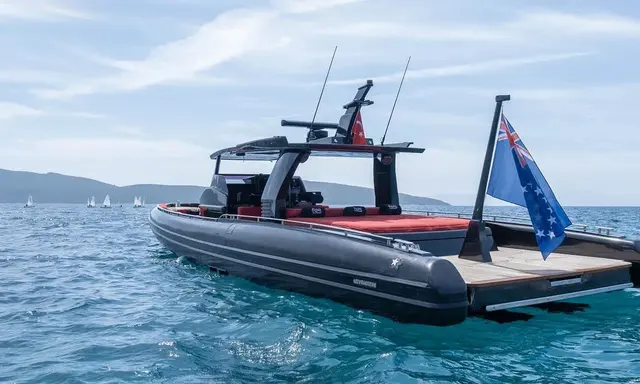
Sources and photograph: British Marine's original 11 November 2026 CPBB fast-track announcement, with background on the Boat Retailers & Brokers Association and Association of Brokers and Yacht Agents. The lead image is British Marine's official brokerage illustration. Buyer and seller considerations are independent editorial analysis and not legal or tax advice.
Sources and image credits
Reporting based on British Marine / BRBA / ABYA 11 November 2026 original boat broker fast-track certification announcement.
Lead photograph: British Marine and ABYA professional boat broker pathway launch briefing, original archival official photograph. Photograph: British Marine / ABYA, original professional boat broker career-pathway launch briefing image; archival photograph illustrating the existing certification programme, not a photograph of the November 2026 price promotion. Original official image source.