A new arrangement for yacht sales in the South West
The Barbican Yacht Agency has completed the acquisition of Network Yacht Brokers (Southwest) Ltd and the Network Yacht Brokers office in Plymouth, according to an announcement distributed by British Marine on 12 November 2026. The transaction brings together a long-established local yacht sales business and the broader Network Yacht Brokers group. Financial terms were not disclosed, and the announcement does not provide an agreed purchase price, staffing changes or future revenue targets. The acquisition is nevertheless significant for buyers and sellers of luxury sailing and motor yachts in South West England because broker coverage, local knowledge and the reach of advertising networks influence how vessels are brought to market. The new arrangement is intended to combine Plymouth-based experience with the contacts and processes of a larger group. Whether it produces material advantages for clients will depend on the quality of the actual brokerage service.
The businesses involved in the transaction
Barbican Yacht Agency describes itself as the longest-established yacht sales company in the Plymouth area. Network Yacht Brokers is a network of independent brokerage offices with a presence across the United Kingdom, Ireland and the Mediterranean. The trade association's release presents the transaction as Barbican's acquisition of the South West business and its Plymouth office, with the resulting operation joining the wider network. This distinction matters because a company acquiring a local brokerage is not necessarily equivalent to the larger network acquiring the local agency outright. Ownership and branding arrangements may be commercially complex, and the press material does not provide full corporate documentation. Buyers should focus on the practical consequence: a local brokerage operation aims to benefit from wider exposure and shared expertise while retaining its connection to Plymouth's established boating community.
Why Plymouth matters to the luxury-yacht market
Plymouth is an important South West English waterfront centre with a mixture of cruising, commercial and specialist maritime activity. Its position near the Channel provides access to domestic and international routes, while the surrounding region supports boatyards, marinas and a community of yacht owners. For a brokerage, proximity to vessels can be a significant advantage. A broker able to visit a boat, assess its condition and arrange a serious viewing without extensive travel may provide a more efficient service than a remote business relying on photographs alone. That is particularly relevant for a technically complex luxury sailing yacht or an older motor yacht with a substantial equipment inventory. The location does not, by itself, guarantee access to every desired buyer, but it provides the local operational setting in which a credible brokerage can build relationships.
A larger network can broaden marketing reach
Network Yacht Brokers' chairman, Ray Flowers, says the arrangement strengthens a network comprising twenty-one offices across the United Kingdom, Ireland and the Mediterranean, with potential for growth in the South West and Cornwall. A shared network can help listings reach buyers who are searching in another geographic area. For example, a client interested in a sailing yacht in Plymouth may be based in the Mediterranean and may begin their search through an adviser in a different office. A coordinated approach could make it easier to refer inquiries and share market knowledge. Yet buyers and sellers should not assume that every office follows identical operational practices or that an expanded network automatically increases the value of an individual listing. The quality of information, accuracy of specifications and transparency of brokerage terms remain essential.
What sellers should expect from the combined service
A vessel owner's principal concerns when appointing a broker are usually the quality of presentation, a credible asking-price strategy, access to qualified buyers and clear communication during the sales process. The new Plymouth arrangement may support those functions by combining local market knowledge with a wider range of contacts. But the official announcement is a statement of intention, not independent evidence that average selling times or achieved prices will improve. Owners considering a listing should ask who will hold the direct client relationship, which marketing channels will be used and how inquiries from other network offices will be handled. The brokerage agreement should also define commission, duration, advertising costs, authority to negotiate and any exclusivity provisions. A familiar network name is useful only if those details are clear and the broker is accountable for the service promised.
Buyers still need independent due diligence
For the buyer of a second-hand luxury yacht, a brokerage's reputation can help in arranging viewings and gathering documentation, but it is not a substitute for a proper survey, title review and technical assessment. A boat may have undergone repairs, equipment changes or long periods out of service that are not apparent from its advertising images. Prospective purchasers should confirm identity, ownership, tax status and relevant documentation through appropriate professional channels. Sea trials and inspections should be structured to suit the vessel's age, machinery and intended use. These obligations remain the same whether a brokerage operates independently or under a larger network. The combined Plymouth business may make access and communication easier, but the customer's decision must continue to be grounded in verifiable information about the individual yacht.
Local relationships remain important
Mike Harkness, managing director of the Barbican Yacht Agency, describes the deal as a way to strengthen the company's South West yacht sales offering while drawing on the wider network's expertise and international connections. In a specialist market, local relationships can be a major source of information. Marina staff, boatyard operators, surveyors and service companies may know a vessel's maintenance history or be able to arrange practical assistance during a transaction. Those relationships are built through repeated professional dealings and cannot be transferred instantly by a change of ownership or a new sign above a brokerage office. The acquisition may offer an opportunity to preserve local knowledge while adding new resources, but its success will depend on how the two operating cultures work together.
Implications for owners of 12- to 24-metre yachts
Luxury yachts in the approximate 12- to 24-metre range can present a demanding mix of ownership considerations. Their machinery and onboard systems may be complex, but they often remain in the hands of private owners rather than large professional management organisations. When such a vessel is sold, the broker may need to help organise records, surveys, haul-outs and sea trials while coordinating the interests of buyers in different locations. An established Plymouth base and access to a wider office network could be useful in that setting. However, the announcement does not specify any new service exclusively for this size category, and it would be inaccurate to claim that the merged operation has introduced one. Owners should make direct inquiries about the types of vessels each broker knows best and the services available for their specific transaction.
An acquisition without disclosed financial terms
The British Marine release states that financial terms have not been made public. No purchase price, valuation or commercial performance target should be inferred from the scale of the office network. Brokerage acquisitions may be undertaken for a variety of reasons, including geographic expansion, continuity of a local business or better use of shared sales systems. The parties have identified wider coverage and expertise as their principal rationale, but the detailed commercial arrangements remain private. This distinction is important in industry reporting because a positive announcement can easily be exaggerated into a claim of market dominance or a guaranteed increase in business. The verified facts are narrower: the South West business and Plymouth office have changed hands, and the parties have expressed an intention to strengthen their presence across the region.
A regional transaction with wider relevance
The acquisition illustrates a continuing structural question in yacht brokerage: how can local specialist businesses preserve their relationships while benefiting from broader marketing reach? An independent office may offer deep familiarity with a particular harbour, while a larger network can provide additional cross-border connections. Combining the two approaches could benefit customers if responsibilities, information and professional standards are well coordinated. The deal is not a new yacht launch or evidence of an industry-wide sales boom. It is a specific change in the organisation of brokerage services in Plymouth. For owners and prospective purchasers in South West England, the important measures will be the accuracy of listings, the competence of advisers and the quality of service delivered in real transactions. Those are the standards by which this new arrangement deserves to be assessed.
Sources and image credits
Reporting based on Barbican Yacht Agency and Network Yacht Brokers official acquisition announcement, British Marine, 12 November 2026.
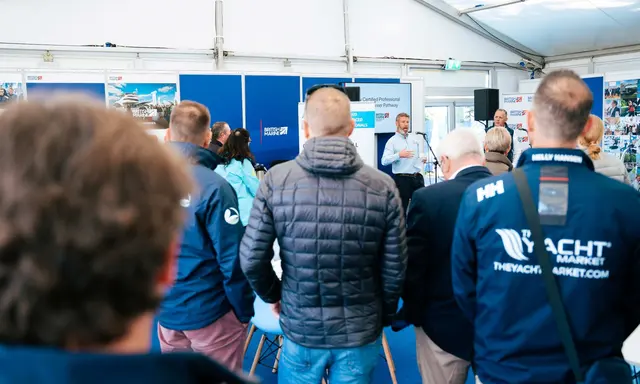
Lead photograph: Barbican Yacht Agency Takes Over Network Yacht Brokers' Plymouth Office — official source photograph. Photo: Barbican Yacht Agency and Network Yacht Brokers via British Marine, official November 2026 release. Original official image source.