A national pavilion with a broad technical remit
Finnish Marine Industries Federation Finnboat organised a twelve-company pavilion at METSTRADE 2026, the international equipment exhibition held in Amsterdam from 17 to 19 November. The federation's official 13 November release set out the mix of electronic systems, marine surfaces, electric propulsion, industrial components and equipment represented by Finnish exhibitors. It also highlighted Nextfour Solutions' Q Display Float Series, which was selected as a finalist in the DAME Design Awards. For yacht builders and owners, the exhibition provides a useful reminder that innovation is not confined to finished hulls. Changes in displays, deck materials, propulsion and the interfaces between them can affect how a boat is operated and experienced for years. The national pavilion brings together companies that may be better known to manufacturers than to individual customers, even though their products can become visible components of luxury sailing and motor yachts.
A relationship with METSTRADE stretching back decades
Finnboat says Finnish companies have participated in METSTRADE through a joint national pavilion since 1991. That continuity is commercially meaningful. Marine equipment suppliers often work through long development cycles, especially where components must be integrated into a builder's production drawings, electrical arrangements or interior specifications. Showing products repeatedly at a trade exhibition gives suppliers an opportunity to maintain relationships with customers, distributors and manufacturers rather than relying entirely on short consumer launch campaigns. Finnboat's chief executive, Jarkko Pajusalo, frames Finland's strengths as a combination of new ideas and established manufacturing competence. Those are the federation's views, not an independent ranking of national industries. The presence of multiple specialist companies is, however, evidence of a varied supplier ecosystem serving the international yacht market.
A display concept recognised by DAME
Nextfour Solutions, based in Turku, was highlighted for its Q Display Float Series, a multifunction display concept intended to support more flexible helm design. The company reached the finalist stage of the 2026 DAME Design Awards, according to Finnboat. That distinction matters because a finalist is not necessarily a category or overall winner. The federation's announcement, written before the award ceremony, describes a selection process that reduced 153 entries from 30 countries to 74 nominated products. It would therefore be inaccurate to present the Q Display as a confirmed winner based solely on this source. Its inclusion nevertheless drew attention to a fundamental issue in contemporary boat design: screens are increasingly integrated into the architecture of a helm rather than simply bolted onto a dashboard. This creates opportunities for new layouts and demands careful attention to usability.
Why helm flexibility matters to luxury yachts
A modern helm may need to accommodate charting, propulsion, monitoring, communication and entertainment functions. The number of available screens is not automatically the measure of a good installation. Display position, daylight readability, redundancy, touch operation and the behaviour of controls in rough conditions all influence whether the station is comfortable and safe. A flexible display concept may allow builders to create cleaner-looking consoles, but it must also support reliable access to information the operator needs at critical moments. Yacht owners should ask how systems behave when a display fails and whether essential functions remain available without an internet connection. The Finnboat announcement does not provide an independent technical test of the Q Display Float Series. It identifies the product and its recognition within the exhibition, inviting further evaluation through the manufacturer and the relevant installation partner.
Smartdeck combines surface protection with lighting
Among the other products discussed is Brand ID's Smartdeck EDGE LED, which integrates app-controlled lighting into protective marine surface material. The manufacturer describes downward-directed illumination designed to reduce glare and offers adjustable colours for styling or branding. That is more interesting than applying a decorative light strip to an existing surface because it seeks to combine two functions within the same component. Deck areas need protection against wear and impact, while lighting influences both atmosphere and the ability to move around safely after dark. Integrating the functions could simplify some installations, but builders should assess heat, electrical protection, service access and material durability. An attractive prototype is not evidence that a particular configuration meets every vessel's requirements. The product's suitability must be established during design and installation.
Beyond the deck: Brand ID's wider materials
Finnboat's release also refers to Smartdeck HEAT, a surface-related heating concept that received a special mention in the 2025 DAME awards, as well as Smartdeck INTERIOR and other protective applications. These products illustrate how manufacturers are reconsidering the role of materials that might once have been described only in terms of appearance or comfort. A marine surface may contribute to grip, impact protection, acoustic treatment, heating or integrated lighting. Combining functions can save space but may also complicate repair, especially when an electrical component is embedded within material exposed to saltwater and mechanical wear. Owners considering such systems should ask about maintenance, replacement costs and whether repairs require removing a large section of material. Innovation needs to be judged over the service life of a yacht, not merely at the moment of installation.
Propulsion and energy systems among the exhibitors
The pavilion includes Oceanvolt and Remoran, companies associated with electric propulsion and marine energy systems, alongside a broader group of suppliers. Electrification is an important topic in the marine industry, but it encompasses different technologies and operating profiles. A sailing yacht with auxiliary electric propulsion has a different power balance from a fast planing motor yacht, and neither should be assumed to perform equally well with the same arrangement. Regeneration, storage, charging and control systems must be engineered as a complete installation. The Finnboat source establishes that companies active in these areas were participating in the event; it does not announce new performance records or certify a particular vessel. For owners, the most useful discussions concern real duty cycles, available energy, reliability and practical service arrangements.
Twelve companies, one trade platform
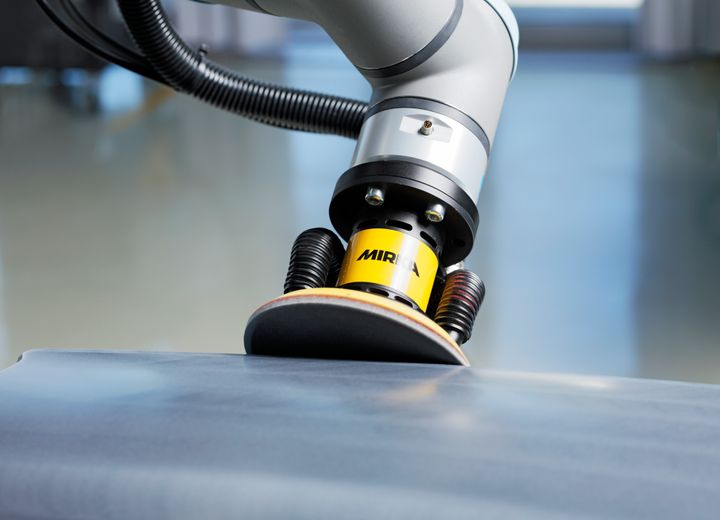
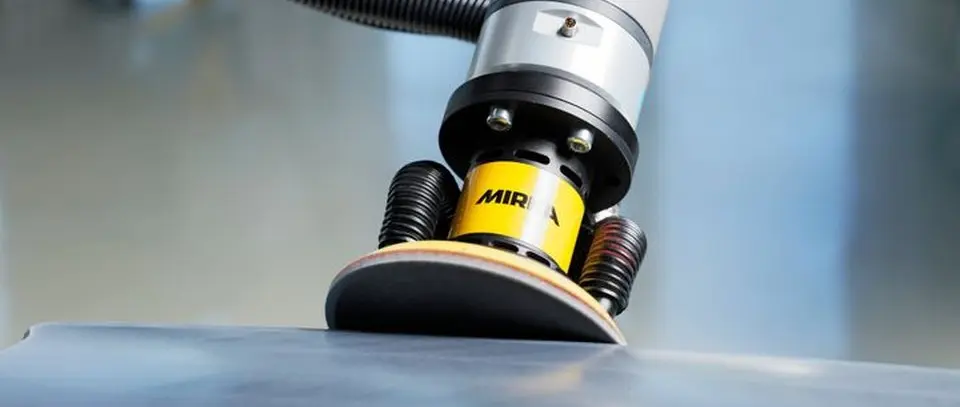
The federation names Brand ID, Lahnakoski, Mirka, Navix, Nextfour Solutions, Oceanvolt, Päijän Boats, Remoran, Toppi, VA-Varuste, Wallas and Öja Alu-Tank as exhibitors within the pavilion. The list ranges from familiar consumer-facing equipment to components that an owner might never notice directly. That breadth is important because a finished yacht is the product of numerous specialised manufacturing relationships. A ventilation or heating component, a fabricated tank or a precision surface treatment may contribute to comfort and serviceability without becoming a headline feature in a sales brochure. A national supplier network can give boatbuilders access to multiple kinds of expertise, but compatibility and procurement remain individual decisions. A builder must assess specifications and warranties for each component rather than rely on its presence at a prestigious trade event.
What an exhibitor's presence can and cannot prove
The pavilion provides an opportunity for product demonstrations, commercial meetings and discussion of future supply arrangements. It does not demonstrate that every exhibitor secured new contracts, or that every showcased product is in full commercial production. Similarly, award recognition should be reported with the correct status and date. The distinction matters for a professional readership. A product still at prototype stage may deserve attention for its potential, while a well-established component may be more immediately relevant to a refit. Owners and managers can benefit by asking direct questions about delivery times, installation requirements, compliance documentation, warranty terms and local support. These operational details often determine whether a technology moves from a trade-show display to a practical application aboard a yacht.
An engineering ecosystem to watch
Finland's marine suppliers offer a useful illustration of innovation taking place at multiple scales. A new display may change the shape of a helm; an integrated deck material can affect comfort and lighting; and an energy system can influence machinery-space planning. None of these developments alone replaces the role of a boatbuilder in creating a coherent vessel. Their value arises through careful integration and testing. Finnboat's long-standing METSTRADE participation gives its companies a platform for those conversations with international customers. For luxury sailing and motor-yacht owners, the lesson is to look beyond the brand name of a finished vessel and consider the specialists that shape the quality of the onboard experience. The most convincing products are those whose engineering can be explained, supported and maintained after the exhibition has closed.
Sources and image credits
Reporting based on Finnish Marine Industries Federation Finnboat original STT Info press release, 13 November 2026.
Lead photograph: Finnboat 2026 METSTRADE official Finnish marine technology supplier photograph. Photo: Finnboat official press assets, 13 November 2026; illustrative manufacturer media photograph. Original official image source.