Electric boating becomes an infrastructure question
Suntex Marinas has announced an electrical infrastructure project at Tahoe Keys Marina in California intended to support the next stage of electric boating on Lake Tahoe. The November 2026 release describes a new dedicated 100-amp, 480-volt three-phase shore-power pedestal, installed to accommodate a planned movable DC fast charger. The distinction is important: the electrical connection is in place, but the announcement does not establish that a commercial DC fast-charging service is already operating, available for public use or connected to every slip. Suntex also highlights discussions with FlyTahoe, a developer of an electric hydrofoil watercraft concept. For owners and operators of small luxury boats, the development illustrates a challenge that is becoming more significant as marine propulsion systems change. Buying an electric vessel is only part of the decision; the availability, reliability and operating rules of charging facilities determine whether the vessel can fulfil a realistic cruising programme. The Tahoe Keys initiative is therefore relevant even to owners who do not plan to visit Lake Tahoe.
What has actually been installed
The Suntex announcement identifies a 100-amp electrical service at 480 volts and three-phase supply at Tahoe Keys Marina. That description refers to the electrical infrastructure intended to serve a future charger, not the rated DC output that an electric boat would necessarily receive. Conversion losses, charger specification and limits imposed by the vessel's battery-management system will affect the actual charging performance. An operator cannot promise a charging time without knowing the charger and the boat. The company also says the marina has modern electrical infrastructure serving its existing 305 slips. It would be inaccurate to report that 305 slips each have a DC fast charger, or that every berth is compatible with any new electric vessel. A prospective user must ask which exact berth or charging position supports the intended equipment, whether the service is available yet and what procedures apply. The announcement is a milestone in preparing infrastructure; future operational availability is a separate question.
Why a movable DC charger is of interest
A charger that can be deployed where necessary could provide flexibility for a marina with different vessel sizes and seasonal demand. Fixed chargers require a dedicated location, while movable equipment may allow an operator to make better use of the electrical supply when compatible vessels visit at different times. That flexibility introduces engineering and operating requirements, including how the unit is secured, protected from water and connected safely. Cable length, dock movement, weather exposure and the clearance around passengers must be considered. The Suntex release refers to future provision for a movable DC fast charger; it does not give enough detail to describe its final mobility system, output power, connectors or safety approvals. Owners should not assume that any particular electric vessel can use it until those specifications are confirmed. A suitable installation will require coordination among the marina, charger supplier, boatbuilder and local electrical authorities. Practical convenience must never come at the expense of protection against electrical faults or unsafe access.
The role of FlyTahoe
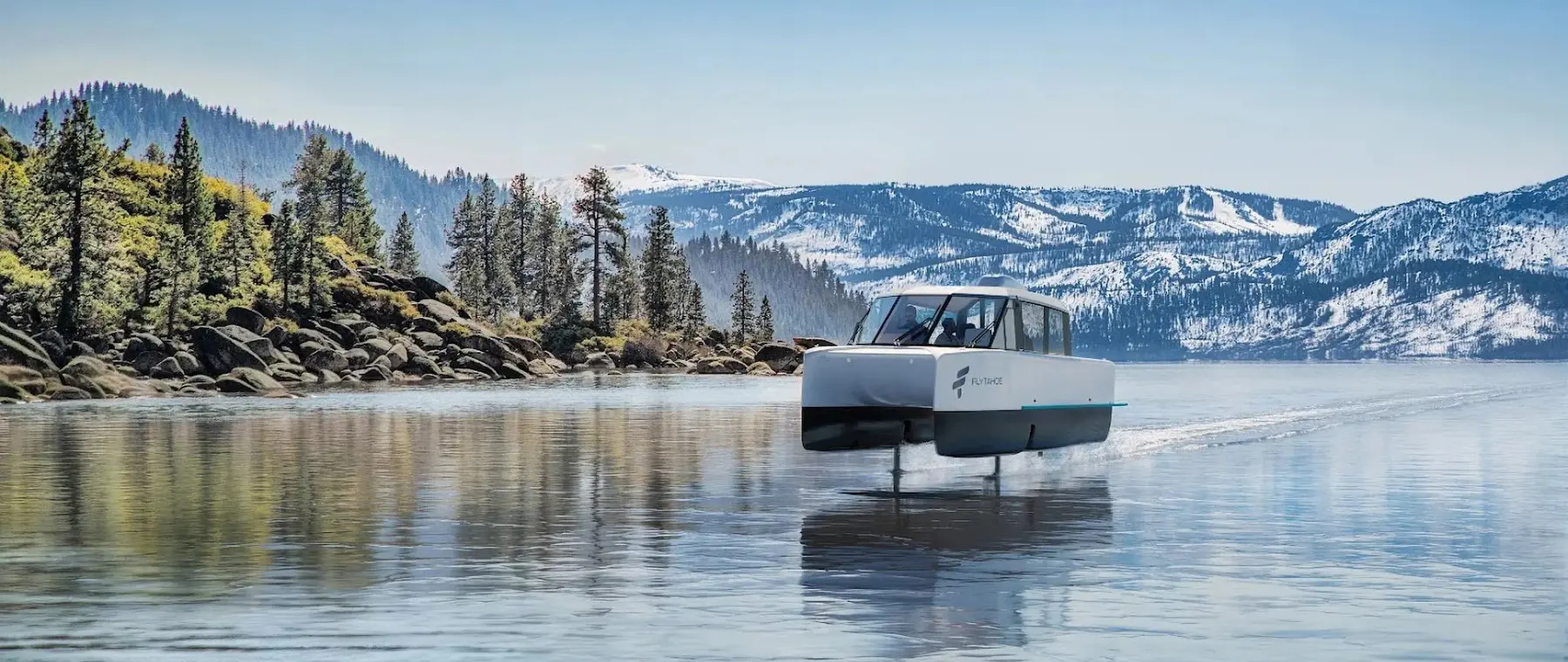
Suntex's news material links the infrastructure work with future electric-watercraft initiatives and highlights FlyTahoe's development of a hydrofoil vessel concept. An electric hydrofoil operates on a different principle from a conventional displacement cruiser, reducing some forms of hull contact with the water when successfully flying on its foils. Its operational requirements may nevertheless include significant power demand, appropriate depths and safe handling at low speed. A picture of a prototype or development vessel cannot establish a commercial passenger service, certified performance or guaranteed timetable. Suntex's announcement should be understood as support for emerging technology, not proof that every proposed operation has already started. For luxury-yacht owners, the broader lesson is that marinas may need to serve new classes of craft with different electrical connectors and turnaround expectations. A service designed for a hydrofoil operator may not automatically satisfy the charging needs of a visiting private motorboat.
How electrification changes trip planning
A conventional small motor yacht can often replenish its fuel at a range of recognised marinas. Electric and hybrid vessels face a different planning process. The skipper needs to know not only where electricity is available but the power rating, physical connector, supported voltage and the maximum charge rate that the boat can accept. A high-power shoreside supply can be of little value if the vessel's onboard equipment cannot use it. Likewise, a fast charger that is frequently occupied or unavailable for maintenance may create operational difficulty. Owners should plan reserves and alternatives instead of assuming that a proposed facility will be working on arrival. Lake Tahoe's freshwater setting and seasonal variations also differ from those of a Mediterranean harbour. The operating envelope of any craft must be assessed against the conditions and navigational rules in its intended waters. Electrification can change how owners manage leisure time, but it does not remove the need for conservative route and energy planning.
Battery capacity is not the whole story
Electric boats are often described by battery capacity, but that figure does not by itself determine a useful range. The energy required to move a vessel depends on hull form, speed, load, sea or lake conditions and the efficiency of the propulsion system. Hotel loads such as refrigeration, communications and cabin climate control consume additional electricity. A hydrofoil may have relatively efficient operation within a defined speed regime yet still require substantial energy during take-off or low-speed manoeuvring. Owners should request measured consumption data at the speeds they actually intend to use. A battery's usable capacity can also change with temperature, age and the limits imposed by the management system. Planning must include a reserve for unexpected delays or route changes. The value of shoreside charging is greatest when it fits a well-understood energy budget rather than encouraging the skipper to rely on optimistic maximum-range figures.
High-voltage installations require disciplined safety
A three-phase 480-volt supply is not an ordinary small-boat convenience outlet. The marina operator needs suitable electrical equipment, protective arrangements, inspection procedures and qualified personnel. Charging hardware must be compatible with the marine environment and protected from physical damage, moisture and inappropriate public access. On the vessel, battery isolation, overcurrent protection, fire precautions and system monitoring must all form part of a properly engineered installation. A visitor should not attempt to adapt a charger to a boat through improvised connections simply because an electrical pedestal has adequate nominal power. The existence of an installed supply also does not confirm that a particular charger has passed commissioning or can be operated by the public. Detailed operating information must come from Suntex and the eventual charger supplier. These are standard engineering safeguards, not allegations about the Tahoe Keys project. As fast charging reaches more marinas, clarity about safe use will become increasingly important.
Why the existing marina network matters
Suntex describes Tahoe Keys as an established marina with 305 slips and a broader electrical infrastructure base. That offers a useful foundation for planning upgrades because the operator already manages dock utilities, maintenance and boat movements. However, higher-power charging creates demands that differ from ordinary shore connections used for lighting and domestic appliances. Local distribution capacity, cable routing, transformer requirements and protection settings need evaluation. Several electric craft charging at the same time could create a different peak load from a marina used primarily by conventional boats. The operator may need to manage reservations and permitted charging windows as the service develops. A well-designed expansion should allow users to understand exactly what is available and what it costs. The announced dedicated pedestal signals preparation, while the actual operational arrangements must still be verified once the movable charging equipment is selected and brought into service.
A freshwater marina has distinct conditions
Lake Tahoe is a freshwater environment with its own navigation, weather and ecological considerations. Many yacht owners associate electric propulsion with reduced local exhaust emissions, which may be appealing in sensitive waters. Yet the environmental benefit of a particular vessel depends on how its electricity is generated, the materials used in its batteries and the full operating programme. Electric equipment should not be presented as having no environmental footprint. Local rules may restrict vessel operation or require particular precautions independent of propulsion type. Cold temperatures and seasonal storage can also affect battery management and service requirements. Operators will need procedures appropriate to the lake, rather than copying a warm-water marina charging model without adjustment. The best measure of progress is a reliable installation that users can operate safely and that delivers documented benefits within local conditions.
The implications for other cruising destinations
A Tahoe Keys charging provision may seem geographically distant from the Mediterranean and Northern European yachting market, but its lessons are widely applicable. Owners considering an electric tender or smaller motorboat may visit marinas whose infrastructure is still being developed. Every facility needs to communicate its exact capability, not simply advertise that electric charging is available. Standardised connectors, predictable bookings and competent technical support could improve the experience. Suppliers may also need to provide equipment that can be serviced by local contractors rather than requiring specialist travel for every fault. For operators, electrical upgrades create investment choices involving infrastructure capacity and expected demand. A marina with only occasional electric visitors may adopt a different solution from one serving a commercial fleet of electric vessels. The Suntex project is therefore an example of a broader transition from viewing electricity primarily as a domestic shore utility to treating it as a possible propulsion energy source.
Commercial operators have particular needs
A business providing passenger trips or watersports experiences must think about charging in terms of scheduling and reliability. The number of trips available in a day can depend on battery replenishment time, weather interruptions and maintenance. A movable charger might assist operational flexibility, but only when its capacity and availability are confirmed. Commercial operators also need appropriate licences, insurance, staff training and vessel safety certification. The exact requirements vary by jurisdiction and type of service. An announcement involving a development-stage hydrofoil should not be interpreted as proof that commercial passenger operations have received every necessary approval. An operator planning a similar venture elsewhere should prepare detailed financial forecasts that include energy cost, charging downtime, battery service, seasonal demand and the cost of obtaining suitable berths. Attractive technology is not a business model unless the surrounding infrastructure and regulatory arrangements support it.
What a prospective user should ask Suntex
Before relying on Tahoe Keys for electric charging, an owner should contact the marina and establish whether the planned DC charger is installed, commissioned and available for the intended vessel. The operator should be asked for connector type, maximum output, pricing, permitted vessel dimensions, booking procedure and expected access hours. Owners also need to confirm whether ordinary shore power remains available if fast charging is not yet operational. For longer trips, identify alternate charging or recovery arrangements and establish a conservative energy reserve. Those questions are appropriate even when the marina is making serious progress on infrastructure. They distinguish a physical electrical provision from a service that is ready to use. A prudent yacht owner should never plan a passage solely on the basis of a headline that says a charging project is being developed. Written confirmation is essential.
The meaning of the November announcement
The November 2026 Suntex release establishes two related but separate developments: an electrical supply has been installed to prepare Tahoe Keys Marina for a movable DC fast charger, and the operator is engaged with wider electric-vessel innovation associated with FlyTahoe. Neither statement confirms that every charger or planned vessel operation has entered commercial service. That precision matters because infrastructure projects can involve several stages before an owner may use them. The initiative nevertheless reflects a real need. As electric propulsion and hydrofoil concepts develop, marinas will need to manage energy delivery as carefully as they manage slips, waste and water. For Luxury Yacht Guide readers, the takeaway is to look beyond the boat's battery rating and examine the network of facilities that make an electric cruising programme feasible. The future of electric leisure boating will depend on reliable shoreside operations as much as on the vessels themselves.
Official source and image credit
The electrical specification, Tahoe Keys marina context and FlyTahoe relationship are drawn from Suntex Marinas' official November 2026 electrification announcement. The lead photograph is the official **FlyTahoe electric hydrofoil craft publicity image** supplied with that company news release. It is not a photograph of a functioning public DC charging station or proof that the craft is operating a scheduled service. Photo credit: Suntex Marinas / FlyTahoe, official company announcement visual. Copyright remains with the original owner; the image is used exclusively for independent editorial reporting about the planned marine technology infrastructure.