Sunreef Yachts has unveiled a new wing-sail concept intended to simplify sailing catamaran operations through aerodynamics, automation and integrated energy management. Announced on its official website in November 2026, the Sunreef Wing is described as a self-supporting structure capable of rotating through 360 degrees, with adaptive camber control and an AI-assisted system coordinating sailing and propulsion. The company proposes introducing it across its sailing range, while leaving details of implementation on individual models for future announcements. This is a technology development report, not evidence that every current Sunreef catamaran has already been delivered with the system.
A new approach to handling wind
Conventional sails require trimming as the wind changes, and their efficiency depends on the condition of the sail and the skill of the crew. Sunreef's wing concept aims to automate much of that adjustment. The manufacturer describes a rotating aerodynamic surface that positions itself in response to the apparent wind and alters its profile through adaptive camber control. For an owner, the appeal is the possibility of a propulsion system that requires fewer continual manual interventions.
Automation does not make wind conditions predictable, and a sail that adjusts itself still requires appropriate seamanship. A crew must understand its limits, monitor surroundings and be ready to respond to changes in weather. The official release describes the intended technology but does not provide a completed set of operating manuals for individual yacht installations. That distinction matters when considering whether a sophisticated system will actually reduce workload during a particular voyage.
A self-supporting structure rotates completely
Sunreef states that the Wing can rotate through a full 360 degrees, allowing it to change orientation without relying on the same trimming techniques used by conventional soft sails. The structure is also described as self-supported, although the detailed mechanical design is not fully specified in the public announcement. Such a system potentially changes the relationship between the sail and its supporting hardware, with consequences for control, maintenance and integration into the yacht.
A moving aerodynamic structure carries loads that depend on wind strength, apparent wind direction and the vessel's movement. Those loads must be transferred safely into the hull and supporting structure. Buyers should not infer that removing some traditional rigging components eliminates structural or inspection requirements. A wing-sail installation creates its own engineering demands, which need to be documented by the designer and validated for the exact model on which it will be used.
Adaptive camber is meant to improve efficiency
The builder describes a profile that adjusts continually as sailing conditions evolve. Camber, the curvature of an aerodynamic surface, influences how a sail or wing develops force. Adjusting it allows a control system to respond to changing apparent wind without requiring an operator to make every change manually. In principle, a well-designed arrangement could provide more consistent aerodynamic performance while making sailing easier for a smaller crew.
However, the degree of improvement depends on the comparison being made. A new wing should be evaluated against a conventional rig of the same area under defined apparent-wind conditions and with the same assumptions about hull performance. Changes in sail shape do not automatically yield a proportional change in the boat's speed. The announcement gives claimed advantages, but owners should seek the methodology and actual test conditions before making technical purchasing decisions.
Sunreef publishes two headline performance claims
According to the manufacturer, under optimal apparent-wind conditions the Wing can produce 50 percent more lift than a conventional sail of equivalent area and 40 percent more propulsive force. These are specific claims and should be reported as such, with the qualifying phrase about optimal conditions. They are not independent test results available for every vessel or wind direction. The effect on actual passage speed, course made good and energy use may be quite different in ordinary conditions.
Those figures are interesting because they indicate the scale of improvement Sunreef hopes to achieve, but a buyer needs more information. What sail geometry forms the comparison? How are structural weight and drag accounted for? Is the system evaluated upwind, on a reach or across a broader range of headings? Does its advantage persist in gusty conditions? Those are engineering questions that cannot be answered by a promotional percentage alone. They should be pursued as detailed specifications become public.
Automatic hoisting and lowering target workload
Sunreef says the technology will provide fully automated hoisting and lowering, reducing some of the operations normally associated with handling conventional sails. This could be attractive to owners who value sailing but do not want to depend on a large crew for every manoeuvre. It may also make it easier to transition between different propulsion modes, at least under the conditions for which the system is designed. However, automation creates a dependence on sensors, actuators and controls whose reliability must be assessed.
A mechanically simplified operation is not automatically free of maintenance. Moving parts, electronics and software need monitoring, updates and procedures for failure. A sensible buyer will want to understand how a wing can be secured in the event of an electrical fault, how manual overrides operate and what the captain should do in strong winds. The press release describes the intended reduction in complexity, but it does not establish failure rates or long-term service costs.
AI-assisted coordination extends beyond the sail
The manufacturer proposes an AI-assisted control system that examines sailing conditions and coordinates the wing, rudders and propulsion. This implies a broader role than a basic autopilot that holds a selected heading. The system is intended to manage the available wind and propulsion in a way that keeps sailing efficient while reducing routine crew input. As a design idea, it addresses the growing complexity of modern luxury yachts with many connected systems.
Artificial intelligence should not be treated as a substitute for a qualified navigator. Automated decisions depend on the information available to the system and the boundaries defined by its engineers. A sensor may fail, communications may be interrupted or conditions may exceed those anticipated during development. Prospective owners should ask how the system handles uncertainty, alerts the crew and transitions to manual operation. The announcement identifies AI-assisted coordination as a proposed capability, not an independently validated safety case.
Voice commands enter the yacht interface
Sunreef's release also refers to voice-command functionality, allowing users to initiate operations without navigating several complex menus. This could be convenient in appropriate settings, particularly when an operator needs to access a routine function quickly. Voice systems on a yacht, however, work in an environment where wind, engine sound and several simultaneous conversations may affect recognition. A well-designed interface should make it difficult for an accidental command to produce an unsafe action.
The company has not published the full list of permitted commands or the procedures that will be required for critical operations. It would therefore be premature to suggest that owners can steer, trim or lower the wing through any arbitrary spoken phrase. The more useful question is how the system distinguishes routine adjustments from decisions requiring explicit human confirmation. Ease of use becomes a real benefit only when it is compatible with safe operation.
Energy generation changes the role of the wing
One of the more unusual elements of the concept is the claim that the wing can contribute to energy generation even when the yacht is operating under engine power. Sunreef describes using apparent wind as part of a larger energy-management approach. This is distinct from the more familiar idea of sails solely providing thrust. It introduces questions about how the generated energy is recovered, how much power it can supply and what the resulting drag or other tradeoffs might be.
Energy does not appear without a cost or source. A system harvesting energy from apparent wind needs to be assessed as part of the complete vessel, including any additional resistance or change to propulsion demand. A claim of energy generation is meaningful when supported by measured output and an explanation of the operating conditions. The official release describes the intended capability but does not give a full published power curve. It should not be translated into an unsupported promise of fuel savings on every passage.
Solar Skin and hydrogeneration join the system
Sunreef says its next-generation sailing catamarans will integrate the Wing with Solar Skin technology and hydrogeneration. Solar Skin involves photovoltaic surfaces within the yacht's structure, while hydrogeneration aims to recover energy through propellers while sailing. An AI-based platform is intended to coordinate these sources with engines and onboard energy demand. The wider aim is to manage power production and consumption more intelligently over a cruise.
Each energy source has different strengths and limits. Solar output varies with sunlight and shading, while hydrogeneration depends on the vessel's motion and can affect drag. Batteries and conversion systems also introduce losses. Combining sources may offer useful flexibility, but system efficiency should be evaluated through real usage data rather than assuming that several renewable technologies automatically eliminate the need for other power. A credible design report would describe the loads, generation and storage capacity together.
A smaller crew still needs clear responsibilities
Automation is often presented as a route to greater independence for owners, but reduced manual sail handling does not remove the need to understand weather, collision avoidance and navigation. A captain or owner remains responsible for decisions about routing, safe speed and the limitations of onboard equipment. The Sunreef Wing may eventually change which operations require physical effort, yet trained supervision will still be necessary. A yacht is not transformed into an unattended autonomous vehicle by adding an intelligent rig.
The practical value may lie in making some tasks more consistent and less exhausting during longer passages. Crew can then devote more attention to route planning, observation and guest needs. To realise that benefit, the system must present information in a way that users can understand and must provide suitable fallback modes. Owners should ask whether relevant training is included and how upgrades will be maintained over the yacht's service life.
What remains unconfirmed for individual models
Sunreef says it intends to introduce the Wing across its sailing range, with details of specific model applications to follow. This means a prospective buyer should not assume that a particular Sunreef 60, 70 or 80 already includes the technology or that the installation will be identical across models. Hull geometry, displacement, rig size and electrical systems may influence how the concept is implemented. Pricing, delivery schedules and service arrangements are also not established in the public announcement.
This uncertainty is normal for a newly introduced technical concept, but it should be reflected in editorial language. A proposed system can be important industry news before it is widely delivered, provided the distinction between concept, development and certified production product remains explicit. Buyers should request the actual specification and documentation for any yacht they are considering rather than relying on technology headlines alone.
The opportunity for mid-size luxury sailing
The technology is especially relevant to owners of luxury sailing catamarans who want to balance active sailing with comfort and reduced operational complexity. At the smaller end of the Sunreef range, automation may be attractive to an owner who sometimes sails with a limited crew. On a larger yacht, the integration of systems may instead be evaluated through its effect on professional operations. Different sizes create different engineering and service challenges.
There is also a wider implication for yacht design. A wing integrated with energy systems may influence deck layout, structural design and the space needed for machinery. It could alter the way designers balance visual appearance with useful working areas. Those possibilities are interesting, but they remain questions until specific installations and independent test data are available. The strongest reporting recognises the design ambition without treating all its expected benefits as accomplished facts.
What the November announcement establishes
The official development is Sunreef's introduction of an AI-assisted wing-sail system with a rotating, adaptive aerodynamic structure, automated handling and proposed integration with propulsion and energy-management systems. The builder reports claimed lift and propulsive-force advantages under optimal conditions and describes a plan to deploy the technology across its future sailing range. No universal delivery date or independently verified operational savings have been supplied.
For luxury-yacht buyers, the news is important because it points toward a potentially different way of operating sailing catamarans. The next stage should involve model-specific specifications, a published safety approach and measured performance data. Until then, the Sunreef Wing is best understood as a manufacturer-announced technology direction with real engineering questions still to be answered, rather than as a proven replacement for every conventional sail plan.
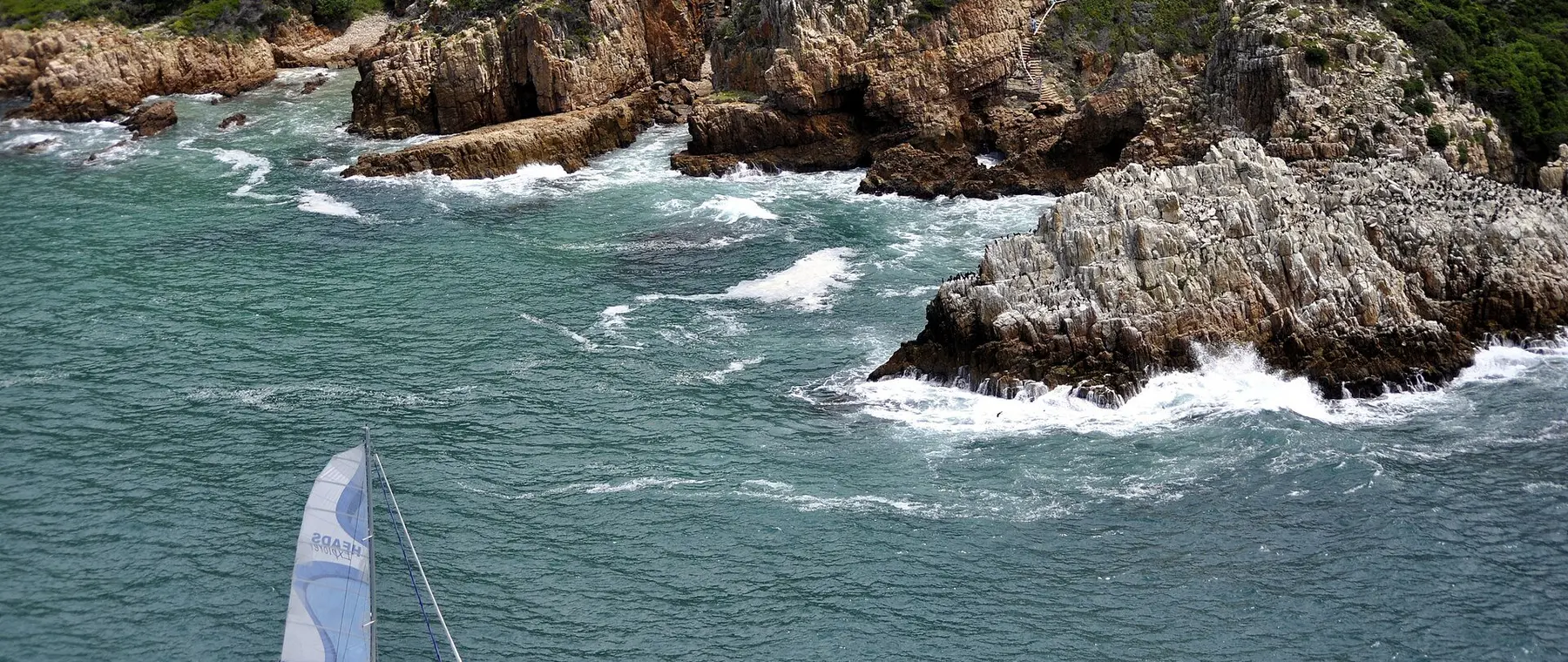
Official source: Sunreef Yachts, Sunreef Wing: Reimagining the Future of Sailing with AI-Powered Technology, released November 2026. The licensed lead photograph is archival Sunreef sailing imagery and is not presented as a photograph of the announced Wing installation.
Sources and image credits
Reporting based on Sunreef Yachts official 19 November 2026 Sunreef Wing technology announcement.
Lead photograph: Sunreef Wing Introduces AI-Assisted Sailing Controls — licensed historical context (2026). Licensed archival photograph of a sailing catamaran, illustrating wind propulsion, not the announced Sunreef Wing system. Photographer: Darren Glanville from Acle, Norfolk, UK. Licence: CC BY-SA 2.0; via Wikimedia Commons. Licensed contextual photograph.
Creative Commons photograph attribution · Image licence terms.