A propulsion supplier changes its scope
MAN Engines has extended its marine product offering to include integrated POD propulsion systems developed in cooperation with ZF, according to a company statement dated 16 November 2026. The announcement was made ahead of METSTRADE, held in Amsterdam from 17 to 19 November, where a model of the arrangement was presented. This is a systems-integration announcement, not the launch of an individual yacht. MAN describes an approach extending from helm controls through engines and drive units to the propellers. Its strategic purpose is to reduce the number of separately coordinated components in a propulsion installation. For an owner considering a luxury motor yacht, the central question is whether that integration produces measurable benefits in manoeuvring, serviceability and operating reliability on the particular hull under consideration.
What a POD system actually changes
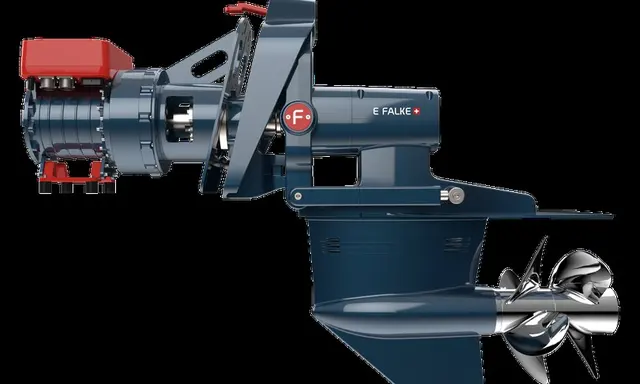
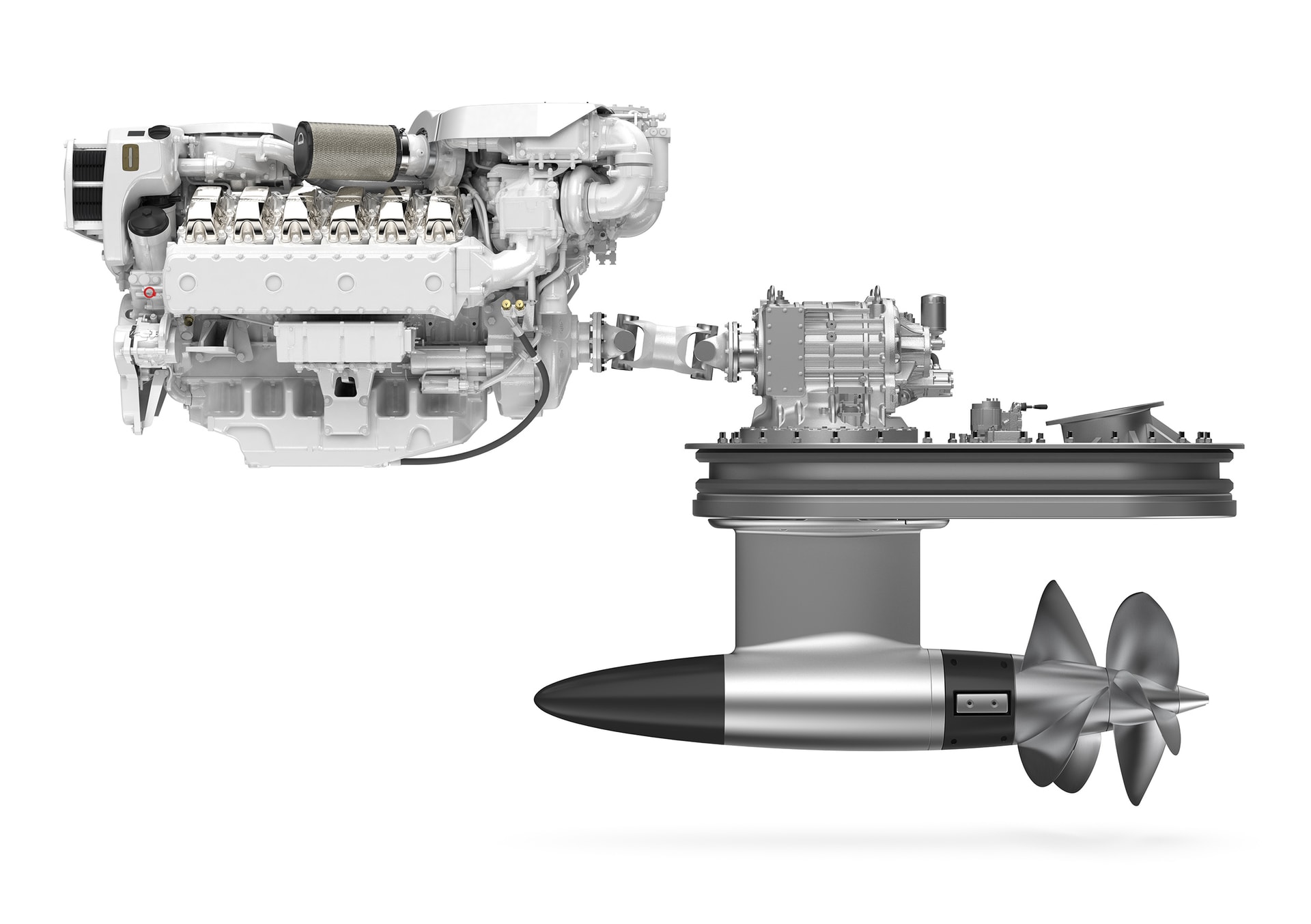
A conventional inboard propulsion arrangement often transmits power along a shaft to a propeller and relies on separate rudders for directional control. A POD drive combines propulsion and steering through an underwater unit that can direct thrust. The exact mechanical layout differs among designs, and the description should not be confused with a simple claim that every POD boat turns more sharply in every condition. Close-quarters behaviour depends on the installed hardware, control calibration, windage and hull design. Nevertheless, the ability to direct thrust offers designers different options for handling a vessel around pontoons, marina entrances and tight berths. Buyers should examine practical handling demonstrations with the actual yacht, particularly when using additional bow or stern thrusters, rather than rely solely on a supplier's schematic diagram.
The MAN and ZF division of work
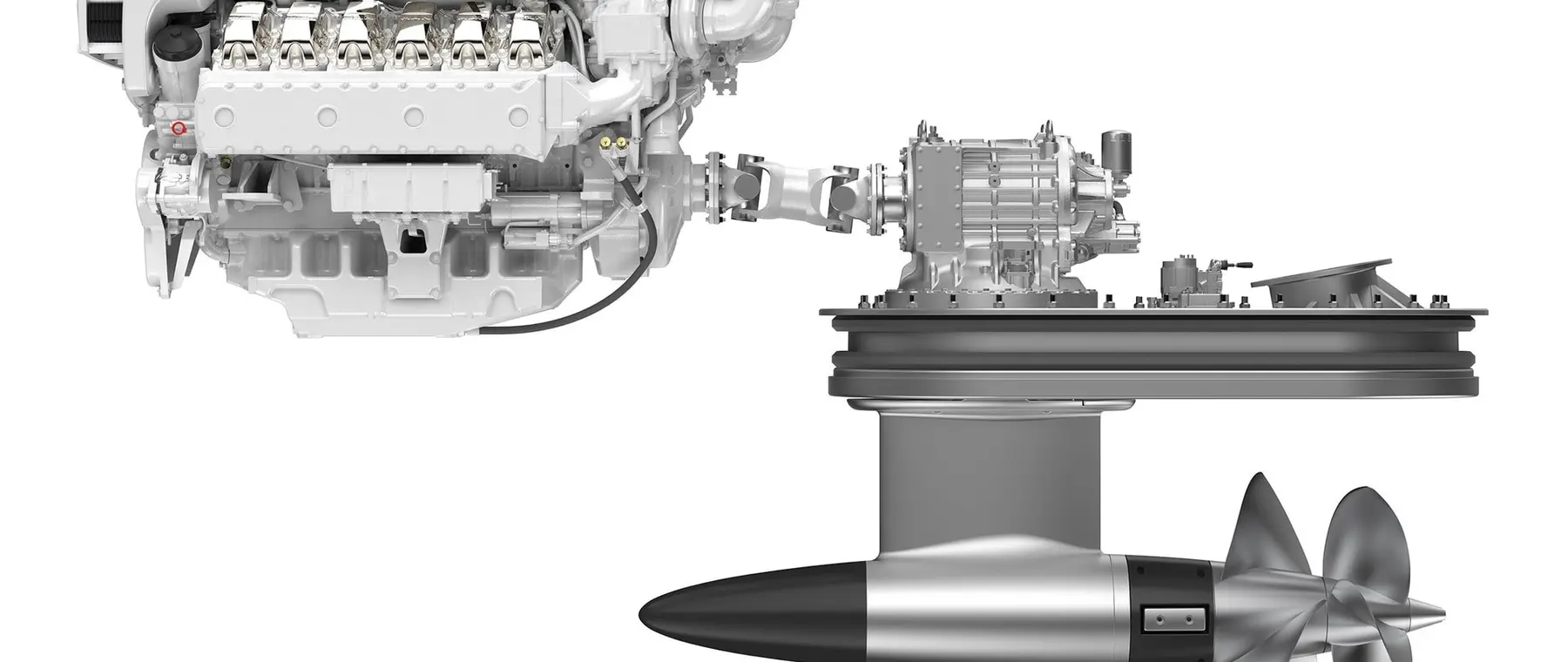
The release identifies a coordinated package involving MAN engines, ZF POD drives, ZF control levers, joysticks and displays, as well as the software linking those elements. MAN presents itself as responsible for the overall system proposition. That framing matters because modern propulsion installations bring together machinery, electronic controls and diagnostic interfaces. If the components are selected independently, shipbuilders must ensure that they communicate reliably and satisfy the intended operating envelope. A more closely integrated package can simplify that engineering exercise, although it does not make the shipyard's installation or commissioning duties disappear. Owners should ask who will investigate a fault crossing the boundary between an engine, a drive unit and its electronic controller, and whether one service contact coordinates the response.
Two POD ratings appear in the announcement
MAN states that the ZF POD 4600 is intended for V12 engine output up to 1,213 kilowatts, equivalent to 1,650 horsepower, while the ZF POD 4900 extends the stated range to 1,470 kilowatts, or 2,000 horsepower. Those are described application ranges, not proof that a particular yacht will achieve a stated speed or efficiency figure. An integrated powertrain still needs to be matched to vessel displacement, propeller loading, cooling requirements and expected service profile. The published numbers also should not be read as a promise that either package is suited to every yacht between 12 and 23.99 metres. Some vessels in that category have very different power requirements. A responsible technical comparison would use the full drive specification and a documented naval-architectural assessment.
Why manoeuvrability deserves scrutiny
An owner usually notices propulsion technology most immediately when leaving a crowded berth, entering a lock or approaching a fuel dock. In those situations predictable responses and clear communication between crew members matter more than top-speed figures. A joystick interface may simplify a set of engine and steering commands, but it does not eliminate the effects of tide, crosswind, wash or obstacles. Operators need instruction in the particular boat's behaviour and should understand how controls respond during failures or degraded modes. The release's emphasis on intuitive operation is a meaningful design goal, yet it is not a substitute for a supervised sea trial. Prospective purchasers should test both normal and alternative control stations and discuss the boat's emergency handling procedures before assuming a technology will make difficult manoeuvres routine.
Counter-rotating propellers and efficiency
MAN describes the POD units as directional underwater drives using counter-rotating propellers. That configuration is part of the supplier's efficiency argument, and it can help designers manage the flow of water through the propeller system when the entire vessel is carefully engineered. The word efficiency still needs a denominator: consumption per nautical mile, performance at a given speed or an annual fuel total can tell different stories. The company says an optimally designed installation can offer fuel-consumption advantages; it has not supplied independent measured savings for every applicable yacht. Owners comparing alternative propulsion packages should request matching trial conditions, displacement assumptions and transparent operating points. It would be premature to state a universal percentage improvement based only on the technology's arrangement or its marketing description.
Fewer integration boundaries may help a shipyard
The press release argues that a coordinated package can reduce engineering interfaces, installation complexity and commissioning effort. In boatbuilding, every interface between equipment suppliers requires agreed specifications, wiring plans, software compatibility and a process for accepting the finished system. Consolidating responsibility may lower the number of disputes that emerge when equipment performs correctly on its own but not as part of the installation. Yet this is a potential organisational advantage rather than proof of a shorter build time for a named yacht. Production schedules depend on yard capacity, design freezes and many other factors. Buyers should look for a realistic commissioning plan with clear responsibility for acceptance tests, not merely an assertion that an integrated solution must be faster or cheaper to deliver.
Maintenance will still involve underwater hardware
POD propulsion changes which machinery a service team must inspect, including seals, gear housings, steering mechanisms and the underwater drive itself. It may improve access to some components while making others more specialised. The exact maintenance implications depend on the manufacturer and model, and should be established from current service documentation. An owner should ask what inspections are required during haul-outs, what happens after a grounding or impact and whether an authorised repair facility is available near the home berth. Equipment integration does not eliminate these questions. In fact, if software and mechanical components form one tightly coordinated system, the owner may have a stronger reason to verify that qualified technicians can diagnose all elements rather than only the diesel engine.
Lifecycle responsibility matters more than a label
MAN positions the arrangement as an end-to-end service offering extending from design and installation through global support. That could make the ownership experience more straightforward when responsibility is genuinely coordinated. Practical value, however, comes from the documents a purchaser receives: warranties, approved service contacts, maintenance plans, operating limitations and access to spare components. A single corporate name on the presentation does not automatically make every technician certified on every product. The handover file should identify the serial numbers and exact configurations of both engines and drives, together with software versions and any required updates. Experienced owners will also clarify what cover is provided after an accident and whether local facilities can lift a yacht to inspect or remove a submerged drive.
Hybrid technology sits alongside the POD offering
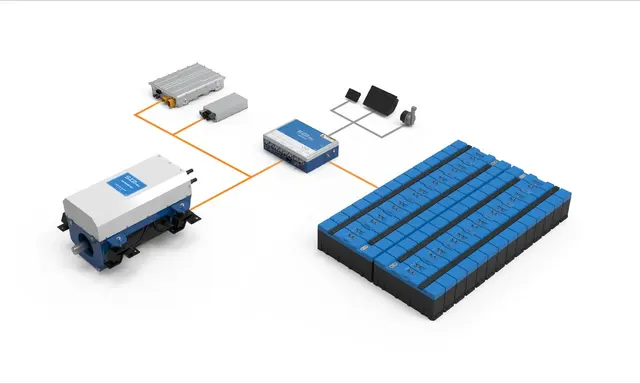
The company also refers to its MAN Smart HYBRID Experience as part of a wider portfolio of alternative marine propulsion concepts. That reference does not mean the announced ZF POD packages are all hybrid installations or that a particular motor yacht will cruise silently under electric power. A hybrid system involves additional design choices around batteries, converters, electrical protection and operating strategy. Energy storage has costs, weight and safety consequences that cannot be assessed from an engine press release alone. The value of discussing hybrid propulsion alongside mechanical POD drives is that yacht propulsion is becoming an increasingly integrated design field. Owners need to compare complete systems, including hotel loads and intended voyage patterns, instead of treating individual components as interchangeable options.
The timing after METSTRADE
MAN stated that the coordinated POD solution was available for new projects with immediate effect and that a model would be on view at its METSTRADE presence between 17 and 19 November. As of this report on 25 November, the Amsterdam exhibition dates are in the past. Reporting them as an upcoming opportunity would be inaccurate. The announcement instead provides a point of reference for builders and owners discussing future vessel projects after the show. The event's role was to introduce the system to the industry, not to establish performance on a named delivered yacht. Before a purchaser attributes a capability to a specific model, the builder should confirm whether that exact engine, POD and control package has completed the necessary integration and validation work.
Questions for a prospective owner
Someone comparing an integrated POD yacht with a conventional shaft-driven motor yacht should start with the intended cruising programme. What is the expected passage speed and annual mileage? Which marinas have sufficient facilities for haul-outs and specialist service? How easy is it to operate from the main helm and any flybridge? What redundancy exists if a controller or display fails? Does the installation allow inspections without dismantling interior joinery, and what does a realistic service schedule cost? None of these questions has a universal answer. They help identify whether a technically attractive propulsion package solves practical problems in the owner's own circumstances, and they prevent a procurement decision from being reduced to a single feature such as joystick steering.
A significant systems announcement, not a performance claim
The substantive change in the 16 November statement is MAN's decision to offer coordinated ZF POD propulsion alongside its established marine engine products. It widens the supplier's role from engine provision toward responsibility for a connected propulsion system, with potential consequences for yard integration, manoeuvring and lifecycle service. Those opportunities explain why the announcement merits attention from the luxury-yacht industry. Their eventual value must be tested on actual installations, with measured consumption, verified handling and clear support arrangements. For readers in the 12 to 23.99 metre segment, the news is primarily about what may become available to builders and owners in appropriate future projects, not confirmation of a new vessel launch or a universally superior drive solution.
Sources and image credits
Reporting based on MAN Engines official press release and media kit.
Lead photograph: MAN Adds ZF POD Propulsion to Integrated Marine Systems — first-party press image, LYG 25 November 2026. © MAN Truck & Bus SE / MAN Engines. Official MAN and ZF marine propulsion press image; original rights retained. Original official image source.