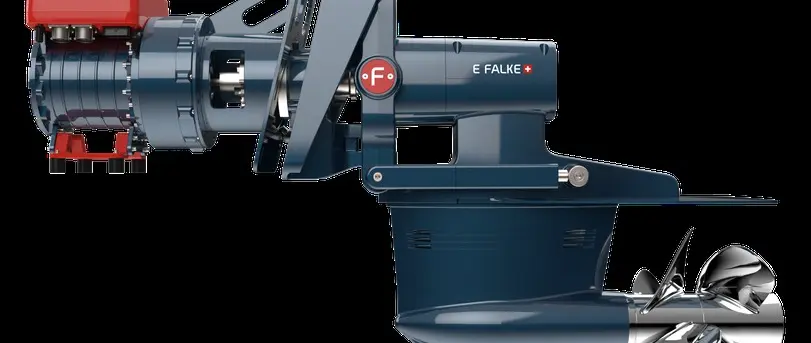
Electric marine propulsion company EFalke is presenting a heavy-duty electric stern-drive system rated at 300 kilowatts, or approximately 400 horsepower, in the 2026 METSTRADE equipment catalogue. The supplier positions the unit for powerful or heavy boats and highlights a drive arrangement that combines electric motor power with the familiar geometry of a stern-mounted propulsion system. Its official product image shows the motor and mechanical drive assembly, including the underwater gearcase and propeller. For luxury motor-yacht owners, the specification raises a more demanding set of questions than the small electric outboards often associated with low-speed boating. At 300kW, battery storage, high-current electrical equipment, cooling and range planning become central design considerations. The catalogue is evidence of a product offering, not an independently documented sea trial, and the electric rating should not be confused with a guarantee that a particular yacht will perform like an existing 400hp diesel installation.
Understanding the meaning of 300kW
Power ratings describe the rate at which a propulsion system can deliver work under defined conditions. EFalke lists a 300kW, approximately 400hp rating for its electric stern drive. That headline establishes the intended power class but does not specify the continuous duty rating, battery capacity or endurance of a completed vessel. A boat requires different power at different speeds and loadings. Owners should request motor performance curves and the conditions attached to the stated rating rather than assume full power can be supplied continuously without limits. The actual operating profile is more important than a single maximum number.
Why a stern drive is familiar to motor-yacht owners
Stern drives place substantial propulsion equipment at the aft part of a boat and allow the underwater drive to transmit power to a propeller. Depending on the configuration, steering may be achieved by directing the thrust rather than relying solely on a separate rudder. Many owners are already familiar with the handling characteristics and maintenance requirements of conventional stern-drive systems. Introducing electric power into that arrangement changes the energy source but does not remove the need to match the mechanical drive to the hull. Propeller design, trim, steering geometry and operating loads must still be considered as a complete system.
A higher-power electric option
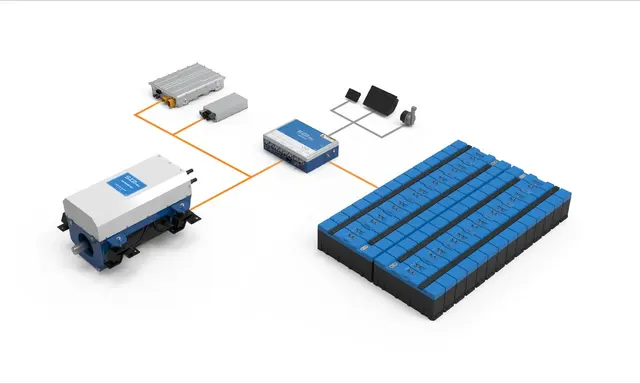
The small electric motors used on tenders or sailing dinghies operate at a different scale from a 300kW stern drive. At the higher rating, the electrical system must manage substantial current and energy flow. That introduces important engineering decisions about battery voltage, cabling, contactors, cooling and fault protection. A compact-looking assembly on a trade-show stand does not convey the dimensions and weight of the energy storage needed to support it. Buyers should evaluate the entire propulsion installation, not simply the size of the motor pictured in the product catalogue.
The question of speed and energy demand
Electric propulsion can be efficient in particular operating conditions, but moving a heavy yacht at high speed generally requires considerable power regardless of the motor type. As speed increases, hydrodynamic resistance may rise sharply, especially across different hull modes. The energy required for a journey therefore depends on the boat's actual performance curve, not only its length. A 300kW motor might deliver strong acceleration or support high-demand operation, but range at a chosen speed must be calculated from credible test data. An owner comparing electric and diesel options needs to examine both propulsion efficiency and the energy that can practically be carried aboard.
A simple calculation with important limits
If a propulsion system were to draw 300kW electrically for one hour, the energy consumed would be 300 kilowatt-hours. This is an illustrative calculation, not a reported EFalke endurance figure. Real battery demand may differ from the mechanical output because of losses, auxiliary systems and duty limitations. A vessel rarely operates at exactly one fixed power demand for an entire passage. Nevertheless, the example demonstrates why battery storage and charging capacity become major design issues at this level. An attractive power rating is only one part of the information needed to judge whether a yacht can support useful cruising.
The weight of energy storage
A substantial battery can be heavy and must be placed within a hull designed for its loads. Battery location affects trim, stability, access and the design of surrounding structures. The best position may not be close to the motor, particularly if available compartments are constrained. A naval architect should evaluate the complete installation and any change in displacement compared with the original vessel. Battery technology continues to evolve, but buyers should not assume that a future improvement will automatically be available to a yacht ordered or refitted today. The installed system must be practical on its own specifications.
Cooling and thermal protection
High-output electric motors and their power electronics produce heat, particularly during demanding operation. A reliable system needs sufficient cooling and protection against overheating. Marine cooling circuits may involve seawater interfaces and equipment that requires regular inspection. The supplier’s catalogue does not provide a complete thermal-management schematic for every installation. Owners should request operating limits and the response of the system when cooling becomes inadequate. High performance is valuable only if the equipment can remain within its intended temperature range during the way the yacht is actually used.
Integration into an existing hull
A stern-drive repower may seem attractive where the boat already has a suitable transom arrangement, but physical compatibility cannot be inferred from general appearance. Engine beds, transom openings, steering interfaces and propeller clearance can differ between models. The electric system may require changes to electrical distribution and controls as well as mechanical components. A professional conversion study should identify what can be retained and what must be replaced. The trade-show image does not establish that the new equipment fits an existing brand of stern-drive aperture or can be installed without hull modifications.
Operating noise and comfort
Electric motors can reduce some forms of mechanical noise associated with combustion engines. That may improve the experience of leaving an anchorage or moving around a marina. However, a high-output stern drive still moves large volumes of water and contains mechanical elements that generate sound and vibration. The total noise depends on propeller loading, mounting and the yacht's structure. EFalke's short listing does not provide independent acoustic measurements. Owners should therefore avoid treating the words electric and quiet as interchangeable without actual performance information for the complete propulsion package.
Steering and manoeuvring arrangements
A stern-mounted propulsion unit can potentially provide directional thrust, depending on its mechanical design and control configuration. The manufacturer’s description refers to freedom from a conventional rudder, but that statement should be considered in the context of the specific system. A buyer should request full control and steering specifications and understand how the yacht will behave during low-speed manoeuvres. A vessel with multiple drives may require coordination between units. The quality of software and the clarity of helm controls can be as important as the motor's rated power.
Regeneration and hybrid operation are separate questions
Electric propulsion discussions often include regenerative charging or hybrid systems, but those capabilities should not be assumed from a photograph of an electric stern drive. The listing describes the 300kW product without giving a universal charging, hybrid or regeneration specification. If an owner wants onboard energy generation while underway, the supplier must explain what configurations are supported and what additional equipment is required. Not every motor or controller can simply be operated as a generator in any installation. Such decisions should be based on certified system diagrams and realistic energy calculations.
The challenge of marina charging
A large propulsion battery may require significant energy after a journey. Available shore electricity can vary widely between marinas, even those that cater to substantial luxury yachts. An installation with powerful charging equipment does not guarantee that the local electrical supply can support it. Owners should calculate the time needed to replace the energy used during typical passages and consider a contingency when suitable shore power is unavailable. The combination of cruising range and charging infrastructure helps determine whether an electric-drive configuration is practical for the intended area.
Where a 12-to-24-metre owner might consider it
At the larger or higher-performance end of the LYG market, some motor yachts require substantial propulsion power. An electric stern drive may warrant consideration during an ambitious new-build or conversion project, but the required hull engineering and battery mass can be challenging. A slower displacement yacht may have a more favourable energy profile than a boat intended for sustained high-speed operation. The correct application depends on hull resistance, load and cruising pattern, not simply whether the yacht's length falls within a particular range. An owner's expectations should be tested against realistic scenarios before deciding on a powertrain.
Safety and emergency operation
High-power electrical propulsion systems require protective measures against faults, overheating and unintended movement. The crew should understand how to isolate power and how the vessel behaves if the main propulsion system becomes unavailable. Batteries, cables and controllers must be specified in accordance with appropriate marine standards and the yacht's flag or classification requirements. The EFalke catalogue does not constitute an approval for every possible installation. Qualified designers and surveyors should be involved early so that emergency procedures and maintenance access are considered alongside performance.
What to ask during a technical evaluation
An owner or naval architect should request continuous and peak output ratings, duty limits, motor efficiency data, cooling requirements, weight, mounting drawings and verified control compatibility. The supplier should explain the relationship between the drive unit and recommended batteries, chargers and propulsion controls. A credible proposal will calculate expected energy consumption at the boat's intended cruising speeds. It should also describe the service network and availability of replacement parts. Without those details, a high power figure has limited value for an owner making a substantial financial commitment.
What METSTRADE verifies
The official listing identifies EFalke's electric stern drive as a heavy-duty marine propulsion product with a stated 300kW, approximately 400hp power rating. It describes the unit as relevant to high-performance or heavy boats and includes a manufacturer illustration of the machinery. The source does not provide a named 20-metre yacht's measured range, a proven conversion price or an independent performance comparison against a diesel stern drive. This report examines what the product could mean for suitably designed luxury motor yachts, without claiming that an installation has already delivered particular results.
Power alone will not determine success
A 300kW electric stern drive offers an interesting route for designers considering high-output marine electric propulsion. Its real significance lies in how it might be combined with a hull, energy storage, charging arrangements and dependable controls. For smaller luxury-yacht owners, the attraction of reduced local exhaust emissions and a different onboard experience must be weighed against battery mass, range and infrastructure. EFalke's product presents a power class worth investigating, but the decisive evidence will come from vessel-specific design and independently documented operation. The best electric yacht is one whose power system suits how its owner genuinely intends to travel.
Sources and image credits
Reporting based on EFALKE official manufacturer product specification supplied to the METSTRADE 2026 trade catalogue.
Lead rendering: EFalke 300kW electric marine stern drive — official manufacturer illustration in METSTRADE 2026 (manufacturer product illustration). © EFalke Original official image source.