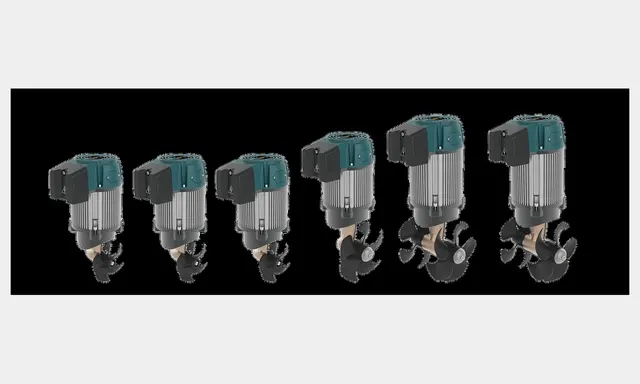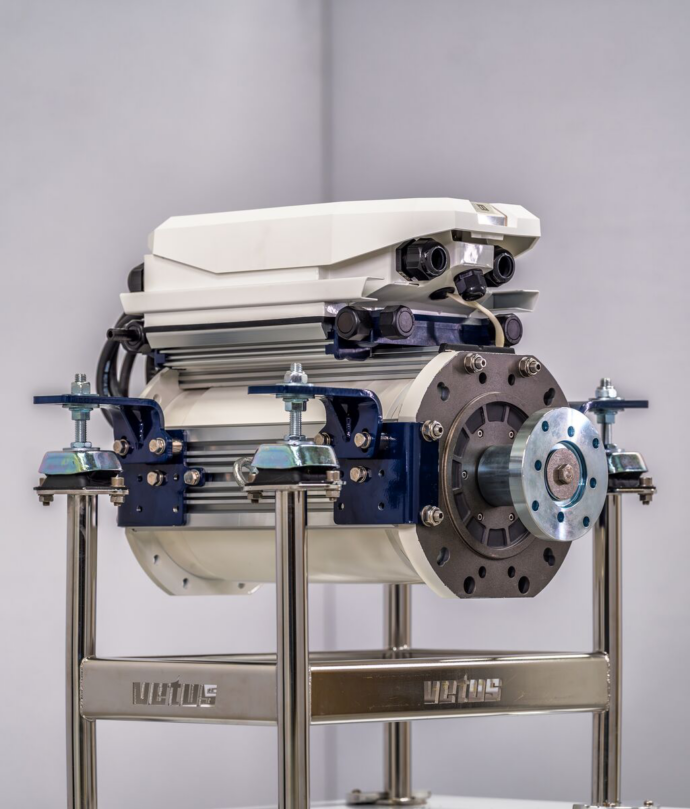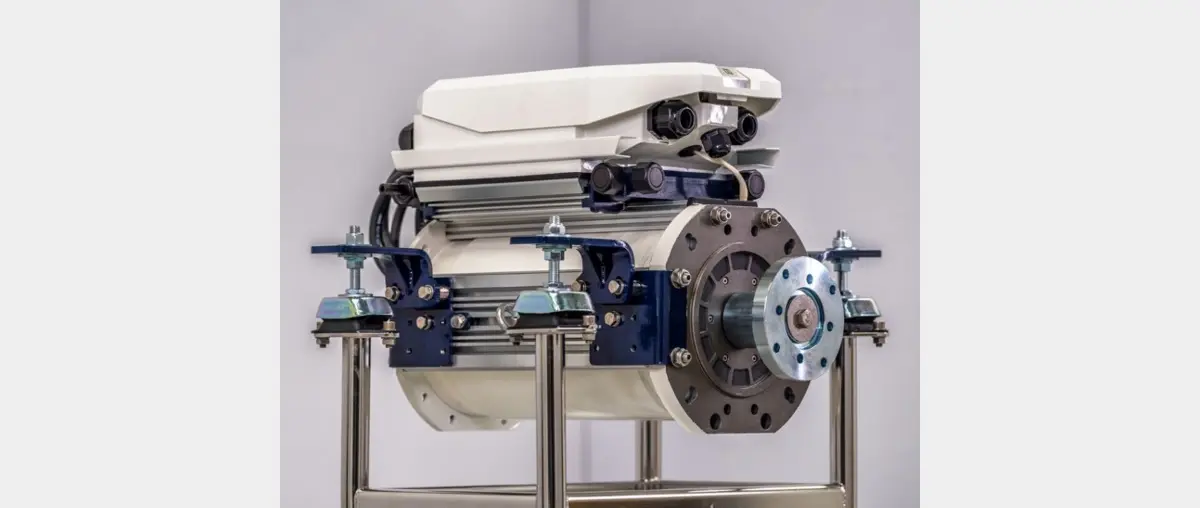
Dutch marine-equipment specialist VETUS is presenting its E-Line electric inboard propulsion range through the METSTRADE 2026 catalogue, emphasising the ability to connect compact electric motors to existing propeller-shaft installations. The first-party product description highlights the company's adjustable Swap & Go mounting brackets, which can be set to different heights and accommodate shaft angles of zero or eight degrees. That detail is significant for older cruising yachts whose engine beds and shafts were originally designed around conventional machinery. The range is intended for new vessels as well as conversion work, but the suitability of an electric motor depends on the specific hull, propulsion demands and supporting electrical system. The manufacturer has promoted E-Line technology for several years; the current catalogue is an update on an established range, not evidence that the entire concept first launched in November 2026.
Why a conventional shaft matters in a refit
Many sailing and displacement motor yachts have an engine connected to a propeller through a shaft and associated bearings, seals and couplings. Replacing the engine without redesigning the whole arrangement may reduce some of the structural work required. Nevertheless, the existing shaft must be in suitable condition and correctly aligned, and the propeller needs to match the new motor's operating characteristics. An electric motor may develop its torque differently from a diesel engine. A professional assessment should establish whether the existing mechanical components can be reused. The ability to connect to a shaft is a design opportunity, not a guarantee that every old installation is compatible.
The E-Line mounting concept
VETUS identifies its Swap & Go brackets and dedicated electric-motor mounts as key features. The mounts can be adjusted in height, with settings for shaft angles of zero or eight degrees, according to the official METSTRADE listing. Such adjustability can help accommodate different engine-bed arrangements, provided the necessary structural and alignment conditions are satisfied. The bracket design does not eliminate the need to measure the yacht carefully before ordering. Installers should confirm permitted tolerances, loading and the exact mechanical interface for the motor selected. Incorrect alignment can still damage a shaft or bearing even when a mount is marketed as easy to adjust.
Compact motors and the available space
An electric inboard motor may occupy less room than some conventional propulsion installations, although the complete system includes batteries, controllers and wiring that must be located somewhere aboard. On a smaller yacht, the engine space may also contain pumps, filters or equipment needed for other services. A conversion plan should account for the whole machinery area and access routes. A reduced motor footprint is useful only if the remaining components can be installed safely and serviced without dismantling substantial parts of the yacht. The manufacturer’s marketing imagery cannot replace a dimensioned layout for the proposed vessel.
A range rather than one motor
E-Line refers to a family of electric inboard products, not a single universally suitable power rating. VETUS also maintains a separate 22kW model presentation and other electric-propulsion options. The choice should be guided by the yacht's displacement, hull resistance and operating profile. A sailing yacht requiring occasional harbour manoeuvres may have different needs from a motor cruiser that relies on its engine for every passage. Owners should not infer from the existence of a range that its largest unit can simply replace any conventional engine. Propeller design, continuous-power requirements and installation constraints all deserve attention.
Electric torque and manoeuvring
Electric motors can provide useful torque characteristics at low shaft speeds, which may assist careful manoeuvring when integrated with appropriate controls. VETUS refers to active electronic braking and responsive control in its wider E-Line technical material. Those descriptions are useful, but the actual behaviour depends on the selected motor, controller, propeller and vessel. The existence of electronic braking does not justify assuming a yacht can stop within a predetermined distance in all conditions. Wind, current, speed and loading affect the response. Owners should learn the characteristics of their specific installation during sea trials with qualified support.
What 48 volts implies
VETUS describes a 48-volt electrical architecture for parts of its E-Line programme. This is different from the ordinary 12-volt or 24-volt domestic circuits found on many boats, so proper integration and isolation are necessary. A yacht may also need DC conversion or separate battery arrangements to support its existing equipment. Low-voltage terminology should not encourage casual handling of powerful battery circuits. High currents and stored energy can create serious hazards even at nominal voltages below those used in larger high-voltage systems. A professional installer must determine the right protection and cable sizes for the actual motor and battery bank.
The controller is central to the drive
An electric motor depends on control electronics to manage its operation and respond to helm commands. The manufacturer's E-Line material describes an integrated water-cooled controller, which is one reason the system can be presented as a compact propulsion package. Electronic integration can simplify certain installation steps but also requires reliable cooling, sensors and communication with the helm. Owners should understand what alarms are available and how the equipment behaves if a controller fault occurs. The complete system should be commissioned and tested using the manufacturer's procedures rather than assembled from apparently compatible parts without verification.
Cooling must be considered from the outset
Electric propulsion is sometimes described as simpler than combustion machinery, but it still generates heat. Motor and controller cooling systems require reliable installation and maintenance. A liquid-cooled unit may need pumps, heat exchangers or other components depending on its exact configuration. The catalogue does not establish one universal cooling circuit for every E-Line model. During a conversion, the yard should consider whether any existing seawater equipment can be reused or must be replaced. Cooling access and fault detection are important, especially when a yacht may operate for extended periods in warm coastal waters.
Battery capacity sets the cruising plan
A successful electric repower needs an energy budget based on the boat's actual needs. Motor power and battery capacity are different quantities: a vessel can have adequate peak power yet insufficient stored energy for its intended journeys. The owner should consider the distance normally travelled under power, the time available for charging and the energy consumed by domestic equipment. A sailing yacht may have a particularly favourable profile if most passages can be made under sail, but it still requires a reserve for demanding conditions. The product catalogue does not provide a universal range figure that can be applied safely to every E-Line installation.
Charging and time away from the marina
Electric propulsion changes the routine around energy replenishment. A yacht that spends most nights with access to suitable shore power may have a more straightforward charging plan than one that anchors for long periods. Owners must account for charger output, marina supply limitations and the battery’s permitted charging rate. A motor conversion alone does not guarantee that existing shore connections can meet the increased energy demand. The practical assessment should include the expected number of cruising days between charging opportunities and an alternative if the planned connection is unavailable.
New builds and refits require different approaches
A new yacht can be designed around an electric system from the beginning, placing batteries and service access where they are most appropriate. A refit must work with existing structure, electrical distribution and equipment. Swap & Go mounting may help with one aspect of the work, but it does not resolve every possible compatibility issue. Owners should survey the hull, shaft, foundations and electrical system before deciding that a conversion is economical. The correct approach may involve changes to the propeller or associated systems that were not obvious when first examining the old engine installation.
The value of correct propeller selection
Electric motors can have different optimal speed and torque characteristics from diesel engines. A propeller selected for the original engine may therefore be less suitable after repowering, even if the shaft can be retained. The installer should analyse propeller diameter, pitch and operating conditions against the new motor's output. Poor matching can reduce efficiency, compromise handling or cause unnecessary loads. A conversion should be judged on the complete drive's behaviour rather than the ability to bolt the motor onto the existing foundation. Technical calculations and sea trials are essential parts of commissioning.
Comfort and local emissions
An electric motor can reduce local exhaust emissions and some forms of machinery noise when operating from batteries. This may be attractive when entering a quiet anchorage or manoeuvring near a marina. However, propeller and shaft noise remain, as do other onboard systems. The environmental effect also depends on how electricity is generated and how the batteries are manufactured and maintained. A conversion can offer meaningful benefits for some owners, but it should not be described as universally emission-free over its full lifecycle. Clear distinctions between local operation and overall environmental impact are important.
Maintenance is different, not absent
Electric systems remove some routine tasks associated with fuel filters, engine oil and combustion components, but other maintenance remains. Shaft bearings, seals, motor mounts, cooling circuits, electrical connections and battery-management equipment need attention. Software and control electronics may require specialist diagnostics. The owner should receive an appropriate service schedule and know where trained technicians can be found. Long-term availability of replacement components is important for yachts that may travel away from the original installation yard. Simplified propulsion should not become an excuse for reduced maintenance discipline.
Operating safely after a conversion
A yacht whose propulsion has been altered may respond differently to helm commands, especially at low speeds or when changing direction. The crew should become familiar with those characteristics in controlled conditions before undertaking demanding marina manoeuvres. The conversion must also be documented for relevant certification, insurance and future buyers. Battery protection and emergency shutdown procedures deserve particular attention. The official product listing is not a substitute for approval of a specific yacht. A professional installation should include testing, clear manuals and appropriate crew instruction.
What the first-party sources establish
The METSTRADE 2026 catalogue confirms that E-Line is designed for existing propulsion foundations and propeller-shaft arrangements, and that the supplied Swap & Go brackets are adjustable in height and can be set for zero- or eight-degree shaft alignment. VETUS's official range information provides further context about the company's electric inboard architecture and integrated control. The source does not guarantee that any particular yacht can be converted without modification, specify an installed price or independently validate range for every hull. This article discusses the system's engineering approach rather than claiming universal performance.
Practical repowering begins with measurements
The appeal of the VETUS E-Line range is that it addresses one of the most difficult parts of changing propulsion technology: integration with a boat that already exists. Adjustable mounts and shaft compatibility may make a conversion easier in suitable circumstances. But the success of a project depends equally on electrical design, energy storage, propeller matching and technical support. For owners in the 12-to-23.99-metre range, the starting point should be a survey and a realistic record of how the yacht is used. An electric motor becomes a worthwhile option when those facts support it, not simply because the equipment appears compact or modern.
Sources and image credits
Reporting based on VETUS official manufacturer product specification supplied to the METSTRADE 2026 trade catalogue, VETUS official E-LINE inboard electric propulsion overview, VETUS E-LINE 22kW official motor presentation and image gallery.
Lead photograph: VETUS 22kW E-LINE inboard electric propulsion motor photographed on manufacturer display stand. © VETUS B.V. — official E-LINE 22kW manufacturer product photograph Original official image source.