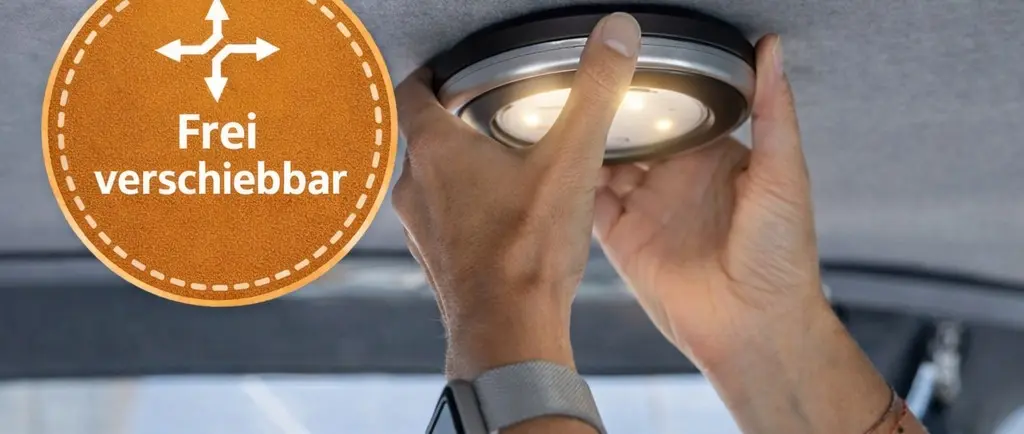
Marine accessories developer fender-design has introduced LUMAGSOLAR to the METSTRADE 2026 product catalogue as a movable LED lamp that uses a solar panel outside a yacht's bimini and wireless energy transfer through the fabric to power lighting beneath it. The manufacturer describes a magnetic attachment arrangement intended to hold the solar element and lamp together without permanent holes or conventional wiring through the canopy. It also states that the product uses 40% recycled plastic and contains replaceable batteries. Those details distinguish the concept from a fixed ceiling spotlight or a battery-operated camping lantern. For owners of 12-to-23.99-metre yachts, the idea addresses a familiar problem: adding practical evening lighting to a canvas-covered cockpit without creating a complicated retrofit. The published catalogue is evidence of the product's stated design, not an independent test of magnetic retention, charging speed or service life.
The particular challenge of a yacht bimini
A bimini provides shelter from sun and sometimes light rain, but it is not usually built as an electrical equipment enclosure. Adding a fixed lamp can require routing a cable around support tubes, penetrating fabric or creating an attachment that interferes with folding. A yacht owner may also want to move illumination depending on whether the cockpit is being used for dining, reading or moving between the helm and aft deck. LUMAGSOLAR is intended to make the light repositionable and reduce the need for conventional wiring. That promise should be evaluated against the actual construction and thickness of the bimini, since marine canvas arrangements differ considerably.
Two components acting together
The manufacturer's photographs and description present solar charging and illumination as parts of one system arranged on opposite sides of the canopy. Magnetic coupling holds the parts in position, while energy is transferred wirelessly through the intervening fabric. This does not make the product an unlimited source of energy. A solar panel must still receive light and the internal storage must still be charged. Wireless transfer introduces its own efficiencies and alignment requirements, so the relevant measurement is useful light delivered over time rather than the absence of a visible wire. The catalogue does not publish measured charging efficiency or a detailed energy balance for different weather conditions.
Magnetic attachment and repositioning
A magnetically held product can potentially be moved to another part of the bimini without permanent mounting points. That flexibility is valuable when several uses compete for the same cockpit space. Nevertheless, secure retention is a safety issue aboard a moving vessel. Wind, pitching, waves and contact with the canopy could change the force applied to the lamp. Owners should obtain the manufacturer's guidance for permitted fabric thickness, operating conditions and any securing precautions. A movable light should not be placed where falling equipment could injure someone or obstruct a helm control. The simple act of attaching a product does not replace a professional assessment of its suitability for a particular yacht.
No drilling as a design advantage
Avoiding holes in a bimini can reduce one source of water ingress and make it easier to preserve the canopy when the accessory is removed. It may also make a retrofit less disruptive than installing a hardwired lamp. However, a non-permanent attachment is not automatically maintenance-free. The owner still needs to inspect contact surfaces, fabric wear and battery condition. If the product is repeatedly moved, the locations used should be checked for visible abrasion or stretching. The catalogue's promise of no drilling is useful, but it does not prove compatibility with every type of textile or every bimini support arrangement.
Solar energy in everyday use
The external solar component is intended to capture daylight while the LED provides illumination beneath the fabric. This makes intuitive sense for a cockpit that receives sunlight during the day and needs light at night. Actual performance will depend on whether the panel is shaded by a boom, hardtop or other object, as well as latitude, season and weather. A yacht whose bimini is folded for most of the day may obtain very different charging results from one that remains open at anchor. Buyers should ask for a realistic runtime and charging specification rather than assume that exposure to daylight will always support a full evening of operation.
The meaning of replaceable batteries
The original product description combines language about avoiding battery swaps with a statement that the batteries are replaceable. These are not necessarily contradictory. An energy storage cell that recharges by solar power may avoid frequent routine removal while still being replaceable when it eventually reaches the end of its life. That design could improve serviceability compared with a completely sealed product whose battery cannot be changed. But the listing does not specify cycle life, replacement cost or the precise battery chemistry. A potential buyer should confirm those details, particularly if the lamp will be stored unused for long periods.
Recycled material as part of the design
Fender-design says LUMAGSOLAR is made with 40% recycled plastic. This indicates an effort to consider material inputs, but it is not a full environmental lifecycle assessment. The overall impact also depends on manufacturing, transport, durability, energy consumption and disposal. A lamp that remains serviceable for years may have a different profile from one that requires frequent replacement. Customers should request documentation if the recycled-content figure is material to their decision. Environmental claims are most useful when they can be understood alongside practical product quality rather than treated as a substitute for it.
Lighting the spaces people actually use
On a yacht, light beneath the bimini is often needed where guests sit, where crew prepare the cockpit or where someone reads an instrument or chart. A movable lamp could let an owner tailor illumination without having several permanently installed fittings. Brightness, glare and colour temperature will influence comfort, but the short METSTRADE source does not specify the exact lumen output or available lighting modes. It would therefore be misleading to promise a particular task-lighting performance. A buyer should inspect the light in conditions similar to those expected aboard and confirm that it does not create distracting reflections near the helm.
Bimini shapes and fabric differences
Canvas canopies range from relatively taut flat panels to curved fabric supported by complex frames. Some are made from multilayer materials or have reinforced seams and transparent inserts. Wireless transfer and magnetic coupling may respond differently to each construction. The manufacturer's phrase through fabric establishes the intended operating principle but not a universal compatibility list. Owners should ask about maximum fabric thickness and any restrictions relating to embedded metal components, waterproof coatings or protective liners. A product that works well on an ordinary fabric canopy should not automatically be assumed suitable for a rigid hardtop.
Water resistance is not the same as immersion
A marine accessory may be exposed to spray, condensation and heavy humidity, even if mounted beneath a bimini. Product marketing alone does not establish the precise ingress-protection rating. The ability to tolerate rain should be assessed from the manufacturer's specifications, not from the word marine. Owners should also understand how to clean the light after exposure to salt and whether the magnetic components need particular attention. If the bimini is removed or folded, the lamp may need to be detached and stored in a dry place. That practical detail should form part of routine yacht care.
Considerations for smaller cruising yachts
In the 12-to-23.99-metre range, owners may operate with very little crew and adapt the cockpit for several different functions during the day. An accessory that does not require a specialist installation could be attractive, particularly when the yacht's electrical wiring is already difficult to access. The benefit is more likely to be convenience than a large reduction in overall electrical consumption. An LED lamp generally represents a modest load compared with refrigeration, air-conditioning or propulsion. The value of the concept lies in its adaptability and potential ease of use, subject to reliable charging and secure attachment.
Retrofitting without compromising safety
Owners often prefer accessories that can be installed without altering structural or electrical systems. Even so, a portable product must not interfere with a safe path from the cockpit to the deck or distract a person at the helm. Its position should be chosen with the vessel's movement in mind. Any installation near navigation lights also requires attention to the risk of confusing or obscuring legally required lighting. The source does not certify LUMAGSOLAR as a navigation light, and it should not be used as a substitute for one. This is an amenity-lighting concept, not a certified vessel signalling system.
Long-term support for a simple accessory
A well-designed product should remain straightforward to maintain after the initial novelty has faded. Owners should consider the availability of replacement batteries, seals and solar components, and whether the manufacturer provides clear instructions in the intended cruising region. A small accessory can become frustrating if a minor part is not available. The catalogue demonstrates the product's market presentation but does not establish a retail price, warranty length or worldwide service arrangements. Those details should be verified before purchase, especially by owners planning to use the lamp on long-distance voyages.
A related debate about yacht interiors
LUMAGSOLAR sits within a wider interest in making onboard amenities adaptable rather than fixed. Yacht design increasingly considers how a cockpit shifts from sailing station to dining room to sheltered lounging space. A magnetic light is a small-scale example of that approach. It also illustrates how solar energy can support a very specific consumer function rather than being treated only as part of the vessel's central electrical system. The technology is different from hardwired interior automation and should not be presented as a replacement for carefully designed permanent lighting when that is required.
What is verified in the first-party source
The manufacturer's METSTRADE catalogue identifies LUMAGSOLAR as a solar-powered magnetic LED bimini lamp using wireless energy transfer through fabric. It states that the unit can be repositioned, requires no drilling or ordinary wiring, contains 40% recycled plastic and has replaceable batteries. The source does not provide verified light-output figures, battery life, solar charge times, wind-load ratings or an independent certification report. This article therefore explains the concept and the practical questions surrounding it without inventing those measurements. The associated image is the original supplier product photograph.
A small innovation with clear practical appeal
For yacht owners, not every worthwhile development needs to change propulsion or navigation. A simple, movable cockpit light can improve the use of a familiar space if it is reliable, adequately bright and easy to maintain. LUMAGSOLAR's magnetic and solar-charging approach offers an interesting alternative to running cables through a bimini. The next test is practical rather than promotional: it must remain secure, charge predictably and provide the right amount of light during ordinary cruising. Those questions determine whether the concept will become a useful piece of everyday yacht equipment.
Sources and image credits
Reporting based on fender-design original LUMAGSOLAR solar-powered magnetic bimini lamp specification from METSTRADE 2026, fender-design official LUMAGSOLAR technical and image gallery.
Lead photograph: LUMAGSOLAR magnetic LED bimini lamp repositioned by hand under a yacht canopy — official manufacturer photo. © fender-design; original LUMAGSOLAR product-gallery photograph showing the magnetic movable light. Original official image source.