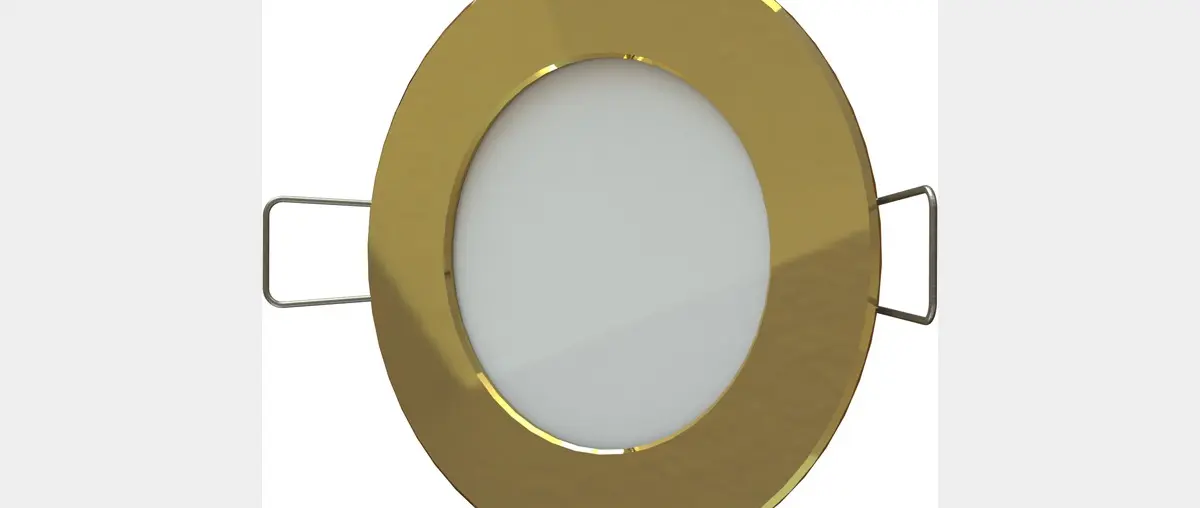
Marine-lighting specialist ASTEL is presenting its INTENSA family of compact interior and exterior LED luminaires in the METSTRADE 2026 product catalogue. The manufacturer describes a waterproof anodised-aluminium housing with an electronic LED driver incorporated into the fitting, along with microprocessor-based control for digital dimming and network connection. INTENSA is also positioned as a replacement option for boats with differing existing mounting-hole sizes, making it relevant to refits as well as new construction. The original supplier photograph shows a circular downlight with an attractive metal bezel, but the real value of the product lies in the electrical and practical questions behind that clean appearance. For 12-to-23.99-metre luxury-yacht owners, lighting should support comfortable cabins, safe movement and maintainable equipment without adding unnecessary complexity. The listing documents manufacturer-supplied features, not an independent measurement of the light's output or long-term durability.
A small fitting can affect an entire room
The choice of a downlight influences how a cabin feels, particularly when ceiling heights are restricted and surfaces reflect light strongly. A source positioned directly above a seating area can create glare, while one placed thoughtfully may provide comfortable illumination for reading or dining. On a yacht, the designer must also work around ventilation ducts, wiring, access panels and structural elements. The INTENSA range is intended for compact mounting positions, which may expand design options. But the appearance of one fitting is only a starting point. The complete layout must be tested against the actual materials and geometry of the room.
An integrated electronic driver
ASTEL says the INTENSA lights incorporate an LED driver within their waterproof anodised-aluminium housing. An integrated driver can reduce the number of separate components that need to be located elsewhere, although it may change how a technician accesses or replaces the electronics. A buyer should ask whether the driver can be serviced independently and what happens if it fails. The complete unit's thermal management also matters because LEDs and their power electronics generate heat. A neat installation will not perform reliably if it exceeds the manufacturer's permitted operating conditions. The source does not provide a universal service-life figure for every version.
Why waterproofing matters inside a yacht
A cabin fixture may experience humidity and condensation even when it is far from direct spray. Exterior fittings can face additional exposure to rain and salt. ASTEL describes INTENSA's enclosure as waterproof, but the precise environmental rating and permitted mounting arrangements should be checked in the technical documentation. A product suitable for a protected cockpit roof might not be approved for continuous immersion. Installation also influences protection: damaged seals or cable entries can undermine the qualities of a well-designed fitting. Owners should distinguish the manufacturer's general feature description from an installation-specific certification.
Anodised aluminium as a housing material
Anodised aluminium can provide a durable finish and help manage heat when properly designed for the intended environment. Its appearance may also suit contemporary interiors that favour clean metal details. However, anodising does not remove every corrosion risk, particularly when different metals come into contact in a salt-laden setting. The choice of fasteners, surface treatment and installation location remains important. ASTEL's material statement is meaningful, but it should not lead buyers to assume that the fitting is maintenance-free under all conditions. Cleaning and inspection should follow the manufacturer's guidance.
Replacing lights without rebuilding the ceiling
The catalogue says INTENSA supports replacements with different mounting-hole diameters. That could be valuable for an older yacht whose original fittings are no longer available. A suitable replacement may reduce the need to repair or refinish large sections of joinery. Yet mounting dimensions are only one part of compatibility. The owner must verify depth, heat clearance, supply voltage, dimming method and cable arrangements. A new bezel that covers an old opening will not make an incompatible electrical installation safe. A refit designer should compare the exact product drawing with the existing fixture and its surroundings.
Digital dimming offers more than on and off
A dimmable system can create different lighting levels for daytime use, evening relaxation and moving through cabins at night. ASTEL says INTENSA includes microprocessor-controlled digital dimming and supports remote control through network connections. The exact control method needs to be confirmed with the selected model and interface. Owners should not assume that a standard household dimmer or every yacht automation system can control it directly. A well-designed system needs to be understandable to guests and stable when other onboard electronics are restarted or updated.
The benefit and risk of network connections
Networked lights can simplify coordination when many fixtures are installed, but they also add dependencies. A central controller may make it easy to adjust multiple cabins; a fault in that controller may affect several fixtures at once. An owner should ask which functions remain available locally and how a technician can diagnose a network problem. The catalogue's reference to network connectivity does not establish the protocol or every supported integration. Those details belong in the technical design and handover documents. Good automation should increase convenience without making basic lighting difficult to operate.
Optical design shapes the experience
The manufacturer mentions an advanced optical system with a reflector and holographic diffuser intended to spread light evenly. That is important because a visually small LED can produce uncomfortable bright points if the light is not managed well. A diffuser may soften the appearance, while a reflector directs the beam to its intended area. The actual quality depends on the selected variant, beam angle, output and the surfaces being illuminated. The original catalogue does not provide an independent glare test for a furnished yacht interior. Designers should examine samples in realistic surroundings rather than choosing solely from a product photograph.
Choosing a white-light character
Different white colour temperatures can make the same interior feel noticeably different. A warm tone may complement timber and soft furnishings, while a cooler light may be desirable for some technical tasks. ASTEL's description refers to options for white colour, but the exact available temperatures should be confirmed from the model's specification sheet. Consistency also matters. A yacht with multiple fittings from different manufacturers can appear uneven if the light colour varies between rooms or along a corridor. Mock-ups and samples can help avoid disappointment after final installation.
Exterior and interior needs are not identical
A guest cabin generally needs gentle, controllable light, while a sheltered exterior passage may need clearer visibility around steps and thresholds. The same family of products might serve both purposes, but the appropriate output, beam and environmental protection can differ. Exterior lighting should not create distracting reflections at the helm or obscure required navigation signals. A decorative cabin downlight should not be treated as a certified emergency light. The manufacturer’s categorisation of INTENSA as suitable for interior and exterior applications must be read alongside the limitations of each selected unit.
Energy use should be calculated for the whole installation
LED lighting is often more efficient than older technologies, but the final energy savings depend on what is being replaced and how the new system is operated. A programmable controller may help reduce output when full brightness is unnecessary. Yet dozens of fittings can still represent a meaningful electrical load when a yacht is at anchor. The relevant energy budget should include the power drawn by each model and its control equipment. ASTEL's overview does not establish a universal percentage saving compared with all previous yacht lighting systems. Specific calculations and usage patterns provide a more reliable basis for decisions.
Quality of installation is fundamental
A light may be beautifully engineered but perform poorly if the mounting creates excessive heat or the wiring is not protected. Marine installations must allow for vibration and the movement of the vessel. Connections should be accessible where practical, and appropriate isolation and overcurrent protection should be provided. The installer should also consider cable routes that pass near other electrical or radio equipment. An owner should receive a clear record of what was installed and how it can be safely serviced. These fundamentals remain important even with integrated drivers and sophisticated microprocessors.
A compact yacht has special constraints
In the 12-to-23.99-metre category, ceilings and technical voids may be particularly shallow. An owner may want the atmosphere of a much larger yacht but without dedicated electrical technicians living aboard. That raises the importance of simple replacement procedures and reliable controls. A compact light might help where a conventional driver or larger fitting is difficult to accommodate. However, every additional circuit and control feature creates a service requirement. Designers should choose the appropriate level of automation, not assume that the maximum possible complexity is automatically better.
Managing lighting as the yacht ages
A yacht interior may be refreshed several times during its service life. Future owners may change fabrics, finishes or lighting preferences, while some electronic components become obsolete. A programmable system can offer flexibility, but only if documentation and compatible support remain available. Owners should ask the supplier about spare parts, configuration software and service channels before adopting a proprietary control arrangement. It is easier to plan for maintenance at construction than to recover the original settings years later. Long-term support is part of the value proposition of advanced interior technology.
What a buyer should request
Before ordering, a designer should obtain dimensioned drawings, voltage and current requirements, environmental ratings, dimming specifications and the approved installation method. A physical sample can help establish finish quality and light distribution. The proposed network design should include what happens if communications fail and whether essential fixtures can still be controlled. A clear warranty and after-sales arrangement will be useful for a vessel cruising away from its original yard. Those questions are not objections to new technology; they are the normal steps required to turn an attractive product into a dependable installation.
What the supplier has verified
ASTEL's first-party METSTRADE description identifies INTENSA as a compact marine LED-lighting range with integrated electronic drivers, waterproof anodised-aluminium housings, digital dimming, microprocessor control and optical components intended to distribute light evenly. It also describes suitability for new projects and replacement situations with different mounting-hole diameters. The source does not publish a universal retail price, independently measured light quality aboard a named yacht or a complete interoperability list for every control system. The accompanying image depicts the manufacturer's actual circular fitting.
Interior comfort depends on more than brightness
The INTENSA range illustrates the direction in which marine lighting has developed: compact hardware is increasingly expected to work as part of a controllable environment. The benefits can be felt in the ordinary experience of using a cabin, from finding a comfortable reading level to moving safely after dark. The quality of the result rests on good design, correct installation and the ability to maintain the equipment. For owners considering a new yacht or interior refit, the sensible question is not how many features a light offers, but whether those features make life aboard simpler and more comfortable.
Sources and image credits
Reporting based on INTENSA official manufacturer product specification supplied to the METSTRADE 2026 trade catalogue.
Lead photograph: ASTEL INTENSA integrated-driver interior and exterior marine LED lighting — original supplier METSTRADE 2026 illustration. © ASTEL Marine Original official image source.