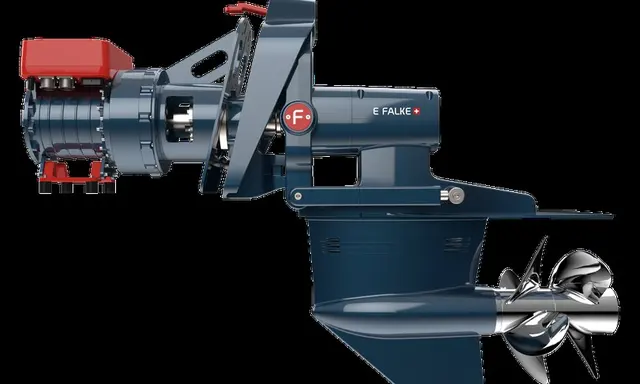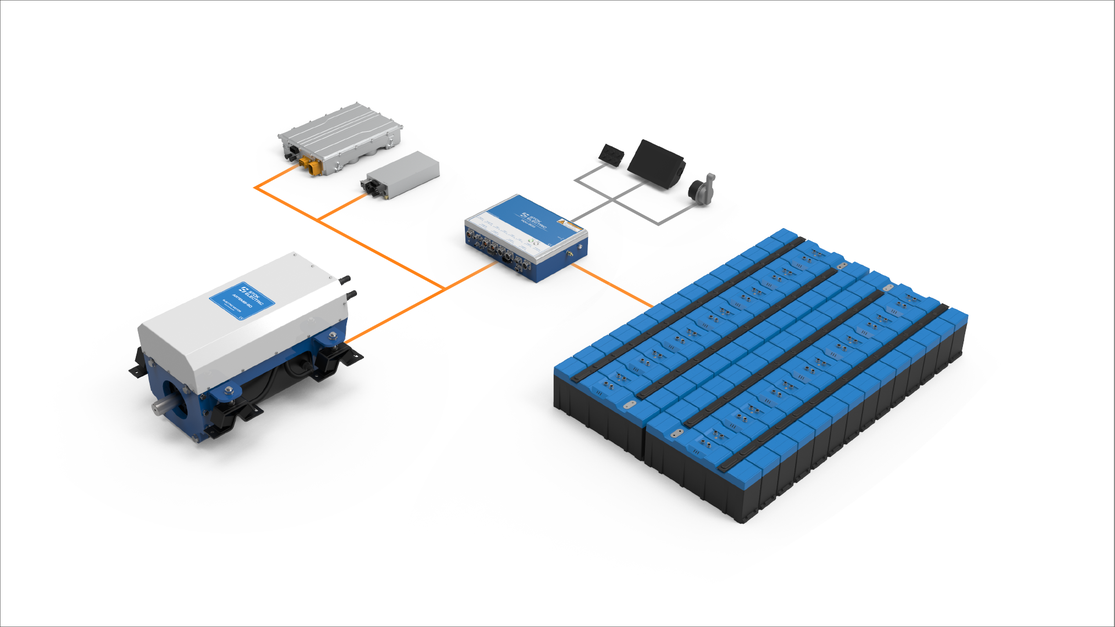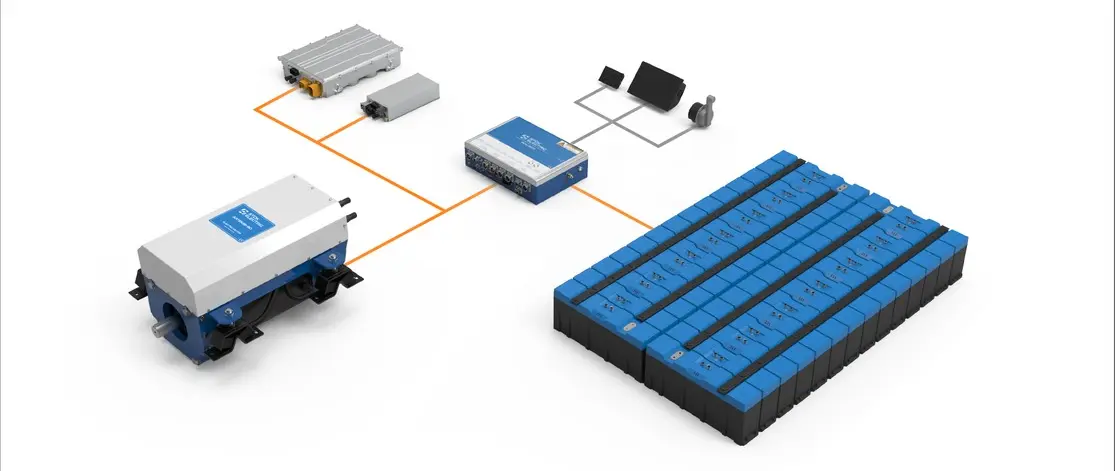
Dutch marine engineering company STOK Electric is showcasing a range of complete electric propulsion systems rated from 10 to 200 kilowatts in the METSTRADE 2026 equipment catalogue. The company describes a modular direct-drive approach, tailored to each vessel's operating profile and intended for both new construction and conversion projects. Rather than presenting a standalone motor, STOK says it can take responsibility for the drivetrain and work with customers through design, installation and long-term support. The first-party product illustration identifies the separate elements that have to function together, including propulsion machinery, electrical components and a substantial battery system. For a 12-to-23.99-metre yacht owner, the technology raises practical questions about operating range, vessel weight, charging access and the costs of replacing or modifying conventional engines. It is a supplier product presentation, not a report of a newly delivered yacht with independently tested endurance.
A wide power range is not a single specification
A 10kW propulsion system and a 200kW unit serve very different vessels and operating requirements. The company groups them within a broader modular offering, but that does not make every component identical or interchangeable. Yacht owners should begin with the power their hull needs rather than select a motor solely because the supplier lists an attractive maximum. Propeller characteristics, cruising speed, displacement and windage all influence performance. A system that suits a relatively light displacement sailing yacht may be unsuitable for a faster motor vessel of similar length. The range is useful because it provides design choices, not because it establishes universal compatibility.
What STOK means by a complete drive
STOK's official description says the company delivers electric propulsion solutions from motor to propeller. Its general supplier profile includes batteries, charging equipment and DC-to-DC conversion, indicating that its commercial offer extends beyond a single mechanical component. This approach may help builders coordinate equipment that otherwise comes from multiple suppliers. However, the exact scope of supply should be written into a contract. A customer should confirm whether propellers, displays, cables, batteries, cooling, commissioning and service are included or supplied separately. An integrated programme is valuable only when responsibilities are clear and the finished yacht can be maintained.
The attraction of direct drive
A direct-drive arrangement can reduce the number of mechanical transmission elements between an electric motor and the propeller shaft in a suitable configuration. Fewer components may simplify some aspects of layout and maintenance, but the engineering is still complex. Shaft alignment, vibration isolation, bearing loads and propeller matching remain essential. A direct-drive label does not guarantee better efficiency for every hull or cruising condition. Owners should request calculations and performance curves for the specific motor and propeller combination. The greatest benefit may come from designing the full drivetrain together rather than attempting to adapt one component in isolation.
A different kind of engine-room planning
Electric propulsion changes which spaces must accommodate machinery, batteries and electrical distribution. A compact motor can free space near the shaft, but significant energy storage may be needed elsewhere. Battery placement affects loading and access, while cooling and high-voltage cabling require careful design. On a smaller luxury yacht, these decisions compete with fuel tanks, accommodation, storage and maintenance space. The appropriate layout should be reviewed by naval architects and qualified electrical engineers. The manufacturer does not provide one universal weight figure for every configuration in the short product catalogue, so no blanket space-saving estimate is justified.
Battery capacity defines useful range
Power is the rate at which a motor uses or delivers energy; battery capacity indicates how much energy can be stored. A motor rated at 100kW need not consume 100kW continuously, but it may do so during high-demand operation. The actual energy used over a passage depends heavily on speed and hull resistance. A rough calculation using rated power alone will not predict a yacht's endurance accurately. Owners need a complete energy budget that considers propulsion, hotel loads, expected charging and the permitted usable fraction of the battery. STOK's advertised power range does not by itself establish how many nautical miles a particular vessel can travel.
Sailing yachts and motor yachts face different trade-offs
A sailing yacht may use electric propulsion primarily for berthing, entering harbours and manoeuvring when wind conditions are unsuitable. A motor yacht may depend on propulsion machinery for most of its passages. Consequently, the battery size and charging plan can differ dramatically even when two boats have similar overall length. A system that provides welcome quiet operation during short periods may not support long-distance high-speed cruising. The correct assessment begins with an honest account of how the owner uses the vessel. A favourable demonstration at low speed cannot replace endurance calculations for the intended journeys.
New-build integration offers more freedom
Builders designing an entirely new yacht can allocate battery compartments, cooling equipment and cable routes before the structure and interior are finalised. That may permit cleaner integration than retrofitting a finished engine room. Still, electric propulsion needs to satisfy structural, safety and regulatory requirements just as a conventional engine does. A yachtbuilder should also consider access to components over the vessel's life. Machinery that is easy to install during construction may be difficult to replace after furniture, tanks and bulkheads are fitted. The design process should include service procedures from the outset.
Refitting a conventional propulsion system
STOK explicitly markets the range for refits as well as new vessels. Conversion can be attractive where a diesel installation is approaching the end of its useful life or an owner wants different operating characteristics. But repowering may require modification to the propeller, shaft, controls, electrical distribution and structural mounting points. A professional survey should establish the condition of the existing drivetrain and whether any components can be retained. The new system's total cost includes installation, engineering, certification and possibly charging infrastructure. The fact that a motor is compact does not guarantee a quick or inexpensive conversion.
Charging is part of the ownership model
An electrically propelled yacht needs reliable access to energy, whether from shore power, onboard generation or a hybrid arrangement where permitted and supported. The power available at a marina pedestal may be much lower than the energy needed to replenish a large propulsion battery rapidly. Connections, charging equipment and shore electrical capacity must be considered together. A vessel intended to cruise between remote anchorages may require a different plan from one operating in a well-equipped home marina. Owners should evaluate realistic charging times and contingency arrangements, not simply accept a maximum charger rating.
The importance of thermal management
Motors, power electronics and batteries can generate heat during operation or charging. The system needs appropriate cooling and protection to operate reliably under marine conditions. Salt air, confined compartments and high summer temperatures can complicate installation. A qualified designer must understand how the chosen components behave when a cooling circuit or sensor fails. The manufacturer's general statement about low-maintenance propulsion does not remove these requirements. Good integration includes fault handling, alarms, access for inspection and clear operating guidance for the crew.
What modular construction can achieve
STOK describes its equipment as modular, which can allow different components and power levels to be selected for individual vessels. Modularity may simplify planning or make later servicing more manageable, provided interfaces remain documented and supported. Yet it does not follow that any battery can be connected to any drive or that an owner can enlarge the system without engineering review. Electrical compatibility, software control and thermal requirements must be checked. The ability to tailor an installation is the practical advantage; unrestricted mix-and-match should not be assumed.
Reliability is a system characteristic
Electric propulsion can remove some routine tasks associated with combustion engines, but it introduces different maintenance needs. Cooling, seals, bearings, insulation, contactors and software must all remain serviceable. A reliable motor will not compensate for an undersized battery, poorly installed cable or unsupported controller. STOK's statement about low maintenance is best interpreted as a design objective until measured service data is available for a particular configuration. Owners should request a maintenance schedule and identify technicians capable of working safely on the installed system.
Quiet operation and the experience aboard
One attraction of electric propulsion is the possibility of reducing engine noise and local exhaust emissions during use. That can improve the atmosphere aboard when leaving an anchorage or manoeuvring near a marina. Yet moving water, propellers, shaft bearings and cooling pumps still make sound, and the production of electricity may create emissions elsewhere. Electric operation should not be equated automatically with a completely silent or environmentally neutral voyage. The appropriate claim depends on the energy source and full operating conditions.
Questions about safety and approvals
A substantial propulsion battery and its associated power electronics need protective measures appropriate to their voltage, chemistry and location. Fire protection, emergency isolation and electrical fault detection must be considered as part of the vessel's overall safety plan. Applicable requirements will depend on the flag, classification and technical standards of the yacht. Buyers should obtain the manufacturer's documentation and have the design reviewed by qualified specialists. A trade-show catalogue cannot establish approval for every installation. The safety case belongs to the complete vessel system.
Long-term support beyond the sale
STOK says it guides customers from design through installation and long-term support. Owners should ask what this means in their cruising area: who will attend a fault, what diagnostic equipment is available and how quickly replacement parts can arrive. A yacht may spend time far from its original commissioning yard. Supporting documentation, remote diagnostic procedures and trained partners can therefore become important. A warranty is only part of the ownership relationship. Before ordering, customers should establish how the complete drivetrain will be maintained over years of use.
What the source does and does not prove
The first-party METSTRADE listing establishes STOK's advertised 10–200kW complete electric propulsion range, its modular direct-drive approach and its stated suitability for new vessels and refits. The manufacturer also describes responsibility for the drivetrain and attention to integration and support. The listing does not supply independently audited range figures for a named yacht, a universal installed price or measured battery degradation. This article explains the technology and the practical decisions it creates without inventing those details.
A case for evaluating the complete vessel
The relevance of STOK's equipment to smaller luxury yachts is its emphasis on the full propulsion system rather than an isolated motor rating. Electric propulsion can be appealing, but the most important figures are the energy required for the owner's actual journeys and the quality of the equipment integration. A well-designed solution could make some cruising patterns more comfortable and reduce engine-room maintenance demands. The wrong combination could leave a yacht with inadequate range or difficult charging logistics. The next step for interested owners is a vessel-specific feasibility study, supported by transparent calculations and a clear service plan.
Sources and image credits
Reporting based on STOK official manufacturer product specification supplied to the METSTRADE 2026 trade catalogue.
Lead rendering: STOK Electric complete 10–200kW marine propulsion drive system — original manufacturer METSTRADE 2026 product photograph (manufacturer product illustration). © STOK Electric, Netherlands Original official image source.