A proposed change in ownership, not an immediate change in products
Swedish industrial group Ernströmgruppen announced on 23 November 2026 that it had signed an agreement to acquire 70 per cent of Danish marine lighting specialist Lopolight ApS. The transaction concerns a company whose LED navigation lights, control equipment and monitoring systems are installed on a wide range of vessels, including yachts. The announcement was distributed through the buyer's official corporate press-release channel and expressly states that completion remains subject to regulatory approval. That condition matters: an agreed acquisition is a commercial development, not evidence that ownership has already transferred. For readers considering a luxury motor yacht, the news is relevant because component manufacturers influence both the original build and the ability to maintain a safe vessel long after delivery. It does not mean new products or immediate price changes have been announced.
The size and structure of the planned deal
Ernströmgruppen says it intends to purchase a controlling 70 per cent stake, while Lopolight's founders Jan Møller and Peter Hancke, together with chief operating officer Jan Louis Mose, will retain the remaining 30 per cent. The statement indicates that these leaders are expected to continue in their present roles. The companies have not disclosed a purchase price in the release, and readers should not infer one from the percentage acquired. A majority investment can change corporate governance, financing capacity and long-term strategy, but its consequences depend on contractual arrangements that are not public. The agreement is designed to preserve the specialist team's involvement while introducing an industrial parent. What happens after approval will be worth watching; it would be premature to claim that manufacturing methods, warranties or equipment availability have already changed.
A Danish supplier with an international market
Lopolight is headquartered in Humlebæk in Denmark, where the release says it employs about 30 people and has annual revenue of approximately 58 million Danish kroner. These figures identify it as a focused specialist rather than a mass-market consumer-electronics group. The company says it serves shipyards, naval organisations and commercial operators, alongside yacht customers. Its product range includes more than individual light fittings: controllers and monitoring systems form part of its offering. That broader scope matters when selecting equipment for a yacht because navigation lights need to work reliably as an installation rather than as disconnected components. A system that is straightforward to test, monitor and maintain may bring practical value beyond the appearance of the individual lamp, though suitability still has to be verified for each vessel.
Why navigation lights matter more than their dimensions
Navigation lights are small relative to the hull and often receive less attention than propulsion, stabilisers or entertainment systems during a yacht purchase. They are nevertheless essential safety equipment intended to communicate a vessel's presence and aspects of its movement to others. Correct configuration depends on vessel length, propulsion and operational circumstances, as well as the applicable rules. On a luxury yacht between 12 and 23.99 metres, an owner should be certain that the fitted lights comply with the relevant requirements, are positioned correctly and remain clearly visible in the intended sectors. No manufacturer's brand can eliminate the need for professional installation and inspection. A robust fitting helps, but compliance also depends on the wiring, supports, power supply, switching arrangements and the way the operator understands the installation.
LED equipment has advantages, but also obligations
LED navigation lights can offer long service life and reduced electrical demand compared with some older lighting arrangements. Their actual performance depends on optical design, operating temperature, electrical stability and proper installation. Owners should not assume that a higher claimed lifetime means lights never require inspection. Corrosion, mechanical damage, moisture ingress or a deteriorating connector can interrupt a functioning system regardless of the light source. A sensible maintenance routine includes visual checks, functional testing and attention to any monitoring alerts, all in accordance with the equipment manual. If a light fails during a voyage, the skipper needs to know what alternatives are available and what action is legally and operationally appropriate. The Lopolight acquisition therefore belongs to a wider discussion about keeping important but easily overlooked systems dependable.
Control and monitoring systems are part of the proposition
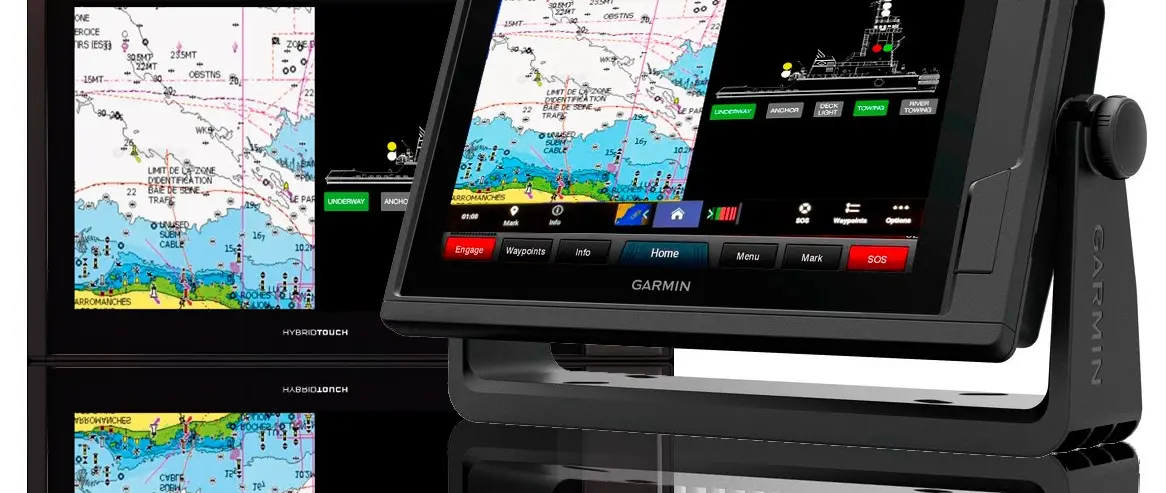
The buyer's announcement specifically mentions Lopolight's control and monitoring products as part of its development beyond standalone LEDs. On a modern yacht, a lighting controller may help centralise switching and identify certain electrical faults, potentially reducing the amount of manual investigation required. It is still necessary to understand how a particular controller reacts if a sensor or communication link fails. An owner should ask whether each light can be independently checked, what alarms are available and whether fault messages are recorded in a form that technicians can understand. Integration with other bridge equipment should be assessed rather than presumed. The correct marine electrical design is more important than a fashionable interface, especially when a vessel will operate at night or away from its normal maintenance base.
The buyer's safety division provides strategic context
Lopolight is expected to become part of Ernströmgruppen's Safety & Protection business area if the transaction completes. That placement indicates how the investor views the company's capabilities: reliable lighting and electrical control are components of maritime safety, not simply accessories for a finished boat. Ernströmgruppen already organises its operations across industrial areas such as automation, energy and related engineering businesses. This may create opportunities for the companies to share management expertise, procurement experience or technical resources. None of those benefits is quantified or guaranteed in the release. The transaction should be evaluated as a stated long-term investment strategy rather than a technical product launch. Owners will learn more from future changes in service support and available equipment than from the corporate division's name.
Keeping the Lopolight identity is significant
The companies say Lopolight will retain its brand, organisation and location in Humlebæk. That reassurance is meaningful for shipyards and existing owners who need continuity of documentation and technical contacts. It does not create an irreversible promise that no future changes can occur, nor does it replace the rights set out in a supplier's warranties and contracts. Nevertheless, retaining a specialist identity can help preserve relationships with designers, yard engineers and service providers who know a product family in detail. A buyer of a used yacht may rely on those relationships when obtaining a replacement light or identifying an obsolete controller. Before making a purchase, the owner should confirm the actual spare-parts policy for the installed generation of equipment and whether service information is available.
Existing systems should be evaluated on their own merits
A corporate announcement can lead owners to wonder if they should replace equipment immediately or defer an upgrade. The 23 November statement provides no basis for either conclusion. A vessel with working, compliant navigation lights may have no reason to undertake a new installation because a supplier's shareholding is changing. Conversely, a yacht with ageing, damaged or poorly documented lights should not postpone necessary safety work while waiting for a transaction to complete. Decisions should follow an inspection of the particular vessel and its operating requirements. The same applies to maintenance planning: a future industrial parent could eventually influence parts logistics, but an owner needs to know what can actually be ordered and fitted today.
How this affects the new-build specification
When a shipyard chooses a navigation-light supplier, engineering questions extend beyond unit price. The yard must determine visibility, mounting and cable routing, protection against the marine environment, appropriate system redundancy and how equipment can be serviced after the yacht is handed over. The designer may also want small, discreet fittings that do not compromise the exterior profile. A specialist such as Lopolight works at the intersection of those objectives. A future majority owner may offer additional business support, yet nothing in the acquisition announcement alters the certification or installation requirements for a new yacht. Buyers reviewing a specification should ensure that the exact model, approval information and control configuration are documented rather than relying on a generic manufacturer name.
Refits are a particularly demanding application
Replacing navigation lights on an established yacht can be more complicated than selecting them for a new build. Existing cable routes, access through furniture and deck structures, differences in mounting dimensions and the condition of old electrical equipment can all affect the scope of work. Some owners may want to modernise the lights without changing the vessel's outward appearance, while others require a complete review of the bridge-control system. In either case, a qualified professional should evaluate how proposed equipment will comply with the applicable rules and work with the boat's existing distribution system. The investment agreement does not advertise a new retrofit package or promise compatibility with every old installation. Its relevance is the continued commercial development of a supplier whose expertise can be useful during such projects.
The continuity of the founding team
Jan Møller, Lopolight's co-founder and chief executive, is quoted in the corporate announcement discussing the value of a long-term industrial partner while retaining the company's identity. The proposed continuing investment by the founders and a senior executive suggests they will remain financially involved in the company's future. That arrangement may support continuity of expertise, but it cannot guarantee particular personnel will always be available to an owner or dealer. A yacht purchaser should be more concerned with documented product support and clear warranty obligations than with any single named individual. The retention of existing leadership is best understood as a feature of the proposed ownership structure, not a personal endorsement of every navigation-light system currently sold.
Competition and supply matter to yacht buyers
The marine equipment market contains both large diversified suppliers and small specialist businesses. Consolidation can help an independent supplier obtain investment and international reach, but it can also change the competitive landscape over time. Whether the proposed Ernströmgruppen investment strengthens manufacturing capacity, shortens lead times or changes distribution will require evidence after the agreement is completed. For owners and shipyards, the ideal outcome is straightforward: equipment that complies with standards, arrives when needed and can be repaired without excessive uncertainty. Those benefits cannot be claimed from a press release about share ownership alone. The prudent position is to monitor the transaction, continue normal technical evaluation and avoid interpreting the announcement as a universal improvement in product performance.
The remaining condition is regulatory approval
The release expressly says closing is subject to regulatory approval. It does not give a definite completion date or a detailed list of approvals, and readers should not infer that those steps have already been satisfied. Until a completion announcement is issued, the transaction remains a signed proposed acquisition. The companies have also not stated that all customer contracts, distribution arrangements or price lists will change. This distinction matters in industry reporting because the legal timing of a corporate deal can have very different consequences from the date of the original agreement. An owner ordering equipment should rely on current sales and warranty documents, while a shipyard contemplating a longer programme may wish to ask suppliers how support will remain continuous during any transition.
A safety supplier enters a larger industrial group
The confirmed development is a majority-investment agreement involving a navigation-light specialist with a significant role in marine electrical systems. Ernströmgruppen intends to take 70 per cent, existing Lopolight leaders will retain 30 per cent and the business is expected to retain its Danish identity. These are the useful facts for the luxury-yacht industry in late November 2026. The broader meaning lies in the industrial value attached to small, highly technical safety suppliers. Owners should view the news as context for long-term equipment support, not as evidence that current yachts have gained any new capability. What ultimately matters will be whether the combined organisation can continue to deliver reliable, well-documented and serviceable marine lighting for vessels operating around the world.
Sources and image credits
Reporting based on Ernströmgruppen corporate press release distributed through MFN, 23 November 2026.
Lead rendering: Lopolight navigation-light control equipment, official Lopolight manufacturer product imagery. © Lopolight ApS / original image creator. Official manufacturer product visual. No third-party image used. Original official image source.