A new agreement extends a long relationship
MAN Engines confirmed on 24 November 2026 that it has expanded its long-standing relationship with British motor-yacht builder Sunseeker into a strategic engine-supply partnership. Rather than announcing a single launch or a newly delivered yacht, the manufacturers have set out a wider arrangement covering current and future model series. The distinction is important for readers considering a production motor yacht: an engineering partnership is primarily about the consistency of equipment selection, the development of future platforms and the support available after handover. It does not mean that every Sunseeker will carry an identical engine, that one configuration is appropriate for every model, or that an owner can already order all the propulsion options described for the future. The release establishes the commercial direction, while the specification of a particular vessel remains the essential purchase document.
Why propulsion relationships matter to buyers
Engine choice is not a decorative line in a brochure. Propulsion determines how weight is distributed, what service access engineers require, how noise and vibration can be managed and what support a boat needs during its working life. A builder with a long-term engine partner can coordinate these aspects across successive models, although the outcome still needs to be demonstrated through testing and sound installation practice. For an owner of a luxury yacht in the 12 to 23.99 metre market, supportability may matter as much as headline output. A boat operating between different cruising grounds should be assessed for the availability of authorised technicians, parts and warranty procedures. The latest announcement suggests continuity in Sunseeker's engineering choices, but it should encourage due diligence rather than replace it.
A portfolio extending from six cylinders to V12
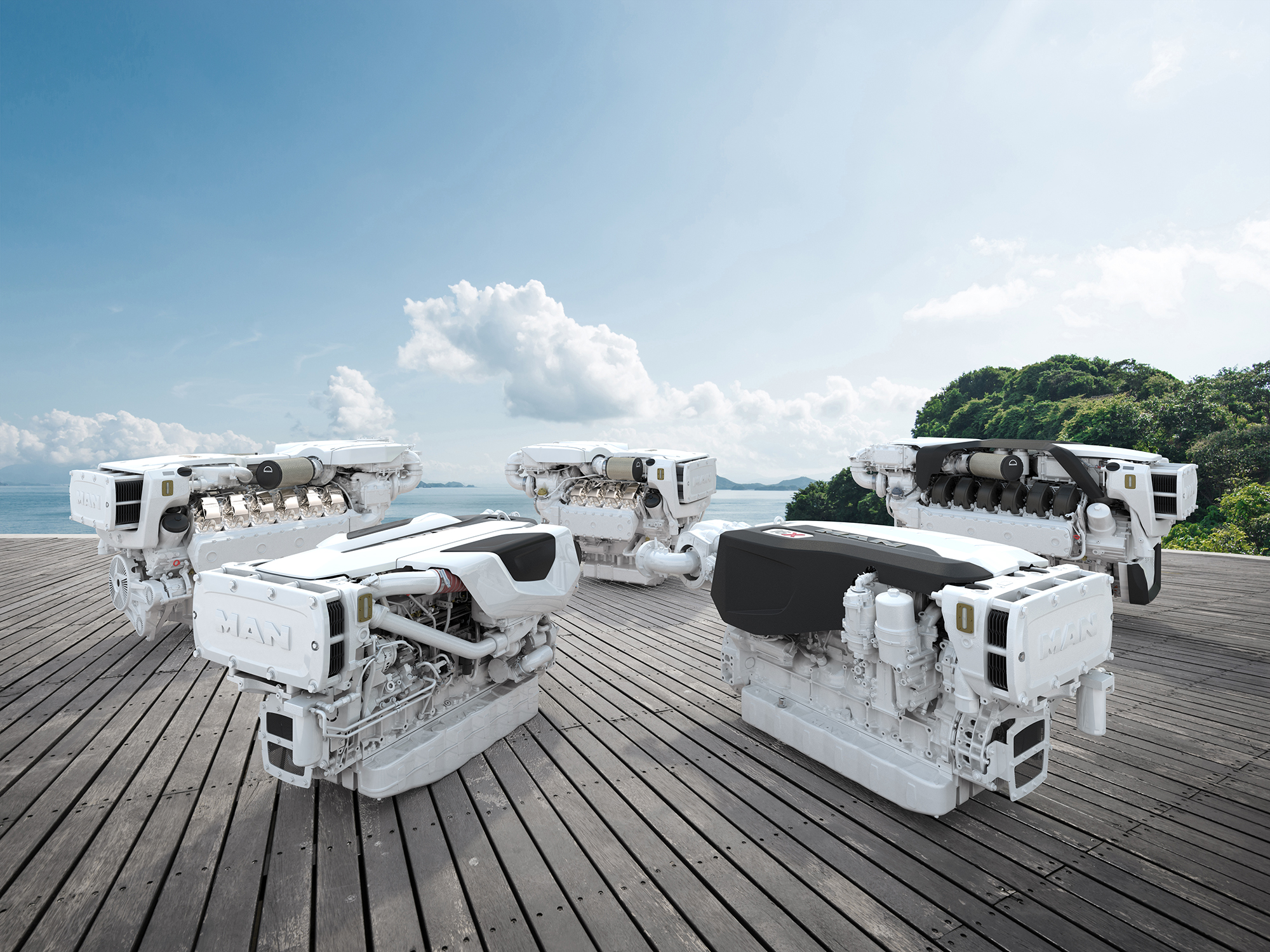
According to MAN's first-party statement, the partnership covers engines from in-line six-cylinder units through V8 and V12 designs, with a cited power range of 800 to 2,200 horsepower. That spread lets a manufacturer address vessels with different displacement, speed ambitions and installation constraints. It should not be read as a statement that every engine is offered in every Sunseeker model. Hull form, regulatory requirements, cooling, gear selection and vessel loading all affect the suitability of an engine package. The right comparison is therefore between certified options for the same yacht, not between maximum outputs advertised for unrelated models. Owners should request operating curves, expected fuel consumption at planned cruising speeds and a clear record of assumptions before treating any projected performance figure as a promise.
Existing Sunseeker ranges are part of the plan
MAN says its engines already feature across Sunseeker's Predator, Manhattan, Yacht and Ocean ranges. The announcement names those ranges as evidence of existing collaboration, rather than as four newly introduced products. Each covers different ownership priorities, and an engine supplier's involvement does not erase those differences. A buyer who values frequent short passages, extended coastal cruising or a larger proportion of time at anchor will use a yacht differently. It is sensible to examine how propulsion capacity fits the hull and hotel-load demands of the specific model rather than assume that a particular brand of machinery is automatically the deciding factor. For the luxury-yacht segment, real-world manoeuvring, comfortable passage speeds and space for service access are usually more useful comparisons than a single maximum-speed figure.
The V12X is aimed at larger projects
MAN identifies its V12X, with up to 2,200 horsepower and a 30-litre displacement, as particularly relevant to Sunseeker's expansion into larger yachts. Its inclusion therefore has a strategic significance beyond the immediate needs of many vessels below 24 metres. Bigger models bring different engine-room layouts and potentially different expectations around continuous operation, machinery redundancy and maintenance. The release also refers to the Manhattan 94 and 100 Yacht among future applications; these named yachts sit outside the usual 12 to 23.99 metre LYG vessel category. They are discussed here as evidence of the supplier relationship, not treated as new vessels eligible for the LYG yacht database. The lesson for smaller-yacht owners is that a builder's equipment partnership may encompass several market classes without implying identical installations across them.
The i6X belongs to a later product cycle
MAN says its newer i6X in-line six-cylinder engine, presented at the Cannes Yachting Festival, is planned for Sunseeker product premieres from 2028. That is a forward-looking schedule, not confirmation of a specific yacht launched in November 2026. The company expects the engine to appear both in new designs and in existing model ranges that will be updated. Prospective buyers should distinguish a planned future engine offering from machinery already fitted and supported in a production boat. If a purchase decision involves a possible next-generation engine, practical questions include the order date, contractual performance specification, sea-trial timing and how a builder will handle any change in the development programme. Waiting for a new product may suit some owners, but postponement is not automatically worthwhile for every cruising requirement.
Engine ratings need operational context
Two yachts with the same installed horsepower can behave differently because waterline length, weight, appendages, propellers and loading change the resistance they encounter. Nor is top speed a direct indication of economy or comfort in a seaway. An informed buyer will ask the yard for a realistic performance prediction, including how trials will be carried out and what condition the boat will be in. Fuel reserves, tender weight, water, stores and guests can all change results. MAN's broad engine range creates engineering choices; it does not eliminate the need to select and validate an individual propulsion installation. During sea trials, owners or surveyors should review operating temperatures, vibration, noise, response under load and access for routine inspections as well as speed and consumption at several settings.
A service network is a commercial advantage, with limits
The official release refers to an international MAN service network of more than 500 service bases. For an owner cruising between countries, that is potentially useful infrastructure, especially when a vessel operates far from its original dealership. It is not evidence that every port has a technician available on demand, that every specialist component is in stock or that all repairs will be covered under warranty. Service capability varies with location, engine model and the nature of a fault. Before taking delivery, an owner should identify local authorised support at the home marina and important destinations, understand routine service intervals and confirm how warranty claims are handled abroad. The strength of a network is best tested against a real cruising plan rather than an abstract global count.
Installation quality remains the builder's responsibility
An engine manufacturer can supply the central machinery, but the builder and its integration partners determine many details that shape ownership experience. Exhaust routing, ventilation, fuel filtration, electrical distribution, controls and cooling-water access all need to function together in a confined marine environment. The renewed MAN–Sunseeker agreement may help coordination, yet an owner still benefits from a detailed machinery specification and independent survey. It should be clear which company is responsible for each part of the installation and what documentation accompanies the finished yacht. Early questions about access around an engine can prevent practical frustration when technicians need to work at sea or in a marina. Good service access is rarely visible in publicity photography, but becomes conspicuous during every maintenance visit.
Implications for the brokerage market
The manufacturer's involvement can also influence how used Sunseekers are assessed. Machinery records, parts support and familiarity among service professionals may help a potential purchaser make a more informed decision. Nevertheless, a recognised engine badge is not a substitute for a documented maintenance history, diagnostic checks, fluid sampling where appropriate or a professional survey. Two examples from the same model year can have very different histories and operating conditions. The strategic agreement is therefore background information for the brokerage market rather than evidence that older vessels have gained a new capability or guarantee. Brokers should specify exactly which engines are installed, their operating hours and whether upgrades have been performed; buyers should confirm such statements independently before relying on them.
Ownership budgets should reflect the full system
Fuel and annual servicing are only part of a propulsion budget. Owners also need to anticipate haul-outs, consumables, replacement components, periodic inspections and the cost of accessing machinery safely. A yacht that travels internationally may incur additional logistics expenses even when the manufacturer has a substantial support network. Costs also change with engine hours and cruising style. It is more useful to build a scenario-based operating plan than to extrapolate from an advertised fuel figure at a single speed. The renewed partnership does not set yacht prices, annual engine costs or a uniform maintenance schedule; none of those numbers can responsibly be invented from the release. They must be sought in the relevant owner's manual, quotation and service plan.
What the agreement does not establish
The companies have not announced that every Sunseeker engine will be supplied exclusively by MAN or that owners of existing vessels are entitled to retrofit the forthcoming i6X. Nor does the release give delivery dates, prices or final technical figures for each future Sunseeker model named. It describes corporate cooperation and an engine portfolio rather than independent tests of every configuration. Reporting these limitations matters because a strategic announcement can be mistaken for a product-order guide. Readers interested in a specific boat should seek the builder's latest signed specification and check whether equipment is standard, optional or still proposed. This is especially important when comparing new-build and brokerage choices, where the exact production date and configuration can alter what is available.
A longer horizon for Sunseeker propulsion
The most significant element of the 24 November announcement is the commitment to coordinate machinery and future yacht development over multiple model cycles. That approach may make it easier for Sunseeker to plan propulsion packages and for MAN to understand what the builder requires, but its practical success must be judged vessel by vessel. For luxury-yacht owners, the questions remain tangible: does the boat cruise comfortably at the speeds they use, can its machinery be maintained without unreasonable disruption and will suitable support exist along their intended routes? The new strategic arrangement supplies relevant context for asking those questions. It is not itself proof of fuel savings, higher resale values or any specific performance improvement, and careful buyers should insist on documented evidence for those claims.
Sources and image credits
Reporting based on MAN Engines official press release and media kit.
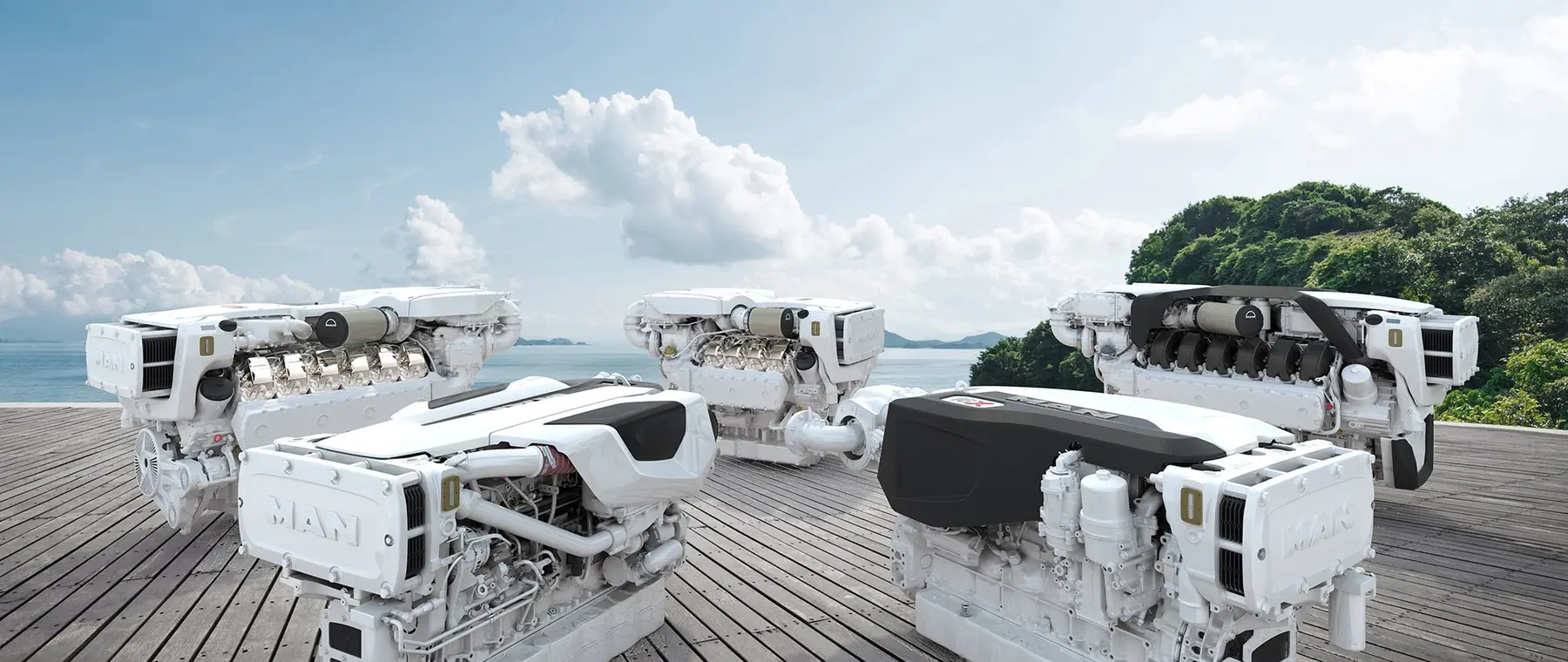
Lead photograph: MAN and Sunseeker strategic engine partnership — official MAN marine engine portfolio press photograph, 25 November 2026. © MAN Truck & Bus SE / MAN Engines. Official press kit photograph of the marine engine portfolio. Original rights retained. Original official image source.