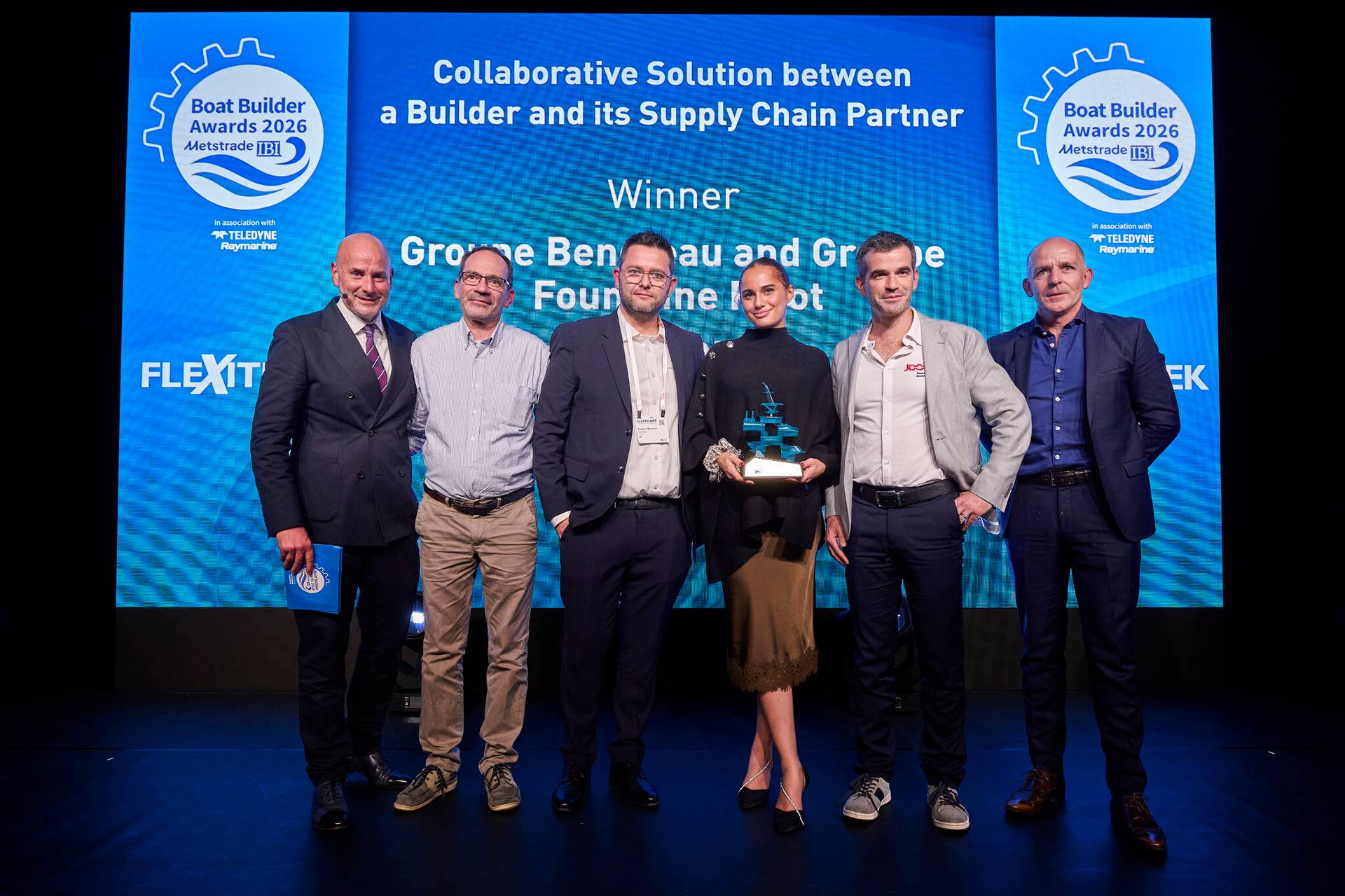
Groupe Fountaine Pajot has confirmed that Elektra Marine, the venture it established with Groupe Beneteau, received a Boat Builder Award during METSTRADE 2026 in Amsterdam for its JOOOL electrical systems initiative. The announcement, published by Fountaine Pajot on 23 November, identifies the category as a collaborative solution between a builder and its supply-chain partner. It is an important distinction in an industry where individual boatbuilders frequently compete for the same owners but share technical challenges: energy storage, conversion, electrical distribution and the move toward more flexible propulsion architectures. The award does not by itself demonstrate that any individual yacht achieves a particular emission reduction, electric cruising range or operating cost. What it recognises is a shared industrial approach. For owners of 12-to-23.99-metre sailing and motor yachts, the practical significance lies in how a common engineering platform might influence future specification, maintenance, safety documentation and the availability of support.
A dated award rather than a new yacht launch
Fountaine Pajot's own statement places the recognition at the Boat Builder Awards 2026, organised by International Boat Industry and METSTRADE. The manufacturer says Elektra Marine received the award through its commercial brand JOOOL, acknowledging the cooperation between two major French boatbuilding groups and their wider industrial partners. This is a current industry award, not a claim that a new JOOOL-equipped vessel launched on 23 November. The distinction matters because technology awards and model announcements are sometimes presented together in marketing material, even though the engineering milestones are different. There is no published sea-trial dataset in the company's award announcement establishing efficiency improvements across every hull or installation. A careful report should separate the confirmed award from the performance questions that remain for buyers to examine in relation to an actual proposed yacht.
Why competitors would share an electrical platform
At first glance, collaboration between competing boatbuilders might seem counterintuitive. Yet designing and supporting advanced electrical systems is an expensive task involving specialist skills beyond styling or furniture layouts. Batteries, conversion equipment, power electronics, cooling arrangements, protection devices and digital controls have to function together under vibration, humidity, salt exposure and changing load conditions. If each builder develops everything independently, owners and suppliers may confront more unique components and less transferable expertise. Fountaine Pajot says the objective behind Elektra Marine and JOOOL is to provide more standardised, scalable and competitively structured solutions for a wider boating market. The potential benefit is not simply manufacturing efficiency. In principle, repeatable system architecture could make training, documentation and the supply of replacement equipment more predictable, although those benefits must be demonstrated in service rather than assumed from the existence of a partnership.
What standardisation should mean aboard a yacht
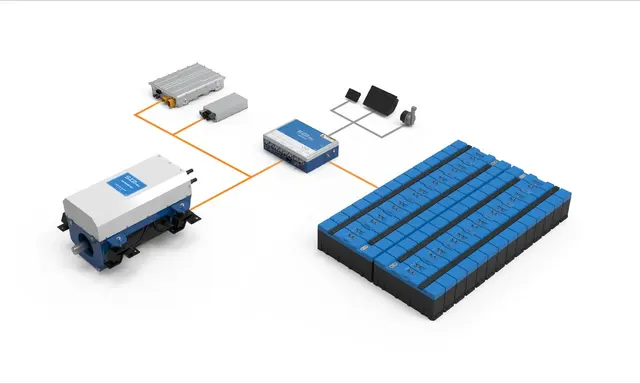
For an owner, the most important question is whether standardisation extends beyond a shared product name. Two yachts carrying a JOOOL-branded system could still have very different battery capacities, electrical loads, software configurations or integration methods. A useful specification should identify each critical unit, how it connects to other equipment and which parts can be replaced without redesigning the installation. Standardisation becomes valuable when a technician working on one vessel can understand the architecture of another, obtain accurate wiring diagrams and use documented diagnostic procedures. It may also support clearer commissioning tests and consistent crew training. None of this removes the need to check the actual boat. Installation quality, cable protection, thermal management, accessibility and maintenance schedules remain builder- and vessel-specific. A standard module placed in a poorly engineered installation would not remove those risks.
Electrification is broader than propulsion alone
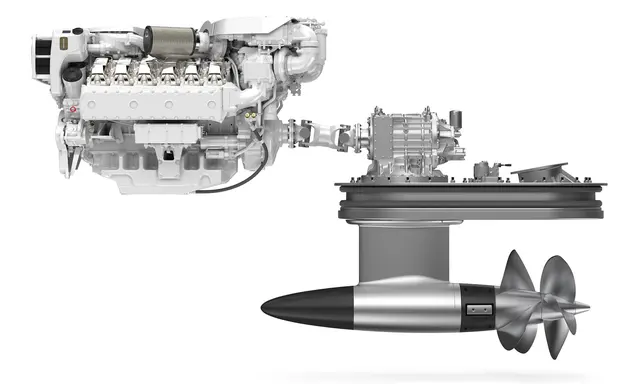
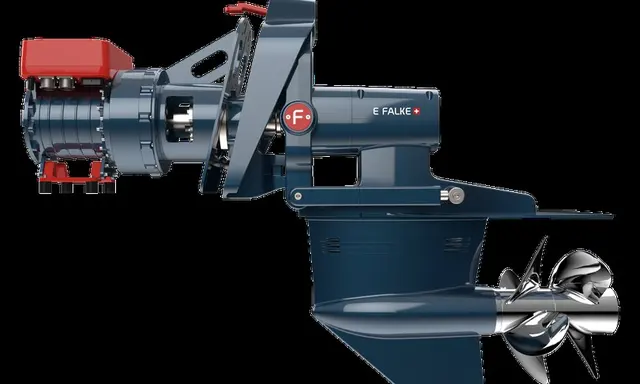
A yacht's energy system affects many activities that owners rarely consider when reading a launch announcement. Lighting, refrigeration, navigation equipment, air conditioning, pumps, charging and entertainment can each influence how long a yacht can operate without running an engine or generator. Electric propulsion may be one element of the architecture, but a practical design also manages hotel loads, shore power and energy replenishment underway. Owners should therefore ask for two separate descriptions: the propulsion operating profile and the domestic electrical profile. A system may reduce generator use at anchor yet offer little or no useful electric-only propulsion endurance. Conversely, a boat designed around extensive motoring might need a different storage or charging strategy from a vessel that normally travels under sail. JOOOL's industrial ambitions are relevant because electrical choices are increasingly interconnected across the entire yacht.
Reading environmental claims carefully
Fountaine Pajot connects the award to its wider efforts to reduce the environmental impact of boating and mentions its ODSea+ technologies as part of that development. Those aims are worth reporting accurately, but they should not be converted into universal performance claims. Lower fuel use depends on the vessel, how it is driven, its electrical equipment, climate-control demand and the origin of the energy used for charging. Batteries also carry manufacturing, replacement and end-of-life considerations. A meaningful assessment would compare the same boat performing a defined cruising programme under clearly described conditions. It would distinguish between reduced engine running, reduced local noise, reduced fuel consumption and any independently calculated life-cycle environmental benefit. Until such figures are available for a specified hull and installation, a manufacturer’s ambition to decarbonise should be described as an objective rather than a proven result in every case.
The owner's electrical safety questions
Advanced yacht electrical systems demand a disciplined approach to safety. Owners should ask how battery temperatures are monitored, how the system isolates a fault and whether critical loads remain supplied after a failure in an individual component. They should request independent conformity documentation appropriate to the vessel and its flag, along with commissioning records that cover the installed batteries, charging equipment, protective devices and power management logic. Crew members and service technicians must know the procedures for isolating high-energy circuits and responding to alerts. Any move toward a common platform could simplify training if the procedures are genuinely consistent, but the brand of the system is not itself a safety certificate. Emergency isolation, signage, ventilation, fire detection and access for inspection still have to be appropriate to the individual yacht's architecture.
Service networks can matter more than specifications
For a yacht owner cruising across borders, a replacement component is useful only if it can be sourced, installed and configured where the vessel is located. That makes the supply-chain element of the award particularly relevant. Buyers should investigate who supports a JOOOL-equipped installation, where trained technicians are based and what happens if the yacht is thousands of miles from the original builder. Are software updates available outside a factory visit? Are diagnostic tools restricted to an approved distributor? Can a local marine electrician isolate a failed module without disabling unrelated equipment? Are there published response arrangements for urgent repairs? A shared platform could make those questions easier to answer over time, but its manufacturers will need to establish the service organisation and keep documentation current. An owner should obtain support commitments in writing rather than treating award recognition as a maintenance guarantee.
A decision for sailing and motor-catamaran buyers
Although the two parent companies build many types of craft, the significance for the luxury-yacht reader is especially clear in the mid-size cruising segment. Sailing catamarans spend long periods managing the balance between generated, stored and consumed electricity, particularly on passages and at anchor. Motor yachts face different propulsion loads but still use substantial electrical equipment for daily life. Owners comparing traditional engines, enhanced electrical systems and hybrid arrangements should ask about actual mass, service access, charging speed, thermal management and the consequences of losing one component. Adding batteries and converters can influence displacement and available storage, while integration can affect helm interfaces and maintenance practices. A project should begin with a measured load profile and the owner's real cruising requirements, not a promise that electrification alone will improve every aspect of operation.
Why the supply-chain award category matters
The award category focuses attention on cooperation between an equipment supply chain and the companies building boats. That is different from rewarding a yacht purely for exterior design, speed or a striking interior. The work being recognised is less visible but can affect a vessel throughout its life. Engineering partners determine whether components are replaceable, whether electrical software remains supported and whether the yard can deliver consistent installations across production. They also influence how quickly technical knowledge is transferred from one project to another. For prospective buyers, supply-chain competence can be assessed through parts catalogues, technical manuals, training arrangements and demonstrable experience in the field. The mere announcement of collaboration does not answer those questions, but it offers an opportunity to ask the two parent groups what systems and support arrangements the venture is prepared to provide.
Purchase specifications should contain measurable commitments
A buyer evaluating a new yacht carrying the JOOOL name would be wise to request a detailed equipment schedule. The document should state battery capacity, usable energy under defined limits, expected loads, conversion and charging ratings, cooling arrangements, principal component manufacturers and the software versions supplied at delivery. It should set out what the builder will test before handover and what the owner is entitled to inspect. Claims about operating hours or reduced generator use should include the load assumptions and environmental conditions behind them. If the installation is offered as an option, the contract should identify the additional weight, the space it occupies and the consequences for other equipment. Clarify which company provides the warranty for each module and who is accountable for whole-system operation. Measurable specifications make technical innovation useful in a buying decision.
A commercial platform must remain useful for years
The first few years of a new electrical technology are only part of an ownership story. Yachts often remain in use much longer than a particular controller, battery module or software release remains current. Buyers should ask for a credible replacement and obsolescence policy. Can newer modules be installed later without replacing the entire system? What happens if a supplier changes ownership or discontinues a product? Will an independent service yard be able to access accurate schematics and current diagnostic information? Fountaine Pajot frames JOOOL as scalable and intended for use beyond the original partners. That is an ambitious commercial objective, but owners will judge success over time by practical compatibility, parts supply and maintainability. A shared brand could help the industry develop common methods while still needing rigorous individual technical oversight.
The significance of the November recognition
The 23 November announcement confirms an award for cooperation in a field where long-term maintenance and system integration are central to owner satisfaction. It also illustrates how builders increasingly regard energy management as a matter for industrial partnership, not merely an equipment option selected at the end of a yacht's design process. For Luxury Yacht Guide's readership, the useful response is neither to dismiss the award as marketing nor to regard it as independent validation of every technical claim. It is a documented milestone in the development of a shared electrical platform and a prompt to examine how future systems are specified, tested and supported. Owners should follow the venture's commercial deployments, compare evidence from actual installations and insist on transparent operating data before making contractual decisions.
Sources and image credits
Reporting based on Groupe Fountaine Pajot: first-party 23 November 2026 Boat Builder Awards announcement confirming JOOOL/Elektra Marine recognition.
Lead photograph: Groupe Fountaine Pajot's original 2026 Boat Builder Awards news-release photograph; official manufacturer award announcement. © Groupe Fountaine Pajot / original event photographer. First-party official award news image; original rights remain with the creator. Original official image source.