A classification question emerges at Genoa
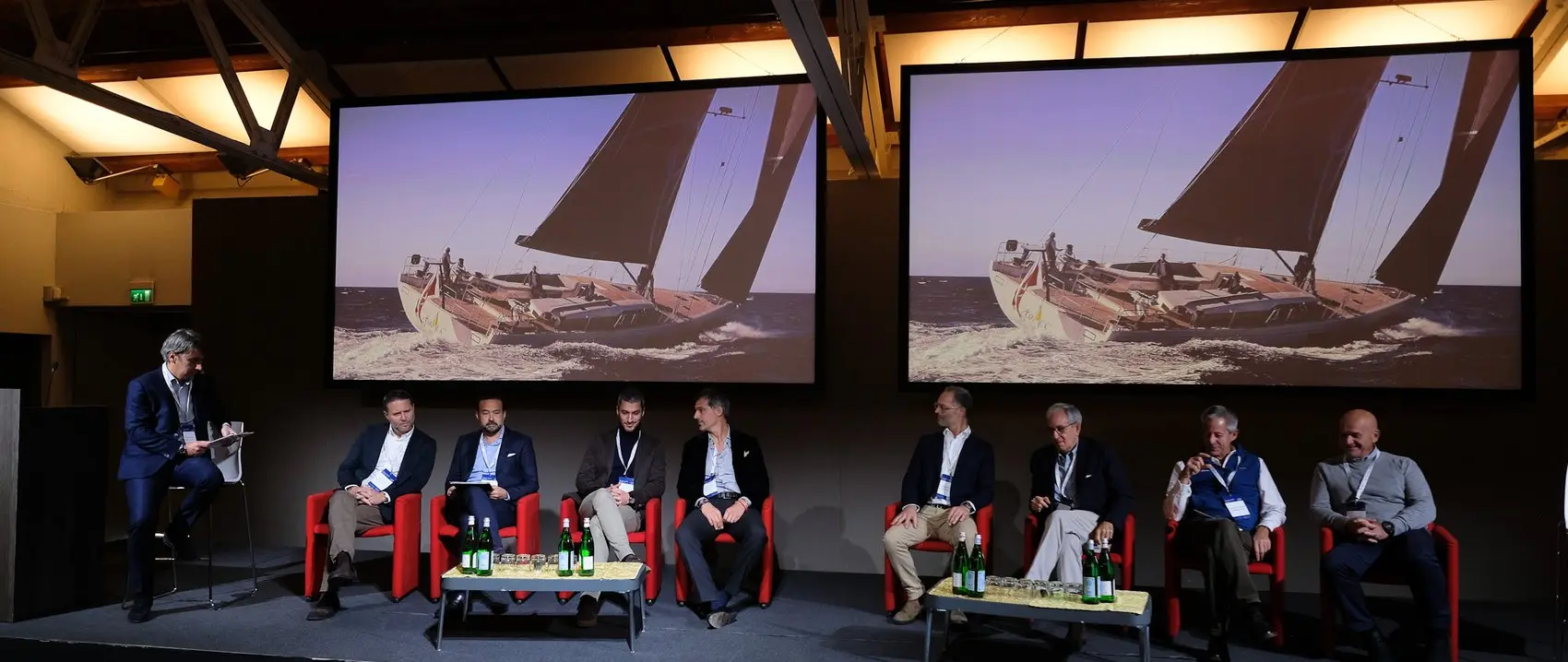
Marine classification society RINA is working with a major client on a semi-autonomous steering concept for a large yacht, with a focus on the boundary between decisions made by software and responsibility retained by the human captain. Giorgio Gallo, speaking at the Sailing Super Yacht Forum in Genoa on 27 November 2026, said the engineering possibilities are advancing faster than the associated answers about command and liability.
The reported work is a development project, not a claim that a fully autonomous luxury yacht is already operating on the open seas without a qualified crew. The distinction matters to owners considering increasingly complex bridge systems. New software can assist a captain, but it does not automatically remove the captain's obligations or the need for clear operating procedures.
The proposed use case is carefully limited
According to the forum account, RINA is examining whether an algorithm might control navigation during less demanding sections of a passage, after a yacht has left a crowded port or other high-traffic area. The intended benefit is to give senior crew opportunities for rest when direct workload is lower, allowing them to be more alert during complex manoeuvres and arrivals.
This is not a proposed replacement for human supervision throughout a voyage. The concept depends on defining where software control is appropriate and when responsibility must pass back to a person at the bridge. Without such a definition, the apparent efficiency gain could create safety and legal uncertainty.
Autopilot and autonomy are not identical
Conventional autopilots maintain a heading or selected track, subject to their operating parameters. A more autonomous navigation system may be expected to interpret information, select between actions and respond to changing conditions. The greater the decision-making authority delegated to a machine, the more important it becomes to establish who approves the decisions and how they can be overridden.
The distinction should be expressed through verified functions rather than marketing labels. A bridge display described as intelligent might provide only advisory information, while another system may adjust steering under specified conditions. Owners need to know exactly which actions are automatic and which require a human instruction.
The central unresolved question
Gallo described the difficulty of asking a captain to remain fully responsible when an algorithm makes a decision that the captain did not directly select. A failure involving a third-party system could raise questions about responsibility among the operator, yacht owner, system supplier and other parties.
The forum did not announce a new legal rule resolving those questions. Any statement that manufacturers automatically escape responsibility, or that a captain always bears every conceivable form of liability, would require careful consideration of the applicable law and contracts. RINA's point was that the division needs explicit examination before wider deployment.
Operational boundaries can help
One approach is to specify where the system may be used, such as particular traffic conditions, visibility thresholds or types of route. Those rules could prevent the yacht from relying on software outside the conditions for which it was designed. A captain would need reliable information about the system's current mode and the circumstances that require intervention.
This is a general safety principle, not a list of final RINA-approved restrictions. The project details have not been published in a complete technical standard. A future certification document should define the operating envelope, sensors, fallback procedures and human oversight requirements.
Monitoring remains an active responsibility
A system that is performing navigation functions still needs supervision. The crew must understand what it is doing and recognise when its behaviour becomes uncertain or inconsistent with the real situation. In shipping and yachting, lookout duties and compliance with collision-avoidance rules cannot be disregarded because a bridge system is sophisticated.
A practical deployment should establish watch arrangements that are consistent with the yacht's flag requirements and the applicable international rules. The purpose of an autonomous-assistance project should be to improve overall safety and workload, rather than reduce staffing in a way that creates new hazards.
The role of sensors and interpretation
For software to assess its surroundings, it may depend on information from positioning systems, radar, cameras, electronic charts and other equipment. Each source has strengths and limits. No sensor should be assumed to detect every hazard accurately in every condition, particularly in complicated coastal waters.
An owner should ask how the proposed system handles conflicting information and what it does if a sensor fails. Those are testable engineering requirements, not abstract questions. Reliability must be demonstrated over a range of realistic operating circumstances before confidence can be justified.
A clear handover process is essential
If a captain is resting while a system controls the yacht, the return to human operation needs to be predictable. An alert that provides insufficient warning or a display that does not explain why control is being returned could undermine the supposed benefit. Training and repeated drills would be important.
The forum's reporting does not provide a completed handover protocol, so this article does not invent one. The operational implication is that autonomy should be judged as a complete human-machine system, including communications and crew readiness, rather than as a steering algorithm in isolation.
Why quiet-water operation may come first
The proposal places special emphasis on less demanding phases of a voyage. Those areas could offer a more controlled environment for evaluating assistance than crowded approaches, where multiple moving vessels, small craft and last-minute instructions can make the situation harder to interpret.
Even an apparently open route can change unexpectedly. Weather, equipment failure and other traffic still require vigilance. Conditions suitable for automated control need to be defined by testing and regulation, not by an informal description of a passage as uncomplicated.
Classification societies do more than inspect hulls
RINA's role illustrates how classification organisations increasingly confront integrated software and electronic systems alongside conventional structure, machinery and safety equipment. A novel design may not fit neatly within rules drafted for older technology. Engineers and authorities then need a defensible way to demonstrate an equivalent level of safety.
Classification does not by itself replace all obligations imposed by flag administrations, coastal authorities or commercial operating rules. An owner should understand which body has approved a component, which has accepted the complete system and what conditions attach to its use.
Ferrari Hypersail provides a regulatory example
Gallo also referred to RINA's involvement with Ferrari's Hypersail project, which uses unconventional technical solutions. The classification society worked for around a year on safety requirements that could support the vessel's registration under the Italian flag without forcing design changes that would undermine its purpose.
The comparison is useful because it shows a process for dealing with new technology in an established regulatory environment. It does not establish that the Hypersail vessel is an autonomous yacht, or that its regulatory work directly approves the proposed semi-autonomous steering concept. The two projects raise different technical questions.
A special-purpose fast towing vessel
The forum presentation included another unusual marine operation: an Azimut-built support vessel for Hypersail, described as about seventy feet long and intended to tow the racing craft at speeds potentially reaching 31 knots during a six- or seven-month preparation period. Such speeds are far outside normal expectations for conventional towing arrangements.
That example is relevant to luxury-yacht engineering because the support craft sits within the size segment familiar to many LYG readers. However, it is a specially developed programme, not a claim that an ordinary seventy-foot yacht can legally tow another craft at 31 knots without modified equipment and operating authorisation.
Maritime authorities must be involved
According to the forum account, RINA also worked with the relevant maritime authority to assess an authorisation for the fast support-vessel operation. It illustrates the need to address unconventional uses explicitly rather than assume a vessel's general registration covers every possible activity.
The report does not provide the final operational permit or its conditions. Those would need to be inspected before making statements about what the support vessel may undertake in practice. A novel technical arrangement requires proportionate safety evidence and correctly documented permissions.
Implications for yacht owners
Owners may be attracted to software promising smoother passages, better monitoring or reduced pressure on crew. Those benefits could be real within defined conditions, but the purchase decision needs to address training, maintenance, cybersecurity and responsibility as well as the advertised functions.
A proprietary system may involve licences, remote services and updates that affect how it works over time. Buyers should ask who controls those changes and how the yacht will be supported if a supplier changes its product or stops providing the relevant service.
Bridge integration is a human-factors problem
Modern yacht bridges can display a large amount of data. Adding another automation layer could simplify decisions if it presents the right information clearly, or make operations harder if it creates too many alerts and ambiguous modes. Human-factors design deserves the same attention as sensor accuracy.
Owners and captains should participate in testing before a system is commissioned, particularly where routines will change. A new feature should be introduced with written procedures, training and a realistic assessment of what can go wrong.
Liability requires contractual clarity
Contracts involving builders, system suppliers, managers and owners should describe the equipment supplied, its performance assumptions and the responsibilities of each party. Liability may ultimately depend on the facts of an incident and the law that applies. No single marketing warranty can answer every possible question.
The forum discussion is a reminder to seek appropriately qualified legal and technical advice before relying on autonomous functions in commercial or private operation. It is not a substitute for a legal opinion about a particular vessel, incident or jurisdiction.
Testing needs measurable criteria
A credible semi-autonomous programme should document how it behaves in expected conditions and how failures are detected. Examples might include the response to loss of positioning, inconsistent radar targets or a failed communication link. The exact tests and acceptance criteria must come from the responsible engineering and classification process.
The public announcement does not establish a finished test programme or a deployment timetable. The correct description is active research and assessment with a client, not a certified commercial launch.
Broader lessons for the yachting industry
The underlying issue extends beyond steering. Yachts increasingly use software to coordinate propulsion, energy, stabilisation and hotel systems. Owners may experience benefits when information is integrated sensibly, but every additional dependency can create new operating and service challenges.
Good engineering makes those dependencies visible and manageable. It allows crew to understand what the system is doing and maintain a safe operation when individual components are unavailable. Innovation should strengthen, rather than obscure, responsibility.
What the Genoa discussion actually establishes
RINA has identified a credible technical direction and a major unresolved operational question: how much navigation may be delegated to software while a captain remains accountable for the voyage. The technology is being explored, but the report does not identify a completed, certified autonomous yacht.
For luxury-yacht owners, the most important lesson is to ask for clear functions, tested limits and a transparent responsibility framework. The next meaningful milestone will be an official system specification, tested installation or agreed regulatory approach, rather than another broad promise that artificial intelligence can navigate a yacht on its own.
Primary reporting and image credit
Primary report: https://www.superyacht24.it/en/2026/11/27/autonomous-yachts-rina-is-researching-navigation-based-on-algorithms/. © SUPER YACHT 24 / original event photographer. Authentic 27 November 2026 Genoa Sailing Super Yacht Forum stage photograph, illustrative only. Image is used only for correctly attributed factual editorial coverage and never represented as open-licence stock photography.