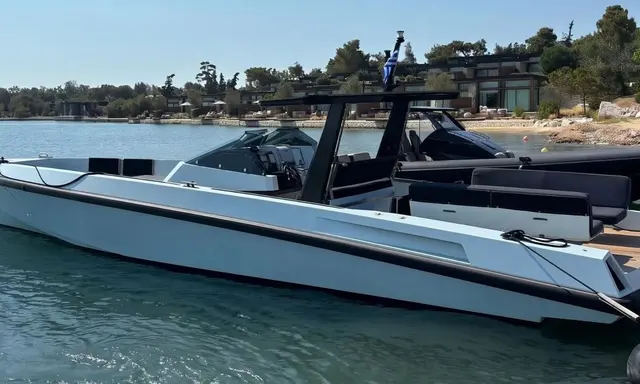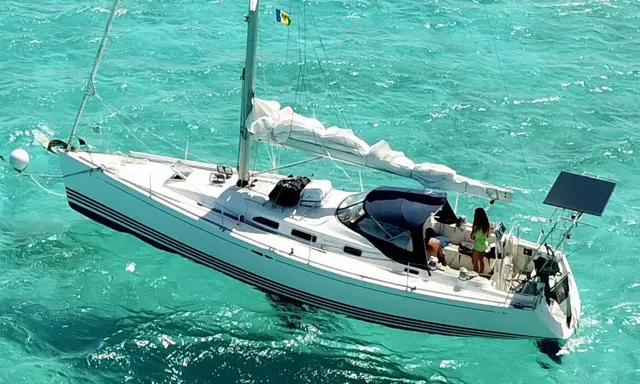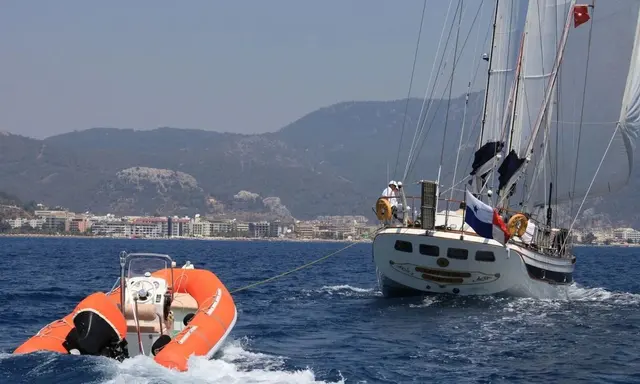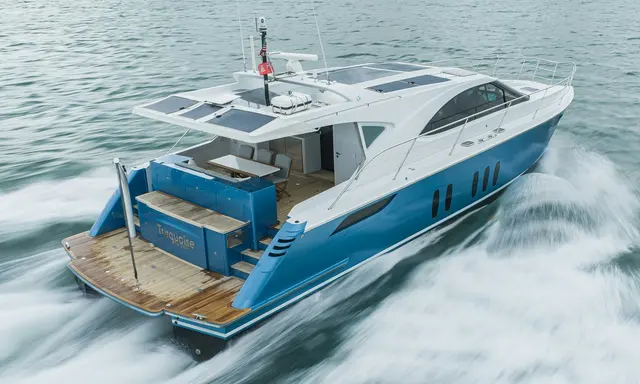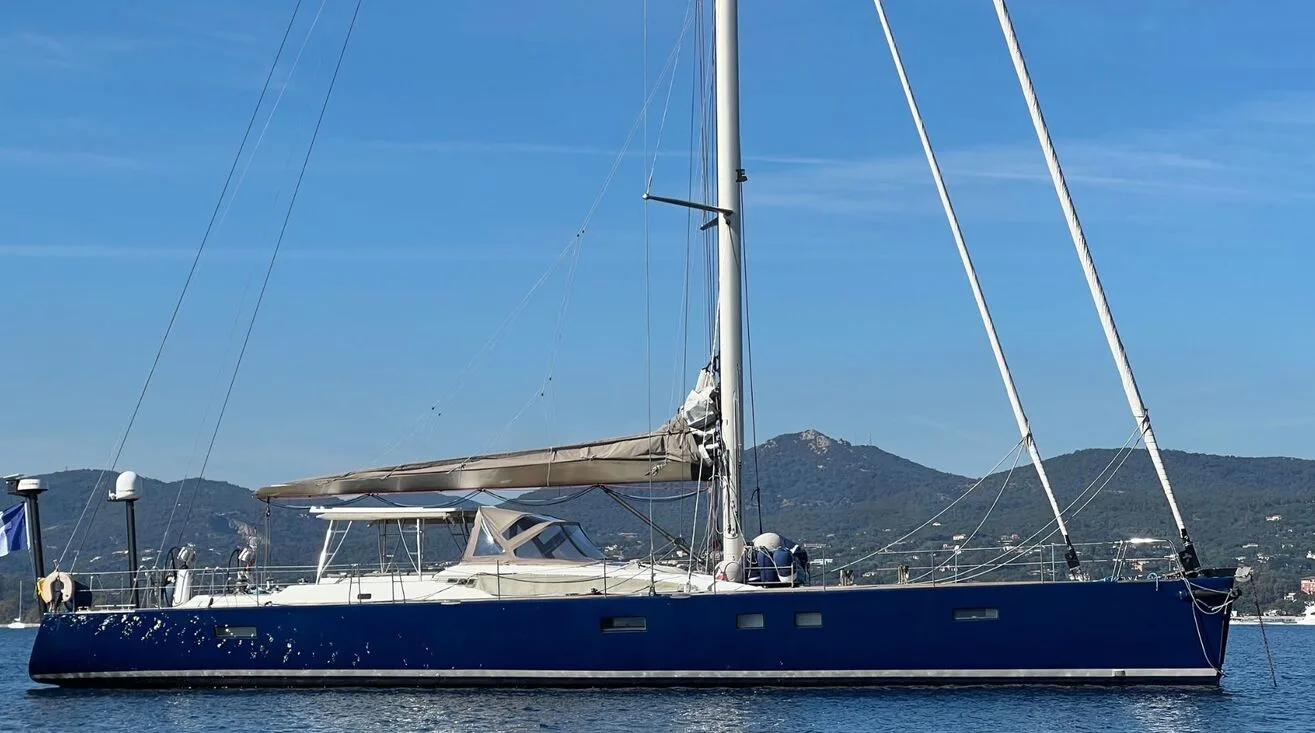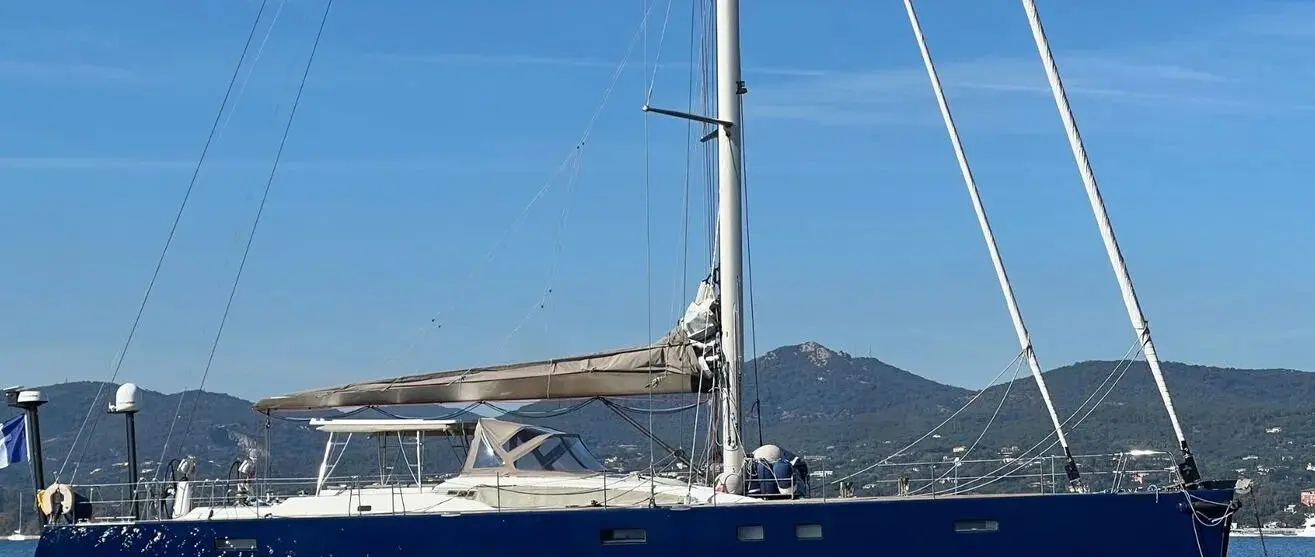
Bernard Gallay Yacht Brokerage announced a new sales listing for the Futuna 70 ICHTUS on 17 November 2026. The 21.75-metre sailing yacht, completed in 2010 to a design by Marc Lombard, combines an aluminium hull with a composite deck and superstructure. Its published history includes a circumnavigation from 2011 to 2015 and an extensive refit undertaken in Göcek, Turkey, in 2017 and 2018. The brokerage description also identifies more recent work in 2025 and 2026.
The yacht is of particular interest to buyers who envisage long-distance cruising with a relatively small crew rather than relying on the arrangements normally associated with larger sailing yachts. The specification brings together a tall carbon mast, substantial sail area, a relatively light displacement and systems intended to support time away from shore. Those qualities deserve to be examined alongside the vessel's maintenance history, rather than interpreted as assurances of present condition or future performance.
An aluminium platform for offshore cruising
At 21.75 metres, ICHTUS occupies a useful position within the luxury sailing yacht market. It is large enough to provide several separate guest cabins and dedicated technical spaces, while remaining below the 24-metre threshold used by Luxury Yacht Guide to distinguish its coverage from the superyacht sector. The choice of aluminium for the hull is relevant because the construction and repair considerations differ from those of a production yacht with a conventional glass-reinforced plastic structure.
A metal-hulled yacht needs careful attention to the electrical installation, protective coatings and the interaction between dissimilar metals. A survey should examine areas that may be difficult to reach during ordinary ownership, as well as the exterior surfaces visible when the vessel is ashore. The composite superstructure adds another set of considerations, including the condition of its attachment to the hull and the integrity of penetrations for equipment and glazing. The construction materials alone cannot establish the vessel's current seaworthiness.
Marc Lombard's design and the displacement figure
The broker describes ICHTUS as an owner's version, with a light displacement of 27 tonnes. The proportions suggest a yacht whose sailing performance is important to the intended cruising experience. A vessel designed to undertake long voyages under sail can offer a different rhythm of travel from a motor yacht whose range is determined primarily by fuel consumption. The way its weight is distributed is nevertheless just as important as a single published displacement figure.
Owners preparing for long voyages typically carry provisions, spares, safety equipment, personal possessions and considerable quantities of consumable liquids. Those additions can change the way a yacht sits and handles. Before purchase, a buyer should establish the condition and actual weight of the boat as offered, rather than assume that the quoted light displacement represents its fully equipped cruising configuration. An appropriate loading assessment can help identify whether the available storage and tank arrangements suit the proposed use.
The carbon mast and its maintenance record
The 31.5-metre carbon mast is one of the vessel's defining components. Bernard Gallay describes it as surveyed and identifies Navtec rod rigging installed in 2018. The arrangement is substantial for a yacht of this length and supports the large sail areas cited in the listing. The rig is also among the most important aspects of the technical due diligence, particularly in view of the vessel's history of offshore sailing.
A statement that a mast has been surveyed should be accompanied by the date, scope and findings of that inspection. The condition of standing rigging cannot be inferred from the visual appearance of the spars alone. A buyer should establish whether any recommendations remain outstanding and review the maintenance records with an experienced sailing-yacht rigging specialist. Insurance requirements and expected replacement intervals may differ according to the rig's specification and intended usage. The history of the installation is therefore relevant to both operation and ownership costs.
A sail plan suited to a performance-oriented yacht
The advertised sail areas are 251 square metres upwind and 450 square metres downwind. These figures illustrate the scale of equipment handled aboard ICHTUS and the importance of the systems intended to assist sail management. The specification refers to electrically operated Bamar furlers and to changes to the sail inventory. Such equipment may reduce some of the physical demands on a small crew, but it does not remove the need for experience or appropriate sail-handling procedures.
Prospective owners should establish which sails are included, their dates of manufacture and their actual condition. A sailmaker familiar with yachts of this size can provide an assessment that goes beyond the presence of a particular brand in an inventory. The relationship between the furling equipment, the deck hardware and the electrical installation also deserves scrutiny. The boat's suitability for short-handed cruising will ultimately depend on how effectively its systems function together and the capability of those operating them.
Draft and the limits of access
The published draft is 2.95 metres, a dimension that deserves consideration when planning an itinerary. The yacht may be suited to offshore passages, but it cannot automatically use the same harbours and anchorages as a smaller or shallower-draft cruiser. The limitation is particularly relevant in regions where channel depths vary considerably or where the available marina berths were originally designed for smaller vessels.
A buyer should check the actual loaded draft and the relevant drawings. Passage planning needs to account for tidal conditions, chart reliability, local restrictions and the recommendations of competent navigators. The same applies to the height of the rig when considering bridges and other overhead constraints. These are practical consequences of choosing a larger sailing yacht, and they should be understood early in the acquisition process rather than discovered during a voyage.
Auxiliary propulsion and the published range
ICHTUS is fitted with a 200-horsepower Yanmar auxiliary engine. The broker quotes a motoring range of 800 nautical miles at eight knots and identifies a fuel capacity of 1,200 litres. These are useful figures for understanding the intended operation of a sailing yacht whose engine can be important during calms, manoeuvres and journeys in which timing matters.
The stated range is a brokerage specification, not a result obtained in a controlled test for this report. Actual consumption depends on loading, the condition of the propulsion installation and the environment in which the boat is travelling. An interested purchaser should request maintenance records and fuel-consumption information, and commission an appropriate sea trial. The fuel system, cooling arrangements and accessibility of maintenance points also deserve inspection. Reliable auxiliary propulsion remains important even for an owner committed to making the majority of a long passage under sail.
Fresh water and electrical autonomy
The yacht's specification includes 1,500 litres of freshwater storage and a watermaker rated at 160 litres per hour. Solar equipment and a 16 kVA Mastervolt generator are also identified. This combination illustrates the importance of designing a sailing yacht's service systems around extended occupancy. The watermaker's rated production figure, however, should not be treated as a guarantee of constant output in all conditions.
A buyer should establish the condition of the tankage, the water-treatment equipment and the electrical supply required to operate the relevant systems. Battery capacity and actual domestic consumption should be understood before making assumptions about autonomy. Long-distance cruising often involves periods in which a particular system is unavailable or cannot be operated efficiently. The owner should therefore consider reserves, maintainability and spare-parts arrangements as much as the nominal performance of the installed equipment.
What the Turkish refit addressed
The brokerage announcement dates the major refit to 2017–2018 and describes work on the teak deck, interior, Raymarine electronics and reverse-cycle air conditioning. It also identifies later work on sails, topsides paint and helm areas. The record demonstrates that the boat has been subject to several interventions since its original completion, although the details of each job need to be confirmed from its documentation.
A refit completed eight or nine years earlier should not be described as though every renewed component remains new in 2026. The importance of the work lies in the condition it helped establish and the records that may be available to trace subsequent maintenance. A purchaser should distinguish between structural work, routine equipment replacement and cosmetic improvement. The quality of repairs and the compatibility of newer systems with the original yacht may affect both reliability and future serviceability.
Accommodation and the role of a crew cabin
The broker describes three guest cabins with individual bathrooms and a separate crew cabin. The accommodation is therefore relevant to a family or group wishing to undertake extended cruising without making all guest spaces serve as permanent storage or operating areas. The tender garage also provides a means of carrying a smaller craft without necessarily placing it prominently on the main deck.
It is worth considering how the interior functions when the yacht is underway for several days rather than simply used for overnight stays in a marina. Secure storage, ventilation, access to systems and usable handholds all influence daily comfort. The allocation of a separate cabin to crew or additional assistance may provide flexibility, but actual permitted occupancy and safety arrangements should be confirmed for the yacht's registration and operating circumstances.
A circumnavigation is a history, not a current certification
The reported world voyage between 2011 and 2015 is a significant part of ICHTUS's identity. It provides evidence of the way the yacht has previously been used and makes its offshore-oriented design more than an abstract concept. It does not, by itself, establish that the boat is ready to depart on another circumnavigation without preparation.
The distinction is essential when assessing a used passagemaker. Records of earlier voyages can help a purchaser understand maintenance patterns and previous modifications. The current technical survey must then establish the vessel's condition independently. The November 2026 brokerage announcement offers an opportunity to investigate a yacht with a distinctive design and sailing history. Whether ICHTUS is suitable for its next owner's ambitions will depend on the quality of that assessment, the documentary evidence and the plans for operation after acquisition.
Related Luxury Yacht Guide reporting
- Oyster Details Atlantic Rally Support for Owner-Cruised Yachts
- Oyster Uses Barcelona Refit Network to Extend Yacht Lifetimes
- VMG 53 Trimaran Reaches Major Build Stage Ahead of 2027 Delivery
- Dufour Confirms 44 and 54 Cruisers for boot Düsseldorf 2027
Primary reporting and image credit
Primary broker announcement(s): https://www.bernard-gallay.com/news-ichtus-a-2010-futuna-70-sloop-a-new-sailing-yacht-for-sale-with-bgyb. © Respective photographer / Bernard Gallay Yacht Brokerage. Subject-specific first-party brokerage photograph, credited to its source; photographer not individually identified. Image is used only for correctly attributed factual editorial coverage and never represented as open-licence stock photography. Original broker image.