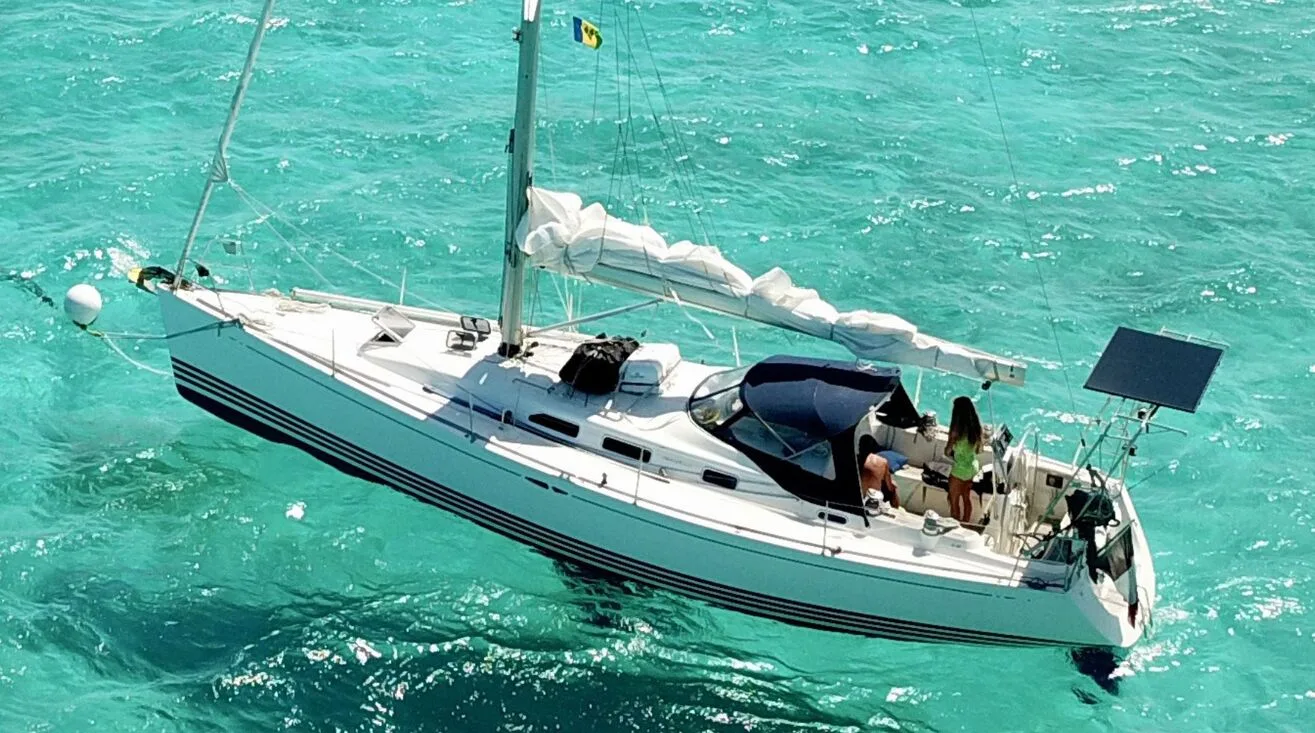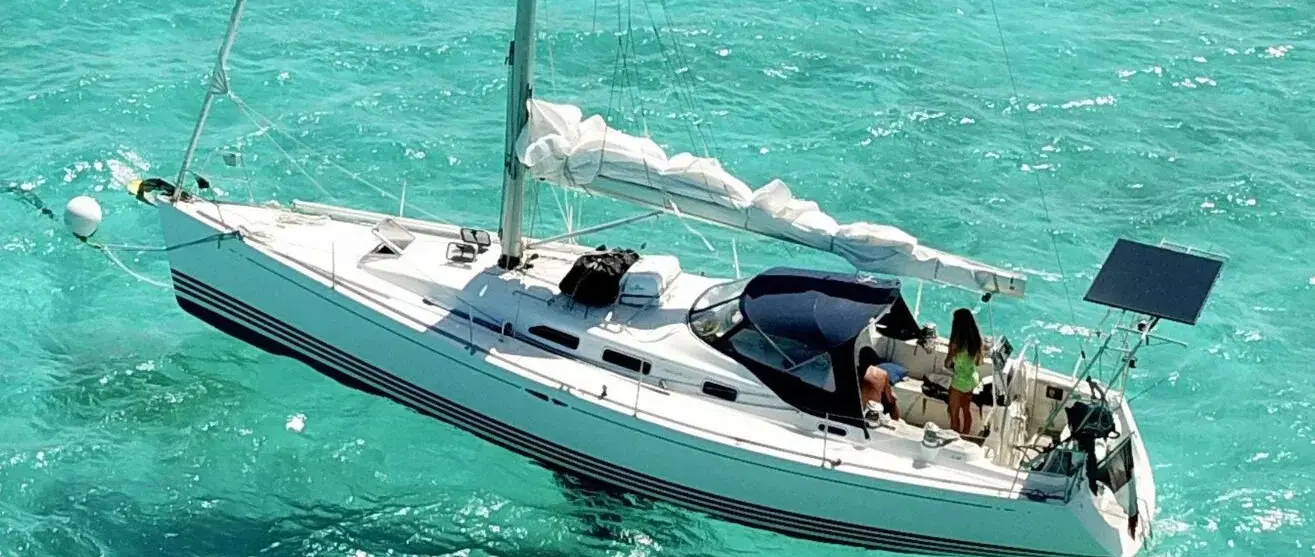
A 2005 X-Yachts X 40 has entered Bernard Gallay Yacht Brokerage's sales portfolio, with a new listing announced on 12 November 2026. AMORADA measures 12.19 metres and was designed by Niels Jeppesen. The current brokerage specification, checked on 28 November, gives an asking price of €145,000, describes VAT as paid and locates the vessel at Port-Saint-Louis-du-Rhône in southern France.
The boat is particularly relevant to owners interested in the lower end of the luxury yacht size range. It offers a sailing-oriented alternative to larger vessels requiring more extensive operating arrangements, while providing accommodation for a family or small group. The 2025 changes to its electrical, navigation and safety equipment are central to the new listing, which describes a combination of an older performance-cruiser platform and more recent investment in practical sailing systems.
A performance cruiser rather than a dedicated racing yacht
The X 40 combines a cruising accommodation plan with a sail inventory and rig intended to support responsive sailing. The broker attributes its design to Niels Jeppesen and identifies a GRP hull, 3.81-metre beam and displacement of 8.1 tonnes. Those dimensions describe a vessel considerably smaller than many professionally crewed sailing yachts, but one that can still offer several distinct sleeping spaces and a substantial sailing rig.
The appeal of this type of boat is the possibility of operating it as an active sailing yacht rather than merely using it for accommodation at a destination. Prospective owners should evaluate how the sail controls, deck layout and equipment fit their experience and intended crew. Good sailing performance in appropriate conditions does not eliminate the demands of manoeuvring, watchkeeping and routine maintenance. The most useful assessment will be one based on a sea trial and the priorities of the people who actually intend to sail the boat.
Two different approaches to sail construction
AMORADA's published inventory includes a carbon North Sails mainsail and genoa, along with additional Dacron sails and both asymmetric and symmetric spinnakers. This is a useful distinction from a boat offered with only a basic cruising wardrobe. It gives a prospective buyer several different types of equipment to evaluate rather than a single combination of working sails.
The presence of carbon sails is not, by itself, an indication of how much useful service life remains. Their condition depends on use, storage, construction and earlier maintenance. An inspection by a suitable sailmaker can establish the condition of the fabric and structural elements and identify whether repairs or replacement may be necessary. The Dacron equipment should be evaluated separately, taking account of the owner's anticipated sailing programme. A boat that will undertake extended cruising may place different priorities on durability and ease of repair from one intended mainly for local competitive sailing.
The rod-rigged aluminium mast
According to BGYB, the boat has an aluminium mast with three sets of spreaders, rod standing rigging and a hydraulic backstay. The arrangement illustrates the performance-oriented nature of the X 40 and deserves specialist attention during purchase due diligence. The equipment should be understood as a complete rig rather than evaluated simply by the material from which the mast is made.
The condition of the standing rigging and its connections cannot reliably be established from general photographs. A purchaser should request the dates and records of previous rig inspections and any replacements, and seek the advice of a qualified rigging specialist. The hydraulic equipment also requires attention to its service history and condition. Before planning extended sailing, an owner should understand the maintenance regime and any insurance requirements applicable to the actual equipment fitted aboard AMORADA.
A cockpit intended for sailing and leisure
The brokerage presentation highlights the teak cockpit and its protective sprayhood. The area is both a working space for the people handling the boat and a social setting when it is moored or at anchor. On a yacht of this length, the ability to accommodate both functions without unnecessary obstruction can be an important aspect of the design.
A viewing should examine the relationship between the helm, sail controls and seating rather than focus exclusively on the appearance of the timber. The condition of the teak, underlying deck and associated fittings should be assessed independently of the broker's description of their cosmetic presentation. Buyers who intend to sail with family members should also consider the ease of moving between the cockpit and the interior. The practical usefulness of outdoor space is determined as much by its arrangement and protection in changing conditions as by its dimensions.
The effect of the 2.46-metre draft
The current specification gives a draft of 2.46 metres. For a sailing yacht of just over 12 metres, that is an important dimension to consider in the context of the intended home berth and cruising area. A relatively deep keel can form part of a design intended to deliver sailing performance, but it can restrict access to some shallow harbours and anchorages.
The actual loaded draft and keel configuration should be verified against the vessel's documentation and current condition. Any owner considering extended cruising needs to investigate the suitability of intended berths and lifting facilities. The draft quoted in the brokerage listing is a useful starting point for that assessment, not permission to enter any particular location. A prospective buyer who plans to sail primarily in shallow coastal waters may find this dimension particularly significant when comparing the X 40 with alternative designs.
Navigation upgrades completed during 2025
The listing identifies 2025 updates involving batteries, Raymarine self-steering equipment, AIS Class B and VHF communications. These changes are relevant because the acquisition of a used sailing yacht frequently requires decisions about the serviceability and compatibility of its electronic systems. More recent equipment can reduce some initial replacement requirements, provided its installation and current condition are satisfactory.
A buyer should request the details of the installed models and the associated invoices. The network, power supplies, sensor connections and the integration of the self-steering system should be understood before relying on them for long periods at sea. The capabilities of Class B AIS should not be confused with complete detection of all nearby vessels. Likewise, self-steering equipment supports the operation of the boat but does not replace competent watchkeeping. Proper familiarisation with the equipment is particularly important if the new owner has previously used a different navigation system.
Batteries, connectivity and the energy balance
AMORADA is also advertised with Starlink connectivity and newer batteries. The ability to communicate from the boat may be attractive to owners who expect to spend time away from their home marina, particularly when they wish to obtain information or remain connected with people ashore. However, the usefulness of communications equipment depends on coverage, service terms and the availability of suitable electrical power.
The listing does not provide enough information to calculate the vessel's complete energy balance. Buyers should establish the battery chemistry, installed capacity, charging arrangements and the loads associated with ordinary operation. Equipment that functions satisfactorily during a short marina visit may impose different demands when the yacht is used continuously without a shore connection. Understanding those demands is an important part of preparing a relatively compact sailing yacht for an extended voyage.
The auxiliary diesel and saildrive
BGYB identifies a 40-horsepower Yanmar 3JH40 engine with a saildrive and folding propeller. Its published fuel capacity is 80 litres, with freshwater storage given as 180 litres. These figures illustrate the distinction between a sailing cruiser and a larger motor yacht intended to carry substantial fuel reserves. Auxiliary propulsion is important for access to ports, manoeuvring and conditions in which sailing is impractical, but its role should be considered within the boat's overall operating concept.
An independent mechanical survey should examine the engine and the saildrive installation, including the condition of the associated sealing and corrosion-protection arrangements. The actual service history of the propulsion equipment is more useful than a general claim about its ease of use. Owners considering longer voyages should also establish realistic fuel consumption, reserve arrangements and freshwater requirements for the particular crew and itinerary. The advertised tank sizes are not sufficient by themselves to establish the boat's practical endurance.
Three cabins and a compact interior plan
The interior provides a forward owner's cabin and two cabins aft, with a central saloon, navigation station and galley. The arrangement is advertised for six guests. For a family, the existence of three separate sleeping spaces may be particularly attractive in a vessel that remains within the dimensions of many conventional marina berths.
The number of cabins should be assessed in relation to the way the yacht will be occupied. Space for personal belongings, provisions and equipment becomes particularly important when several people are travelling for more than a few days. A navigation station can provide a useful dedicated working area, while a usable galley contributes substantially to longer stays aboard. Buyers should examine these spaces with the actual intended crew in mind, paying attention to ventilation, storage, ease of circulation and access when the boat is underway.
Asking terms and preparation for the next owner
The broker's current AMORADA specification describes the €145,000 asking terms as VAT paid and identifies a French flag. Those details should be confirmed against the title, registration and tax documentation before a transaction. The 2025 equipment updates, including a liferaft for six people, should also be verified individually. A liferaft's presence and stated capacity are distinct from its current service status or suitability for a particular voyage.
The new November listing is an opportunity to examine an owner-oriented performance cruiser with a relatively compact hull, multiple sleeping cabins and recent investment in operational equipment. Its suitability for offshore travel cannot be established solely from the broker's description of its capabilities. A thorough survey and realistic preparation plan will determine whether AMORADA meets the requirements of its next owner. The attraction lies in the combination of the established X-Yachts design and the documented recent updates, not in an assumption that a twenty-one-year-old yacht needs no further work.
Related Luxury Yacht Guide reporting
- Dufour Confirms 44 and 54 Cruisers for boot Düsseldorf 2027
- Dufour Sets Out a Winter Sailing Checklist for Cruising Yacht Owners
- Futuna 70 ICHTUS Enters Market After Ocean Voyages and Refit
- Oyster Details Atlantic Rally Support for Owner-Cruised Yachts
Primary reporting and image credit
Primary broker announcement(s): https://www.bernard-gallay.com/news-x-yachts-x-40-amorada-blue-water-sailing-yacht-now-for-sale-at-bgyb. © Respective photographer / Bernard Gallay Yacht Brokerage. Subject-specific first-party brokerage photograph; photographer not individually identified. Image is used only for correctly attributed factual editorial coverage and never represented as open-licence stock photography. Original broker image.