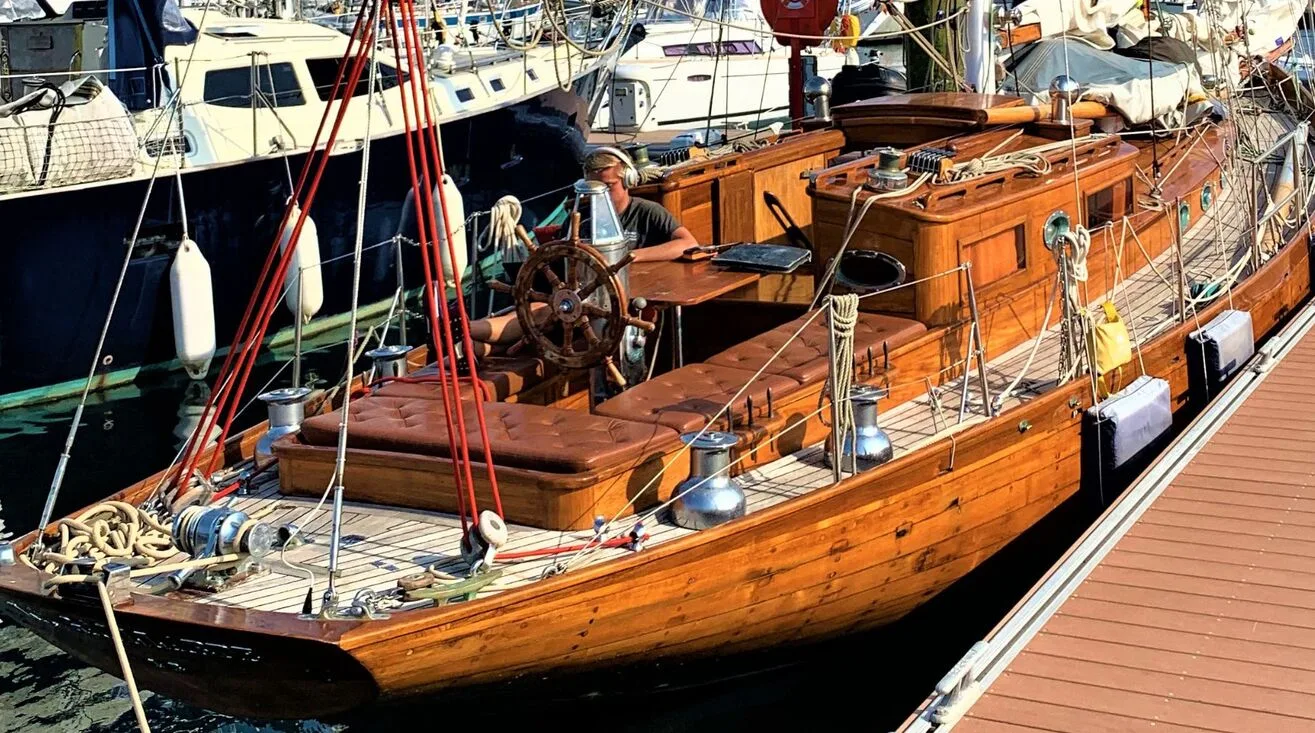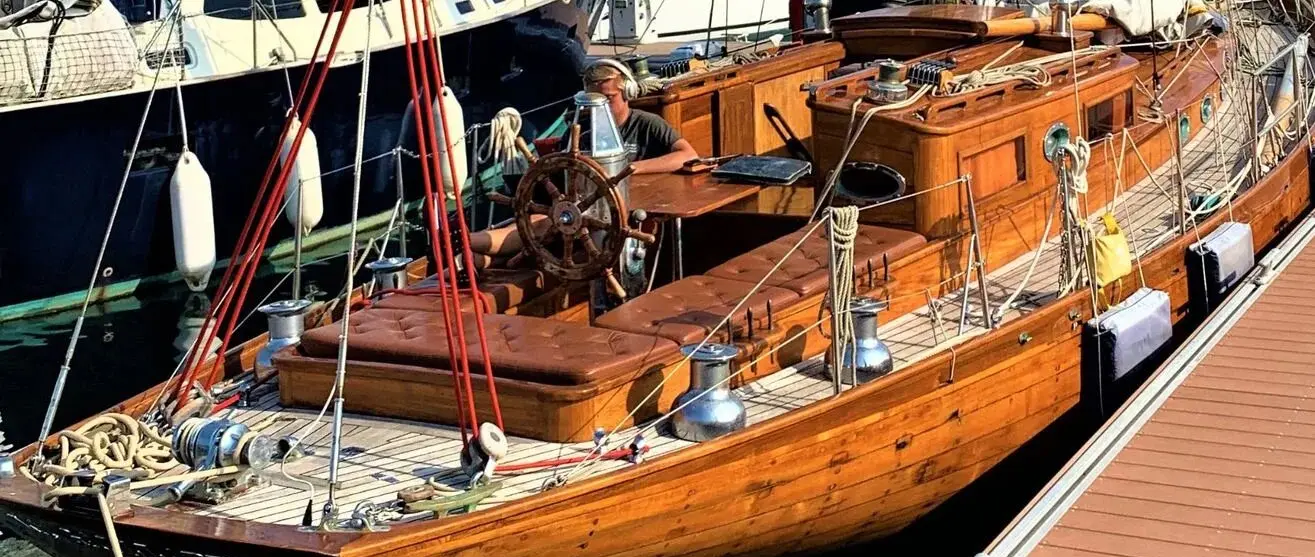
A wooden schooner built before the Second World War has entered the contemporary luxury yacht brokerage market. Bernard Gallay Yacht Brokerage announced the availability of LA GAILLARDE on 19 November 2026, describing the 15-metre yacht as a 1939 Abeking & Rasmussen build maintained by the same owner for more than 45 years. The vessel's combination of traditional construction, a schooner rig and modern equipment makes it an interesting alternative to recently built sailing yachts in this size range.
The announcement also identifies LA GAILLARDE as a vessel recognised for its heritage interest and undergoing a further heritage classification process. It is important to distinguish that existing recognition from an application or procedure that may not yet have concluded. A prospective purchaser should establish the precise status of any designation and the obligations or restrictions associated with it. For a yacht of this age, ownership involves not only enjoying the boat but also understanding the responsibility of maintaining an historic structure.
A yacht from a distinguished German yard
Abeking & Rasmussen's name is closely associated with the development of high-quality yacht construction. LA GAILLARDE was completed in 1939 to a Rasmussen design, according to the brokerage record. That date places the vessel within a period when timber construction was fundamental to yachtbuilding and the design of a sailing vessel depended on materials and methods that differed considerably from those employed for today's composite production yachts.
The distinction matters to a purchaser assessing the yacht as an historic object. Original construction, subsequent repairs and alterations can together form part of a vessel's history. The relevant question is not whether every piece of material dates from 1939, but how later work has affected the vessel's structural integrity and historic character. A detailed documentary record, including earlier surveys and photographs where available, can contribute significantly to understanding the condition of a boat that has existed through many decades of changing marine technology.
Teak planking and oak frames
The broker identifies teak planking laid over oak frames, with a varnished teak superstructure. These materials contribute to the distinctive appearance of the schooner and are part of its traditional construction system. The yacht's hull was reportedly repainted during 2026. A fresh finish may present the boat attractively, but it does not establish the state of the underlying timber or fastenings.
The correct approach is to commission a survey from a specialist experienced in traditional wooden vessels. Different sections of the hull may experience different stresses and environmental conditions. Fasteners, frame ends, the areas around fittings and the interfaces between materials deserve appropriate inspection. A wooden boat may be structurally sound after a long service life when it has received suitable care, but that conclusion requires evidence. It should not be inferred merely from the quality of the external varnish or paintwork.
The meaning of long-term ownership
The reported continuity of ownership for more than 45 years is a noteworthy part of the listing. Long-term ownership can offer the possibility of obtaining extensive knowledge about the vessel's maintenance, repairs and use. In the most useful circumstances, that knowledge is supported by written records that allow a new owner to follow the decisions taken over several decades.
Continuity is not automatically a substitute for documented condition. An individual owner may have maintained a vessel very carefully, or some work may have been deferred in accordance with a changing pattern of use. The prospective purchaser should ask for the maintenance history, records of structural repairs, any outstanding survey recommendations and the scope of the repainting undertaken this year. A conversation with the existing owner may also help explain how the yacht has been used and which routines have proved important.
A schooner rig with a substantial sail wardrobe
The schooner configuration distinguishes LA GAILLARDE from the sloop-rigged sailing yachts that dominate much of the contemporary cruising market. Its spruce spars and sail inventory are part of its historic appearance and operating character. The broker gives sail areas of 136 square metres for upwind sailing and 220 square metres for downwind conditions. Those are substantial areas to manage on a 15-metre boat.
The arrangement offers a different division of sail area from a yacht carrying most of its sail on a single mast. It also requires the crew to understand the interaction of the individual sails and the equipment used to set and control them. A prospective owner attracted principally by the boat's appearance should spend time understanding the practical demands of sailing it. The experience of an appropriate instructor, classic-yacht skipper or rigging specialist can be particularly valuable during the transition into ownership.
Standing rigging and wooden spars
According to the brokerage announcement, the stainless-steel standing rigging was renewed in 2018. That is a useful reference point in the maintenance history, although it is now eight years since the reported renewal. A buyer should ask for the records of installation, later inspections and any work undertaken on related attachment points. The condition of the wooden spars must also be established independently.
A classic sailing yacht's rig should be considered as an integrated assembly. The security of attachments, the state of timber in areas subject to concentrated loads and the compatibility of later fittings with the existing structure all matter. The owner should confirm the recommended inspection regime with specialists familiar with the specific materials involved. That diligence is central to preserving the yacht's character while ensuring that it remains suitable for the intended sailing programme.
A history of classic sailing events
BGYB describes LA GAILLARDE as a regular participant in classic yacht regattas on the Atlantic and around the English Channel. The activity is significant because it suggests that the vessel's historical identity has been expressed through sailing rather than entirely through static preservation. Classic regattas can bring together owners who value traditional construction and the individual characteristics of yachts from different periods.
An owner interested in future participation should examine the rules and entry requirements of the relevant events. The precise measurement, equipment and eligibility requirements can differ, and an earlier appearance at a regatta does not guarantee acceptance into every future event. Any decision to compete should account for the condition of the yacht, the experience of the crew and the preservation objectives associated with an historic vessel. Enjoying competitive sailing and maintaining historic fabric are not necessarily incompatible, but both deserve appropriate planning.
Accommodation arranged for an intimate group
The broker describes sleeping accommodation for six guests in two cabins, together with a shower room, saloon, cooking facilities and a navigation area. It is an arrangement more consistent with the dimensions and traditions of the schooner than the multiple individual suites frequently found aboard modern motor yachts. Its appeal will depend considerably on the owner's preferred style of living afloat.
The visitor who expects the space and privacy offered by a contemporary yacht of similar length may find a different experience here. The interior layout is tied to the historic form of the vessel, and the organisation of storage and circulation may require more deliberate planning. For those who enjoy the character of traditional timber interiors and shared spaces, that may be an important part of the attraction. Prospective owners should view the accommodation with the actual intended occupants in mind rather than judge its suitability by the number of advertised berths alone.
Modern auxiliary machinery within an historic hull
The vessel is equipped with a 55-horsepower Volvo diesel, reported by the broker to have approximately 850 operating hours. It also has Simrad electronics, solar equipment with a stated capacity of 400 watts and a Victron inverter. These installations illustrate how an older yacht can incorporate contemporary systems without necessarily abandoning its traditional sailing identity.
The engine-hour figure needs to be considered alongside the age of the machinery, service records and operating conditions. An independent inspection should address the complete propulsion installation as well as the engine itself. The electrical systems deserve particular care on a wooden boat, where maintenance and the condition of equipment must be understood in relation to the structure around it. The nominal solar capacity also should not be confused with an assured daily energy yield. Battery storage, weather and the loads aboard will determine its practical contribution.
Heritage status and the obligations of ownership
The current description identifies LA GAILLARDE as a Boat of Heritage Interest and refers to an ongoing process for further historic recognition. A buyer should request the relevant certificates and obtain advice about the consequences of any current or future designation. Depending on the jurisdiction and classification, there may be questions concerning modifications, maintenance, transfer or access to particular forms of support.
The potential attraction of heritage recognition is that it acknowledges the vessel's significance beyond its current commercial value. The practical responsibility is that decisions made during ownership can affect the character of a yacht that has survived for generations. Changes that might be routine on a modern production boat may require a different approach when they involve original or historic components. Specialist advice is essential before assuming that any particular modification is appropriate.
The economics of caring for a classic
The new brokerage announcement does not provide a confirmed transaction value. An interested buyer should assess the asking terms in relation to the vessel's condition, included equipment and anticipated maintenance requirements. The availability of experienced shipwrights and suitable yard facilities can be as important as the price of acquiring an historic yacht.
LA GAILLARDE represents an opportunity to investigate a distinctive schooner rather than a promise of inexpensive ownership. Its long reported association with one owner, timber construction and modernised equipment make its maintenance record especially relevant. The announcement confirms that it has been offered to the market in November 2026. The next owner's decision should be based on a specialist survey, an understanding of the heritage status and a realistic plan for maintaining the vessel in the years ahead.
Related Luxury Yacht Guide reporting
- Grillo Parlante Refit Highlights Why Yacht Owners Must Plan Before Entering the Yard
- Oyster Uses Barcelona Refit Network to Extend Yacht Lifetimes
- Dufour Sets Out a Winter Sailing Checklist for Cruising Yacht Owners
- Oyster Details Atlantic Rally Support for Owner-Cruised Yachts
Primary reporting and image credit
Primary broker announcement(s): https://www.bernard-gallay.com/news-la-gaillarde-1939-abeking-rasmussen-schooner-a-classic-yacht-now-for-sale-at-bgyb. © Respective photographer / Bernard Gallay Yacht Brokerage. Subject-specific first-party brokerage photograph, credited to its source; photographer not individually identified. Image is used only for correctly attributed factual editorial coverage and never represented as open-licence stock photography. Original broker image.