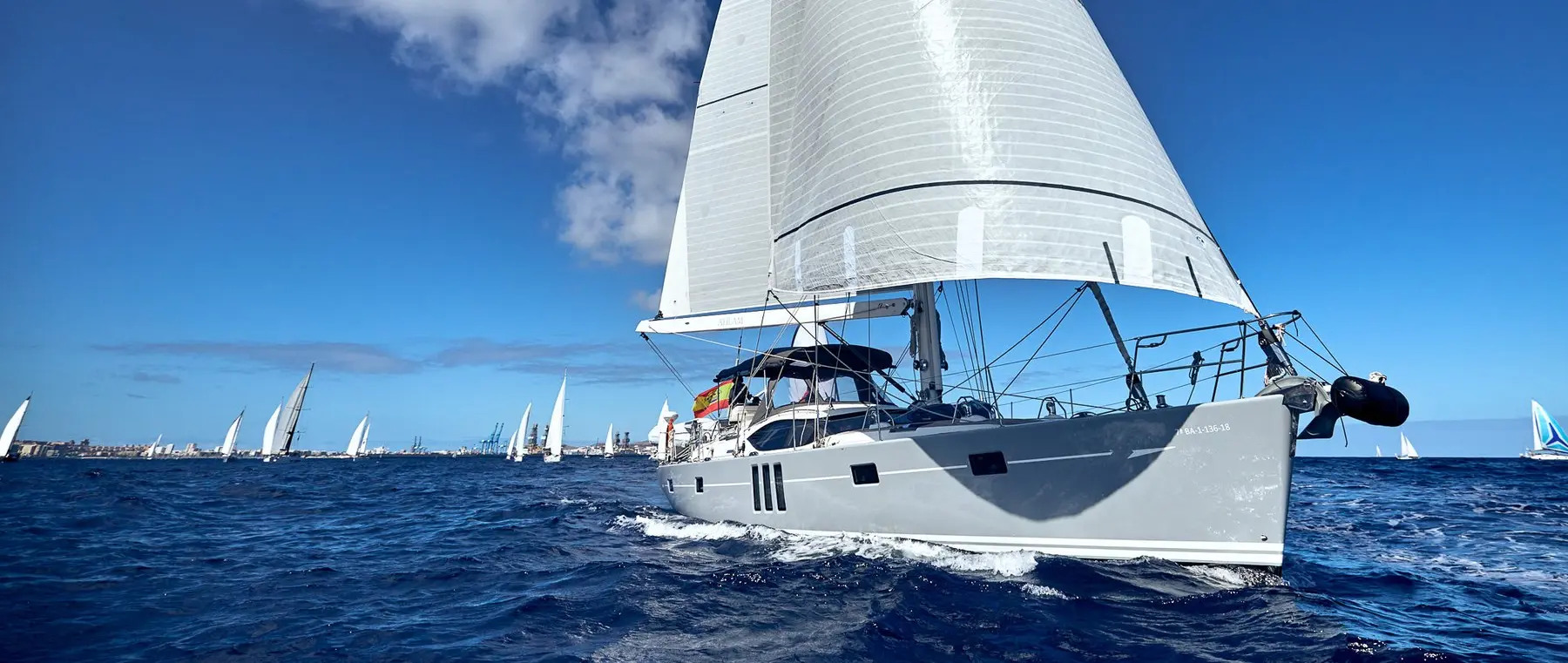
An Atlantic crossing framed around practical preparation
Oyster Yachts' official event information places the 2026 Atlantic Rally for Cruisers start at Las Palmas, Gran Canaria, on 22 November. Its emphasis is not on announcing a new boat or claiming a record crossing, but on the less visible work owners and crews undertake before leaving shore. The British builder describes an on-the-ground technical support programme intended to help its owners approach a long offshore passage with their equipment and plans properly reviewed.
That is an important distinction for the 12-to-23.99-metre cruising audience. A capable bluewater yacht may be suitable for ocean travel, but a model's advertised specification does not determine the readiness of the individual boat or its crew. The relevant news is the scope of practical support available around this year's departure season, not a claim that every entrant is already at sea, has passed an inspection, or will finish on any particular date.
What Oyster's 2026 event information confirms
The company lists the ARC as an owner event and identifies Las Palmas as the departure location. It describes both cruising and racing participation, together with the chance to meet other crews before the crossing. The page also refers to ARC+ participants, whom Oyster's team can support ahead of their voyage. Those are separate event formats; details of any individual vessel's route or entry should be verified through the organisers rather than inferred from a general builder announcement.
Oyster describes the crossing to Saint Lucia as approximately 2,700 nautical miles and says an Atlantic passage commonly takes around three weeks, depending on conditions. These figures convey the scale of the undertaking, not a guaranteed distance logged by every boat or a promised arrival time. A late-November departure puts the planning emphasis on reliable systems, watchkeeping and the decisions made before land disappears astern.
A technical team with a defined job
The builder says its Las Palmas support team includes technical specialists, experienced sailors and skippers who offer complimentary health checks and passage advice to Oyster owners joining ARC and ARC+. Its stated areas of assistance include engineering, systems and rigging. A pre-departure check should be understood as an opportunity to find overlooked concerns and organise remedial work, rather than a certification that a yacht cannot encounter problems offshore.
The timing matters. Equipment that is straightforward to examine while the yacht is alongside may be much harder to assess or repair at sea. A support visit can help owners prioritise tasks before departure and establish which matters need professional intervention. Oyster's page does not publish a completed 2026 inspection count, so this article does not assign one or suggest that the team has inspected any named entrant this season.
Why the rig deserves more than a glance
Rigging inspection is especially relevant to an offshore sailing yacht because repetitive loads continue around the clock. Standing-rigging connections, running-rigging wear, sail-handling equipment and deck attachments can all warrant careful attention. The purpose of reviewing these systems before a long passage is to understand their current condition and to decide whether maintenance, adjustment or replacement is required.
A yacht may have completed pleasant coastal trips without exposing a weak point that becomes more apparent during sustained sailing. Conversely, a scheduled inspection should not be presented as proof of an emerging fault. The useful editorial takeaway is that reliable offshore preparation includes specialist examination and clear responsibility for follow-up actions. Oyster specifically names rigging among the disciplines covered by its technical support offering.
Engineering checks and the systems behind comfort
The builder also refers to engineering and onboard systems. For owners, these categories encompass the machinery and services that make a passage manageable as well as the equipment that helps the yacht move. Engine and charging-system readiness, electrical distribution, cooling arrangements and essential spares can become particularly important where immediate shore assistance is unavailable. A technical discussion at the dock provides an opportunity to review equipment access and maintenance priorities.
It would be wrong to assume that Oyster is fitting an identical equipment package to every yacht in the fleet. Boats may differ in age, model, refit history and the options chosen by their owners. Even sister yachts can have materially different service histories. The announced support programme is best read as a personalised assessment framework, rather than an assurance of a uniform engineering standard across participating vessels.
Steering, generators and checks with real consequences
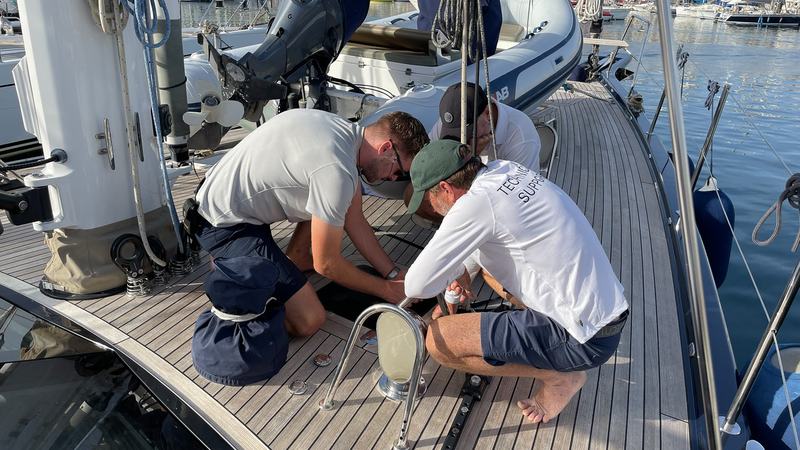
Archival official Oyster Yachts photograph of its ARC technical-support team in 2024; not a photograph of a verified November 2026 inspection. © Oyster Yachts and the original photographer.
Among the testimonials shown on the event page, owners describe the value of having experienced personnel consider major systems such as steering and the generator. These remarks illustrate the sorts of concerns that may receive attention, but they are not a new 2026 incident report. They also remind prospective owners that the offshore experience depends on machinery, interfaces and electrical services working together, not merely on hull design or a comfortable interior.
A practical review can include asking what happens if a primary component fails and whether crew members know the relevant procedures. Such questions do not imply that a particular yacht is defective. They identify planning work that is useful before a lengthy crossing. The role of a technical support team is to help focus that work and, where appropriate, point owners toward the specialist assistance their boat requires.
The 19.05m Oyster 595 as an ownership example
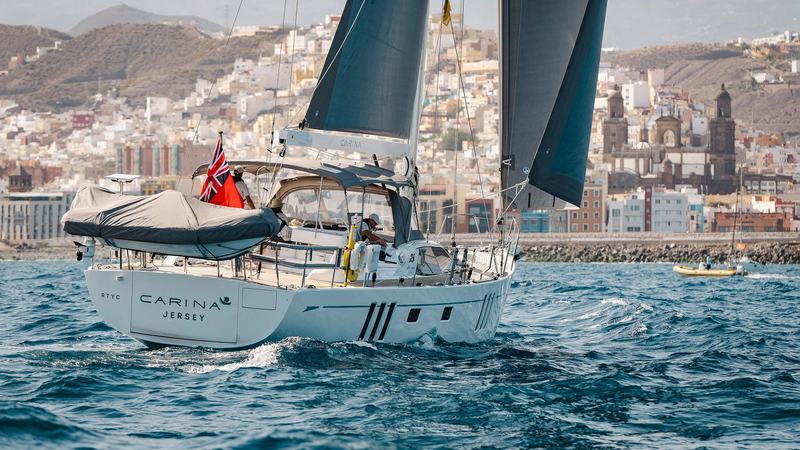
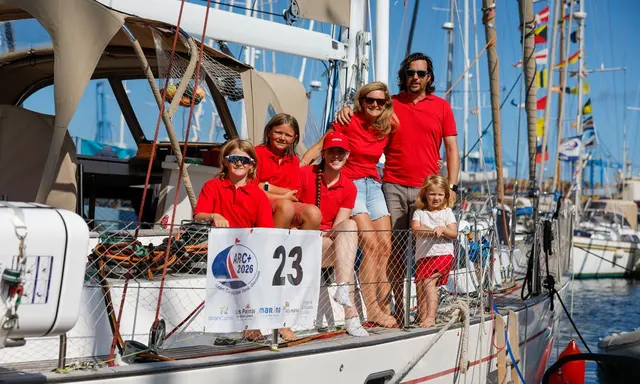
Oyster 595 Carina pictured at the ARC+ 2024 departure in the official Oyster Yachts event archive; no claim is made that Carina entered ARC 2026. © Oyster Yachts and the original photographer.
Oyster's current model specification lists the Oyster 595SII at 19.05 metres overall, comfortably within Luxury Yacht Guide's editorial range. The model is designed as a bluewater cruising yacht, with accommodation and systems intended for owners considering extended passages. The size is significant because it places substantial liveaboard capability in a category that may still be operated in an owner-led style, depending on the people, experience and circumstances aboard.
The ARC page includes an expressly historical photograph associated with an Oyster 595 named Carina at the 2024 ARC+ start, together with an owner comment about receiving technical help before an ocean crossing. That image illustrates the builder's established connection to this activity; it does not prove Carina is entered in 2026. Keeping the image date separate from the current event protects both the accuracy of the report and readers' understanding of what is newly announced.
The 18.09m Oyster 565SII offers another comparison
The official specification for the Oyster 565SII gives a length overall of 18.09 metres. Its published design is aimed at bluewater cruising, and the model provides another useful point of reference for readers considering what an Atlantic programme means on a yacht under 24 metres. The difference between length overall and hull length is worth preserving: Oyster separately lists a 17.22-metre hull measurement, so those numbers should not be treated as interchangeable.
A model specification is not an entry list. Nothing in the cited 2026 ARC event notice establishes how many 565SII or 595SII yachts registered or finished. The significance of these two models is their relevance to the group of owners the guide serves, and the fact that the readiness questions raised by the ARC support announcement are not confined to much larger professional-crew superyachts.
Preparing the crew as carefully as the yacht
Oyster's description of its Las Palmas gathering extends beyond equipment. The company highlights opportunities for crews to meet other sailors and the social programme around the start. These encounters may help share practical experience, but they are not a substitute for a vessel-specific passage plan, appropriate training or watchkeeping arrangements. Each owner remains responsible for the decisions that govern the boat and its people.
An ocean crossing changes the rhythm of life aboard. Watch schedules, rest, food, communications and the management of fatigue demand sustained attention. A relaxed marina conversation may be valuable preparation, yet its benefit is hard to quantify and should not be advertised as a safety result. The reasonable inference is that an owner event combining technical and social support can create more opportunities to identify questions before departure.
A route shaped by conditions, not a sales brochure
The company's approximately three-week crossing description explicitly allows for the variability of the trade winds. That qualification matters more than any simple headline mileage. A yacht's actual course and progress can differ according to weather, crew decisions and its sailing characteristics. Neither a model's specification sheet nor a past example provides a basis to forecast a particular yacht's 2026 arrival.
For readers following the event after the scheduled start date, confirmed position reports and arrivals belong to the rally organiser or verified vessel tracking. This article does not present an unverified fleet status, an exact daily average or a record attempt. The official announcement establishes the planned departure framework and Oyster's support role, which are sufficient to explain why the event matters for ocean-going owners.
Where the ARC and the World Rally connect
Oyster notes that the ARC can be a warm-up for participants considering the Oyster World Rally. On its own, that statement should not be interpreted as meaning that every ARC entrant is taking part in a circumnavigation. The programmes have different commitments and an owner's immediate Atlantic crossing may be a major adventure in its own right, whether or not a much longer itinerary follows.
The connection is nonetheless useful: preparing for a single ocean leg can reveal which routines and systems deserve further attention before an extended voyage. It can also reveal the difference between a yacht that is enjoyable for weekends and a boat organised for weeks of self-sufficient living. Those observations are editorial context, not reported findings from an evaluation of this year's crews.
Why after-sales support belongs in the news
Much of the discussion surrounding yachts in the 18-to-20-metre range concerns layouts, finish, sail plans and cost. The ARC support announcement directs attention to a different part of ownership: what the builder and its wider service network can provide when the yacht is preparing for a demanding passage. Oyster specifically describes its Las Palmas technical assistance as complimentary for its participating family of owners.
Complimentary does not mean that every repair, replacement part or external service is covered, and the event page should not be read as a complete warranty contract. Owners should confirm the practical scope of assistance individually. Still, the existence of a named support programme is a factual difference that readers can evaluate alongside the yacht itself when comparing long-distance ownership options.
Archival photographs require accurate captions
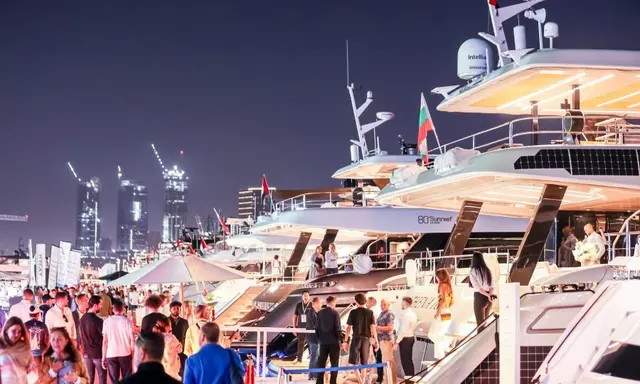
The official ARC page carries images connected with previous rallies as well as general promotional photography. In this report, the lead image is an Oyster Yachts ARC image supplied on that official page. An additional photograph shows the Oyster 595 Carina in connection with ARC+ in 2024, while another depicts Oyster technical-support activity in 2024. These are genuine Oyster-hosted visuals, not images independently authenticated as scenes from the November 2026 departure.
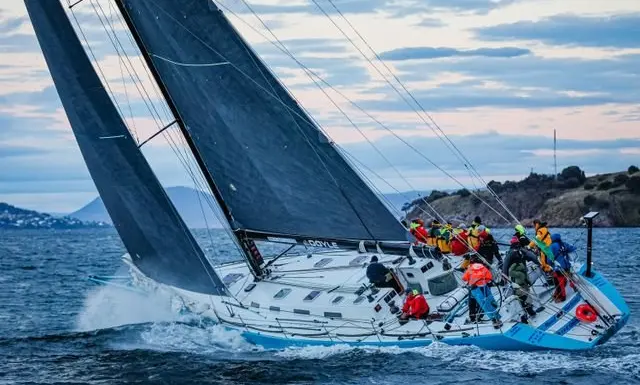
Using dated historical material openly is preferable to borrowing an unrelated racing photograph or presenting a past fleet as this year's entrants. The photographs help explain the type of sailing and dockside support involved, without changing the facts of the current announcement. All rights remain with Oyster Yachts and the original photographers; their inclusion is specific to reporting on this documented event.
The difference between preparation and assurance
The company's language about checks and advice offers a constructive framework, but no responsible editorial report should turn preparation into a guarantee. Boats can experience failure even after diligent attention, just as a successful voyage does not prove that no risks existed. The proper measure of a support programme is its stated scope, documented activities and transparent communication with the owners receiving assistance.
This distinction also protects readers from overinterpreting promotional claims. A manufacturer is entitled to explain its support service, while an independent publication should make clear which statements come from the manufacturer and which observations are general seamanship analysis. The confirmed 2026 facts here are the scheduled ARC event, the described technical support and the route context supplied by Oyster.
What an owner should ask before leaving Las Palmas
Before committing to an offshore start, owners can use the builder's stated support areas as prompts for a disciplined conversation: which systems were examined, what work remains open, what spares are critical, and who is responsible for any outstanding actions. The purpose is not to create an invented checklist supposedly issued by Oyster, but to translate the service description into questions useful to readers.
Answers should be specific to the vessel rather than copied from a model brochure. An older yacht, a recently refitted boat and a new build may all require different attention. Equally, a crew's experience will affect how maintenance plans and unexpected problems are managed. The announcement is a reminder that a well-prepared Atlantic crossing combines human judgement with a yacht that has been maintained for its intended voyage.
Las Palmas as the final practical staging point
The official event description places the departure activity at Muelle Deportivo in Las Palmas de Gran Canaria. A marina setting allows owners to combine technical discussion with the practical work of provisioning, organising crew and preparing documents. The builder also points to a lively shore programme, acknowledging that preparation is both an operational task and a social occasion for people about to spend many days at sea.
The atmosphere of a major departure can be compelling, but its success cannot be reduced to photographs of full pontoons or a busy dock. The operational story is what individual owners do with the time available before they leave. Oyster's positioning of technical personnel at the event is directly relevant to owners who want an experienced second opinion as that preparation reaches its final stage.
Saint Lucia is the destination, not a guaranteed timetable
The event page describes Saint Lucia as the classic ARC destination. It also warns, through its discussion of variable crossing time, against treating the passage as a fixed-date transfer. A finish line in the Caribbean makes the journey understandable to a broad audience, yet it does not remove the need to adapt at sea as conditions, crew wellbeing and equipment dictate.
There is no published 2026 completion list in the cited Oyster event announcement, and this report does not infer one. Any subsequent story about arrivals, performance or crew experience should rely on newly dated information. For now, the clear reportable development is the 2026 Atlantic departure season and the specific help that Oyster says its owners can request while preparing.
What this means for the smaller luxury-yacht sector
For the 12-to-23.99-metre category, this is a story about the realities of using capable yachts beyond local cruising grounds. Oyster's two cited models, the 18.09-metre 565SII and 19.05-metre 595SII, illustrate how much long-range ambition can sit inside this part of the market. Their dimensions and capabilities are manufacturer specifications; their presence in this analysis does not establish any particular 2026 rally participation.
The central editorial lesson is that an Atlantic plan begins well before a boat reaches the start line. Manufacturer support, independent maintenance judgement, crew preparation and route awareness all play different roles. Oyster's 2026 ARC page provides a documented example of that preparation framework. Future reporting can assess actual departures and arrivals when independent, appropriately dated evidence becomes available, without turning a support announcement into a claim of sporting results.
Official sources and image attribution
First-party reporting: Oyster Yachts ARC 2026 event and technical-support information; Oyster 595SII model specifications; and Oyster 565SII model specifications. Original event and archive photographs © Oyster Yachts and the original photographers; older rally images are identified as archival, not images of the 2026 departure.