A propulsion supplier moves beyond electric tenders
New Zealand-based ZeroJet is preparing to introduce two electric inboard propulsion systems at METSTRADE 2026, extending a business previously associated largely with compact electric jets. The E22 and E45 will be shown in Amsterdam during the 17–19 November trade exhibition, with advance orders already open. The announcement broadens the possible application of ZeroJet's technology to shaft-drive and saildrive arrangements for cruising yachts, sailing catamarans and other boats. It does not mean that any particular twelve-to-twenty-four-metre yacht has been independently tested or approved for one of the new products.
For Luxury Yacht Guide readers, the significance is not merely another electric-motor launch. The proposal offers a way to consider lower-voltage propulsion architecture on yachts for which machinery volume, noise and integration can be major design concerns. ZeroJet reports that the E22 offers twenty-two kilowatts of continuous power and that the larger E45 is planned to deliver forty-five kilowatts continuously. These ratings must be interpreted in the context of the hull, required thrust and duty cycle rather than used as a substitute for a naval architect's propulsion calculation.
Two motors, different stages of readiness
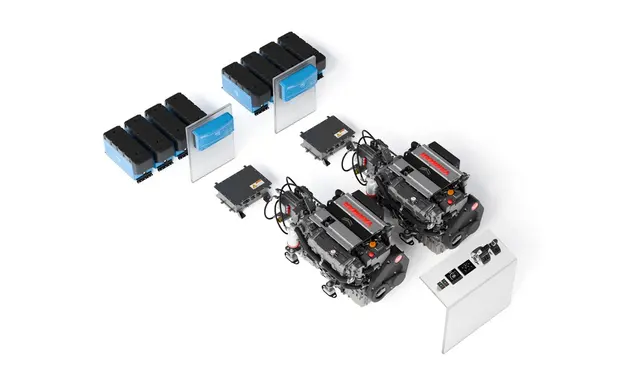
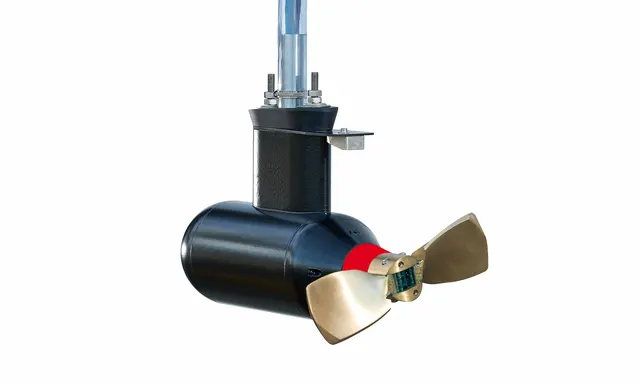
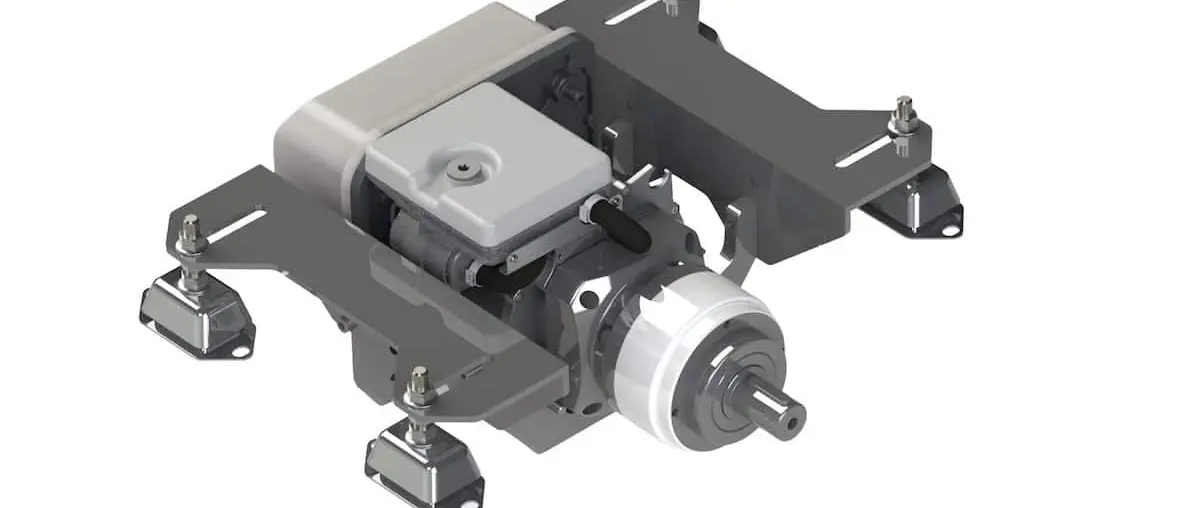
The E22 is described as an integrated eighteen-kilogram powertrain incorporating the motor, closed-loop cooling arrangement and controller. The company has scheduled availability from January 2027. That figure should not be confused with the weight of a complete ready-to-sail propulsion installation, which also needs batteries, wiring, cooling connections, controls, protection equipment, mounting hardware and potentially a shaft or saildrive unit. Owners comparing the weight with an existing diesel engine must include the balance of the proposed system.
The E45 uses two motors within a common housing to provide the stated forty-five-kilowatt rating and a degree of motor redundancy. It remains in final prototyping and testing according to the announcement, with availability planned for March 2027. The distinction between one product nearing launch and another still being validated should appear clearly in any quotation. Pre-order availability is not the same as delivery, and buyers should obtain written confirmation of the final specification and production timetable.
Why a 48-volt architecture attracts interest
ZeroJet says both new inboards use a nominal forty-eight-volt architecture and are intended to accept a range of compatible batteries. A lower-voltage approach may simplify some elements of electrical integration and servicing compared with higher-voltage architectures, but it does not make a propulsion system hazard-free or remove the need for properly engineered cables and protection. At substantial power levels, current can be high, making conductor sizing, voltage drop, fusing and the arrangement of isolation equipment especially important.
The manufacturer also identifies CAN-bus communications as part of its strategy for integrating propulsion with other onboard equipment. For an owner, such interfaces become valuable when systems are arranged into understandable controls that display power demand, charging, alarms and operating limitations. The installation must still be designed so that loss of an external display or a communications link does not create an unsafe condition. An appealing dashboard cannot replace documented fault handling, manual procedures and qualified commissioning.
E22 cooling and integrated controls
ZeroJet describes the E22 as using an integrated inverter together with its Carbon Cool Technology, with a carbon-based cooling design intended to manage motor temperature under sustained load. By placing more of the relevant control and cooling technology into a compact assembly, the company aims to reduce the number of separate components that an installer has to accommodate. This is an engineering proposition with practical consequences, especially when replacing an engine in a machinery space originally designed around a completely different installation.
Cooling arrangements must be assessed against the whole operating envelope. An owner should know whether the selected installation requires seawater connections, heat exchangers or other equipment, as well as the consequences of an obstruction or failure. A specification should address sustained output in warm cruising waters and at low speeds, where airflow and cooling conditions can differ markedly from a workshop demonstration. Until full product documents and independent operating results are available, the stated continuous ratings remain manufacturer claims rather than measurements by Luxury Yacht Guide.
Regeneration under sail has real conditions
Both systems are described as offering regeneration as standard, enabling the motor arrangement to return some energy to the batteries while a sailing yacht moves through the water. This is particularly interesting for cruising catamarans and sailing monohulls that might spend extended periods under canvas. However, regeneration is not free energy and it is not guaranteed to provide a useful amount in every passage. It extracts energy through the propeller and creates resistance that may affect sailing performance.
Owners should ask for output curves that relate regeneration to boat speed, propeller configuration and the actual conditions of the proposed installation. A yacht sailing slowly in light wind will not necessarily reproduce a demonstration conducted at a higher speed. Equally, a fully charged battery may be unable to accept further useful charge. A realistic energy budget should include solar, shore power, any generator, domestic loads and the storage capacity needed to cover several days of varied weather.
A repower involves more than removing diesel
ZeroJet says shaft and saildrive configurations are intended to support new boats and engine-replacement projects. Retrofit owners may find this attractive, particularly if they want to reduce machinery noise or reposition some equipment. Nevertheless, replacing a diesel engine is a structural and systems project. It raises questions about engine foundations, shaft alignment, propeller selection, thrust loads, cooling, ventilation, electrical isolation and the disposition of old tanks and machinery. These details cannot be resolved from a headline motor-weight figure.
The available battery installation is often decisive. Sufficient energy capacity to run a yacht for many hours may occupy substantial volume and mass. Battery chemistry, containment, monitoring, fire protection, ventilation where required and access for inspection must be considered with the naval architect and appropriate specialists. Owners should avoid confusing maximum motor output with a credible cruising range; a boat's required energy varies enormously with speed and displacement. A complete repower feasibility study should establish what the new system can actually do in the chosen hull.
What the power figures imply for yacht selection
Twenty-two or forty-five kilowatts can be appropriate for certain displacement craft or sailing yachts, but those ratings cannot be assumed sufficient for a large, high-speed luxury motor yacht. Many production motor yachts in the twelve-to-twenty-four-metre segment need far greater installed power to reach their intended cruising speeds. The E22 and E45 therefore make most sense as candidates for specific lower-power vessel designs, appropriately matched catamarans or selected auxiliary propulsion arrangements, subject to the manufacturer’s final sizing advice.
A credible supplier should be willing to establish the required thrust and continuous operating duty based on the vessel rather than simply selling the larger motor. One useful approach is to compare the current boat's measured power requirement at different speeds against the proposed motor and battery installation. The resulting model must retain proper margins for adverse conditions and manoeuvring. This avoids overselling a compact electric package to an owner whose actual expectations include long-distance passages or sustained high-speed operation.
The builder and dealer question
ZeroJet names McConaghy among the early builders adopting the new product range, providing a relevant sign that the technology is being evaluated for more than direct-to-consumer retrofits. The company also describes an electrification-partner network intended to support integration. Those relationships may be useful in a market where owners need not only a motor but also a complete engineered package, consistent commissioning and technicians who can work on the system during its life.
Any dealer or installer should provide a clear scope of responsibility. A motor supplier, battery integrator, boatbuilder and electrical contractor may all be involved, but there should be no ambiguity about who makes the system work as a whole. Warranty terms, firmware updates, battery compatibility, remote diagnostics and spare-part supply need attention before final payment. Especially on an imported yacht, the nearest competent technician matters more to a stranded owner than the geographic location of the original product launch.
Pricing and the limits of a headline number
The manufacturer's release gives starting prices of US$12,495 for the E22 and US$19,495 for the E45. These are entry figures for equipment, not necessarily the cost of the full propulsion project in an individual yacht. Actual bills may include energy storage, charging, shaft-drive or saildrive components, controls, cooling, electrical engineering, certification, installation and sea trials. Prices and availability should be confirmed when the buyer commits, because the E45 in particular is still proceeding through final development.
An owner comparing diesel and electric options should ask for a full installed-cost estimate and an operating-case analysis, including realistic annual hours and the source of charging energy. Such a comparison may also consider noise, vibration, access, local emissions restrictions and resale uncertainty. The point is not that one propulsion type will always win. It is that a credible ownership decision depends on the complete technical package and intended voyages, not a bare cost per kilowatt.
METSTRADE and the next evidence
ZeroJet is scheduled to present its new inboard range at METSTRADE stand 02.222. Visitors should be able to discuss the E22 in more detail and ask how development of the E45 is progressing towards its intended March 2027 availability. The event itself provides an industry forum, not an independent endorsement. Product availability, compatibility and performance remain to be confirmed against the actual installation and any revised manufacturer documentation issued after the show.
The launch is relevant because the boundary between electric tender systems and larger cruising-yacht propulsion is beginning to shift. ZeroJet's compact motor-and-controller architecture, nominal forty-eight-volt design and regeneration capability introduce more choices for designers of suitable yachts. Owners should recognise both the opportunity and the limits: this is a product range with published claims and planned 2027 deliveries, not a universal replacement for conventional propulsion on every luxury yacht. The next important milestone is documented experience from correctly matched installations.
Source documentation: marinebusiness.news. www.zerojet.com. The new ZeroJet E22 electric inboard motor, official company publicity photograph supplied to Marine Business News courtesy of ZeroJet.