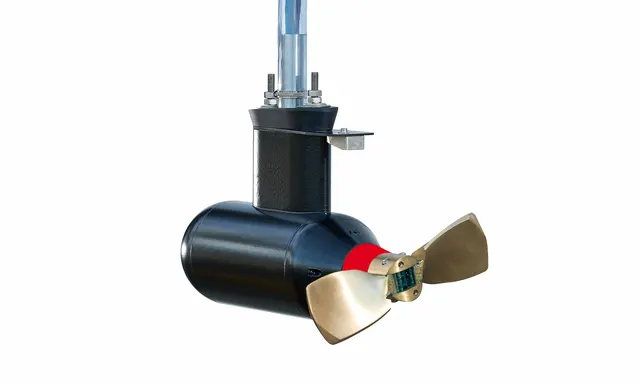
The 2026 DAME Design Awards marked a historic milestone in the marine industry, celebrating its 35th anniversary with an unprecedented triple win for three groundbreaking products: Garmin’s Signal VHF & Remote system, Scanstrut’s Wireless Powered Navigation Pole Light, and Teignbridge Propellers’ International Controllable Pitch Propeller (T-CPP). This rare occurrence underscored the exceptional quality of entries, with a record 153 submissions from across the globe. The awards not only highlighted innovation but also reflected the industry's growing emphasis on design-led progress. Amid this landscape, Yanmar Marine’s YF12e Hybrid propulsion system received a Special Mention, a recognition that, while not a category victory, signals a shift in how hybrid-electric solutions are being evaluated and appreciated within the marine sector.
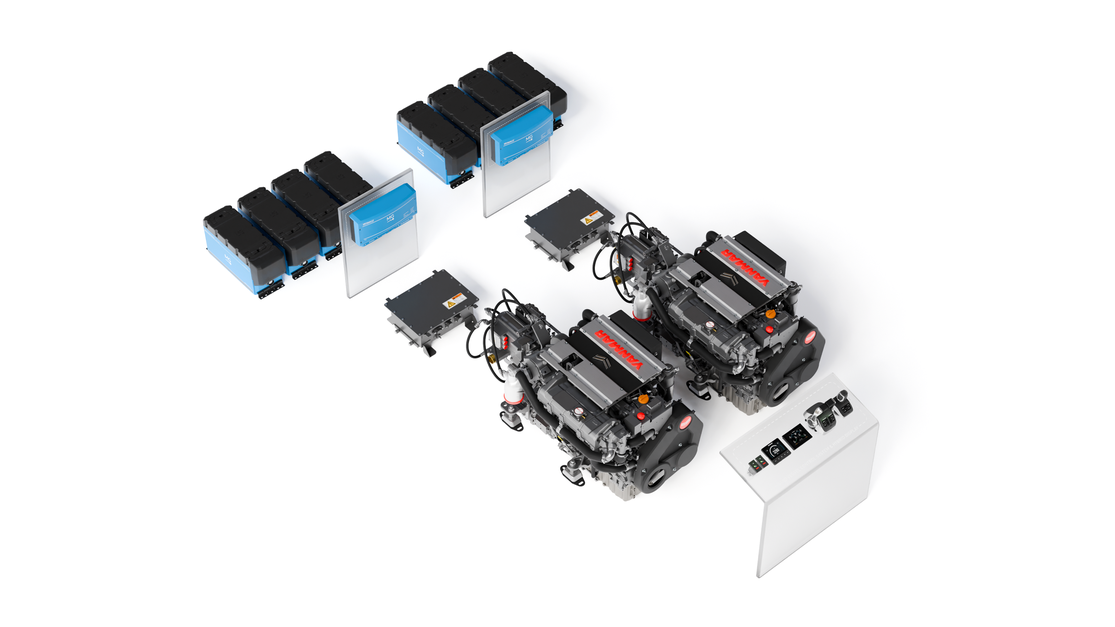
The YF12e Hybrid, developed by Yanmar Marine International B.V., represents a significant step forward in integrating electric and traditional power systems for recreational yachts. As an all-in-one hybrid-electric propulsion system, it combines the reliability of conventional engines with the efficiency and environmental benefits of electric technology. This dual-mode approach is particularly relevant for yachts within the 12–23.99 metre range, where owners often seek a balance between performance, fuel economy, and operational flexibility. The YF12e Hybrid’s inclusion in the DAME Design Awards shortlist highlights its potential to redefine propulsion standards, even if it did not secure a category win.
A combination of propulsion technologies
The exhibitor describes the YF12e as an integrated hybrid-electric propulsion system for recreational boats, but its concise METSTRADE listing does not give a complete installation schematic, independently measured range, battery capacity or fuel-saving figures. It would therefore be premature to describe specific mode transitions, charging performance or electrical integrations as verified. The significance of the concept is the coordination of the engine and electric drive within one planned propulsion package rather than leaving the builder to connect unrelated equipment. Buyers should ask YANMAR for the latest manufacturer-approved configuration diagram, tested performance and compatible components before treating it as a fit for any individual hull.
What integrated hybrid means in practice
For yachts within the 12–23.99 metre range, the YF12e Hybrid offers a compelling proposition. These vessels often require a balance between speed, fuel efficiency, and environmental responsibility, making hybrid propulsion an attractive option. The system’s ability to switch seamlessly between electric and diesel modes allows for quiet operation during sensitive areas such as marinas or protected waters, while still maintaining the power needed for longer voyages. Additionally, the reduced emissions associated with electric mode aligns with growing regulatory pressures and owner preferences for sustainable marine solutions.
The attraction for luxury yachts
The practical question for a 12–23.99 metre yacht is whether the electric drive, combustion engine, energy storage, cooling and controls fit within the boat’s existing architecture. Hybrid propulsion is not necessarily a drop-in replacement for a diesel installation. A professional installation assessment would need to examine weight distribution, shaft and gearbox geometry, available engine-room volume, electrical fire separation, battery positioning and cooling. On a new build these decisions can be taken early; on an older yacht structural or electrical modifications could become a major cost. The public exhibitor listing does not establish the total retrofit labour or compatible yacht models, so claims of a straightforward conversion require case-by-case evidence.
Engineering review before installation
There is no basis in the concise public METSTRADE description for declaring lower maintenance expense or a longer engine lifespan across all boats. A hybrid arrangement may reduce diesel running hours in certain duty cycles, but it also adds high-voltage or low-voltage electrical components that need their own inspection schedules. Owners and skippers should consider battery monitoring, isolation procedures, propulsion redundancy, crew training, emergency recovery and which service centres can support the complete installed package. These are normal questions of engineering diligence, not allegations of shortcomings in the YF12e. The best comparison is a documented lifecycle estimate for a particular yacht against an established diesel installation.
Maintenance and service planning
Cost comparisons need the same discipline. The award notice supplies no quoted installed price, fleet trial or independently audited return-on-investment data. A buyer would need costs for the electric drive, any diesel components, energy storage, chargers, cooling and installation in addition to expected maintenance and insurance. A yacht spending most of its time at high continuous speed will have a different energy profile from one making short local voyages with long periods at anchor. Before estimating savings, designers should model representative operating days and ask what onboard energy source replenishes the battery. Hybrid technology can be attractive, but an individual economic case remains to be demonstrated.
Comparing lifetime costs
The YF12e Hybrid’s inclusion in the DAME Design Awards shortlist also raises questions about how hybrid systems are being assessed within the marine industry. While the award does not equate to proof of performance, it signals a growing recognition of the value these systems bring to yacht design and operation. As regulatory frameworks evolve and environmental pressures mount, the demand for sustainable propulsion solutions is expected to rise, making the YF12e Hybrid an increasingly relevant option.
The award in context
For owners considering hybrid-electric propulsion, the YF12e Hybrid represents a viable path forward. Its integration of electric and diesel modes offers flexibility without compromising performance, while its modular design makes it adaptable to a wide range of yacht sizes and configurations. However, the decision to adopt such a system should be based on a thorough evaluation of operational needs, budget constraints, and long-term maintenance expectations.
Matching technology to the operating profile
The YF12e Hybrid’s Special Mention in the DAME Design Awards underscores its potential to influence future trends in marine propulsion. While it did not secure a category win, its recognition highlights the industry's growing interest in hybrid solutions that combine efficiency with reliability. As the marine sector continues to innovate, systems like the YF12e Hybrid may become standard features on yachts of all sizes, redefining what is possible in terms of performance and sustainability.
Why evidence matters
Ultimately, the YF12e Hybrid’s inclusion in the DAME Design Awards reflects a broader shift towards more integrated, sustainable propulsion technologies. While it does not guarantee superior performance or efficiency, its recognition signals that hybrid systems are being taken seriously as viable alternatives to traditional diesel engines. For owners of 12–23.99 metre yachts, this development may prompt re-evaluation of their propulsion choices, particularly in light of evolving environmental standards and the increasing importance of design-led innovation in yacht construction. As the industry moves forward, systems like the YF12e Hybrid could play a pivotal role in shaping the future of recreational marine propulsion.
Power requirements beyond propulsion
Owners of midsize luxury yachts need to distinguish propulsion energy from domestic electrical demand. Refrigeration, cooking, navigation instruments, lighting, air conditioning and stabilisation can continue drawing power even when a vessel is travelling quietly. Introducing electric propulsion does not erase those loads; instead it may put more of them on a shared energy-management agenda. Yacht designers should establish which functions can be powered simultaneously, how shore power and onboard charging work, and what happens when the stored energy reaches its reserve threshold. The public YF12e product announcement gives too little information to infer that every hotel load will be supported without additional equipment. A realistic specification would present a daily energy budget at anchor, underway and in a marina, alongside operational rules that preserve engine-start and emergency-power reserves. These questions matter particularly for owner-operated 12–24 metre craft where a small crew must understand the system as well as enjoy its quieter potential.
Control and training are part of the purchase
An integrated propulsion package must make sense to the person at the helm. Before accepting an installation, buyers should request a demonstration of start-up, changeover, low-charge warnings, alarms and what the controls display when a component fails. Sea trials ought to cover docking, sustained running, low-speed operation and the transition between intended modes, under the manufacturer’s supervision. In addition to performance, the test should examine how much attention the system demands from the skipper when traffic or weather conditions become difficult. YANMAR’s presence in the DAME Special Mentions list is useful recognition of design thinking, not a substitute for the practical documentation or owner instruction that accompanies a completed vessel. Training should include service isolation, charger faults and procedures for recovering propulsion if an electric component is unavailable. The buyer can then evaluate operational complexity honestly.
Assessing efficiency claims responsibly
The promise of hybrid propulsion is easiest to understand in terms of when power is needed. A harbour manoeuvre, a steady coastal passage and a long night at anchor are different operating cases. Shifting some duties from an engine to electrical storage could offer advantages in selected situations, but the overall environmental impact depends on how electricity is generated, how often equipment operates and what batteries are installed. None of those variables can be read from a design-award citation alone. The DAME Special Mention should prompt a request for duty-cycle testing rather than an assumption of a universal percentage saving. For a yacht owner comparing builders, the fair evidence would be measured fuel use, actual engine hours, emissions under representative conditions, service commitments and a manufacturer-supported performance prediction. Without those, even an exciting new architecture remains a proposition awaiting vessel-specific proof.
What the 2026 recognition means for buyers
The DAME Design Awards have a specific role within METSTRADE: to draw attention to new products that the judging panel considers noteworthy in design and functionality. The organiser’s official 2026 release lists the YF12e Hybrid among the propulsion and dynamics Special Mentions; it is not one of the three joint Overall Winners. That distinction matters to accurate reporting. The recognition indicates that marine-sector judges considered the system worth highlighting, but it says nothing by itself about warranty coverage, mass-market availability or an installation suited to a particular yacht. For builders and owners evaluating 12–23.99 metre yachts, the useful next step is to ask YANMAR and approved installation partners for dated data sheets, system diagrams, technical service documentation and a demonstration on a comparable vessel. Those practical answers, rather than award wording alone, would determine whether this proposal belongs in a new-build specification or a future refit.
Sources and image credits
Reporting based on YANMAR Marine official METSTRADE exhibitor listing, Boatbuilding News, METSTRADE 2026 recap and award result.
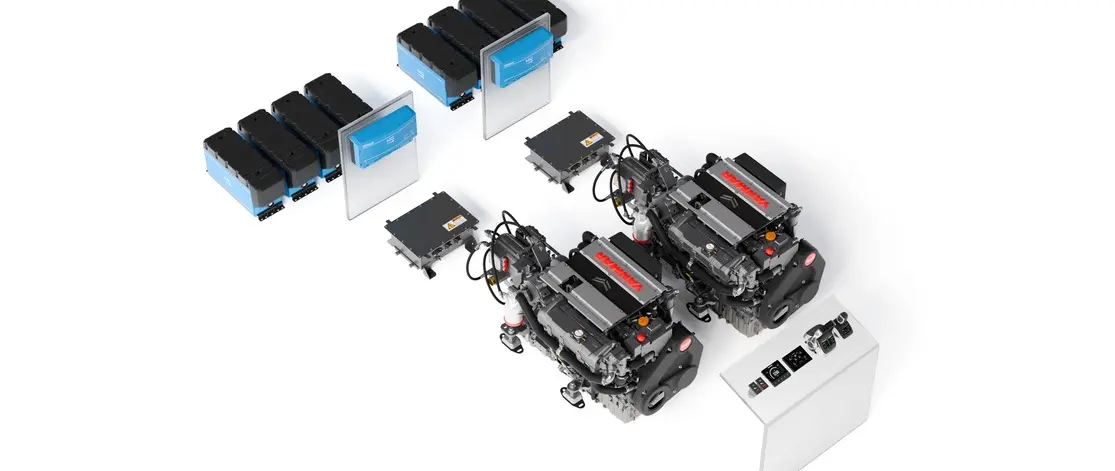
Lead photograph: YANMAR YF12e Hybrid system, official METSTRADE product image. YANMAR Marine official METSTRADE exhibitor image of the YF12e Hybrid system. Original official image source.