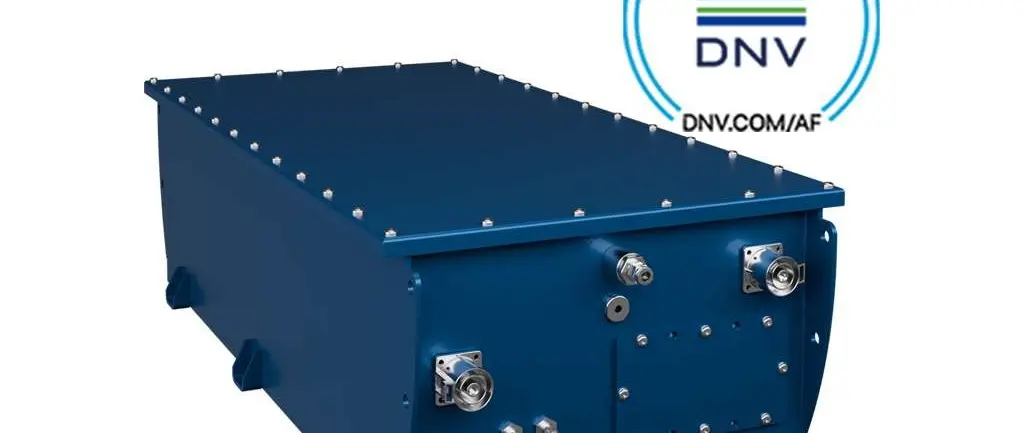
A design accolade for marine energy storage
Danish electric-propulsion specialist EPTechnologies has received a Special Mention in the Electronic and Electrical Systems category of the 2026 DAME Design Awards for its Svenner II battery. The award, announced during METSTRADE in Amsterdam, draws attention to the engineering of the energy-storage system rather than merely to the electric propulsion machinery that it can support.
The exhibition catalogue dates the product to May 2026 and identifies modular construction, battery monitoring and a design intended to prevent propagation between modules as important features. This recognition follows the company's November 2025 announcement of a DNV type-approved Svenner solid-state-technology battery. It is important to distinguish the earlier certification announcement, the subsequent product version and this week's award. They are related developments, but are not interchangeable milestones.
For designers of luxury motor yachts and sailing catamarans, the battery installation influences vessel weight, the location of machinery spaces, the operating profile and onboard electrical architecture. A change in the way an energy-storage system is engineered can therefore have implications well beyond the replacement of an individual battery.
What the company means by solid-state technology
In its original Svenner announcement, EPTechnologies described cell construction that replaces most of the conventional liquid electrolyte with advanced solid materials. That wording is more precise than assuming the product contains no liquid electrolyte of any kind. Solid-state terminology covers a range of cell architectures, and the published description does not identify every constituent or establish that the battery shares the characteristics of all other products using that term.
The manufacturer's November 2025 release describes specific puncture and overcharge tests, together with its approach to thermal incident containment. These are reported test outcomes and design claims, rather than guarantees that a damaged or incorrectly installed module can never develop a hazardous condition.
Battery chemistry is only part of the engineering picture. Electrical connections, enclosure design, heat management, the protection system and the conditions in which a module is installed all influence system safety. An owner discussing a proposed electric or hybrid installation should therefore ask about the complete approved configuration rather than selecting cells solely on the name of the underlying technology.
Understanding the role of type approval
EPTechnologies identifies DNV approval reference TAE000054J in its earlier press release, and its 2026 exhibition description identifies Svenner II as DNV-approved. This distinction is relevant to shipyards and integrators because a documented type approval can provide a more defined basis for assessing an item of equipment against the applicable rules.
The current announcement does not supply the full certificate and its schedules. The precise certified model numbers, validity period, applicable standards and limitations must accordingly be established from the original certification documentation before a particular installation is specified.
A type-approved component does not by itself make an entire yacht class-compliant. The vessel's design, installation, integration and acceptance requirements remain separate matters. The batteries may form part of a wider electrical system incorporating propulsion drives, charging equipment, generators and hotel loads. The approval conditions for that integrated system need to be considered alongside the approval status of the individual module.
This is particularly important in the refit sector, where the layout and electrical infrastructure may have been designed for a different type of energy-storage system.
Designing to limit the consequences of a fault
The exhibition listing identifies a no-propagation design as one of the system's characteristics. The earlier Svenner release associates this approach with DNV Design Option 1, describing containment of a thermal event within a module. Such a design aims to limit the consequences of a fault rather than implying that faults themselves are impossible.
In a yacht installation, the relevant questions include the conditions under which this performance has been demonstrated, the arrangement of adjacent modules, the monitoring of the installation and the procedures required by the approval documentation. A designer also needs to understand how the battery enclosure interfaces with its surrounding space.
The company's statement that individual module gas ducting is not required in the specified design context should not be extrapolated into a claim that an entire battery room needs no ventilation, emergency provision or appropriate protective measures. Those decisions depend on the documented installation requirements and the vessel's applicable rules.
Owners should request an explanation of the installation's safety architecture from a qualified marine electrical engineer. The DAME distinction does not replace that assessment.
Life-cycle claims and ownership planning
EPTechnologies quotes a capability of more than ten thousand cycles. The number is potentially important to operators expecting substantial utilisation, because the operating life of energy storage influences the economics of an electric or hybrid vessel.
However, cycle life is not an unconditional calendar-life promise. Capacity retention, depth of discharge, charge and discharge rates, temperature and the definition of a completed cycle all matter when interpreting a figure. The public exhibition description does not provide those detailed conditions. It also does not establish the warranty that would apply to a particular yacht.
A charter catamaran may operate through a different daily cycle from a private offshore sailing yacht. The charter vessel may spend repeated periods charging and discharging while accommodating large groups of guests. A private cruiser may spend longer periods inactive between voyages, making long-term storage and calendar ageing equally important. The expected service profile should be supplied to an integrator when assessing whether an advertised cycle figure is relevant.
A useful comparison would therefore consider the usable energy available under the proposed conditions along with documented warranty coverage, maintenance, replacement costs and technical support. An exceptional figure in one test regime is not a substitute for that complete comparison.
Battery management as part of yacht engineering
The exhibition listing refers to advanced battery management and remote monitoring. The earlier press release describes two synchronised processors, interlocks and internal leak monitoring within the company's design. Together these elements illustrate how marine battery systems can combine electrical protection with information about the state of the installation.
For the yacht owner, the practical value of monitoring depends in part on how the system communicates information. Alerts must have a defined meaning, and the crew needs to understand which conditions require attention from a technician. Monitoring should be supported by written operating procedures and appropriate training.
Remote access can also be useful to an equipment supplier investigating a fault, but the yacht should retain the functions and protections required for its operation even when an internet connection is unavailable. The availability of remote monitoring does not establish that every fault can be diagnosed remotely or that physical inspection is no longer required.
The public award information does not specify all the communication protocols or the compatibility of the battery with particular third-party equipment. These need to be determined for the chosen system configuration.
Matching a modular system to the vessel
The manufacturer presents modular scalability as another characteristic of Svenner II. In principle, a modular energy store allows a system designer to select a configuration according to the required power and energy. Those are different quantities: a yacht may need to supply large electrical loads briefly, while its ability to support those loads for a long period depends on usable stored energy and the availability of charging.
A sailing catamaran may have separate propulsion machinery in each hull, whereas a motor yacht may have a different distribution of machinery and accommodation spaces. The available structural capacity, access for service and requirements for electrical protection influence the choice of configuration. A larger battery is not necessarily a better installation if its weight, placement or charging requirements are unsuitable for the vessel.
An owner seeking quiet operation at anchor may also have different requirements from one intending to use electric propulsion regularly. EPTechnologies' wider portfolio includes both electric and hybrid marine applications. A meaningful proposal should set out the intended operating profile, anticipated energy requirements and charging arrangements rather than promise a particular range solely on the basis of the selected battery technology.
The significance of this week's recognition
Svenner II was exhibited at stand 03.331 at METSTRADE. Its DAME Special Mention is recognition of the design contribution, not an independent confirmation of every marketing claim or a new type-approval certificate.
The development is relevant to the luxury yacht industry's continuing work on integrating energy storage into vessel design, including sailing yachts and smaller motor yachts selecting hybrid or electrical systems. The next step for an interested owner or shipyard is to obtain the detailed specifications and approval schedules for the actual proposed version and to assess the entire installation. The award is a reason to investigate that engineering proposition, not a reason to assume universal suitability.
Sources and image
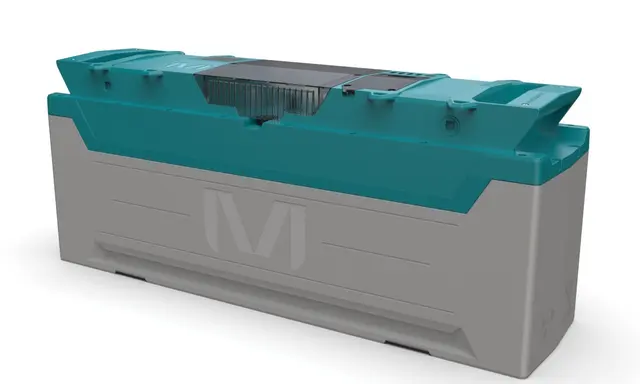
Primary and technical sources: current announcement, technical background. Award independently confirmed in the official DAME Special Mentions list. Lead image: EPTechnologies Svenner battery family — official November 2025 press illustration, not a new photograph of Svenner II. Supplied by the manufacturer via its official press release. Copyright remains with the rights holder; resized for editorial publication.