A reversible approach to sail handling
Seldén Mast has received a Special Mention in the Deck Equipment category of the 2026 DAME Design Awards for its reversible electric winches. The distinction, announced during METSTRADE in Amsterdam, recognises an approach to powered sail handling that allows a line to be eased as well as trimmed under electrical control. The Swedish manufacturer first presented its E40rev concept in January at boot Düsseldorf. The November recognition is therefore a new development in the product's story, rather than a second launch announcement.
For owners of cruising yachts, the requirement to ease a loaded line is just as important as the requirement to haul it in. An electric winch designed principally for hauling in does not necessarily remove the need to handle the line when reducing tension. Seldén's reversible concept is designed to address both operations, with the line remaining engaged in the winch's dedicated tailing arrangement. The manufacturer describes this as particularly relevant to small crews.
What a reversible winch changes
A winch allows the crew to work with loads that cannot conveniently be controlled directly by hand. The drum provides a means of transferring force between the line and the winch, while the tailing system assists in managing the free end. An electric drive replaces much of the physical effort involved in turning a conventional winch handle. Different systems have different procedures for easing a line and controlling its movement.
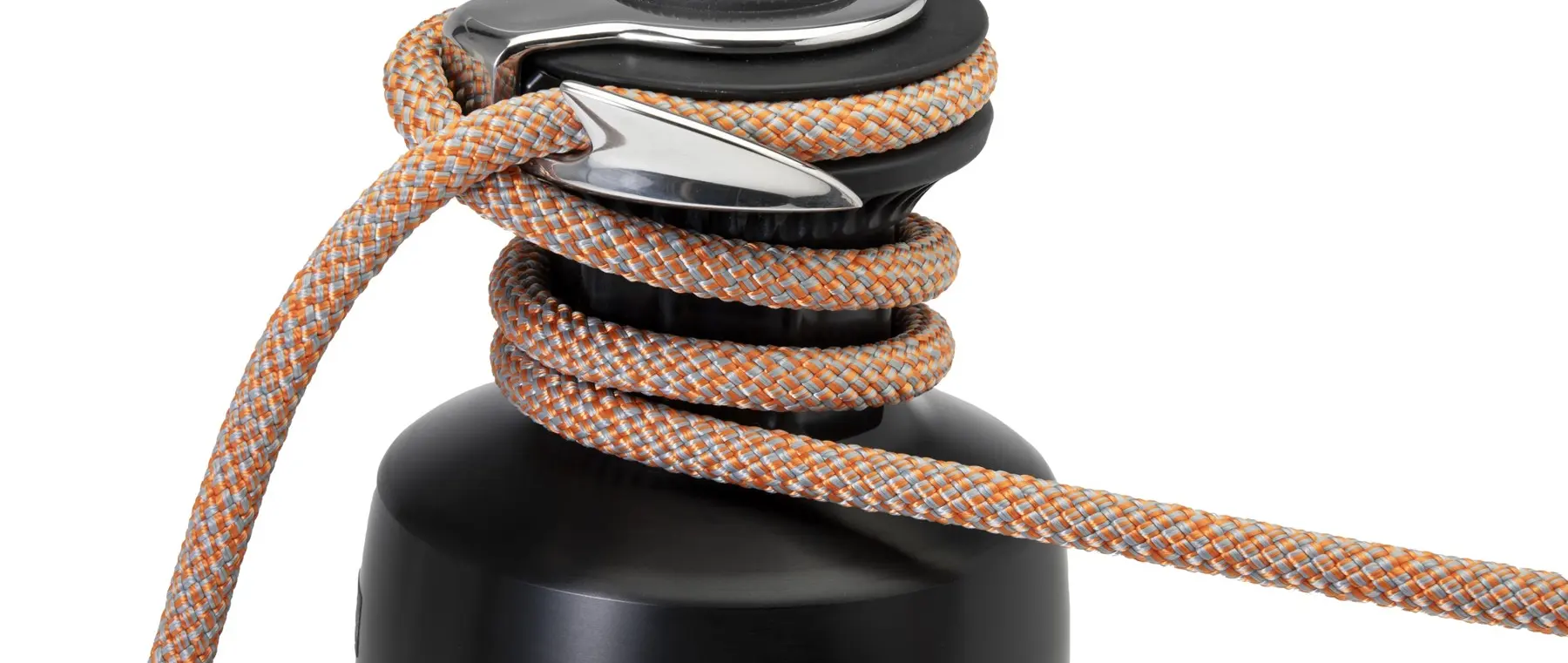
Seldén describes the E40rev as a two-speed electric winch capable of operating in both directions. In its published explanation, the line remains in the self-tailer and the back-tailer while the drive adjusts it under push-button control. This allows the operator to manage trimming and controlled easing without first removing the line from the tailing system.
The distinguishing feature is not simply the ability of the motor to rotate backwards. The equipment must also retain control of the line as tension is reduced. The design of the drum, tailing components, controls and drive mechanism is therefore important to the operation as a whole. Buyers should refer to the manufacturer's instructions for the actual arrangement and limitations of the winch rather than infer them from the term reversible alone.
The influence of crew size
Many luxury cruising yachts are operated by owners and a relatively small complement of family members or friends. During a passage, the number of people available to handle a line may vary considerably. A system that permits an appropriate adjustment from a conveniently positioned control can be attractive when there is no dedicated crew member at each winch.
The manufacturer's exhibition description also identifies potential for easing a sheet from a helm position. That is relevant to the layout of cockpits on contemporary cruising yachts, where the position of a control and the physical location of its associated equipment may differ. The feasibility of a remote control arrangement depends on the overall installation and its compliance with the supplier's requirements.
Remote operation should not be confused with permission to operate equipment without observation. The person controlling a winch needs to understand the consequences of changing line tension and must be able to identify situations in which movement should be stopped. Powered operation does not eliminate loads in the rigging or the possibility of injury arising from moving rope and hardware. It changes the way the crew interacts with that equipment.
Based on an established drum design
The E40rev uses Seldén's patented ART drum technology, identified by the manufacturer as part of the existing S-series platform. ART stands for Asymmetric Rib Technology. The manufacturer attributes reliable grip and improved self-tailing characteristics to this arrangement. It also identifies the ability to operate the winch manually in the event that electrical power is unavailable.
That last feature deserves particular consideration on a cruising yacht. Electrical assistance can simplify a routine manoeuvre, but the yacht's equipment specification needs to take account of a loss of power, a fault in the control system or a need to operate an individual fitting independently. Owners should know what manual facilities are provided by the actual configuration installed on their yacht and should follow the product's prescribed operating procedures.
The possibility of manual operation is not evidence that every type of fault can be overcome with a winch handle. Mechanical damage and a failure of the electrical supply are different situations. The manufacturer's documentation and the vessel's operating procedures should establish how the crew is expected to respond to them.
The electrical installation
Seldén specifies its 42-volt SEL-Bus system as the power architecture for the E40rev. This is an important detail for owners considering an upgrade because a yacht's general electrical supply may be arranged at a different nominal voltage. The configuration of the required power supply and control equipment must be assessed as part of the installation rather than assumed from the physical size of the winch.
At the original January presentation, the company listed a recommended retail price of SEK 30,000 excluding VAT and stated that the SEL-Bus control box and power supply unit were sold separately. That is historical manufacturer pricing, not a confirmed current retail quotation. The cost of installing the system aboard a particular yacht needs to account for associated components, labour, appropriate protection and any alteration of existing equipment.
Electrical requirements on a cruising yacht are influenced by the number of powered devices that may operate during a manoeuvre. The availability of adequate power and the suitability of its distribution system should be considered by the installer. An owner comparing the E40rev with a different powered winch arrangement should request a complete installation specification and cost rather than compare the advertised price of individual winches.
Integration into a cockpit
On a new yacht, the choice of a winch can influence the location of the deck reinforcement, control stations and accessible equipment spaces beneath the cockpit. Those decisions form part of the design of the sail handling system. They should reflect the anticipated line loads, the geometry of the rig and the way the crew will use the equipment.
A refit creates a different set of questions. A yacht may have an existing winch that performs satisfactorily in one respect but does not provide the desired powered easing function. The owner and installer must establish whether the new equipment's dimensions, mounting arrangement and service requirements are compatible with the existing deck structure and adjacent fittings. The visual similarity of two winches does not establish that their mounting arrangements or power requirements are interchangeable.
The E40rev model name should not be taken as a universal specification for sailing yachts of a particular hull length. Appropriate winch sizing depends on the sail plan, line leads and expected loads. The company's January announcement indicated that larger reversible models were planned for later in the year; the current availability of individual sizes should be established directly with Seldén, rather than inferred from that earlier schedule.
Assessing the practical value
The attraction of the reversible concept is that it addresses two sides of a routine sail adjustment through one powered system. An owner evaluating the equipment should consider whether that change would simplify the actual work undertaken by the crew. The relevant comparison includes the existing cockpit layout, the types of sails used and the accessibility of controls while maintaining an effective view of the rig.
It is also worth examining how the installation can be serviced. Powered winches combine a mechanical load-bearing component with electrical and control equipment. Storage space, moisture exposure, access to fasteners and the ability to inspect the system can affect the work involved during routine ownership. A yacht specification should provide for the actual maintenance procedures recommended by the manufacturer.
The DAME Special Mention is an independent recognition of the design concept, not a certification that any particular installation is safe or suitable. It does not provide a measured comparison of operating effort, energy consumption or injury rates across different vessels. The significance for owners is that a supplier has brought a specific approach to controlled easing into the same equipment category as conventional powered trimming.
For the twelve-to-twenty-three-metre cruising-yacht market, that is a development worth evaluating alongside other improvements in sail handling. Some owners may find that a strategically positioned reversible winch offers more practical value than adding further powered equipment elsewhere. Others may prefer an established arrangement. The appropriate choice requires an assessment of the yacht's rig, electrical infrastructure and crew requirements, with the award serving as a reason to investigate the design rather than a substitute for that assessment.
Sources and image
Primary sources: Seldén METSTRADE product listing and Seldén original press release. Award independently confirmed by the DAME Design Awards Special Mentions list. Lead photograph: Seldén Mast AB, high-resolution E40rev photograph made available for editorial reporting through the manufacturer’s designated press release. Resized for web display; copyright remains with the rights holder.