Recognition for a compact galley fitting
Germany's Queensize Camper GmbH has received a Special Mention in the Onboard Facilities, Comfort and Entertainment category of the 2026 DAME Design Awards for its Deluxe Folding Faucet. On 17 November, the exhibition organiser recognised the design among this year's marine equipment entries. The product combines a folding spout with three separate water-supply options in a fitting intended for yachting applications.
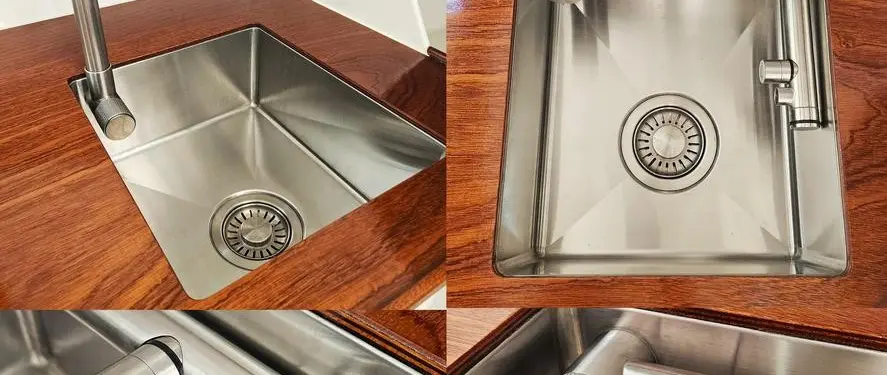
The exhibitor catalogue dates the product's release to February 2026. The fresh news is therefore recognition by the design jury, rather than an assertion that the faucet was first launched at this week's show. Queensize Camper identifies stainless steel of the 316 grade and an additional supply route as distinguishing features. Its official product imagery shows the fitting in several configurations beside a compact sink.
The product has specific relevance to the twelve-to-twenty-three-metre luxury yacht segment, especially in vessels where cockpit furniture incorporates a concealed wet bar or a galley with a work surface that closes over the sink. The design addresses the practical relationship between domestic convenience and the restricted dimensions of yacht joinery.
Why a folding fitting matters
The shape of a domestic kitchen fitting is usually determined by convenience, appearance and the size of the sink. A yacht installation has additional constraints. A countertop may have a sliding cover or hinged panel, allowing the sink to disappear when the area is being used for another purpose. In a cockpit wet bar, this can make a piece of furniture useful for different functions during a day aboard.
A faucet with a tall, fixed spout may require a deeper enclosure or a raised cover. A folding arrangement can reduce the clearance required when the fitting is not in use. Whether that advantage can be realised depends on the actual dimensions of the product, the sink and the panel closing over it.
For a yacht designer, the important measurements include the height of the folded component, the permitted movement of its spout and the space required for controls and plumbing beneath the surface. These must be obtained from the manufacturer's dimensional drawings. The exhibitor's announcement gives an overview of the concept but does not supply all the engineering details needed to specify a particular installation.
The significance of a third supply path
Queensize Camper describes its product as a three-way faucet, offering conventional hot and cold water together with an additional supply that may be configured for filtered water or salt water. The choice is significant because the third supply serves a different purpose depending on the vessel's water-management arrangement.
A freshwater configuration could offer a separate route for water treated by appropriate filtration equipment. A saltwater configuration could make seawater available for suitable uses, potentially conserving freshwater. The company presents these as alternatives, not as evidence that the product automatically separates or treats water regardless of how it is connected.
A faucet by itself does not establish that water is potable. The quality of drinking water depends on the source, storage tanks, treatment equipment, plumbing and maintenance. Any supply intended for consumption must be appropriately designed and verified. The separation of potable and non-potable systems is particularly important when a fitting offers alternative supply options.
The reviewed product description does not establish which backflow protection is incorporated or what additional components might be required. Yacht owners should seek the manufacturer's installation documentation and competent marine plumbing advice before specifying a saltwater configuration. There is no basis for assuming that a third inlet automatically prevents contamination.
Freshwater conservation at sea
Water is an important operational consideration for a cruising yacht. Owners can replenish tanks in marinas, and yachts equipped with watermakers may produce additional freshwater, but neither arrangement removes the need for responsible water use. The capacity and reliability of the vessel's water system influence how a crew manages consumption on passage or during extended periods at anchor.
The potential attraction of a dedicated seawater supply is that some tasks do not require potable water. However, the actual usefulness depends on the task, contamination risks and local water conditions. Seawater is not an appropriate substitute for drinking water or food hygiene, and owners must follow suitable hygiene practices.
A separate filtered-water feed addresses a different priority: convenient access to water treated by the vessel's designated potable-water system. It may reduce the need for a second protruding faucet in a restricted galley. Whether it is preferable to a separate fitting depends on the layout and how easily the different supply functions can be distinguished and maintained. An owner considering either arrangement should assess the complete plumbing specification rather than judge the proposal entirely by its compact exterior.
Material selection in a marine setting
The manufacturer specifies 316 stainless steel, also referring to an A4 grade. This family of stainless steels is commonly selected for environments where exposure to chloride-containing water is a consideration. Its corrosion resistance can make it suitable for marine components when the design, finish, manufacturing quality and service conditions are appropriate.
It is important to distinguish corrosion resistance from immunity to corrosion. Stagnant saltwater, deposits and crevices can create conditions in which even stainless steel components require inspection and care. A finished faucet also contains features other than its visible metal body, including seals, internal passages and mechanisms that may have their own maintenance requirements.
A yacht installation should be assessed as an assembly. Cleaning practices, drainage around the mounting point and compatibility of fasteners and connections can influence its long-term condition. If the fitting is specified for an exterior galley, the owner should establish which exposures are covered by its warranty and instructions. The general designation of the material is not a substitute for that information.
Fitting the product into a refit
For an owner undertaking a galley or cockpit refurbishment, the decorative finish of a faucet is often chosen alongside the sink, counter and furniture hardware. The folding mechanism and additional supply line change the space required beneath and above the counter.
Before removing the original fitting, the installer should establish whether the mounting arrangement, service access and available space are compatible with the proposed design. The third supply route may require additional equipment or plumbing, which needs to be accounted for in the project design. A countertop that already contains a hole for a standard faucet may still need alterations to accommodate a different arrangement.
A concealed wet bar introduces another consideration: the position of the fitting when the cover is closed. Designers should confirm that normal operation cannot cause unintended contact between the cover and the faucet. The ability to reach the controls and clear the sink with the cover open should also be examined. Small fittings are often specified late in a project, but their dimensions can have a substantial bearing on finished usability.
Ownership and service considerations
A folding faucet contains a moving joint that a conventional fixed fitting may not have. That does not imply that it is less reliable, but it creates a specific area to consider when evaluating access to service parts. Owners should establish which components are replaceable, what maintenance is prescribed and how the product can be serviced without damaging neighbouring joinery.
Connections need to remain accessible for inspection, particularly where a water supply runs through an enclosed unit. Leakage can affect timber finishes, electrical equipment or storage spaces if it is not detected promptly. Marine systems should be installed and maintained in accordance with the supplier's guidance and the yacht's overall engineering arrangements.
The award listing does not provide a retail price, service interval or quantified comparison of product lifetime. Buyers should seek current information from the manufacturer or its supplier network before making a purchasing decision. The potential saving in space must be considered alongside total installation cost and longer-term serviceability.
A modest component with wider implications
Queensize Camper exhibited at stand 05.631 during METSTRADE. Its DAME recognition highlights the role of small-scale design decisions in yacht accommodation. The Special Mention is an editorially significant distinction but cannot be treated as evidence of universal compliance, potable-water safety or performance in every installation.
The design proposition is a combination of compact storage geometry and flexibility in water supply. For a yacht with a concealed galley or cockpit sink, the folding function may be particularly relevant. For a vessel where freshwater conservation or filtered drinking water is a priority, the third route may provide additional utility if correctly specified.
The wider lesson is that a luxury yacht interior depends on more than conspicuous decorative features. Everyday fixtures determine how smoothly people use the accommodation, how easily equipment can be maintained and how efficiently available space is used. This year's recognition offers owners and boatbuilders a concrete product to evaluate against those requirements, with the final suitability determined by the vessel's design and the complete installed water system.
Source and product images
Primary source: official exhibitor product information. Recognition independently confirmed by the DAME Design Awards Special Mentions list. Lead visual: Queensize Camper Deluxe Folding Faucet — official manufacturer product photo collage. Supplied via the official METSTRADE exhibitor catalogue for editorial coverage in the context of the virtual press room. Native resolution retained; rights remain with the copyright holder.