Recognition for a complete offshore clothing range
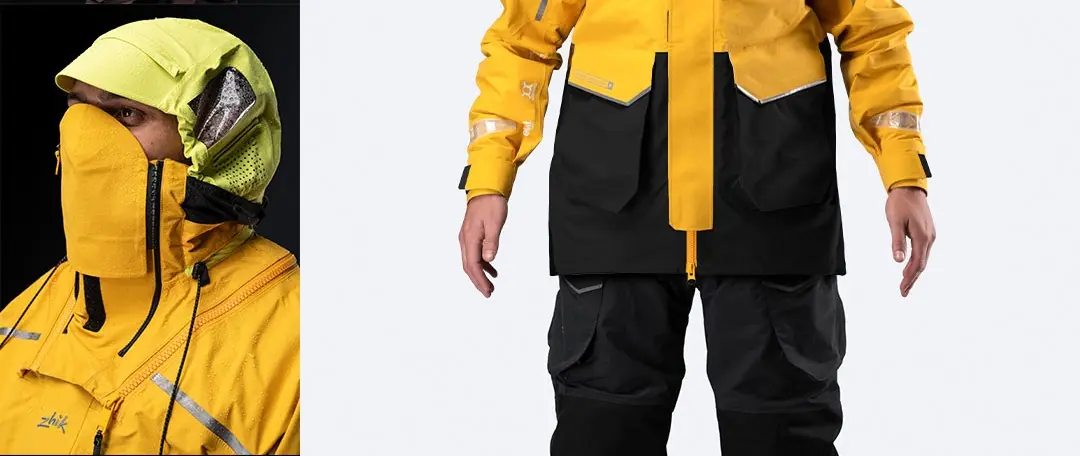
Australian sailing clothing specialist Zhik has received a Special Mention in the Personal Equipment category of the 2026 DAME Design Awards for its OFS800 Offshore Range. The distinction was announced during METSTRADE in Amsterdam on 17 November. The exhibition catalogue records a May release date for the collection, so the November news is its design recognition, not the first introduction of the garments to the market.
The OFS800 range consists of a jacket, smock and salopettes, intended to meet different demands aboard an offshore sailing yacht. The manufacturer associates the development programme with the racing campaigns of LawConnect, Comanche and Paprec Arkéa. Those connections are useful context for the product's design priorities, although the award does not establish how every garment will perform in every sailing environment. Offshore racing is a particularly demanding setting, but the requirements of an owner-operated cruising yacht are not necessarily identical to those of a professional race crew.
For Luxury Yacht Guide readers considering long-distance cruising in a yacht between twelve and twenty-four metres, the important question is how the design features translate into clothing that can be worn comfortably during extended periods on deck.
Understanding the fabric specification
The manufacturer identifies a three-layer eVent alpineST membrane as central to the garment construction. Its exhibition description quotes waterproof and breathability ratings of 24K and 20K respectively. These are manufacturer-reported figures rather than measurements made by Luxury Yacht Guide. The published exhibitor description does not identify the full test methods or conditions, which is an important qualification when comparing products from different suppliers.
In waterproof clothing, the membrane, face material and inner layer have different functions. The exterior needs to tolerate abrasion and contact with the environment, while the membrane offers resistance to liquid water and permits some transfer of water vapour. The inner layer helps protect the functional structure and influences the feel of the garment against clothing worn underneath.
Waterproofness and moisture transfer are distinct properties. A fabric that performs well in a laboratory does not prevent condensation under every combination of humidity, temperature and physical activity. Moisture can also enter through openings, and the construction of seams, closures and cuffs matters as much as the fabric specification in many practical situations.
Owners preparing for a voyage should therefore consider the complete clothing system rather than assuming a high fabric rating guarantees dryness in all conditions.
Reducing unnecessary material
Zhik describes its revised garment patterns as reducing overlaps, seams and excess fabric. On a sailing yacht, unwanted bulk can make a difference to the way a person moves. An offshore watch may involve relatively little movement for a period, followed by work around the cockpit or deck that requires reaching, bending and turning. Clothing needs to accommodate both situations.
A garment with fewer overlapping panels may offer more freedom of movement, but fit will still depend on the wearer and the layers used underneath. A jacket that feels comfortable over a shirt during a fitting may feel restrictive when combined with insulating clothing and a lifejacket. Conversely, an excessively loose garment may interfere with access to pockets or equipment.
In the context of cruising yachts, it is worth examining the fit while seated at the helm and while wearing the personal flotation equipment normally used aboard. A purchase should reflect the season, expected climate and range of activities rather than rely entirely on clothing tested in an indoor retail setting.
Three garments, different purposes
The OFS800 collection provides three main garment formats. A jacket can be convenient where conditions change frequently and the wearer needs to put on or remove an outer layer during a watch change. A smock represents a different approach to weather protection, with the exact design of its openings and closures influencing convenience and sealing. Salopettes extend the protective clothing system across the legs and torso and help maintain overlap with whichever upper garment is selected.
The manufacturer says the garments share a patented removable hood system. A removable component can provide options when a crew member moves between exposed and sheltered positions aboard. However, its security, range of adjustment and compatibility with the wearer's other equipment should be evaluated in practice.
Owners who sail short-handed may give particular weight to the ease of operating these features while wearing gloves. For a yacht with a protected helm or substantial cockpit enclosure, the preferred combination might differ from that selected for an exposed watch position. The virtue of a collection with several formats is the opportunity to match clothing to use, rather than the assumption that all three are necessary for every sailor.
Reinforcement in the areas that work hardest
The manufacturer identifies Cordura reinforcement and Hypalon detailing in areas exposed to wear, together with SAB closures and Yamamoto neoprene components. These material and supplier references identify elements of the construction, not a guarantee against damage or leakage. Their practical significance lies in where they are used and how the different parts of the garment interact.
Sailing crews often make repeated contact with cockpit seats, deck surfaces and equipment while changing positions. The fabric at the knees and other contact areas can experience substantially different loads from fabric across the body. Reinforcement may help a clothing designer respond to those local demands, although additional material also has implications for weight and flexibility.
Closures, cuffs and overlapping sections should be assessed with the rest of the clothing system. A cuff that works with one glove arrangement may be less convenient with another. For a long-distance voyage, the ability to inspect and maintain these components deserves attention alongside the materials selected for the garment.
Water repellency and care
Zhik states that the collection's durable water-repellent treatment is PFAS-free. The manufacturer's statement applies to the identified treatment; it should not be expanded into an unsupported assertion about every chemical constituent of the garment or its environmental impact over its entire life.
A water-repellent outer finish supports the working behaviour of the fabric but can be affected by use, contamination and maintenance. Owners should consult the specific care instructions and identify which cleaning products and treatment methods are recommended for the garment. Salt residues, grime and improper cleaning may affect how well waterproof clothing functions.
It is useful to establish a routine aboard for storing wet clothing separately from dry insulation and personal equipment. In a compact cruising yacht, the available ventilation and drying space may be an important part of that routine. Choosing clothing that suits the accommodation and expected operating conditions can matter as much as selecting a garment with a particular technical fabric.
Evaluating the range for long-distance cruising
The use of clothing in professional racing is not equivalent to cruising service. Race teams may have specific equipment support arrangements, clothing budgets and operational priorities. A cruising couple or family has to consider repair availability, storage, drying and the practicality of wearing the same equipment across different climates.
A useful comparison begins with the type of sailing the owner expects. A summer voyage with occasional exposed passages may call for a different wardrobe than repeated winter passages or extended offshore watches. The equipment list should include suitable insulating layers, compatible gloves and footwear, and personal safety equipment selected for the voyage. The OFS800 garments are apparel, not replacements for flotation, harnesses or other required safety equipment.
Prospective buyers should also establish local availability, warranty support and the supplier's procedures for repair. The DAME announcement does not provide comparative ownership costs or prove that the collection is the best choice for every yacht crew. These questions require information beyond exhibition recognition.
What the award means
The Special Mention, awarded in the personal equipment category, recognises the design contribution of the collection. It is not an independent certification of waterproofness or an assurance of protection under particular offshore conditions. Zhik exhibited the range at stand 05.404, giving industry visitors a chance to examine its construction directly.
The significance for cruising yacht owners is the continued development of apparel around mobility, environmental exposure and the interaction between different garments. Clothing is part of the working environment aboard a sailing yacht, and even relatively modest improvements can influence how readily a crew carries out ordinary tasks. A design distinction offers a reason to examine those changes, while the final purchase decision remains dependent on individual fit, intended use and verified product specifications.
Source and product images
Primary source: official exhibitor product information. Recognition independently confirmed by the DAME Design Awards Special Mentions list. Lead visual: Zhik OFS800 offshore apparel — official manufacturer product photo collage. Supplied via the official METSTRADE exhibitor catalogue for editorial coverage in the context of the virtual press room. Native resolution retained; rights remain with the copyright holder.