New sail-handling equipment heads to Amsterdam
Seldén Mast is bringing new sail-handling products to METSTRADE 2026, including an in-boom furling system intended initially for yachts up to forty feet and a compact S19 self-tailing winch. The news is relevant to the smallest end of the twelve-to-twenty-four-metre luxury-yacht market, where a forty-foot cruising yacht may be operated by an owner and one other crew member. The equipment will be presented at RAI Amsterdam on 17–19 November, with Seldén listing stand 01.775. It is an announcement of products and planned supply rather than evidence that every relevant yacht has been fitted successfully.
The distinction between an exhibition preview and delivered equipment matters because yacht owners often seek to improve sail handling during a refit. A product that looks simple on a stand can require significant changes to the boom, mast fittings, halyard leads, winches and control arrangement aboard. Seldén's announcement gives enough detail to start a technical conversation but does not eliminate the need for an individual rig assessment. A prospective customer should establish exactly which system version is available, how it is sized and what additional deck hardware may be required.
The IBF system and its intended vessel size
The first Seldén In-Boom Furling, or IBF, model is designed for yachts up to forty feet. On an approximately twelve-metre cruising yacht, simplifying mainsail handling may make a real difference to the number of routine tasks the skipper and crew must coordinate. An in-boom system stores the mainsail along the boom rather than inside the mast or in conventional folds on top of the boom. It changes how the sail is hoisted, reefed and stowed, and therefore affects both operation and maintenance.
Seldén proposes manual and electric versions, with manual backup for the electric system. That choice is practical rather than purely cosmetic. Some owners will value independent manual operation; others may prefer a powered arrangement to reduce physical effort. A system should never be chosen on convenience alone. Its operating limits, permitted sail shape, mast compatibility and emergency procedure need to match the individual rig. Owners should verify a complete approved installation rather than mixing components based on an assumed mechanical similarity.
Why the manufacturer chose a tapered aluminium boom
Seldén says its new system uses a tapered extruded aluminium boom, drawing on its established spar manufacturing experience. The choice of material and construction is relevant to the boom's structural function, but the furling unit is also part of a connected system under varying sail loads. The boom must cope with sailing forces, the mass and movement of the stored sail, and the operation of the furling mandrel. This is an engineered spar assembly, not simply a tube with an electric motor installed inside.
A yacht considering a retrofit must therefore begin with the mast and rig specifications. The gooseneck arrangement, vang, sheeting loads, sail geometry and mast rake can all affect compatibility. The owner should ask whether a new mainsail is needed and whether the sailmaker has approved the proposed luff and battens for the system. A beautiful boom in a product photograph is not sufficient evidence that a particular ten-year-old cruising yacht can be converted economically or without changes to its sail plan.
Manual control remains an important option
In manual configuration, the new in-boom furling unit uses an endless furling line routed back to a winch in the cockpit. Seldén describes a line driver with a ratchet mechanism intended to prevent unintended unrolling during operation. The appeal is clear on a yacht run by a couple: the skipper can coordinate reefing and stowage without leaving the safe working area unnecessarily. Nonetheless, the line leads, clutch arrangements and working positions must be planned carefully for the existing deck.
A manual system should be demonstrated with realistic sail loads and not merely operated on a stationary display. Owners need to know what happens if the sail does not enter the boom evenly, how the sail is stopped in a partially furled position and what actions are required if the furling line becomes obstructed. Equipment that reduces effort in normal conditions still needs understandable procedures when a squall approaches. A rigorous handover should include instruction for everyone expected to handle the yacht.
An electric version linked to the halyard winch
The electric IBF uses a motor integrated into the boom and can be paired with a compatible Seldén electric winch. The manufacturer describes coordinated hoisting through its SEL-Bus control system, with the halyard winch adjusting speed in response to the furling mandrel's operation. In ordinary language, the technology is intended to keep the mainsail moving at a controlled pace during hoisting and reefing. The company also refers to a two-speed arrangement for the powered mandrel.
Such integration is promising because an electric furler alone cannot solve problems caused by poorly coordinated halyard tension. The actual quality of operation will depend on the sail, the installed sensors, control setup and the crew's understanding of the system. Owners should ask what information the operator sees, how overloads or unusual tension are handled and whether manual intervention is required if the automatic coordination stops. The presence of electronics does not absolve a skipper from monitoring the sail and conditions.
Self-tailing S19 extends the smaller winch range
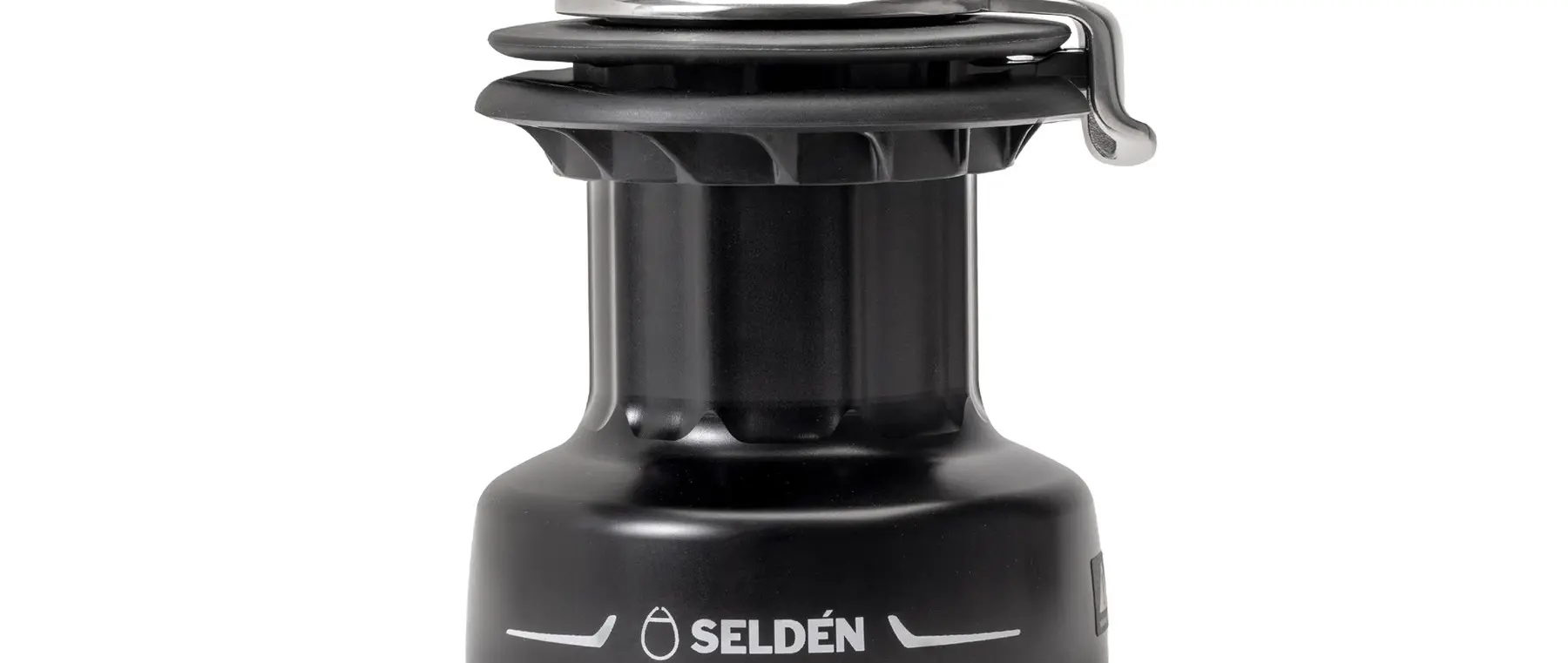
Seldén is also launching the S19, a single-speed self-tailing winch intended as a compact addition beneath its existing S30–S66 family. The manufacturer cites its patented Asymmetric Rib Technology, or ART, for the aluminium drum and says this arrangement is intended to provide grip while reducing rope wear. Its self-tailer is designed to let the sailor draw slack through with little friction. The company has indicated a retail price of €565 before VAT, with deliveries expected to begin in December 2026.
The S19 is aimed principally at smaller keelboats, so the winch should not be presented as a universal upgrade for all twelve-to-twenty-four-metre luxury yachts. In particular, a winch that is right for a lightly loaded line on a compact yacht may be wholly inadequate for heavily loaded sheets or halyards on a larger cruising boat. Owners should refer to the published load ratings and Seldén's sizing guidance. The wider significance lies in a coordinated portfolio of handling equipment, not in fitting the newest small winch wherever there is available deck space.
How the choice affects a short-handed passage
The benefits of easier reefing are easiest to appreciate when the weather changes earlier than expected. On a weekend cruise, a small crew may need to alter sail area while also maintaining lookout, navigating and keeping the vessel steady. Moving the mainsail handling process into a controlled cockpit workflow can reduce some physical demands. However, the details of the route, sailing conditions and the skipper's training determine whether a given system is appropriate for the planned passage.
The best system is one that crew members understand before they need it in difficult conditions. Owners should practise hoisting and reefing in light weather, then establish safe operating limits with the installer or rigger. They should also ask how to manage the sail if electric power fails or a mechanical component jams. A dependable sail-handling upgrade is defined by the clarity of the normal and emergency procedures as much as by how little effort it takes when everything is working smoothly.
Maintenance, salt and the realities of ownership
A furling boom lives in a harsh environment. Salt, moisture and repeated movement can affect bearings, controls, seals and fittings, so the maintenance requirements should be reviewed before the system is purchased. The manufacturer’s detailed documentation needs to identify approved cleaning methods, lubricants, inspections and intervals. A device marketed as user-friendly should remain serviceable after seasons of cruising, not only in its first month of operation.
For an electric system, owners should also clarify how the motor and control hardware are protected and accessed. If an electric component becomes unavailable during a voyage, the manual-backup procedure must be practical rather than theoretical. This calls for physical demonstration on the individual yacht. Parts support outside the home port matters for boats sailing between Mediterranean countries or farther afield. Seldén's existing distribution and technical-document resources offer a starting point, but the availability of parts for the new IBF should be confirmed.
New build or existing yacht: different questions
A yachtbuilder can plan an in-boom system into the original rig design, including the mast section, mainsail, winches and electrical pathways. That permits coherent engineering from the outset and may limit expensive later alterations. An owner ordering a new yacht should ask the builder to show the actual rigging plan and demonstrate that the selected equipment works together. References from comparable boats can help when evaluating comfort and durability claims.
A retrofit requires more caution. Existing sheeting geometry, mast fittings and deck layouts may constrain the installation, and changing the mainsail system can alter the way the boat is used. The owner should obtain a written assessment from a competent rigger and sailmaker before committing. Some boats may be better served by improving conventional reefing lines, blocks and winches instead of installing a completely new furling boom. The correct decision is one that improves safety and reliability on the particular yacht.
Pricing, availability and independent evaluation
The S19 is scheduled for deliveries from December 2026, whereas Seldén expects the initial IBF systems to begin delivery in April 2027. These are manufacturer plans and could change; buyers should verify current lead times and approved equipment specifications when ordering. The company has not presented independent long-term test results in the November preview proving a particular reduction in crew workload or maintenance cost across different rig designs.
METSTRADE provides a useful opportunity for installers and yacht owners to discuss these questions with the supplier directly. Visitors should bring mast and boom specifications, current winch details, sail dimensions and a realistic description of their crew arrangements. For electric configurations, include the boat's voltage, battery capacity and available control infrastructure. A detailed technical conversation will reveal more than a broad promise of push-button sailing.
What the announcement means for luxury-yacht owners
Seldén's new IBF represents a practical development in the effort to make modern sailing yachts manageable by smaller crews. Its first forty-foot model sits at the lower boundary of the luxury-yacht sector, while the associated winch development demonstrates the company's willingness to refine handling across different sizes. The announced manual and electric choices give builders and owners distinct options rather than one mandatory solution. Their value will depend on correctly matched rigs and clear operational procedures.
The lasting test will come from installations used through full sailing seasons. Owners should watch for detailed manufacturer drawings, actual delivery dates and experience from riggers who have commissioned the systems aboard comparable yachts. Until then, the confirmed facts are the new boom concept, its stated size limit, the manual and powered arrangements, the compact S19 companion product and the planned METSTRADE display. Those facts are sufficient for timely reporting without pretending that a press preview is already an independent sea trial.
Source documentation: support.seldenmast.com. support.seldenmast.com. Seldén's actual S19 self-tailing winch, manufacturer photograph extracted from its official November 2026 S19 product leaflet.