A compact device enters a demanding safety discussion
Technical Marine Supplies is preparing to introduce the Sertec CMCE Micro at METSTRADE 2026 in Amsterdam, scheduled for 17–19 November. The compact passive device is described by its distributor as a way of managing local electrical conditions on exposed marine structures, particularly where conventional larger hardware is difficult to accommodate. Intended applications include yacht fittings and secondary structures, as well as navigation marks and other marine equipment. The exhibition presentation is a product launch, not an independent demonstration that any boat will be immune from lightning.
The story is relevant to owners of twelve-to-twenty-four-metre yachts because lightning risk is a serious issue for vessels with masts, aerials, electronic antennas and exposed deck equipment. Even a sophisticated yacht can contain numerous vulnerable electrical systems connected by long cable runs. However, claims about reducing conditions associated with lightning attachment need to be interpreted with great care. A device sold for electrical-field management must not be confused with a guarantee that a lightning strike cannot occur or a substitute for an appropriately engineered protection and grounding scheme.
What the distributor says the Micro does
According to the launch information, the CMCE Micro employs insulated capacitive electrodes and requires no external power supply. Its stated approach is to influence local electrical-field conditions by managing induced charge, instead of relying on the arrays of exposed fine points used by some traditional static dissipaters. Technical Marine Supplies describes the product as suitable for installations constrained by size, weight or access, including outriggers on sportfishing boats and certain remote installations.
The manufacturer and distributor's account should be presented as a technical claim rather than settled proof of a specific reduction in lightning strikes. The atmospheric processes involved in lightning formation are complex, and conditions around a yacht can change rapidly. A product may alter measurable local electrical behaviour without eliminating the possibility of a direct or nearby strike. For owners, the safe starting assumption remains that a yacht can encounter severe thunderstorms and should be operated and protected accordingly.
Origins in sportfishing and exposed structures
The announced Micro was developed partly in response to installation challenges involving outriggers in the American sportfishing market. These structures can be long, elevated and awkward places for conventional equipment, which helps explain the emphasis on compact dimensions and passive operation. The supplier also identifies potential applications on buoys, navigation equipment, monitoring stations and communication structures. Such uses are examples of where the hardware might be considered, not a blanket approval for every vessel or installation.
On a luxury yacht, the appropriate question is whether a particular exposed fitting is part of a professionally assessed lightning-protection strategy. An outrigger, antenna mast or other prominent structure may have special bonding, electrical and mechanical requirements. Adding a device must not compromise the strength of the fitting or interfere with navigation lights, aerial performance or other equipment. A marine electrician, rigger or suitably qualified engineer should determine whether the proposed location and connection method are acceptable.
Passive operation does not remove engineering obligations
No external power supply may make a product easier to accommodate, especially on installations without conveniently available electricity. It does not remove the need to consider how the device is attached, how charge is referenced and what happens if a connection deteriorates. The launch report explicitly notes the importance of suitable earthing arrangements. On boats, the word 'ground' can be misleading because the electrical reference system is influenced by hull materials, bonding practices and the surrounding water.
The exact installation should be designed to avoid creating unsafe current paths or introducing corrosion risks through inappropriate connections between dissimilar metals. A composite yacht, a steel yacht and an aluminium yacht do not present identical bonding conditions. The owner should obtain written instructions from the supplier and ensure they are applied in the context of the vessel's existing electrical system. A visually neat installation is not proof that the grounding, bonding and protection arrangements are correct.
Lightning protection is more than one component
A responsible conversation about lightning aboard a yacht should examine the whole vessel, including likely attachment points, down conductors, bonding, grounding, surge protection and sensitive electronic equipment. A marine lightning-protection strategy may also involve operational guidance for crew and guests during thunderstorms. An additional product aimed at managing a local electric field might be considered within that process, but it cannot reasonably be treated as a replacement for comprehensive assessment.
Owners should therefore be cautious of sales language that appears to promise absolute protection. Lightning is variable, high-energy and potentially damaging even when the most careful preventive measures are taken. The practical aim of good electrical design is to manage risk and the consequences of an event, supported by appropriate technical standards and professional engineering. The presence of an advanced new product should prompt more careful scrutiny, not a relaxation of seamanship or emergency preparation.
What independent evidence would be useful
The distributor's announcement describes the operating principle but does not present an independent, standardised fleet trial demonstrating a stated percentage reduction in strike probability for twelve-to-twenty-four-metre yachts. That evidence gap must be made clear. A purchaser should ask for relevant test reports, the exact scope of any certifications and whether those documents concern the new Micro or different products within the wider Sertec CMCE range. Certification of one device or installation must not be assumed to apply automatically to a new variant.
Evidence may include laboratory measurements of electrical-field changes, engineering assessments, and records of installations operated in relevant environments. Each has limitations. A large number of uneventful sailing hours, by itself, cannot establish whether a device prevented a lightning strike that might never have happened. Conversely, a nearby strike does not alone establish that a device is ineffective. Owners need appropriately qualified interpretation and a clear explanation of what outcomes the product is intended to influence.
The existing Sertec Marine family provides context
Technical Marine Supplies already distributes larger Sertec CMCE Marine devices through its product catalogue, including versions described for different kinds of vessels. Those existing products help explain the technical family from which the Micro has emerged. However, published descriptions and dimensions for older models should not be copied into a specification for the Micro. The new device's final dimensions, mounting requirements and applicable documents must be confirmed from its own current product sheet.
The distributor's broader marine portfolio also includes electrical, rigging and safety-related equipment, which makes it a plausible source of integration advice for professional marine installers. Yet the commercial relationship is not a substitute for independent engineering judgement. Owners should distinguish information supplied by the manufacturer, assessment by the distributor and the obligations of a professional who designs the yacht's overall installation. These roles may overlap in a project, but their responsibilities should remain clear.
Particular considerations on sailing yachts
Sailing yachts can present complicated lightning-exposure scenarios because the mast, standing rigging and associated fittings rise well above the deck. Many modern cruising yachts also carry antennas, navigation instruments and lighting supported on the mast. A proposed field-management device at one location may have implications for surrounding fittings, but a safety assessment must account for the whole rig and its electrical connections rather than just the mounting point under consideration.
For an owner, mast material and construction records matter. Aluminium and carbon-fibre spar arrangements require different consideration, and some existing yachts may lack complete records of prior modifications. A competent inspection should also review internal cables, masthead instruments, deck penetrations and accessible bonding points. The Micro announcement does not include a yacht-specific installation guide proving compatibility with every rig type. It would be irresponsible to infer one from the product's compact size alone.
Motor yachts, towers and navigation equipment
On motor yachts, exposed radar arches, communication masts and metal structures may be obvious candidate locations for a discussion with the supplier. Yet even here, any proposed installation must account for radio-frequency equipment, radar operating envelopes and navigation-light visibility. A device fixed at the wrong place could obstruct maintenance or interfere physically with neighbouring gear. Practical integration must be evaluated by the yacht's technical team, not only by the distributor of the new product.
The distinction is especially important on compact owner-operated motor yachts, where there may be little dedicated engineering space and where owners might be tempted by small bolt-on accessories. The physical device may be simple, but the system-level consequences of a poor connection are not. Surveyors should assess the exact mounting arrangement, existing earth and bonding design, material compatibility and any consequences for warranties on nearby electronics. The product should be treated as specialist equipment rather than general-purpose chandlery.
Weather decisions remain the first defence
Regardless of the installed technology, skippers must continue to manage the weather. Forecast monitoring, conservative routing and avoiding known thunderstorms remain essential. Once a yacht is already exposed to severe electrical activity, instructions for crew and guests should reflect qualified maritime safety guidance and the vessel's documented procedures. The presence of a lightning-risk product does not justify continuing an otherwise unsafe voyage or deliberately approaching storm cells.
After a suspected strike or nearby discharge, the yacht may require inspection even if no obvious external damage is visible. Electrical devices, wiring, antennas and composite structures can sustain hidden damage. Owners should know what checks are appropriate before relying on affected systems again. These are general precautions, not evidence of a particular weakness in Sertec equipment. They underline why effective risk management is broader than the purchase of an additional component.
Exhibition details and questions for buyers
The CMCE Micro is scheduled to be displayed by Technical Marine Supplies at METSTRADE 2026 on stand 01.574. The distributor has indicated that it will hold UK stock and provide support to boatbuilders, marine engineers and other specialist customers. Prospective buyers should ask for the final product specification, installation drawings, electrical and mechanical requirements, relevant certificates and the precise intended uses of the Micro. The manufacturer’s instructions should identify what maintenance and inspections remain necessary.
A further question is how the Micro differs from the larger Sertec products already distributed. The comparison should include the limitations of each device and the way the supplier recommends combining them, if appropriate. Owners should ask whether a professional survey is required before quotation and how the supplier will document the chosen installation. Clear technical paperwork is more valuable than a claim that a compact device can solve every lightning problem on a complex yacht.
The right way to report this launch
The significant announcement is the introduction of a compact passive electrical-field-management device for marine installations, with a stated focus on smaller exposed structures. Its lack of external power demand and the claimed capacitive-electrode principle offer topics of legitimate interest to yacht designers and engineers. They should not be described as conclusive proof that lightning will be prevented or that existing protective arrangements can be discarded. Luxury Yacht Guide has not independently tested the product.
METSTRADE should provide an opportunity to examine the Micro and obtain detailed documentation. Until such material has been reviewed in the context of an actual yacht, owners should approach it as a potential element in a professionally designed protection strategy. The launch is worth covering because exposed structures and sensitive electronics are everyday realities of modern luxury yachts. Its value will depend on verifiable performance, appropriate installation and sensible claims about what any single device can, and cannot, do.
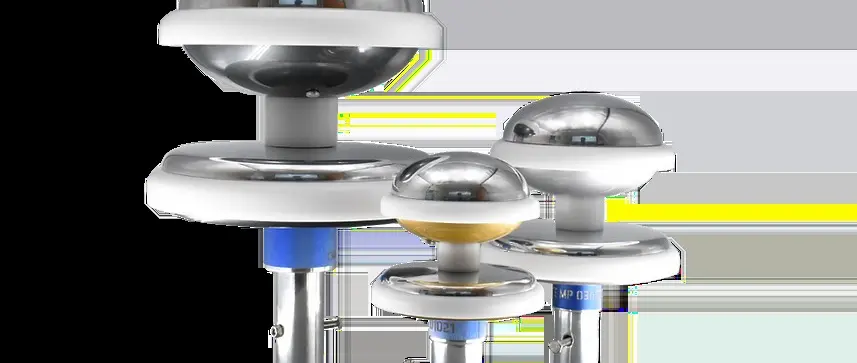
Source documentation: www.technicalmarinesupplies.co.uk. marineindustrynews.co.uk. Existing Sertec CMCE Marine lightning-protection product range, manufacturer publicity image shown by marine dealer On Board Marine Group. The new CMCE Micro is not pictured.