A design anniversary raises an ownership question
When Metstrade opens in Amsterdam on 17 November, the DAME Design Awards will mark their thirty-fifth edition. In its anniversary analysis published on 28 October, the organiser's design-award commentator Kim Hollamby looks beyond the annual competition towards the next generation of marine equipment. The accompanying discussion programme calls attention to design as something more than a cosmetic exercise. In practical terms, the combination of purchase cost, accessibility, servicing and day-to-day use should matter as much as the appearance of a new display, deck fitting or piece of machinery. This is particularly relevant to the 12–23.99-metre luxury yacht, on which sophisticated equipment must fit into relatively limited spaces and may be looked after by only a handful of people. A yacht owner considering equipment decisions during the coming winter refit season has reason to pay attention to this debate, even without attending the exhibition. The most important measure of design quality may be what happens long after a product is installed.
The awards and the timing
The organiser reports a shortlist of seventy-four products from 153 submissions, and the winners are scheduled to be revealed on the first morning of the exhibition. A separate anniversary discussion is scheduled for 11:00 that day in the Metstrade Theatre. No 2026 winner is implied by this coverage, which concerns the forward-looking design discussion rather than an announced product result. The shortlisting process represents a specialist assessment of design, not a certification that any particular product will suit every boat. For a yacht builder, the value of an exhibition is the ability to compare products in an unusually concentrated setting. For the buyer commissioning a refit, the more useful lesson is to ask what a product is designed to do, how its operation can be demonstrated and what it will cost to maintain. An award or nomination can help identify equipment worth investigating, but it cannot replace the engineering, contractual and practical decisions that determine whether the installation is the right one.
Service access needs to be designed in from the outset
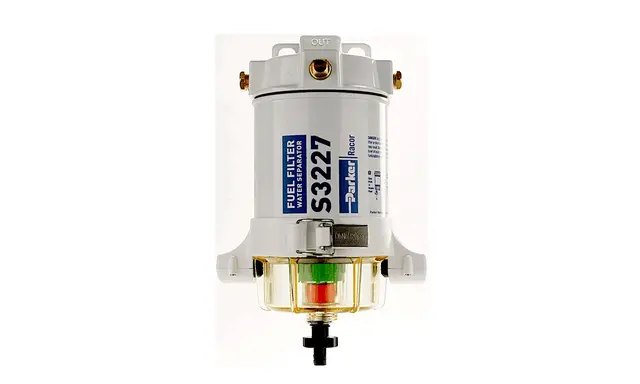
A component can look excellent on a sales stand while being remarkably inconvenient to service in a finished yacht. Consider the difference between an accessible pump with a clearly documented replacement procedure and a pump installed behind other equipment that must be dismantled before the technician can reach it. Both could function identically at delivery. Their cost and inconvenience over several years of cruising could be very different. The same principle applies to filters, switches, valves, sensors and electronic modules. The buyer or owner's representative should request the maintenance schedule for the specified equipment and ask the yard to demonstrate access with the surrounding installation complete. This is not a request to make every piece of machinery permanently visible. It is a request to design realistically for people who will eventually service it, often in a hot machinery space, an unfamiliar marina or a country where replacement parts must be ordered.
Assess the entire installed system, not just the box
Marine equipment rarely works in isolation. A refrigerator depends on ventilation and electrical supply, a navigation display depends on its input data, and an automated control can depend on actuators and sensors elsewhere in the boat. Decisions about connectivity and control should be made with those relationships in mind. A new product may save space in the dashboard while requiring an additional module behind it. It may reduce cabling in one area but require careful routing elsewhere. A buyer who compares only the catalogue price can easily miss important installation costs. The quotation should explain the complete fitted system, including commissioning, interfaces and equipment that must be retained as backup. It should also identify who takes responsibility when the interaction between two otherwise healthy products fails. If the owner has to coordinate several suppliers to solve a single fault, the benefits of integration may become less persuasive. A well-documented system is more likely to remain manageable after the original commissioning team has moved on.
Accessibility in a yacht of this size
Designing equipment for a diverse range of users does not mean compromising its technical purpose. It means recognising that not every user has the same reach, strength, vision, mobility or experience. A control that is easy for a tall skipper to operate while seated may be less accessible to someone standing at a different height. A fastening that works with dry hands may be frustrating in cold or wet conditions. Where equipment is used in an emergency, these questions are particularly important. Crew and guests may also learn new controls at different speeds. Clear labelling and sensible separation between routine and critical actions can reduce the burden of familiarisation. For a yacht used by an extended family, a practical demonstration involving several intended users will often reveal details that are missed when a single purchaser inspects the boat. The opportunity is to make the best equipment useful to more people, not to pretend that operation no longer requires knowledge or training.
Avoid designing only for the delivery photograph
Finishing work can be understandably driven by the desire to present a flawless yacht at handover. The long-term owner needs additional evidence: how removable panels are secured, how equipment can be isolated safely, where the product documentation is kept, and whether a replacement module can be fitted without cutting an expensive surface. These issues have direct consequences for the cost of a refit. They can also influence willingness to replace an inefficient component with a more suitable one later. From an environmental perspective, equipment that survives through maintenance or can be repaired locally may be preferable to a sealed assembly that must be discarded when a minor part fails. That does not automatically establish a life-cycle advantage in every application. The conclusion depends on material choice, actual service life, energy consumption and the availability of repair expertise. Owners should ask manufacturers for evidence of replaceable assemblies, support policies and realistic service requirements rather than accept a broad environmental claim on the strength of a label.
The practical economics of product choice
A yacht equipment budget is commonly affected by costs that do not appear in the purchase price. Delivery, adaptation, wiring, software subscriptions, specialised tools, commissioning, service visits and downtime can all contribute. A product that looks inexpensive initially may be less attractive when it requires proprietary replacement assemblies or the services of a distant specialist. Conversely, a costly product may be reasonable if it solves a real problem and has well-understood support requirements. Comparison should include both the capital outlay and the likely cost of using the equipment in the intended cruising region. This is particularly relevant to owners whose yachts move between countries or spend time away from major service hubs. The most practical solution is not necessarily the cheapest or the most advanced. The appropriate decision is the one that offers acceptable performance and support throughout the anticipated ownership period. Suppliers who can describe those costs clearly have an opportunity to distinguish their offer on more than its showroom appearance.
Knowledge transfer and practical handovers
Even well-engineered equipment needs informed users. A modern yacht contains systems that can seem opaque to someone learning the vessel for the first time. The handover should include more than a tour showing where everything is located; it should provide enough instruction for routine use and for recognising when professional assistance is needed. Printed quick-reference material, current electronic manuals, serial numbers, installer details and a sensible inventory can reduce confusion when ownership or crew changes. Owners should also know the limits of their competence. Some work involves safety-critical electrical, mechanical or fuel installations and belongs with qualified technicians. A good design does not need to encourage an inexperienced user to dismantle dangerous equipment. It can instead make ordinary checks understandable, critical warnings apparent and the route to expert assistance clear. Those qualities are relevant to a yacht's eventual resale as well as its first season.
An exhibition agenda with a useful takeaway
The anniversary discussion invites the industry to look beyond the next product introduction and consider how equipment serves people and businesses over time. Its relevance to the mid-size luxury-yacht market is straightforward: owners are buying systems to use in a demanding environment, and the consequences of poorly considered installation can be magnified by limited space, small teams and distant service facilities. Buyers visiting Amsterdam should arrive with questions about their own boats rather than merely collect attractive brochures. Ask the manufacturer to show ordinary operation, explain the service procedure, identify local support and separate included functions from optional extras. An honest compatibility assessment is more valuable than a general assurance that a device will work with everything. The awards will celebrate individual achievements, while the broader design debate offers a measure by which any installation can be judged. The eventual test of thoughtful design is whether the yacht remains comfortable, understandable and dependable in real use.
Sources and photograph
Source documentation: https://www.metstrade.com/news/dame-design-awards/marine-equipment-design. Photograph: Metstrade exhibition, November 2025 — Metstrade / RAI Amsterdam official press library. Archival photograph of the previous exhibition, not the 2026 awards. Press enquiries: pressmetstrade@rai.nl.