New jet tenders prepare for US debut
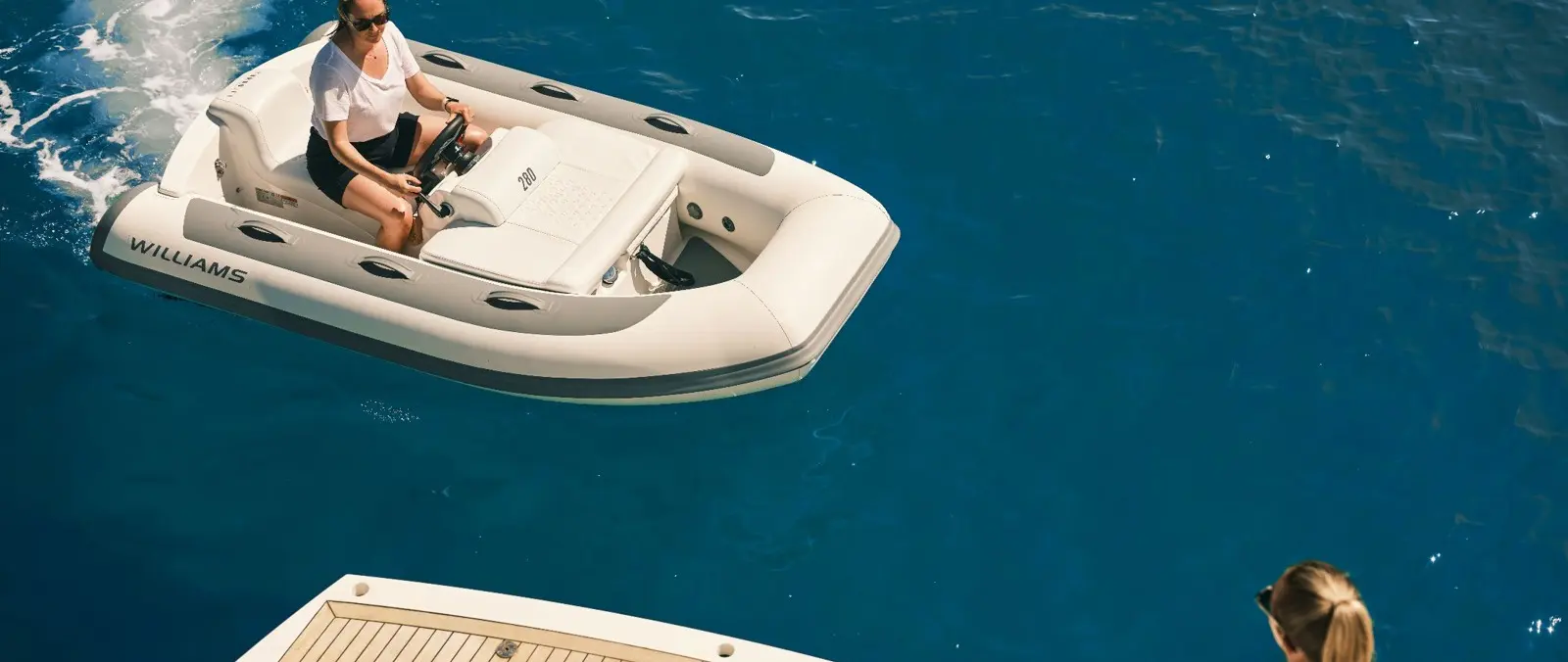
Williams Jet Tenders is preparing the North American debut of its TurboJet MX range at the Fort Lauderdale International Boat Show from 28 October to 1 November 2026. The British manufacturer will present its 280MX and 320MX models to customers and industry professionals.
The source also mentions the Evene Origin 57, a tender designed for yachts over 30 metres. This LYG article instead concentrates on Williams' smaller jet tenders as equipment that owners of yachts within LYG's size range may evaluate.
Two models and their announced prices
The 2.79-metre 280MX is listed from $26,950 before applicable tariff, tax and delivery charges, while the 3.19-metre 320MX begins at $29,950 under equivalent terms. These are advertised starting prices, not the final cost of a customised tender delivered to a particular yacht.
The 280MX uses a 60hp BRP Rotax ACE 903 engine and is rated for three adults and one child. The 320MX has a 90hp engine and space for four adults and one child, according to the manufacturer.
Performance figures and weight
Williams quotes speeds of up to 42mph for the smaller craft and 45mph for the 320MX, dependent on operating conditions. The company also describes the range as approximately 30% lighter than competing jet tenders, a statement that depends on the comparison set.
Buyers should check the real all-up weight with fuel, options and equipment, especially where a mother yacht has a platform or garage with strict loading limits. Top-speed claims are less useful than the tender's behaviour in the conditions where it will normally be used.
Why compact tenders matter
A jet tender can provide guest transfers, local exploration and access to shallow areas, but the launching system and storage space of the main yacht place limits on suitable models. A nominally short craft can still be difficult to stow if its beam or height is incompatible.
Owners should ask about lifting points, towing restrictions, fuel handling and the safe number of passengers for their intended use. A tender is a separate powered vessel with its own maintenance and operational obligations.
Williams and the marine supplier network
Williams manufactures jet tenders in Britain and supplies the international recreational-yacht market. The MX range is positioned as a more accessible entry into its product families, while aiming to retain familiar design and service arrangements.
Availability of authorised engine support may be especially important in a jet-propelled craft. Owners should confirm dealer coverage, consumables and warranty responsibilities for both the hull and propulsion components.
Before making a purchase
The October announcement confirms a future US show debut and published specifications. It does not establish that every optional colour or equipment configuration will be present in the display boats.
An owner should compare dimensions, launched weight and crew requirements against the main yacht before placing an order. Sea trials and a clear handover plan are valuable parts of tender ownership.
Tender storage and safe launching
A tender that fits a brochure-stated garage dimension may still be unsuitable because of its filled weight, beam or the clearance needed for launching. Buyers should measure the handling arrangement on the actual yacht.
Tender use requires independent attention to passenger limits, safety equipment and competent operation. Maintenance and winter storage also remain costs of yacht ownership.