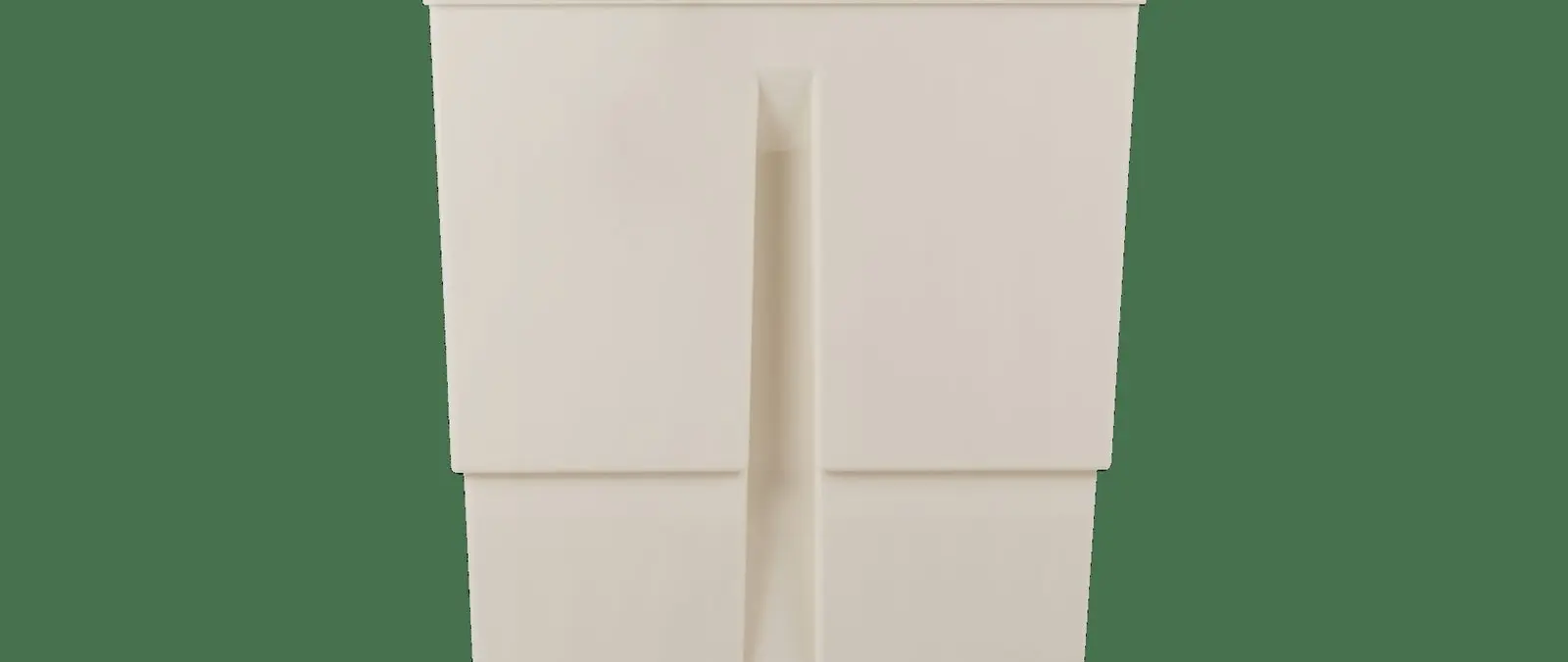
A new approach to storing black water aboard yachts
Dometic Group is showing a wall-mounted sanitation holding-tank family with VacuMAX technology in its METSTRADE 2026 marine equipment catalogue. The manufacturer describes injection-moulded tanks designed to use vertical space where bilge floor area is limited. Standard and VacuMAX variants share one tank-body design with common mounting and hose positions, enabling a consistent installation approach for different toilet systems. Dometic also claims the new tanks use 50 percent less plastic than the relevant earlier design, while the VacuMAX arrangement can reduce water use by up to 75 percent. These are manufacturer claims with product-specific scope; the published listing does not provide independent comparative measurements on a named luxury yacht.
Why holding tanks matter to owners and designers
Marine sanitation is often considered only after the visible accommodation layout has been chosen, yet tanks, pumps, hoses, access points and discharge arrangements take valuable room. On a 12-to-23.99-metre yacht, the volume available below a cabin sole may already be occupied by fuel tanks, batteries, trim equipment or pipe runs. A wall-mounted tank may give a designer more choices about how to route services, but it must still be securely supported and accessible. The correct location depends on weight when full, available headroom, centre-of-gravity implications and the proximity of plumbing. Moving a tank does not remove the need for a carefully engineered and compliant wastewater system.
One tank body for multiple toilet configurations
The notable feature of Dometic's proposal is the use of a shared tank envelope for different versions. The company says the range can support macerator, manual and VacuFlush installations through compatible connection and mounting arrangements. That could help builders standardise production across several yacht options and simplify future replacement. However, identical external mount locations do not mean every pump, hose, valve and control component is interchangeable. Before ordering, an owner should establish exactly which model suits the yacht's existing toilet system, what conversion components are required and whether changes to pipe routing will be needed. A simple replacement in the catalogue can be more involved in a finished boat.
Vacuum systems and freshwater demand
Dometic's VacuMAX description claims up to 75 percent less water use, a potentially significant result because every toilet flush eventually contributes to wastewater volume and tank-filling frequency. But the percentage should not be treated as a universal measured saving over every installation. It depends on the comparison baseline, flush arrangement, system maintenance and operating pattern. Owners considering a retrofit should identify the current volume used per flush, number of occupants, tank capacity and typical marina access. Reducing water demand is valuable, especially offshore, yet a change that complicates maintenance or affects reliability may not be attractive for every yacht.
Black-water storage influences cruising independence
An owner may carefully calculate freshwater endurance but overlook how often the black-water tank needs to be emptied. A yacht that uses less water in its toilet systems could potentially increase the interval between pump-outs, depending on occupancy and system design. That is a practical benefit in cruising areas where reception facilities are limited or regulations prohibit discharge. Nevertheless, a holding tank still has a finite capacity, and the crew must follow applicable coastal-state, flag and marina rules. Manufacturers cannot turn a tank into permission to discharge waste wherever convenient. Sound voyage planning includes the location of authorised shore reception facilities.
Wall mounting changes the structural equation
A tank mounted vertically may save footprint, but liquid is heavy and imposes dynamic loads when a yacht pitches or rolls. The supporting structure and fixings must carry the tank's full operating weight, including movement and any specified safety factors. It would be unwise to fasten a full tank to a thin decorative bulkhead simply because the housing appears compact. A yard should use the manufacturer's drawings and assess the actual backing structure. The arrangement must also allow hoses to be led without sharp bends and provide access to sensors, venting and connections. A successful installation balances space savings against mechanical security and serviceability.
Odour control requires the complete system
Dometic associates the VacuMAX approach with reduced odour and solids buildup, but holding-tank smell often results from several interacting factors. Blocked or inadequate vents, aged hoses, stagnant water, incomplete cleaning and poor access can all contribute. A new tank cannot automatically cure a defective vent or unsuitable plumbing route. Owners should therefore ask a sanitation specialist to inspect the entire system before spending money on a replacement. Hose selection, appropriate vent sizing, maintenance practice and correct pumping can be more important than the tank's appearance. Any claim of reduced odour needs to be assessed in the context of the complete installed system.
Materials and environmental claims must be read carefully
A claimed 50 percent reduction in plastic is relevant for both manufacturing material use and potentially overall installation weight, but the comparison must be defined. The METSTRADE entry describes the new injection-moulded design without presenting a complete lifecycle assessment. It is not enough to assume that less plastic automatically means fewer emissions over the tank's full life, especially if different service life, accessories or recycling arrangements are involved. Owners can treat the material-saving claim as an interesting manufacturer-reported design choice while requesting technical documents. Durability, repairability, safe use and long-term spare-part support remain essential components of an environmentally responsible purchase.
Noise and pump life are practical comfort considerations
The company also identifies lower noise and longer pump service life among the intended benefits of VacuMAX. These are areas that owners notice in quiet cabins or during overnight use. A sanitation pump cycling near a berth can disturb guests, while a blocked or worn component can become an urgent maintenance task. But the product listing does not provide an independently verified sound level or lifetime test covering every toilet and pump combination. A buyer should request a demonstration, confirm operating conditions and ask how maintenance intervals compare with the existing installation. Good routing, vibration isolation and access may affect the result as much as the tank design.
Service access should determine the tank location
A tank that fits neatly into a wall cavity can be difficult to maintain if all its connections are hidden behind permanent joinery. Crew need access to inspect seals, vent lines, sensors and mounting points, and to respond to leaks without dismantling accommodation furniture. A conscientious refit specification should therefore include removable panels or access hatches where the manufacturer requires them. The tank's filling indicator must also be correctly installed and calibrated, particularly where the shape differs from the vessel's previous equipment. Accurate indication can prevent overflow events and disputes about the true capacity available during a passage.
Compatibility with shore pump-out arrangements
Many luxury yachts use deck fittings for shore pump-out, while others may have additional handling arrangements consistent with local rules. A replacement tank needs to work with the existing line diameters and pumping configuration or include a properly designed conversion. Incorrect hose sizes, blocked venting or poorly routed suction lines can make pump-out slow or ineffective. Owners should check the location and accessibility of deck fittings, especially when guests or crew use them frequently in marinas. A system advertised as simple to install still requires a careful inspection of the yacht's full plumbing scheme. Dometic's common connection positions may help standardisation, but cannot guarantee an effortless retrofit.
Commissioning needs more than a flushing demonstration
After installation, a sanitation system should be inspected for leaks, proper operation, pump behaviour and tank-level monitoring. The procedure should include realistic use of every connected toilet, not just one brief flush at the dock. Crew need to understand isolation valves, any vacuum controls, cleaning rules and warning signs of a restriction or full tank. A yard should provide updated drawings and product information. If parts of the installation have changed, the vessel's normal cleaning and winterisation procedures may need revision. Good commissioning protects comfort and reduces the chance of a small plumbing problem becoming a major interruption to a voyage.
Comparing retrofit cost with the existing system
A new tank may appeal when the current installation is leaking, difficult to service or taking space needed for other equipment. But an otherwise reliable system should not necessarily be replaced solely for the latest technology. The full cost includes removing the existing tank, preparing structural supports, replacing hoses or pump components and restoring access panels. Work may be expensive if the equipment is behind an interior finished to luxury-yacht standards. Owners should require a survey of the existing plumbing and a clear itemised quotation. Any claimed reduction in water or maintenance should be considered against those costs and a realistic period of ownership.
What the official 2026 listing establishes
The first-party Dometic METSTRADE entry establishes a wall-mounted holding-tank series, its common body design across standard and VacuMAX versions, and the manufacturer's claims about plastic reduction and water use. It also identifies the intended compatibility with several marine toilet arrangements. The entry does not provide an independent life-cycle assessment, measured pump noise on a specific yacht or a verified percentage reduction in every installation. The official product image illustrates the tank rather than a named owner's vessel. This distinction is important when comparing evidence with promotional language and deciding what a supplier must demonstrate before receiving an order.
Why it matters to 12–23.99-metre yachts
The best luxury-yacht sanitation equipment is rarely noticed by guests. It works quietly, stores waste safely, can be serviced without disruption and helps the crew comply with local discharge requirements. Dometic's VacuMAX wall-tank approach is a relevant 2026 equipment development because it attempts to address limited installation space, standardisation and freshwater use at the same time. Its value will differ from boat to boat. A new-build yard may benefit from shared tank geometry across variants, while a refit owner should focus on compatibility, structural support and genuine measurable improvements. The decision is a technical one with direct consequences for comfort and environmental responsibility.
Source and image: Primary product data: https://www.metstrade.com/exhibitors/dometic-group-ab/products/dometic-sanitation-wall-holding-tank-series-with-vacumax-technology. Photo: Dometic Group AB, first-party VacuMAX sanitation holding-tank product image supplied to METSTRADE. Original media URL: https://stpsprodwe.blob.core.windows.net/media-blobs/8136a71586703c3c9692025a1e1a064e.png.