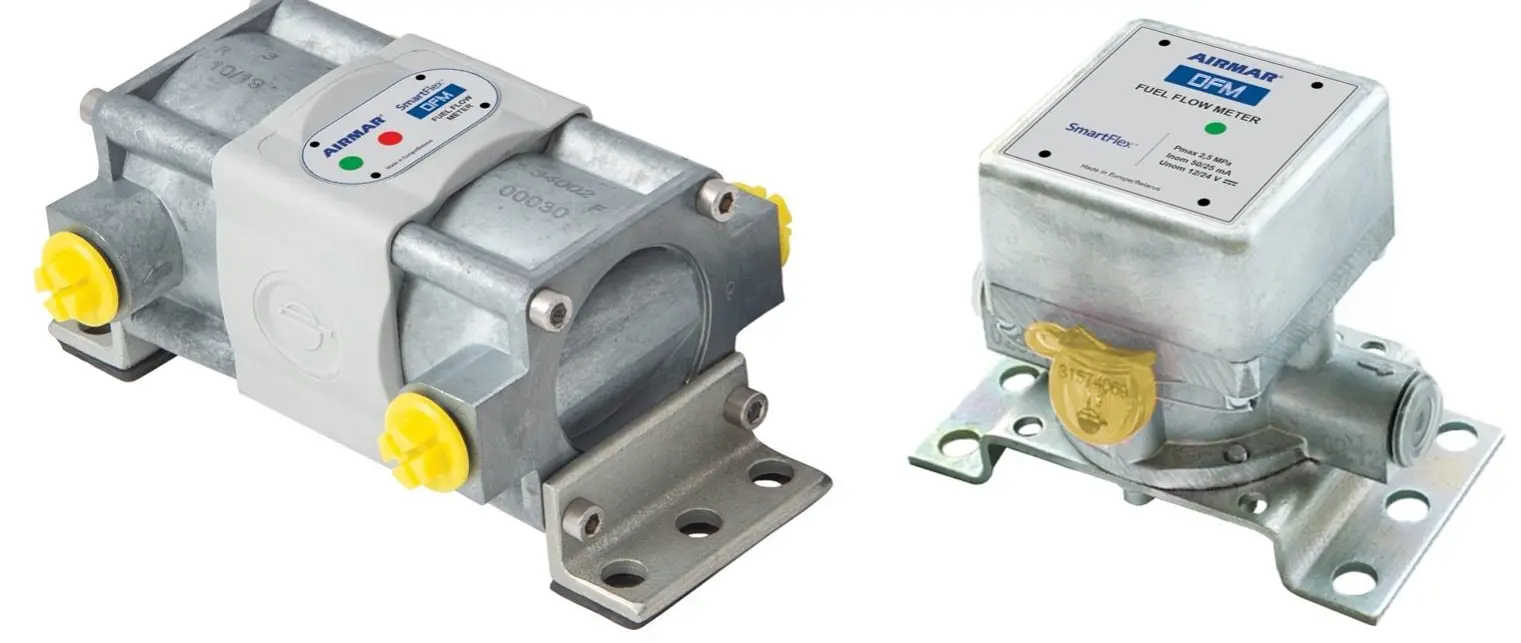
AIRMAR puts diesel flow measurement on the 2026 trade-show agenda
AIRMAR Technology Corporation is displaying its SmartFlex diesel flow meters in the METSTRADE 2026 marine electronics catalogue. The company's first-party entry describes single- and dual-chamber configurations intended for engine systems across a broad nominal flow range of 0.2 to 1,100 US gallons per hour, depending on equipment selection. The sensors are designed to work with AIRMAR's SmartBoat modules, which convert data to NMEA 2000 for compatible displays. This is a current catalogue presentation of a specific measurement system, not evidence that it was first invented on 24 November. For luxury-yacht owners, the relevant subject is making fuel consumption measurable in a way that crew can validate rather than relying solely on tank gauges and assumptions.
Why fuel-flow information is more useful than a fuel-level estimate
Tank levels tell an owner approximately how much fuel remains, but they do not show precisely how different speeds, sea states or operating practices affect consumption at a particular moment. A flow meter records fuel moving through a defined part of the machinery system. With properly configured inputs, a vessel may display an instantaneous rate and a cumulative amount consumed. The distinction matters for a 12-to-23.99-metre yacht making longer coastal passages, where a few changes in cruising speed can affect range planning. Nevertheless, a flow-meter reading is only as good as the installation, calibration and interpretation behind it, and it should not replace independent reserve calculations.
Supply and return create a particular diesel challenge
Many diesel engines circulate considerably more fuel through their supply line than they actually burn. Unused fuel returns to the tank after passing through the engine's fuel system. Measuring only the supply side can therefore overstate real consumption. A properly engineered arrangement for relevant engines has to account for fuel returning as well as fuel supplied. AIRMAR's dual-chamber options are intended to address such monitoring requirements. The company also describes reporting circumstances in which return flow exceeds supply. That data can be diagnostically valuable, but the actual configuration must match the engine manufacturer's approved fuel routing rather than encourage an installer to add components wherever they fit.
What the published flow range means
AIRMAR quotes a family covering 0.2 to 1,100 US gallons per hour, a range spanning very different engine sizes and applications. It does not imply that a single meter delivers identical accuracy at every point in that span or that all units are appropriate to the smaller yacht market. Buyers need the model-specific flow range, pressure tolerance, temperature characteristics and rated accuracy before selecting hardware. The appropriate size may be determined by the engine's circulation rate rather than its actual burn rate. Installing an undersized sensor can create unnecessary restriction, while oversizing can reduce useful resolution at low loads. These are engineering decisions, not styling options.
Connecting with SmartBoat and NMEA 2000
The first-party product description indicates that the flow meters communicate through AIRMAR's SmartBoat modules for conversion to NMEA 2000 data. A yacht with a compatible helm display may therefore present fuel information alongside navigation and engine data. This can be more useful than a dedicated gauge hidden in an engine compartment, particularly when one person operates the boat. However, network compatibility is not proof that every chartplotter shows every message in the desired format. Installers should verify supported data types, display configuration, firmware requirements and alarm behaviour. A marine electronics network needs correct power distribution, termination and isolation, even when the sensor itself is designed for straightforward integration.
Fuel consumption and range are related but not identical
An owner may use measured litres per hour, speed over ground and a known tank capacity to estimate operational range. That calculation becomes unreliable if currents, weather and load change substantially along a route. A yacht travelling at the same engine setting into steep head seas can experience different fuel use and progress from a passage in calmer conditions. Measurements can still provide a valuable basis for planning by revealing trends over repeated voyages. Crew should retain appropriate reserve margins and check engine performance independently rather than treat a displayed range figure as a guaranteed distance. Flow data can improve decisions without removing the uncertainty inherent in boating.
Installation requires specialist knowledge of the fuel circuit
Any new component inserted into a diesel line can affect pressure losses, air entry points, filter access and maintenance procedures. A yacht mechanic should review the engine manufacturer's requirements before proposing a flow-meter retrofit. Materials must be compatible with the fuel and environmental conditions, and connections should be secured and leak-tested according to applicable standards. Fire safety and access for inspection are especially important in compact machinery spaces. An owner should not accept a fitment plan that compromises the engine's warranty or makes routine filter service harder. The electronic benefit is secondary to the mechanical integrity of the fuel system.
Calibrating real measurements aboard the yacht
Even a well-designed instrument benefits from commissioning against known quantities and realistic engine conditions. A fuel transfer, calibrated tank measurement or other accepted method may help verify whether cumulative readings make sense over time, although each method has its own sources of error. The first check should also establish that return-flow calculations and numerical signs behave as expected. Recording the installation's selected sensor model, calibration settings and network configuration makes future diagnosis easier. A display that looks precise to one decimal place is not automatically a measurement with that level of verified accuracy. Owners should ask for a commissioning record rather than simply a demonstration screen.
Tracking both engines on a twin-shaft yacht
Many motor yachts in the relevant size range have two diesel propulsion engines. To compare port and starboard consumption, each may require suitable measurement arrangements. A pair of instruments might reveal differences caused by trim, propeller condition, operating load or mechanical problems, but the readings must be interpreted carefully. Slight variations between engines do not prove a fault, and a discrepancy can also arise from sensor selection or calibration. The best diagnostic approach combines fuel information with RPM, temperatures, pressures, engine manufacturer diagnostics and service history. AIRMAR's product provides data that may support that process; it is not a standalone mechanical health diagnosis.
Data logging can make the numbers useful over time
A single instantaneous reading is most valuable when the operator compares it with a known baseline. Recording fuel rate alongside speed, engine hours and voyage conditions allows the crew to distinguish normal seasonal variation from unexpected change. An owner may discover that a particular cruising speed creates disproportionate fuel demand, or that hull fouling seems to coincide with higher consumption. Such observations need confirmation, because weather and loading can produce similar effects. The SmartFlex product listing focuses on measurement and NMEA 2000 integration; it does not guarantee an advanced cloud reporting subscription or automatic diagnostic conclusions. Any wider analytics would depend on connected equipment and software.
Attention to units avoids expensive mistakes
The manufacturer's flow range is stated in US gallons per hour, while many European yacht operators work in litres per hour. A common conversion or display setting error can make numbers appear plausible while being significantly wrong. The system should have clear units and consistent conventions across the bridge, engine log and voyage calculations. Crew training is especially useful if a yacht operates with a rotating seasonal team. The same discipline applies to identifying whether a reported figure is gross supply, return or net consumption. A fuel-monitoring system should make those distinctions understandable rather than leaving operators to infer them from menu labels.
When owners may see a financial return
Better measurement can help identify an economical cruising speed, monitor refuelling records and support more informed maintenance scheduling. But the sensor does not physically reduce consumption by itself. Any savings depend on operators changing behaviour, correcting an actual problem or improving route and speed choices. The purchase and installation cost should be weighed against the yacht's annual engine hours, fuel expense and existing instrumentation. A lightly used yacht with reliable engine displays might gain less than a frequently operated vessel with incomplete fuel data. Marketing claims about operational efficiency require an actual baseline and follow-up measurement to become meaningful.
Cybersecurity and network resilience belong in the specification
As navigation, batteries and machinery monitoring share electronic networks, owners should consider the consequences of a faulty device or misconfigured gateway. A digital flow meter should not become a route for affecting an engine's critical control functions. Technicians should confirm that the system is installed on the correct network, that device addresses do not conflict and that a loss of data cannot trigger unsafe decisions. Crew should know how to operate the yacht if the monitoring screen becomes unavailable. Useful instrumentation enhances situational awareness but must not make safe propulsion dependent on a single consumer-facing display or application.
What the source establishes and what it does not
AIRMAR's official METSTRADE entry establishes the SmartFlex name, single- and dual-chamber diesel flow-meter family, broad specified flow range and integration through SmartBoat to NMEA 2000. It identifies outputs including instantaneous and total fuel use as well as special return-flow conditions. The published listing does not provide a universal installed cost, independent long-duration accuracy test or confirmed fuel savings for any particular yacht. The manufacturer's supplied image illustrates the product, not a documented installation aboard a named vessel. Owners can regard the technology as a practical option for better fuel information while requesting model-specific calibration, wiring and engine-compatibility data.
Relevance for medium-size luxury yachts
Fuel is both a major running expense and a fundamental passage-planning constraint for power yachts and many sailing yachts. A system that measures the amount consumed can strengthen record-keeping, highlight changing performance and improve communication between an owner and the person responsible for engines. Yet the most valuable outcome is not an impressive display; it is a reliable measurement that crew actually use and can independently check. AIRMAR SmartFlex is therefore worth examining for an upgrade or new build in the 12–23.99-metre sector, provided its sensors are appropriately sized, installed and commissioned within the yacht's approved fuel and electronics architecture.
Source and image: Primary product data: https://www.metstrade.com/products-and-services/airmar-technology-corporation/products/smartflextm-diesel-flow-meters. Photo: AIRMAR Technology Corporation, official METSTRADE SmartFlex diesel flow-meter product photograph. Original media URL: https://stpsprodwe.blob.core.windows.net/media-blobs/32bcd885e363ed47d142b2491c0268f2.jpg.