Marlec brings a higher-efficiency flexible solar range to yacht builders
British marine energy supplier Marlec is showing its 2026 Spectralite SemiFlex Pro range in the METSTRADE equipment catalogue, highlighting its use of LONGi high-performance back-contact solar cells and an ETFE surface. The manufacturer positions the lightweight panels for boats where rigid glass modules would be impractical or visually intrusive. The catalogue dates the product entry to May 2026, while Marlec's own technical data published in April details the wider panel family. The November industry relevance is continued supplier presentation and availability, not a fictitious launch on 24 November. For owners of 12-to-23.99-metre sailing and motor yachts, the development raises useful questions about the performance, mounting and realistic output of semi-flexible solar.
What makes a semi-flexible marine panel different
A conventional framed solar panel is built to retain a rigid shape, while a semi-flexible panel may tolerate a limited gentle curvature. This is useful on many yacht coachroofs, hardtops and deck surfaces that are not flat. Yet the term semi-flexible does not mean a panel can be folded tightly, repeatedly bent through large angles or rolled for storage. The manufacturer's installation limits have to be observed to avoid cell damage and early failure. Marlec describes a multilayer construction that is intended to resist salt exposure, scratches and some foot traffic, but those claims need to be interpreted alongside the exact product data and the planned yacht installation.
Back-contact cell technology and its potential
The Spectralite SemiFlex Pro HPBC models use high-performance back-contact cells, according to Marlec, with the aim of improving electrical collection and reducing some visible front-side conductor features. The company's material mentions cell efficiency figures up to 26.4 percent. That number should not be confused with the conversion efficiency of a complete installed solar panel once encapsulation, wiring, operating temperature and shading are taken into account. Owners should request the specific module's rated output and characteristics rather than use a cell-level figure to estimate battery charging. A higher-efficiency cell can be valuable where roof space is scarce, but real production depends on the entire system.
A range of sizes rather than one universal panel
The manufacturer markets SemiFlex Pro variants at nominal output classes including 50, 100, 150 and 200 watts. Those ratings provide useful starting points for planning a yacht installation, but should not be taken as guaranteed output in the middle of a summer cruise. Rated power is measured under defined test conditions; panel orientation, operating temperature, shadows and the state of the battery can change the result significantly. An owner contemplating several modules should measure the actual usable surface and the routes for cables before choosing quantities. Two well-positioned modules may generate more useful energy over a day than several larger panels placed under persistent shade.
Salt, sun and repeated use shape durability
A panel on a yacht may be sprayed with seawater, exposed to ultraviolet radiation and stepped around by crew who are working with ropes or access hatches. ETFE is a material selected by manufacturers for outdoor protective layers, but it cannot make a panel indestructible. Abrasive deck grit, a dropped winch handle or a poorly supported mounting surface can still cause damage. Marlec's documentation should be consulted for the permitted foot-traffic conditions, cleaning agents and bending radius. If a solar panel lies close to a frequently used side deck, the designer must also ensure that its texture provides sufficient footing and does not introduce a slipping hazard.
The importance of the surface beneath the module
A semi-flexible panel placed against a solid roof can heat up considerably in strong sunlight. Its actual temperature depends on ventilation, colour and the way it is mounted. Solar-cell output generally declines as temperature rises, and sustained heat may affect materials and adhesives. Owners should therefore choose an approved installation method rather than simply bonding a panel to the nearest convenient surface. The material supporting the module must be sound, clean and compatible with its fixings, and water should not become trapped against sensitive deck structures. Where a refit involves painted or composite surfaces, a qualified yard should confirm that the adhesive and the structure are suitable.
Electrical integration is more than connecting two leads
Each module needs correct cabling, protective arrangements and a controller compatible with the yacht's battery chemistry and system voltage. A modern maximum-power-point-tracking controller can help manage the available electrical energy, but its specification must be appropriate to the installed array and the possible input voltage. Multiple modules wired together require attention to current, conductor sizing and shading behaviour. A buyer should also consider where to place the controller for service and heat dissipation. The presence of convenient connectors on a manufacturer's photograph does not remove the need for correct marine wiring practice, water-resistant cable entries and clearly labelled isolating arrangements.
Shade is an everyday problem aboard a sailing yacht
Masts, booms, standing rigging and sails cast moving shadows across yacht roofs. On a small array, a relatively narrow shadow can reduce output, depending on the panel's internal electrical layout and the way multiple modules are connected. Marlec highlights optimised performance under partial shading for its newer back-contact products, yet the degree of improvement depends on the comparison method and installation. Owners should measure where shadows fall during normal anchoring and sailing conditions. A promising panel placed directly below a boom may underperform a smaller one installed in a less shaded position. A representative energy survey matters more than a single midday photo.
Solar yield and the daily energy budget
A typical cruising yacht uses electricity for refrigeration, navigation electronics, communications, lighting and often freshwater pumps or entertainment systems. Solar charging can offset some of that demand, but it should be assessed against actual energy consumption recorded in watt-hours or kilowatt-hours. A few hundred watts of rated modules will not continuously power several kilowatts of air conditioning or induction cooking. Owners should calculate an average day at anchor and a day under way, then account for seasonal sunlight and unexpected poor weather. Batteries remain essential for night use, and other charging sources may still be required. Clear calculations prevent disappointment after a visually attractive solar refit.
Walking surfaces require special attention
Some semi-flexible products are advertised as able to withstand limited foot traffic. Such claims depend on an appropriately supported substrate and the precise model, and they should never be interpreted as permission to stand anywhere on the cells with hard or sharp objects. A panel can be scratched or damaged by point loads even when it tolerates carefully defined test conditions. On a luxury yacht, guest routes and crew work areas should take precedence over photovoltaic coverage. The best installation may use a surface that is rarely stepped on, avoiding the trade-off altogether. If walking on the panel is expected, written approval and exact fitting guidance should be obtained.
Refitting without disrupting the yacht's appearance
A slim dark module may fit more discreetly on a coachroof or hardtop than a framed panel mounted on raised rails. That can be a significant design consideration for a carefully styled 18-metre yacht. Yet an understated appearance will not be achieved if thick cable runs, poorly finished deck penetrations or mismatched panel edges remain visible. A professional installer should prepare a layout drawing showing the cells, junction points, cable routes and access to nearby equipment. Owners may choose to begin with a modest array, measuring its actual production before extending it. This staged approach can reveal whether shadowing or the battery strategy needs adjustment.
Maintenance and troubleshooting in a salty environment
Even when a solar array has no moving parts, it still requires periodic attention. Crew should check connections, cable support, visible surface damage and the condition of any sealing around penetrations. Salt and grime can affect appearance and, in some circumstances, reduce useful light reaching the cells. The manufacturer should specify approved cleaning methods and whether any coating or polishing products are prohibited. A battery-monitoring display that logs charge performance can help identify a gradual fall in production, although changes in weather and sunlight must be taken into account. When a module fails, the owner should know whether it can be replaced without damaging the deck finish.
Cost comparison with rigid solar alternatives
Semi-flexible panels may be chosen for weight, appearance or ease of adapting to a gentle curve, not necessarily for the lowest purchase price per watt. Rigid framed modules can be less costly for some installations and may offer other advantages where adequate space exists. The real comparison should include brackets or adhesives, cable installation, shading, expected service life, warranty and the likelihood of accidental damage. A solar refit that creates hidden moisture problems or requires repeated removal of deck hardware may have a higher total cost than its initial quotation suggests. Owners should also check the availability of replacement units that match the original array's dimensions and electrical characteristics.
A documented product rather than a universal energy solution
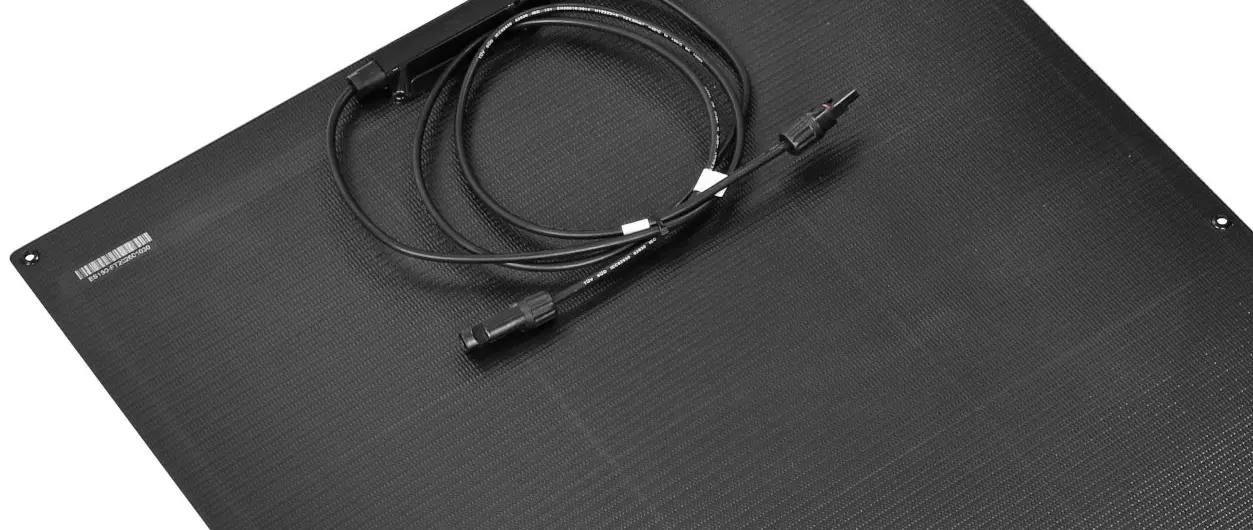
The first-party METSTRADE and Marlec material establish the Spectralite SemiFlex Pro HPBC name, the use of LONGi back-contact cells, the intended semi-flexible ETFE construction and available nominal output classes. The company's photograph illustrates an actual manufacturer product; it does not demonstrate a specific hourly yield aboard an unidentified yacht. The supplier's data should be read alongside installation instructions and the technical sheet for the exact model ordered. No independent claim of guaranteed daily generation or automatic fuel saving is made here. Those outcomes depend on weather, module positioning, battery controls and the equipment already installed on board.
Relevance for the mid-size cruising fleet
Yacht owners face competing demands for roof space, aesthetics and useful electrical autonomy. A well-installed semi-flexible photovoltaic array can support a quieter period at anchor and reduce the need for some engine or generator charging, but only within the limits of actual sunlight and onboard loads. Marlec's 2026 product range broadens the equipment available for that discussion. The key decision is not whether a panel looks slim and modern; it is whether its rated performance, mounting system and service life suit the yacht's actual surfaces and cruising pattern. A measured installation with clear maintenance records is more valuable than overoptimistic claims about producing all of a vessel's electrical energy.
Source and image: Primary product data: https://www.metstrade.com/zones/superyacht-zone/marlec-engineering-co-ltd/products/spectra-semiflexible-solar-panels. Photo: Marlec Engineering Co. Ltd., original official 150W Spectralite HPBC product photograph, from the manufacturer's product page. Original media URL: https://www.marlec.co.uk/wp-content/uploads/2026/05/150W-3.jpg.