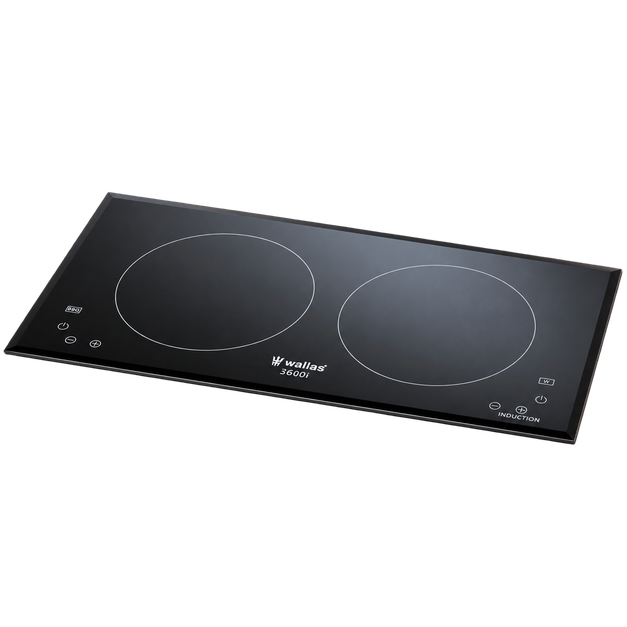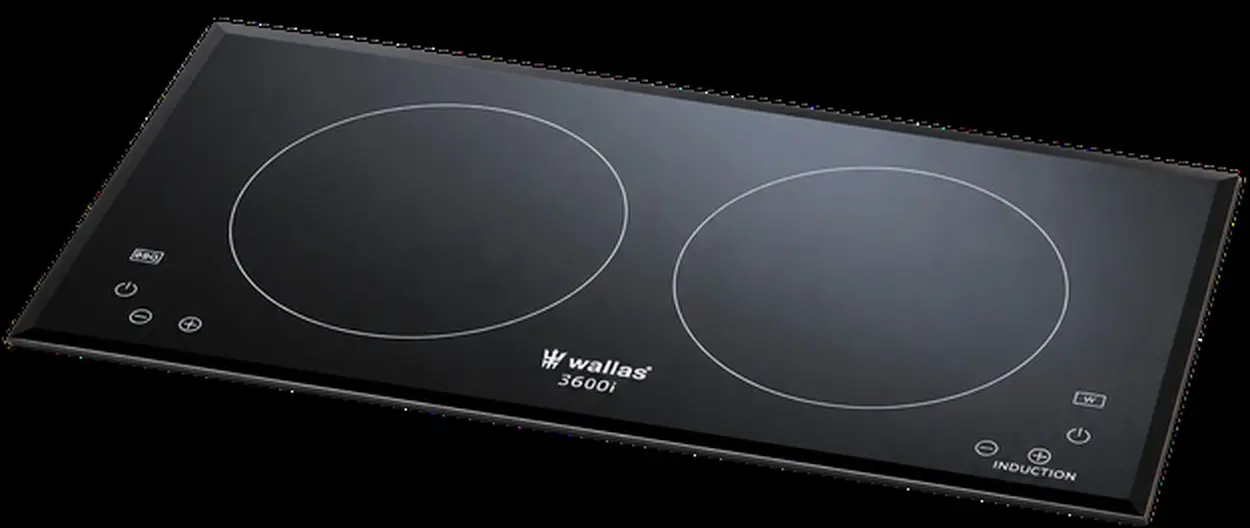
Wallas has presented the 3600i two-zone induction cooktop in its METSTRADE 2026 equipment range, identifying the new model as a compact, electric-only solution for boat galleys. The official exhibitor product entry is dated 17 November and lists a maximum of 3,600 watts when supplied at 230 volts or 2,400 watts on a 110-volt system, with automatic voltage switching. The supplier also highlights a continuous low-power mode, an adjustable power limit intended to accommodate smaller shore-power connections and an installation depth of approximately 100 millimetres below the ceramic surface. This is a different product from the Wallas 3800 Dual Power, which combines diesel and induction cooking in one unit and has been covered separately by Luxury Yacht Guide. The 3600i does not claim diesel operation; it is intended for yachts with an electrical supply appropriate to an induction galley. For owners of 12- to 24-metre sailing and motor yachts, the announcement offers a concrete new choice in galley equipment but does not remove the need for careful electrical design.
What distinguishes the new model
The 3600i is presented as a two-zone induction cooking appliance, contrasting with smaller single-zone units and with the dual-fuel 3800 model. Having two cooking zones may make it easier to prepare several elements of a meal at the same time, provided the electrical system can deliver the required power. Wallas says its unit can adapt between the two quoted supply voltages, which could be useful on yachts visiting marinas with different shore-power arrangements. The published figures describe equipment capability under specified conditions, not the energy used by a particular meal. Owners should ask how power is divided between zones and whether the maximum draw changes when other safety or operating limits apply. A clear understanding of that behaviour is more useful than treating the headline wattage as a simple measure of cooking quality.
The role of induction aboard a yacht
Induction cooktops generate heat in compatible cookware rather than using an exposed gas flame. This arrangement can be attractive on boats where owners prefer to avoid managing an LPG installation and want a clean, modern galley surface. Nevertheless, induction places a substantial electrical load on the vessel, particularly if several zones are used at high settings. A cooktop cannot be assessed in isolation from batteries, inverters, generators and shore-power arrangements. The Wallas 3600i may be convenient on a yacht with appropriately designed electrical systems, but could be impractical on a smaller vessel without adequate capacity. Owners should confirm the entire supply architecture before assuming the appliance can replace an existing gas or diesel cooker directly.
The meaning of two electrical ratings
Wallas states that the 3600i delivers up to 3,600 watts at 230 volts and 2,400 watts at 110 volts. Those numbers suggest that the available power changes with supply conditions, a detail worth understanding for yachts that travel internationally. The manufacturer says the unit switches between the voltages automatically, but the boat's existing shore-power converter, inverter and protective equipment must still be compatible. The yacht's electrical engineer should obtain the installation manual to verify voltage tolerance, frequency and all connection requirements. A marketing statement about automatic selection is not permission to connect an appliance to an unsuitable supply. Safe operation begins with correctly designed circuits and protective devices.
Managing the available shore-power connection
A yacht arriving at a small marina may discover that the electrical supply available at the berth is considerably less than the boat could use at a larger facility. Water heating, refrigeration and battery charging may already be consuming a significant portion of that capacity. Wallas describes an adjustable power limit to help the 3600i work within restricted electrical supplies. Such a setting may reduce the chance of nuisance trips, but it can also constrain cooking performance when several dishes are being prepared. The owner should understand the practical trade-off and how the settings are adjusted. An appropriately designed load-management system may be useful, but the cooktop alone should not be treated as a substitute for sound electrical planning.
Low-power cooking and inverter behaviour
The manufacturer's product description highlights continuous low-power output intended to protect or work comfortably with inverters. That feature could be relevant when a vessel operates from battery-powered alternating current and the cooktop is used for gentle simmering. Induction appliances can manage low heat in different ways, so owners should seek a demonstration rather than assume every design behaves identically. The precise benefit depends on how the cooker and inverter interact under real conditions. Electrical equipment may have start-up, harmonic or control characteristics not apparent from a headline output rating. A yacht considering installation should test compatibility with its actual inverter or obtain written confirmation from the relevant suppliers.
Compactness and available galley volume
Wallas quotes only 100 millimetres of required space beneath the ceramic top, making the 3600i a potentially interesting option where cabinetry is shallow. This is a useful design figure, but it is not the same as a complete installation envelope. Wiring, ventilation, clearances and any supporting structure may impose additional requirements. The manufacturer says the unit drops into a suitable countertop opening without a separate installation kit, yet the exact cut-out and fastening instructions still need to be followed. A galley designer should check the real structure before ordering. A seemingly shallow appliance can become difficult to fit if drawers, water pipes or timber supports occupy the space below it. Proper integration determines whether compactness is a practical benefit.
The changing needs of cruising owners
Yachts in the 12- to 24-metre sector have very different galley programmes. One owner may prepare simple meals for two, while another employs a chef to cook for several guests. A two-zone hob might be adequate in a compact galley or serve as one part of a larger cooking arrangement. The owner should list the meals normally prepared and consider whether two zones provide enough flexibility. This is particularly important where an existing hob offers additional burners or a separate oven. Wallas's 3600i supplies a possible replacement or component of a broader system, not a promise that every cruising yacht can cook everything it needs on one surface.
Cooking safely while the yacht moves
A yacht galley is a working space subject to motion, and a flat ceramic cooktop does not eliminate the hazards of hot pans or liquid spills. Owners should discuss pot restraints, safe working positions and operating limits with the yacht's builder or technical team. It would be wrong to assume that a cooktop suitable for a marina berth can be used without precautions at sea. The vessel's motion, available handholds and the location of nearby cupboards can affect how safely meals are prepared. The manufacturer's installation and operating guidance should be followed. Good galley design combines convenient heating technology with reliable storage and clear crew procedures during passages.
The absence of bottled gas
Choosing an induction-only hob may form part of an owner's decision to avoid LPG appliances. That can remove some equipment associated with gas storage, but it also increases dependence on a reliable electrical system. A yacht may still carry other fuel-burning appliances that need their own maintenance. Owners should compare the risks, costs and practicalities of each arrangement with competent advisers. Removing a gas cooker does not automatically make the entire vessel safer if the replacement electrical installation is poorly designed. It changes the systems that need attention. The 3600i is most attractive where an electric galley already fits the yacht's overall engineering strategy.
Battery capacity and energy management
At anchor, an induction cooktop can draw from an inverter connected to the yacht's batteries, depending on how the electrical system is arranged. Running a high-power appliance for extended periods may reduce the energy available for refrigeration, lighting or other domestic loads. Owners should calculate representative cooking sessions rather than assume the quoted maximum power is consumed continuously. Actual energy use depends on settings, cookware and the duration of preparation. The manufacturer's product listing does not provide enough information to estimate a universal daily battery requirement. A yacht designer can model the likely load profile and determine whether additional storage or charging equipment is justified. Power management turns a convenient appliance into a workable cruising solution.
Generator operation is an ownership choice
Some yachts already run a generator during meal preparation, while others aim to spend long periods on battery power. The 3600i may suit both arrangements under the correct electrical conditions, but its adoption does not guarantee a reduction in generator hours. That result depends on the rest of the yacht's energy system and the owner's routine. The trade-off may favour induction where other high-power domestic systems are already installed. On a simpler sailing yacht, the owner may prefer a different arrangement for extended offshore passages. The correct decision follows an honest appraisal of available power, intended itinerary and cooking habits rather than the assumption that newer equipment is always more efficient in practice.
Cleaning and the everyday experience
A smooth ceramic cooktop can be attractive because it fits neatly into contemporary joinery and may be relatively straightforward to wipe down after use. The surface still requires the cleaning materials and care methods recommended by Wallas. Abrasive substances or inappropriate tools could damage the finish, and a hot surface may remain hazardous after cooking even where the heating method is induction. The owner should assess the controls and the practical position of the cookware. A product may have compelling electrical features yet feel inconvenient if the zones are poorly matched to the pots normally used. A working demonstration can reveal how the two-zone arrangement behaves in an ordinary galley routine.
Installation during a newbuild
When a yacht is being designed from the beginning, its electrical architecture can accommodate an induction galley as part of the overall domestic power strategy. The shipyard can allocate circuits, protective devices, inverter capacity and ventilation according to the appliance's requirements. The countertop can be constructed for the correct cut-out and finish. Wallas's shallow installation dimension may provide flexibility, but the builder should still obtain full drawings before finalising joinery. The crew or owner may also want a dedicated local isolator and clear operating instructions. A clean installation is one where the appliance looks integrated without making the wiring or service access difficult to reach.
Considerations during a refit
Replacing an older cooker may require more than lifting out the existing unit. The countertop opening could be a different size, and the existing electrical supply might not support the new power demand. A yacht that previously used LPG or diesel may need substantial electrical modifications to adopt induction. The yard must check the inverter, distribution board and cable routes rather than assume that an available socket is sufficient. The new unit's 100-millimetre under-counter space claim may help in a constrained galley, but other equipment underneath could require relocation. A realistic refit budget should include commissioning and testing as well as the appliance price. The goal is a dependable improvement, not a visually neat but underpowered installation.
A new 2026 entry in a wider Wallas range
The 3600i was listed on 17 November 2026 at METSTRADE, where Wallas also displayed other cooking technologies. Its two-zone induction approach differs materially from the company's 3800 Dual Power, which combines diesel and electric heating. The products should not be conflated in purchasing advice or editorial coverage. The 3600i is positioned for owners who want an electric cooking surface with flexible voltage handling and power-limiting features, while the 3800 addresses a different operating choice. The published product page does not establish a named yacht installation or independent performance test under long-term cruising conditions. Those details can be evaluated as the unit reaches builders and refit projects.
What the next specification discussion should cover
The Wallas 3600i gives owners a concrete new option: two induction zones, automatic operation on suitable 230- or 110-volt supplies, adjustable power limiting and a relatively shallow unit. Before ordering, the yacht should confirm actual dimensions, electrical compatibility, cooking performance and safe operating arrangements. It is equally important to understand how the appliance will behave alongside other domestic loads during a cruise. A good galley allows owners and crew to prepare meals without turning power management into a constant frustration. Wallas's new model may help achieve that objective on an appropriately equipped yacht, but its value comes from correct integration with the vessel rather than from the headline power rating alone.
Primary source: Wallas official 3600i product entry, released 17 November 2026 in the METSTRADE 2026 catalogue. Electrical figures and installation features are supplied by the manufacturer; this is the two-zone induction model, not Wallas's separate diesel-and-induction 3800 Dual Power.
Sources and image credits
Reporting based on Wallas official 3600i two-zone induction product release of 17 November 2026.
Lead photograph: Wallas 3600i two-zone induction marine hob official product photograph. Original manufacturer-supplied Wallas 3600i induction cooktop image, METSTRADE 2026 listing. Original official image source.