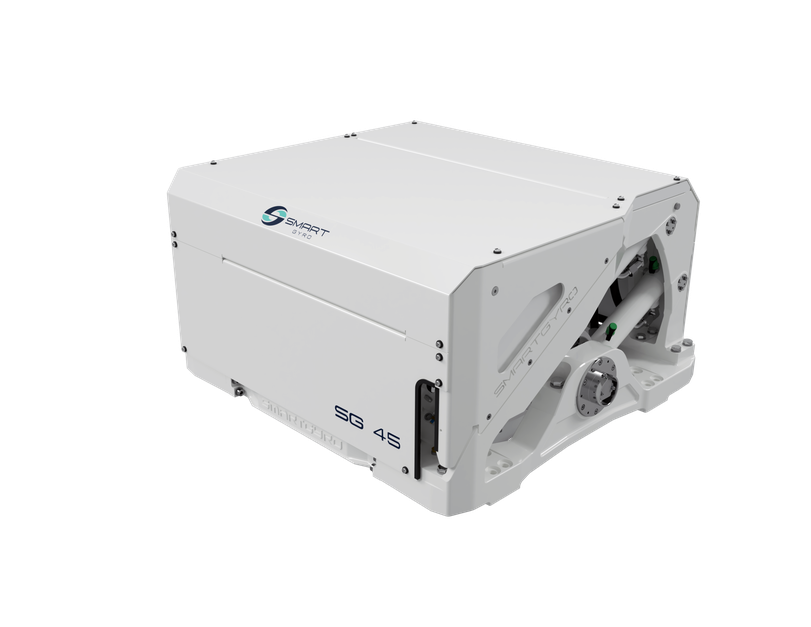
Smartgyro has placed the SG45 gyroscopic stabiliser in its current METSTRADE 2026 exhibitor catalogue, identifying the model as intended for boats approximately 50 to 60 feet in length. The supplier's official product entry carries a release date of 17 November 2026 and highlights an unusual service proposition: its gyro system is designed so that maintenance can be performed aboard the vessel without lifting the entire stabiliser out for work. Smartgyro describes the product as suitable for both new installations and refits, subject to engineering assessment. The announcement is distinct from the company's SG65 model, which is separately presented for vessels around 55 to 68 feet; model names and the quoted size ranges should not be treated as interchangeable. For owners of luxury motor yachts in the 12- to 24-metre sector, the SG45 offers another potential route to improving onboard comfort at anchor. Its suitability, power consumption and actual roll-reduction performance require the complete technical specification and a vessel-specific study, not assumptions drawn solely from a catalogue description.
Why roll comfort matters to owners
A yacht at anchor can experience waves from wind, passing vessels and swell even when the conditions appear generally pleasant. Rolling motion can make dining uncomfortable, interrupt rest or discourage guests from spending time in the water. Stabilisation systems seek to reduce some of that movement, but they cannot eliminate every motion in every sea state. A gyro can be one option among several, including fins and other approaches suited to different vessel configurations. Smartgyro is addressing the mid-sized yacht market with equipment aimed at a recognisable class of motor boat. Owners should begin with the actual discomfort they want to reduce and the places they intend to cruise, rather than selecting a particular technology before discussing the problem with a naval architect.
What the SG45 official listing confirms
The METSTRADE product entry names the SG45 as a gyroscopic stabiliser for boats from roughly 50 to 60 feet. It describes the product as applicable to newbuilds and refits and states that the stabiliser can be fully serviced on board, without removing the unit from the vessel. These are manufacturer claims and must be tested against the exact installation and service tasks involved. The short listing does not provide a full table of torque output, mass, electrical demand or cooling arrangements. Buyers should request the appropriate engineering datasheet and installation drawings. A gyro's compatibility cannot be established from the length range alone, since two boats of the same length may have very different displacement, roll characteristics and internal space.
The principle behind a marine gyro
A gyroscopic stabiliser uses the behaviour of a rotating mass to generate forces that oppose rolling motion when controlled appropriately. This is a different concept from an external fin working in the surrounding water. Because a gyro operates within the hull, its installation does not necessarily require the same underwater appendages as a fin system. That distinction can make it attractive to some owners, but it also introduces considerations relating to mass, foundations, mechanical systems and heat management. The stabiliser's effect depends on its design and the yacht's movement. A simple explanation of the principle is useful, but the owner should rely on detailed engineering calculations for predicted roll reduction on a particular boat.
Why the 50–60ft segment is significant
Yachts in this range can provide spacious accommodation and considerable recreational capability while remaining manageable for relatively small crews. They may also contain machinery spaces with limited room for large new equipment. A gyro intended for this size class must therefore address not only stabilising capability but also the practicality of fitting the unit alongside engines, fuel systems and existing services. The owner may be particularly concerned about the space consumed by a refit installation. Smartgyro's quoted 50–60ft suitability is a starting point, not a universal approval. Actual displacement, centre of gravity, structural design and the intended operating area all need assessment. Good sizing prevents disappointment and reduces the risk of installation compromises.
Newbuild integration versus retrofit
During a newbuild, a shipyard can allocate space, structural support and access for the stabiliser before machinery systems are installed. This usually creates more flexibility for placing foundations and arranging electrical and cooling connections. A refit poses a different problem: the machinery space already contains equipment, and routes for moving a gyro into position may be restricted. Smartgyro explicitly promotes the SG45 as suitable for both kinds of project, but each installation requires a survey. The yard should inspect clearances, structural loads and service access before placing an order. A system that technically fits inside a space may still be difficult to install or maintain safely. The practical route from workshop to machinery compartment matters as much as the final footprint.
Onboard service as a purchasing consideration
The ability to maintain a stabiliser without removing the complete unit could have commercial and practical value. Lifting heavy equipment out of a yacht may require specialist contractors and disruption to other machinery or interior areas. Smartgyro's catalogue presents onboard serviceability as a defining attribute of its range. However, the public description does not identify every maintenance procedure or state that all repairs can be completed without external support. Owners should request a task-by-task service plan showing normal inspections, expected component replacements and the tools required. The cost advantage will depend on the vessel's accessibility and the scope of the work. A useful service design reduces disruption but does not remove the need for qualified technicians.
Stabilisation at anchor and underway
Owners should clarify when the SG45 is intended to operate and what performance can be expected under different conditions. A vessel at anchor may move differently from one running at cruising speed, and stabilisation systems can have distinct operating limits in each case. The manufacturer's short listing does not provide verified results for all these situations. An engineering proposal should outline the expected roll reduction and the conditions used for predictions. It should also explain start-up and operating requirements, including whether a substantial spin-up period is necessary. Guests may value comfort immediately after arriving in an anchorage, so the yacht's operating routine matters. The skipper should understand the product's limitations rather than promise a stationary platform in all weather.
The importance of weight and foundations
A stabiliser imposes loads on the vessel's structure, and a gyro also contains a rotating mass. The yacht's engineer or naval architect should assess the appropriate foundation and the effect on overall weight and stability. The machinery may be compact relative to the yacht, but its mass and location can still influence design decisions. The owner should request the product's current weight and the required structural calculations rather than infer them from the SG45 name. Retrofitting without adequate support could create vibration or reliability problems. A properly engineered foundation allows the equipment to operate as intended and helps reduce unwanted transmission of forces into surrounding structures. It is a critical part of the installation.
Electrical requirements need a full review
A gyroscopic stabiliser uses electrical energy for its machinery and control systems. The amount required can influence generator operation and the yacht's energy budget, particularly during long periods at anchor. The official short product listing does not provide enough data to calculate consumption for an arbitrary cruising programme. Owners should obtain figures for start-up, normal operation and any cooling auxiliaries. The electrical system must also have appropriate protections and integration with other onboard loads. A yacht with a limited generator or battery arrangement may need additional work before fitting the equipment. The potential benefit in guest comfort should be assessed alongside the real operating cost and available power.
Cooling and machinery-space conditions
Gyroscopic systems can generate heat that must be managed within their approved operating environment. Different manufacturers may use different cooling methods, so the SG45's exact requirements need to be confirmed from official documentation. A cramped machinery compartment with poor ventilation can affect equipment even if there is sufficient floor area. The shipyard should examine ambient temperatures, access for inspection and the potential effect on surrounding systems. Owners may focus on stabilisation performance without seeing these hidden engineering demands. Yet cooling and access are crucial to long-term serviceability. A proper design considers how the unit functions during a hot cruising season as well as during initial tests in favourable conditions.
Comfort can change how a yacht is used
If the motion of a yacht is reduced in suitable conditions, guests may feel more comfortable dining or relaxing while at anchor. Owners who previously avoided some exposed anchorages might find new possibilities, although no system should be used as a justification for disregarding the weather or choosing an unsafe location. A stabiliser is one tool in the captain's assessment of comfort and operational risk. It may also help reduce movement for crew carrying equipment or providing service. The effect should be described carefully because individual responses to motion differ. Some people remain sensitive even when roll is reduced. The best yacht management combines technology with sensible itinerary planning and clear expectations.
Comparing the SG45 with larger variants
Smartgyro's METSTRADE listings distinguish SG45 from SG65, with the latter described for boats approximately 55–68ft. The ranges overlap, which highlights why length alone cannot determine the appropriate model. A 58ft vessel could fall within the broad marketing category of more than one unit, but the correct choice would depend on its displacement and roll characteristics. Owners should ask the supplier for a formal sizing proposal and predicted performance rather than select the most powerful model automatically. A larger unit may introduce additional weight, space and energy demands. Conversely, equipment that is too small may fail to provide the expected improvement. Technical analysis must resolve that balance.
Noise and vibration need to be assessed
A stabiliser intended to improve comfort should not create unacceptable noise or vibration in guest accommodation. The proximity of machinery spaces to cabins can vary significantly among 50–60ft yachts. Foundation design, insulation and the equipment's operating characteristics all affect the result. Buyers should request available acoustic information and discuss it with the yard before finalising placement. It would be wrong to promise silent operation without measured data. A successful installation should improve overall comfort, not simply shift the source of discomfort from rolling motion to mechanical noise. The best result requires coordination between the equipment supplier and the yacht's structural and acoustic designers.
Controls and operating responsibility
Stabilisation equipment should be straightforward for the captain or trained operator to monitor, but it remains technical machinery with defined limits. The yacht should understand start-up, shutdown, alarms and any interlocks that affect operation. A control interface may be attractive, yet owners should not assume that every system can be managed from any existing display without compatibility checks. Crew training and documentation are important, especially where personnel change or the vessel is used only seasonally. The manufacturer should provide clear guidance about what to do if the gyro reports a fault. Equipment intended for comfort should never become a source of confusion during navigation or manoeuvring.
Servicing across an international cruising season
A yacht may travel far from the yard that completed its installation, making service availability an important part of the purchase decision. Smartgyro's emphasis on onboard maintenance could help, but owners still need to confirm authorised technicians, spare parts and any diagnostic equipment. Routine inspection should be scheduled around the vessel's itinerary, rather than postponed until a problem appears. The equipment's model and installation details should be retained in the maintenance records. A good after-sales plan can prevent excessive downtime during a valuable cruising period. The yacht's management should compare service commitments alongside the initial equipment price and projected performance.
An actual 2026 product listing, with limits
The SG45 appears as a separately named model in the METSTRADE 2026 Superyacht Zone catalogue, with a 17 November release date. It is therefore appropriate to report its current exhibition presentation. The source does not state that the model was first invented this year or provide independent sea-trial measurements from a named yacht. Those distinctions prevent an equipment listing from being exaggerated into a performance breakthrough. A prospective buyer should obtain the product sheet, installation drawings and engineering assessment before relying on any promotional claim. The manufacturer has identified a specific market and a serviceability proposition; the real-world value must be confirmed through suitable applications.
A comfort upgrade that begins with engineering
Smartgyro's SG45 is aimed at owners who want to reduce uncomfortable rolling on yachts of roughly 50–60ft and who value the possibility of servicing the system without removing it from the hull. These goals are meaningful, particularly for a refit. They cannot be evaluated in isolation from available space, structural support and power systems. Owners should discuss their actual cruising habits with the yard and request predicted performance based on the specific hull. The most satisfying stabilisation installation may be one whose presence guests barely notice because the yacht simply feels more comfortable in the right conditions. Achieving that outcome requires careful technical work long before the equipment is switched on.
Primary source: Smartgyro S.r.l. official SG45 product entry in the METSTRADE 2026 Superyacht Zone, released 17 November 2026. Size range and onboard-service claims are manufacturer statements and require vessel-specific verification.
Sources and image credits
Reporting based on Smartgyro S.r.l. SG45 original supplier product listing dated 17 November 2026 in the METSTRADE Superyacht Zone.
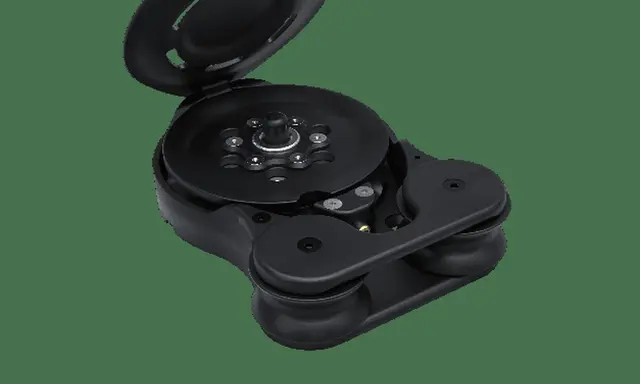
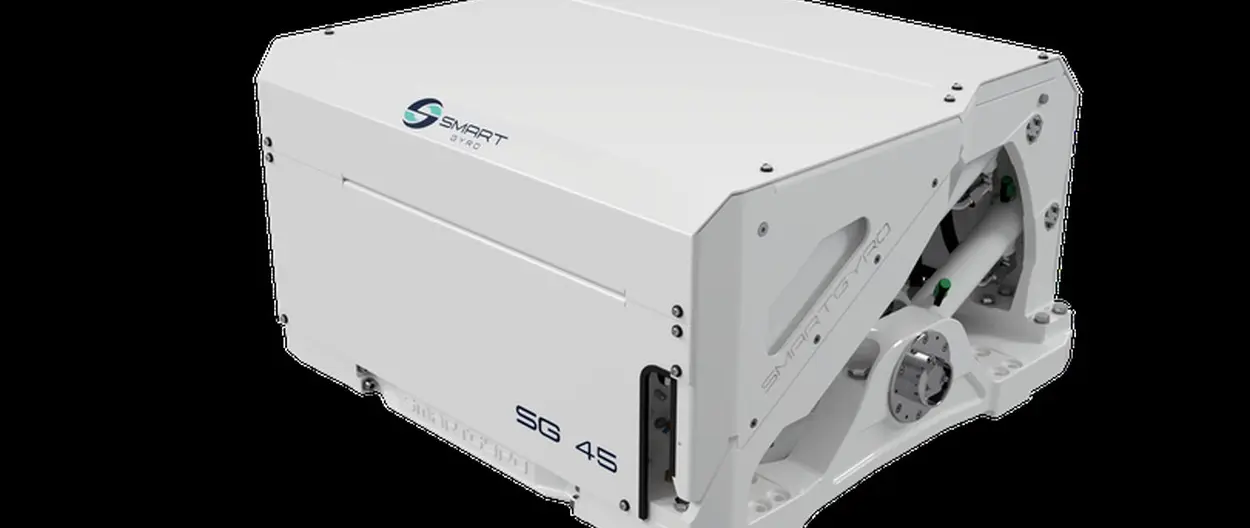
Lead photograph: Smartgyro SG45 marine gyroscopic stabiliser original supplier product photo. Manufacturer-supplied Smartgyro SG45 product photograph from the official METSTRADE 2026 product catalogue. Original official image source.