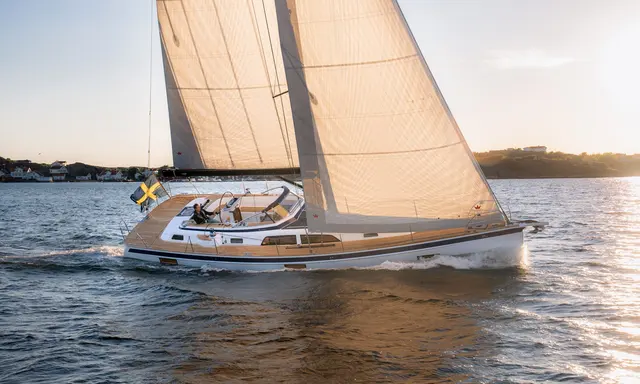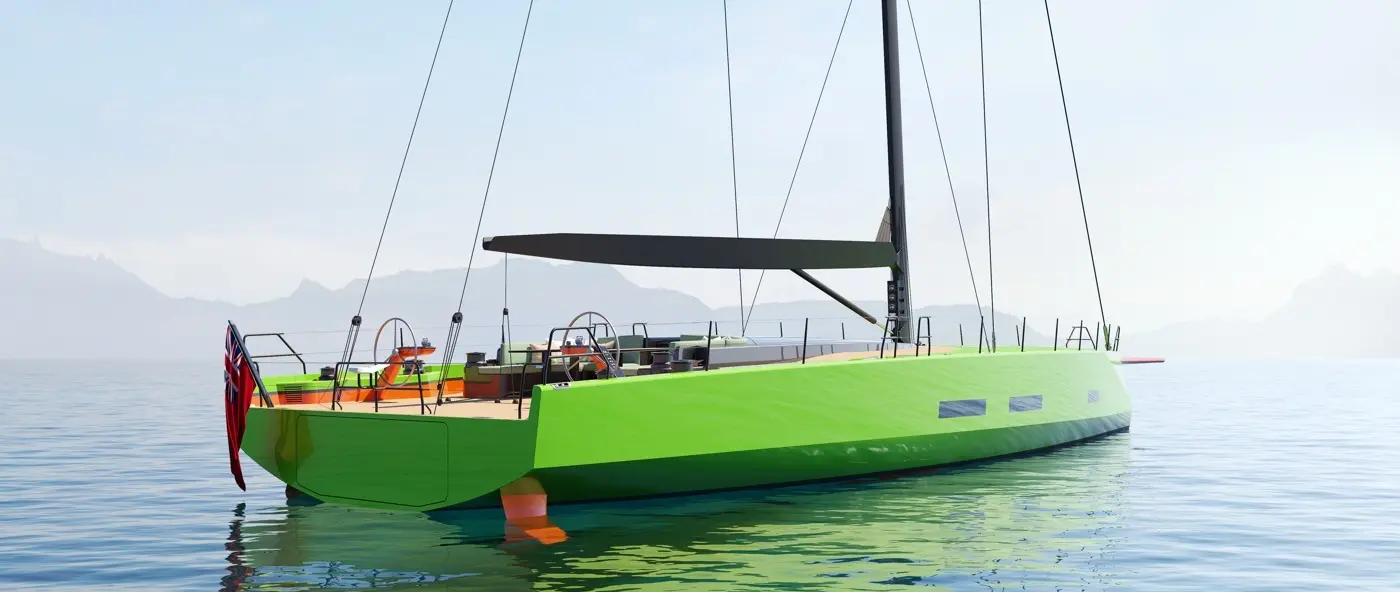
Baltic Yachts' first Baltic 80 Café Racer is progressing through construction in Finland, with an industry build report published in November 2026 describing the hull mould being turned, the deck laminated and cabin work under way in the shipyard's joinery operation. The 23.98-metre sailing yacht is scheduled for delivery in 2027 and sits just below the 24-metre threshold that matters in many yacht ownership and regulatory discussions. Its builder presents the model as a development of the Baltic 68 Café Racer concept, designed to balance lively sailing with unusually informal, flexible accommodation. Official published specifications include a beam of 6.40 metres, a quoted light-craft displacement of 29 tonnes and 11 tonnes of ballast. The naval architect is Javier Jaudenes, with interiors by Design Unlimited. These figures and design credits come from Baltic Yachts' own product information; the specific recent build milestones are attributed to contemporary industry reporting rather than invented as a new builder press release. For owners considering the maxi daysailer segment, the project offers a useful case study in how a carbon-composite yacht can place easy handling and residential pleasure alongside sailing performance.
A specific build programme rather than a concept
It is important to distinguish the first Baltic 80 Café Racer under construction from an uncommitted design proposal. The builder's product catalogue identifies a 2027 delivery programme, while November industry reporting says the hull structure has advanced and the deck is laminated. These developments are meaningful because they indicate physical manufacturing rather than purely promotional design activity. They do not establish that the vessel has launched, completed sea trials or been handed over to an owner. Nor should the anticipated delivery year be interpreted as a guaranteed date for a future event. Construction schedules can change as systems, interiors and rigging are developed. A responsible account should describe the status actually documented and reserve later milestones for evidence that they have occurred.
Where the Café Racer concept began
Baltic Yachts traces the larger model to the Baltic 68 Café Racer, a series intended to combine spirited sailing with manageable operation and a relaxed onboard setting. The builder has described the feedback gained from owners of the smaller boats as part of the development process for the 80. The ambition is to expand the available volume without losing the direct, enjoyable connection between the people on deck and the act of sailing. The new hull is more substantial, but its guiding principles include simplicity and flexibility. Those aims are manufacturer statements, not independent proof that the yacht can always be managed with fewer people than a comparable competitor. Owners should examine the final deck equipment, sail plan and operating procedures before forming conclusions about crew requirements.
The significance of staying under 24 metres
An overall length of 23.98 metres places the Baltic 80 close to an important size boundary in the market. The builder has highlighted the under-24-metre dimension as a deliberate aspect of the design. However, the legal and operational consequences of a vessel's length depend on the measurement definition, flag, commercial use and applicable regulations. A quoted overall length does not alone establish how a yacht will be categorised for every purpose. Owners should consult their flag administration and professional advisers rather than treat a marketing statement as legal advice. The broader attraction is clear: this is a large sailing yacht that seeks to preserve an approachable ownership experience despite its considerable size and ambitious performance credentials.
What the technical figures suggest
Baltic publishes a 6.40-metre beam, 29-tonne light-craft displacement and 11 tonnes of ballast for the 80 Café Racer. These figures help describe the intended scale and the weight-related elements of its design. The distinction between a light-craft displacement and an operating displacement is important because fuel, water, stores, equipment and crew can add weight. Similarly, the ballast number alone does not establish stability, righting moment or offshore performance. Those require the full naval architecture and approved stability information. A prospective owner should request the final specifications and understand how the yacht's rig, appendages and loading conditions are treated. Headline numbers can make a design interesting, but they should not be turned into unverified speed or handling claims.
Carbon construction and its demands
Contemporary reporting describes work using a carbon-fibre female mould and notes the builder's experience with advanced composite sailing yachts. Carbon construction can be attractive where designers seek to manage structural weight and stiffness. Yet the performance and service characteristics of any yacht depend on its engineering, layup, quality control and overall configuration. It is not sufficient to assume that every carbon yacht is automatically lighter or faster than every yacht built in a different material. The first Baltic 80 Café Racer will need the same rigorous testing and commissioning expected of any serious yacht. The construction method is one part of the project, not a substitute for demonstrated behaviour at sea.
A deck intended for different styles of sailing
Baltic says the Café Racer concept allows owners to choose between relaxed sailing with friends and more demanding racing programmes. The first 80 has been described with different rig configurations intended to support varied ambitions. A yacht optimised for a family afternoon will not necessarily use the same sails, deck routines or crew arrangement as a serious regatta entry. The owner should understand the trade-offs in the rig selection, including handling loads and maintenance. The appeal is the possibility of tailoring the sailing experience before delivery. Design flexibility is useful when it reflects genuine preferences rather than a desire to claim that a single yacht can do everything equally well.
Javier Jaudenes and the sailing platform
The official Baltic 80 product page names Javier Jaudenes as naval architect. His role encompasses the hydrodynamic and structural design considerations that underpin the yacht's sailing intentions. A design of this size must balance the interaction of hull, appendages, rig and displacement with the practical needs of the people aboard. The published overview does not provide a complete velocity prediction programme or verified race performance, so such figures should not be invented. Owners interested in competitive sailing should request the appropriate technical analysis, including the conditions and rating systems relevant to their plans. The value of a named design team is a clear line of professional responsibility, not a guarantee of a particular place on a results sheet.
Design Unlimited and the first-hull interior
Baltic identifies Design Unlimited as the interior designer and describes the first hull's accommodation as a bold, open arrangement. The galley, dining area and lounge are conceived as connected spaces, creating a loft-like environment rather than a sequence of small, enclosed rooms. This is a notable choice for a yacht designed to be enjoyed socially. It may encourage guests to gather naturally after sailing, with cooking and conversation sharing the same general volume. The builder's published interior renderings illustrate the intention, but a rendering should not be mistaken for a photograph of a completed cabin. The actual finish and detail will be established as construction and installation proceed.
A flexible approach to the galley
The builder also describes alternative interior configurations with a semi-enclosed or fully enclosed galley. That choice can influence how the boat feels during daily living. An open galley may make cooking part of the social experience, while a more separated arrangement could provide privacy or reduce the intrusion of preparation into the main seating area. The correct answer depends on the owner's habits and any crew arrangements. A dedicated chef may have different priorities from an owner who enjoys preparing meals personally. The ability to discuss these options is more meaningful than a generic claim of customisation. It allows the yacht's layout to reflect how it will be used.
Entertaining after a day's sailing
The Café Racer name suggests a lively, performance-minded personality, but the owner may spend as much time anchored in a scenic bay as racing around marks. The saloon therefore needs to be comfortable for quiet afternoons and informal evenings. A connected galley and lounge can help create that atmosphere without requiring a very large formal dining room. The builder's concept appears aimed at owners who value participation and simplicity as much as separation from the crew. Lighting, ventilation and access from the cockpit will influence whether the intended openness works in real life. Those details deserve close attention during the interior fit-out.
A distinctive owner personality
Baltic's July 2026 presentation described the first hull's styling as bold and individual, with an emphasis on the owner's willingness to use expressive colour and forms. That design direction is part of the boat's identity, not a specification for every future hull. The builder has described the series as flexible enough for later owners to choose different expressions. This is important because a strongly personalised first hull could otherwise be mistaken for the only design offered. Buyers should distinguish the platform's shared engineering from the owner-specific visual choices made for Hull No. 1. A performance yacht can accommodate a distinctive personality without requiring every example to look alike.
Why the 2027 delivery schedule matters
A published delivery target gives the market a sense of when the first yacht might enter service, but the remaining work is substantial. Structural completion is followed by systems installation, joinery, deck outfitting, rigging and commissioning. Each stage can affect the final programme. Owners and brokers should avoid announcing a completed yacht before the builder confirms launch and handover. Baltic's own product page currently identifies 2027 as the delivery year. An article written in November 2026 should respect that future status. A completed hull mould and laminated deck are progress, but they are not evidence that sea trials have begun or that the yacht has been delivered.
The difference between size and usable space
A beam of 6.40 metres creates opportunities for internal accommodation, but the shape of the hull and the needs of sailing equipment constrain the layout. A yacht must provide structure, machinery, tankage and access for technical maintenance alongside the rooms used by guests. The impression of volume in the builder's renderings comes from the planned openness rather than a promise that every part of the hull is freely usable. Prospective owners should inspect the general arrangement drawings and consider how storage, ventilation and circulation are handled. A compact but coherent interior may feel more generous than a larger layout burdened by narrow passageways or poorly positioned furniture.
Serviceability on a modern performance yacht
Lightweight construction and integrated interiors can complicate maintenance if service access has not been planned carefully. Owners should therefore review how engineers reach equipment behind the joinery and how rigging and deck systems can be inspected. Baltic's experience with composite sailing yachts provides a relevant background, but the actual arrangements of Hull No. 1 should be confirmed from the latest drawings. A performance yacht used for extended cruising needs reliable everyday systems, not just an impressive sail plan. The most thoughtful designs make technical tasks manageable while maintaining the simplicity of the guest experience. That balance is particularly valuable where the owner hopes to sail frequently.
Position within the maxi daysailer market
Large sailing yachts increasingly combine high-performance design with interiors that resemble informal private residences. The Baltic 80 Café Racer is unusual in its deliberate proximity to the 24-metre length mark and its emphasis on configurable accommodation. Its comparison set should include other sophisticated performance cruisers rather than every much larger superyacht. Owners will weigh sail handling, quality of construction, interior comfort, service support and the practicalities of sailing programmes. It would be premature to declare it faster or easier to operate than named competitors without comparable test data. The value of the design lies in its stated priorities and the tangible development of the first hull.
November's construction update in context
The November build reporting provides a useful new progress point, while Baltic's own July material and current model page give the specifications and design philosophy. The distinction between those sources matters. The builder's established information documents the yacht as a real project planned for 2027 delivery; the newer industry report describes manufacturing milestones. Together they support a contemporary update without inventing a fresh builder statement or claiming completion. Additional official photographs and technical information should be sought as the yard moves through outfitting and commissioning. The next credible milestones will be those confirmed by the shipyard as they occur.
What potential owners can take from the project
The Baltic 80 Café Racer shows how a builder can develop a well-defined concept without making every hull identical. The first yacht pairs a performance-minded platform with an especially open and expressive interior. Buyers interested in the series should ask about the available rig packages, actual weight data, accommodation choices and maintenance approach, while checking the regulatory consequences of their intended flag and use. The project is promising because its choices are specific, not because it can be declared the best solution for every sailor. As construction continues toward the announced 2027 delivery target, it offers a tangible example of a large sailing yacht intended to make participation in sailing central to the ownership experience.
Sources: Baltic Yachts' official Baltic 80 Café Racer specification and July 2026 first-hull release; industry construction report published in November 2026. Build milestones are attributed to the latter, while dimensions, design team and delivery target follow the builder's own information.
Sources and image credits
Reporting based on Baltic Yachts official 23.98m model specifications, design team and 2027 delivery programme, Baltic Yachts first-hull and accommodation design announcement dated 2 July 2026, YACHT magazine, November 2026 report on Baltic 80 construction and hull mould progress.
Lead rendering: Baltic Yachts Baltic 80 Café Racer first-hull exterior design original shipyard rendering. Baltic Yachts official exterior rendering of the first Baltic 80 Café Racer from the yard’s current model page; concept rendering, not a launched-yacht photograph. Original official image source.