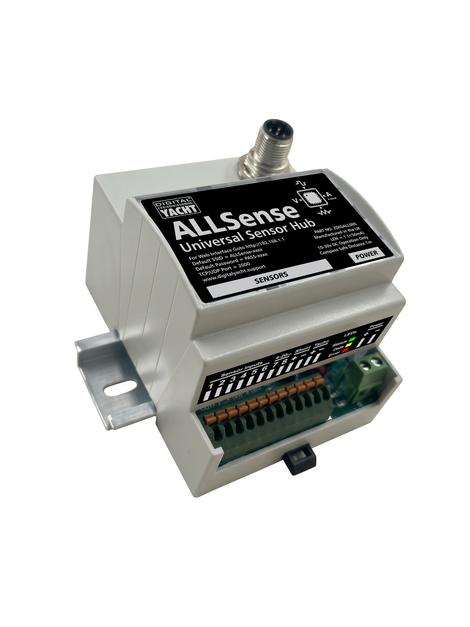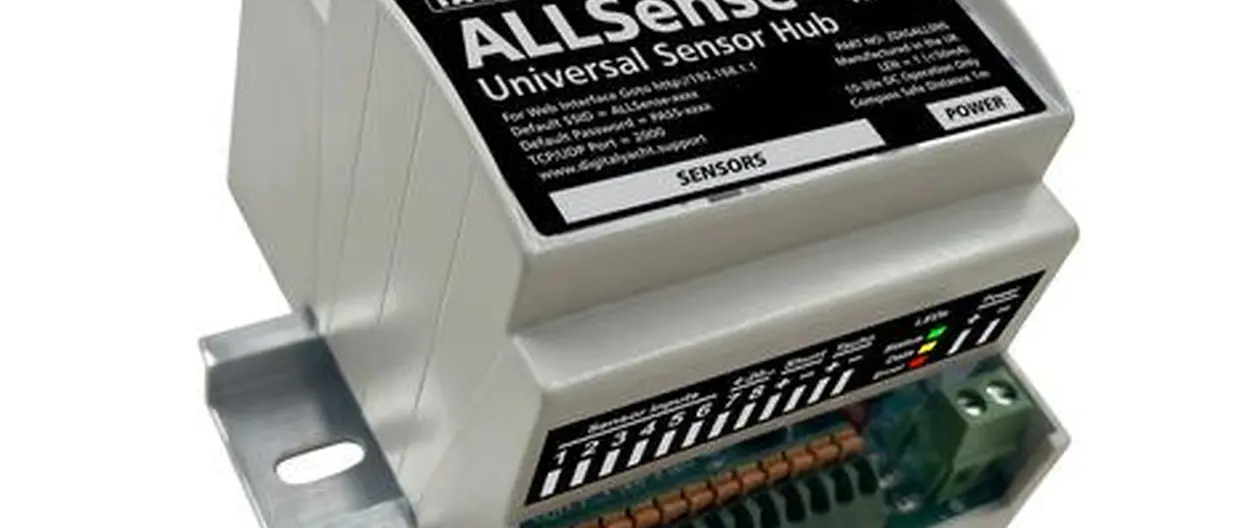
Digital Yacht has expanded its onboard monitoring portfolio with ALLSense, a gateway designed to connect analogue sensors to a vessel's NMEA 2000 data network. The British electronics manufacturer's official METSTRADE 2026 product listing is dated 1 November and describes eight configurable analogue inputs accepting voltage, resistance and current signals, together with a dedicated high-precision battery-current input for an external shunt and a separate tachometer connection. The company says the channels can operate simultaneously and are set up through a web-based interface, with an integrated NMEA 2000 alarm capability. Digital Yacht also included ALLSense among its new products highlighted for the Amsterdam show held from 17 to 19 November. For owners of 12- to 24-metre yachts, the announcement is relevant to refits in which existing engine and tank sensors could become part of a more accessible digital monitoring system. Integration still requires careful calibration, wiring and compatibility checks; installing a gateway does not automatically make every older instrument network-ready.
The challenge of mixed-age yacht systems
A yacht may carry equipment installed at different times by several builders or specialist contractors. An engine or fuel sender might use a familiar analogue electrical signal, while a modern chartplotter expects data from a digital network. The result can be a collection of gauges and displays that are difficult to monitor together. A gateway offers a way to translate selected signals into a format that compatible devices can understand. ALLSense is positioned for this bridging role. The owner may appreciate a cleaner display arrangement, but the technical team must establish which sensors provide suitable signals and how their values are interpreted. The reliability of the information will depend on the sensor and wiring as well as the conversion equipment.
What the official specification establishes
The METSTRADE listing identifies eight configurable analogue inputs supporting voltage, resistance and current. It also describes one dedicated battery-current input designed for use with an external shunt and a separate tachometer input for engine revolutions. Digital Yacht says the inputs can be operated simultaneously, with configuration through a web interface and alarm functions on NMEA 2000. These are supplier specifications for the announced product, not independent proof of compatibility with every sensor on every yacht. The publication does not provide all possible calibration ranges in its short public description. Installers should obtain the complete manual and determine which electrical parameters each input supports. A system intended to consolidate information should be engineered carefully to avoid introducing misleading readings.
Why eight configurable inputs could be useful
A yacht can have several items worth monitoring: fuel and freshwater levels, battery voltages, selected engine parameters or other equipment with suitable analogue outputs. Eight input channels could allow a relatively compact installation to handle several measurements, depending on the actual sensor types and wiring. However, the number of channels is not a guarantee that all desired data can be read without additional components. Some senders may have unusual signal characteristics or share wiring arrangements that require special attention. The installer should prepare a channel schedule before ordering, identifying each sensor, its expected output and the destination display. A planned approach is more dependable than connecting equipment in the hope that it will identify itself automatically.
Converting signals is not the same as calibrating sensors
An analogue sender may produce a resistance or voltage that must be mapped to a meaningful engineering value. For example, a tank level can depend on the shape of the tank and the sender's calibration. Turning a voltage into a digital number is only the first part of a reliable monitoring solution. The installer needs to establish how the raw signal corresponds to the actual quantity and verify it across a useful operating range. A system could display a precise-looking percentage that is wrong if calibration is careless. Digital Yacht's web-based configuration may make setup more convenient, but it cannot replace the need for accurate data. Owners should request a commissioning report showing how each channel was tested.
A particular benefit for yacht refits
Many 12- to 24-metre yachts remain in service for decades, often with capable mechanical equipment and traditional gauges. Replacing all the original sensors and displays can be expensive and disruptive. A gateway that supports existing analogue signals may offer a more selective update where the equipment is compatible. The yacht could retain functional senders while making their measurements available to newer displays. Yet it would be wrong to assume that every old sensor is suitable for direct connection. Corrosion, damaged wiring and undocumented modifications may need to be corrected first. A refit survey should determine which signals can be reused and which require replacement. The aim is to improve information without preserving hidden technical problems.
Battery-current monitoring and the external shunt
ALLSense includes a dedicated input for high-precision battery-current measurement through an external shunt, according to its product description. A shunt can provide a measurable voltage relationship to current flowing through a circuit, allowing compatible electronics to calculate current. The exact installation depends on the electrical system and the manufacturer's instructions. Battery monitoring may be especially useful on yachts with significant domestic loads, but current alone does not fully establish battery state of charge or remaining capacity. Those calculations can require other data, calibration and a suitable battery-management architecture. Owners should not treat the presence of one current channel as a complete battery-management system. Its usefulness comes from integration into an appropriately designed monitoring arrangement.
Understanding a tachometer input
The dedicated tachometer input may make it possible to monitor engine speed using a supported signal. That can be useful when an owner wants engine information on a modern display, but the installer must confirm that the source signal is suitable. An engine's existing instrument system may use pulse frequencies, electronic messages or proprietary methods that are not interchangeable. The interface cannot be assumed to read every manufacturer configuration. A tachometer reading also does not replace the engine's approved alarms and control instrumentation. The yacht should retain necessary operational safeguards while considering whether additional display access would be helpful. A stable RPM value can support awareness, but its accuracy must be established through comparison with a trusted reference.
The role of NMEA 2000
NMEA 2000 is a common marine network standard used to exchange selected data among compatible equipment. A single network can support multiple devices without requiring every display to be wired directly to each sensor. This is useful in an increasingly connected wheelhouse, where the owner may want to see navigation, machinery and tank information in a consistent interface. However, the standard does not mean that all equipment supports every data parameter or alarm. The installer must confirm which message types the ALLSense gateway generates and which displays can interpret them. Network topology, power and termination also require attention. A sophisticated gateway is only as useful as the network that carries its data reliably.
Multiple displays can create convenience
On a family cruising yacht, the skipper might want tank levels visible at the helm while another crew member checks the same information near the electrical panel. A correctly integrated gateway may help make selected measurements available in several locations. That can reduce the need to walk between separate gauges, though it should not create confusion about which display has priority. The owner should decide which data genuinely needs to be accessible and avoid cluttering screens with every available parameter. A yacht's bridge should remain focused on safe navigation and essential machinery information. Monitoring features are most valuable when the interface is clear, consistent and suited to the operator's needs.
What an alarm system should do
Digital Yacht says ALLSense supports an integrated NMEA 2000 alarm system for monitoring. That may allow selected conditions to produce alerts on compatible equipment, but exact functions and supported thresholds need confirmation. An owner should not assume that a gateway automatically detects every possible engine or electrical fault. It can only respond to signals and logic configured within its capabilities. Critical safety systems may require independent alarms and approved monitoring arrangements. The technical team should document which alerts originate from ALLSense, how they are tested and what crew should do when they appear. A warning is useful only when it is accurate and clearly understood. Poorly configured alarms can create unnecessary distraction or, worse, false reassurance.
Web-based configuration and security
A browser-accessible setup process can simplify commissioning compared with equipment that relies entirely on small physical controls. Digital Yacht promotes ALLSense's web interface as a way to configure and monitor the available inputs. The installer should determine how access is authenticated, what connections the unit exposes and whether configuration can be changed accidentally. A yacht may connect many different systems over time, making sensible segmentation and account management important. The manufacturer should explain how software updates are handled and whether settings can be backed up. Convenience should not encourage unrestricted access to technical parameters. A professional installation protects configuration while allowing authorised maintenance when needed.
Engine rooms can be electrically noisy
Analogue sensors and long cable runs can be affected by electrical interference, poor connections and grounding problems. A digital gateway will not necessarily correct those underlying issues. The yacht's installer should inspect wiring quality and ensure signals are connected according to the manufacturer's recommendations. The readings should be tested with engines and other major electrical equipment operating under representative conditions. If values fluctuate unexpectedly, the cause might be the sender, cable route or ground reference rather than the gateway itself. A clean digital display can make an unreliable signal look authoritative. Proper testing is therefore an essential part of converting older systems to networked monitoring.
Tank levels are more complicated than they appear
Fuel and water tanks may have irregular shapes that make a simple linear percentage misleading. An analogue sender can indicate fluid height without accurately representing volume unless the system is calibrated for the tank. Owners who want dependable range or provisioning information should confirm the available conversion and calibration options. The official ALLSense listing describes sensor integration but does not specify that it automatically learns tank geometry. A careful installer may need data from the boatbuilder or measured calibration points. Tank readings should also be considered in light of vessel heel and movement. A useful display can make provisioning easier, but its accuracy depends on the underlying measurement method.
How owners might evaluate the equipment
A prospective buyer should begin with a list of what they want to monitor and what sensors are already installed. The technical team can then compare those requirements with ALLSense's supported inputs and data outputs. Questions include the number of channels, the correct wiring method, network power, calibration options and alarm compatibility. A demonstration may show how information appears on the intended chartplotter or multifunction display. The owner should not choose the gateway merely because it offers eight inputs or an attractive interface. Its value comes from making relevant information easier to use and maintain. A modest, reliable monitoring arrangement may be more useful than an elaborate system with poorly understood readings.
The significance of an early November release
Digital Yacht listed ALLSense in its METSTRADE product catalogue with a release date of 1 November 2026 and highlighted it again among the products showcased during the Amsterdam exhibition. That makes this a contemporary product announcement rather than an old system relabelled as new. The official sources do not establish a named yacht installation, an independent comparison with competing gateways or a universal list of supported sensors. Those details remain matters for technical documentation and installation experience. The current significance is clear: boat owners and installers increasingly want to combine established analogue equipment with connected monitoring without unnecessarily replacing everything aboard. ALLSense is intended to address that practical integration challenge.
A clearer picture of the vessel
A good monitoring installation can make life easier for both professional crew and owner operators. Fuel levels, battery current and engine information become more useful when the figures are trustworthy, accessible and presented without clutter. Digital Yacht's ALLSense gateway offers a route from selected analogue signals into an NMEA 2000 system, with several configurable channels and a web interface. Its successful use depends on the quality of the existing sensors, correct calibration and a compatible network. Owners should seek full specifications and a documented commissioning process before relying on the readings. The goal is not more data for its own sake, but a clearer understanding of how the yacht is operating.
Primary source: Digital Yacht, official ALLSense Analogue to NMEA 2000 Gateway product entry released 1 November 2026 in the METSTRADE catalogue, supported by the manufacturer's November 2026 exhibition announcement.
Sources and image credits
Reporting based on Digital Yacht, official ALLSense Analogue to NMEA 2000 Gateway release of 1 November 2026.
Lead photograph: Digital Yacht ALLSense analogue sensor to NMEA 2000 interface manufacturer-supplied product photo. Digital Yacht ALLSense gateway original manufacturer product photo on the official METSTRADE 2026 catalogue. Original official image source.