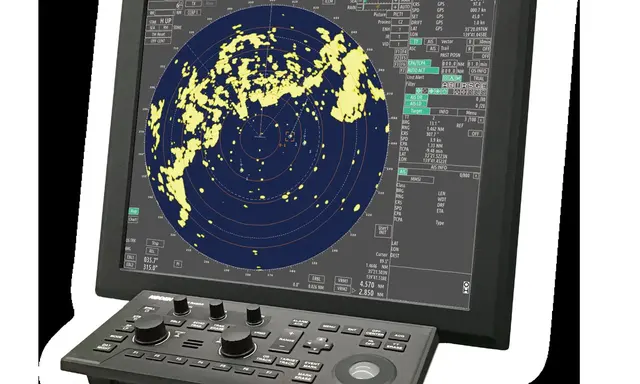
South Korean marine electronics supplier DM Tech is showcasing its SV185 display in the METSTRADE 2026 catalogue, with the official product entry dated 1 August 2026. The manufacturer describes the SV185 as an 18.5-inch touch monitor with an eight-channel BlackBox arrangement, positioning it as one of the display options available to yacht bridge designers and equipment integrators. The short catalogue description does not publish detailed brightness, resolution, interface or marine certification figures, so those should not be invented or inferred from the screen size alone. Its relevance to owners of 12- to 24-metre luxury yachts is nevertheless apparent: increasingly sophisticated helms require displays that place navigation and machinery information within comfortable reach while leaving enough space for reliable controls and clear sightlines. The SV185 provides a specific manufacturer product to consider, not evidence that it is already installed aboard a named yacht or compatible with every popular chartplotter or camera system.
The changing appearance of a yacht helm
A wheelhouse once required an array of dedicated instruments for engine information, navigation and communication. Modern yacht bridges often bring different data sources together on fewer displays. That development offers opportunities to create cleaner layouts, but the work can be challenging when each connected system has different requirements. An 18.5-inch screen is substantial enough to affect the overall look of a helm. A designer should consider the information that will actually be displayed and the viewing distance from each seat. More screen area does not necessarily create better situational awareness if the information is poorly organised. The SV185's role must be defined within the complete bridge design rather than judged from its dimensions alone.
What the official listing tells us
DM Tech's METSTRADE product entry identifies the SV185 as a touch-enabled 18.5-inch, eight-channel BlackBox monitor and lists a release date of 1 August 2026. Those basic features form the verified basis for this report. The listing does not specify whether the eight channels refer to video inputs, processing functions or a particular control architecture. Buyers should request the complete manufacturer's datasheet and an explanation of those terms. It would be inappropriate to describe the product as an eight-camera recorder, a radar display or a chartplotter without confirmed technical information. A screen described as a BlackBox monitor may rely on external equipment to generate the content shown, and the precise division of functions needs clarification.
The meaning of an integrated display
A yacht may have several equipment suppliers responsible for navigation, cameras, vessel monitoring and entertainment. Designers sometimes wish to combine some of those sources on a common screen to reduce clutter. Whether the SV185 can support a proposed arrangement depends on its actual inputs, software interfaces and operating limitations. The word touch does not establish that every external system can be controlled from the display. Touch capability may apply only to certain functions or require compatible processing equipment. Owners should identify their essential functions before planning integration. A coherent bridge is one in which the skipper can access the right information predictably without searching through unnecessary menus during a demanding manoeuvre.
An 18.5-inch panel takes careful placement
A relatively large monitor can provide comfortable viewing from a seated helm, but it must not obstruct the view forward or crowd access to physical controls. The correct height depends on the console, glazing and seat arrangement. On a compact raised pilothouse, a screen that is easy to see in a showroom could feel intrusive once installed. Designers should check the entire housing, not merely the diagonal screen measurement. The thickness, cooling clearance and mounting requirements will influence the final layout. A prototype or full-scale mock-up can help the captain and owner decide whether the display is positioned correctly. The best bridge places practical operation ahead of an appearance copied from a marketing illustration.
Touch interfaces and vessel movement
Touchscreens can make menus accessible, yet operating a small on-screen control while the yacht moves can be more difficult than using a physical switch or knob. A bridge designer should decide which actions need dedicated controls and which can be handled through the touchscreen. A professional watchkeeper may prefer reliable tactile access for frequently used functions. The SV185's touch description does not establish its sensitivity, glove compatibility or wet-hand performance, so prospective users should ask for a demonstration. The display's location and inclination may also affect comfort. The owner should not assume that a touch interface is inherently easier or safer than other methods; its usefulness depends on the task and the surrounding layout.
Daylight readability needs measured evidence
A yacht helm can receive intense daylight, reflections from the sea and glare through large windows. Screen brightness and optical treatment can therefore be important when assessing a display. DM Tech's short product listing does not provide a verified brightness specification for the SV185, so comparisons with other marine monitors would be premature. The installer should request current data for luminance, viewing angle, glare resistance and any applicable dimming modes. A trial under realistic daylight conditions is preferable to evaluating the unit solely in a dim exhibition hall. A screen may look impressive indoors yet become difficult to read when the sun reaches it from the side. Visibility is a functional requirement, not merely an aesthetic preference.
Night operation is equally important
A monitor used in a wheelhouse should also be considered at night, when an overly bright display can interfere with the watchkeeper's ability to see outside. The owner and captain should establish whether the chosen model provides suitable dimming controls and how those interact with other screens in the console. A system with several displays may require coordinated lighting rather than independent adjustments that are hard to manage. The precise SV185 functions should be confirmed from the manufacturer's manual. The bridge team should test the intended configuration in low-light conditions before accepting the installation. Safe operation depends on a balanced environment in which electronic information is readable without overwhelming the view through the windows.
Power, cooling and reliability
A monitor is an electrical component that may operate for long periods, sometimes in a warm, enclosed console. Its voltage requirements, heat output and mounting limits need confirmation from the supplier. The yacht's technical team should check how the display is powered, protected and cooled. A product intended for marine applications still needs adequate installation conditions to perform reliably. The presence of other electronics in the console can increase heat and make maintenance access difficult. Designers should avoid sealing equipment into decorative joinery without a service strategy. The owner may never see the power connections or ventilation behind the display, but they are essential to its dependable operation.
Compatibility with external BlackBox systems
The term BlackBox is used differently among electronics suppliers, sometimes referring to processing units installed separately from a display. The official description of the SV185 does not establish whether a particular BlackBox processor is bundled or which external sources are supported. An owner should request a system diagram rather than assume that a monitor arrives ready to perform every bridge function. A display may require separate navigation, video or control equipment, each with licensing and compatibility constraints. The installer should verify cable types and maximum runs, particularly if the processor is located far from the helm. An integrated solution is successful when its components work together, not because they happen to carry similar labels.
Cameras and situational awareness
Many yachts benefit from aft-facing and engine-room cameras, especially when manoeuvring near a berth or checking onboard equipment. It may be tempting to use a large screen for those views, but compatibility with the SV185 must be established from technical documents. The yacht should not assume that eight-channel wording guarantees a specific number of camera feeds or simultaneous views. A well-designed system presents critical views at the right moment without distracting from other navigation tasks. The skipper should understand whether camera images are live, whether there is any delay and how the system behaves if a connection fails. Cameras can support awareness, but they do not replace the lookout and safe operating practices.
Vessel monitoring as a separate function
Electrical power, tank levels and machinery status may be displayed through a yacht's monitoring system. The captain often wants those values accessible without opening several unrelated menus. A new screen might become part of that arrangement if compatible interfaces are available. However, an ordinary monitor does not create sensor data or provide engine alarms by itself. The yacht must retain any required independent monitoring and safety arrangements. Designers should distinguish between the source of a measurement, the network carrying it and the display presenting it. The SV185's basic catalogue description supports consideration as a user-interface component, but the complete monitoring architecture requires its own engineering review.
A refit may reveal hidden constraints
Replacing an older screen can look like a simple cosmetic improvement, but the new device may have different power, mounting and interface requirements. An 18.5-inch monitor could require a changed console opening or reinforcement. The existing electronics may not produce a signal the new display can use without conversion or replacement. A yacht should commission a survey before ordering. The cost of adapting software and wiring can exceed the price of the monitor itself. Owners should also consider whether the new screen will remain compatible with the boat's other equipment over time. The most successful refits improve reliability and functionality as well as appearance.
Newbuild coordination with the navigation team
During a newbuild, the builder can involve the captain and electronics specialist in developing the console layout. This allows the display type, physical controls, seating and sightlines to be planned together. The owner's preference for a clean visual scheme should be balanced with the watchkeeper's practical needs. A full-scale mock-up can reveal difficult-to-reach controls or displays that are awkward to view from a standing position. The team should also determine which systems remain operational if a primary screen fails. The SV185 could be assessed as one possible component during that process. Its acceptance should depend on documented performance and an appropriate integration plan, not only the appeal of a large touch panel.
Technical documentation and service support
An owner considering an unfamiliar supplier may place particular value on accurate documentation, parts availability and technical support. The SV185's official exhibition page provides a brief overview rather than a complete specification. Buyers should request the latest drawings, firmware and interface information, environmental ratings and service conditions. The yacht should know how a failed unit would be repaired or replaced while cruising abroad. It is also useful to ask whether configuration settings can be backed up and restored. A display that looks sleek at delivery can become expensive if repair depends on a discontinued processor or proprietary accessory. Long-term support belongs in the purchasing comparison.
Avoiding unsupported performance claims
A product listing with only a few technical facts leaves substantial gaps. It does not establish brightness, resolution, waterproof rating, touch technology, speed of response or the presence of particular navigation software. None of those characteristics should be guessed to make the article sound more complete. A credible report can explain why the confirmed features matter while identifying the questions that owners and installers must still answer. The SV185 appears to address the market for larger bridge displays, but its position against competing products cannot be ranked without comparable data. The manufacturer should supply current documents before the display is represented as superior or suitable for a particular helm arrangement.
The August release and November exhibition
The METSTRADE 2026 exhibitor catalogue dates the SV185 listing to 1 August 2026, rather than to the exhibition itself. Its presence in the current show provides an opportunity for industry visitors to examine DM Tech's range. That is a legitimate reason to revisit the product, but not to describe it as having made its debut during November without evidence. The public information also does not identify a named production yacht installation. Owners should focus on the product's verified dimensions and touch-enabled concept, then seek demonstrations and full engineering details. The story illustrates the broader trend towards cleaner, more configurable helm interfaces.
More screen should mean clearer information
The challenge for yacht electronics designers is not simply to install the biggest display. It is to give watchkeepers accessible information while preserving visibility and a sensible working environment. DM Tech's SV185 offers an 18.5-inch touch monitor described with an eight-channel BlackBox arrangement, making it a candidate for technical comparison in suitable projects. The exact interfaces and functions remain matters for the manufacturer to document. Owners should approach a purchase by defining their tasks, testing readability and establishing support. When those questions are answered carefully, a display can help make a wheelhouse feel more coherent without overwhelming the people responsible for operating the vessel safely.
Primary source: DM Tech Co., Ltd., official SV185 touch 18.5-inch eight-channel BlackBox monitor catalogue entry at METSTRADE 2026, originally released 1 August 2026. The brief manufacturer description does not verify additional technical capabilities or installation claims.
Sources and image credits
Reporting based on DM Tech Co., Ltd., official SV185 touch 18.5-inch BlackBox monitor product entry, dated 1 August 2026.
Lead photograph: DM Tech SV185 original official 18.5 inch marine touch BlackBox monitor photograph. DM Tech original SV185 monitor manufacturer photograph from the official METSTRADE 2026 exhibitor product entry. Original official image source.